Concrete Solutions
Bay Area Concrete Contractors
Driveways, patios, foundations, and commercial flatwork across Santa Clara, Alameda, San Mateo, and Santa Cruz counties. Over twenty years of local experience, and a free written estimate before you commit to anything.
Free consultation · No obligation
Step 1 of 3
Takes about 2 minutes
Your details
So we know who we're talking to and how to reach you.
- Licensed & Insured
- 20+ Years Experience
- Free Written Estimates
- Locally Owned & Operated
- 5.0 Rated
Business Overview
Dueling Trowels Concrete Solutions is a licensed and insured concrete contractor based in San Jose, California, serving 55 cities across Santa Clara, Alameda, San Mateo, and Santa Cruz counties since 2005. We install and replace concrete driveways, patios, walkways, stamped and stained decorative finishes, foundations and slabs, industrial floors, and commercial parking lots. Every project begins with a free on-site assessment and a written scope stating slab thickness, mix strength in PSI, reinforcement, and base depth. Call or text (669) 200-9478 or email concrete@duelingtrowels.com.
Who We Are
Two Decades of Concrete, on the Same Ground
Dueling Trowels has been pouring concrete across Santa Clara, Alameda, San Mateo, and Santa Cruz counties for more than twenty years — driveways and patios for homeowners, parking lots and structural slabs for businesses, in 55 cities from Half Moon Bay and Santa Cruz to Gilroy and Albany.
What two decades on the same ground teaches you is that almost everything about how long a slab lasts is decided before the truck ever arrives. Base preparation, thickness, reinforcement, joint layout, and drainage are where concrete either gets thirty years or six.
So that's where we spend the time. We'd rather have a longer conversation about what's under your slab than come back in five years to break out a slab that failed for a reason we could have designed around.
- Written scope and fixed price before we start
- Engineered thickness and reinforcement for the real load
- Honest repair-versus-replace advice
- Permits handled where the work needs them
- Years in the Bay Area
- 20+Years in the Bay Area
- Cities served
- 55Cities served
- Projects completed
- 1,000+Projects completed
Featured Services
The Work We're Asked For Most
Four services cover the majority of what we pour. Each has its own page with specifications, finish options, pricing factors, and the questions people actually ask.
 1–2 weeks
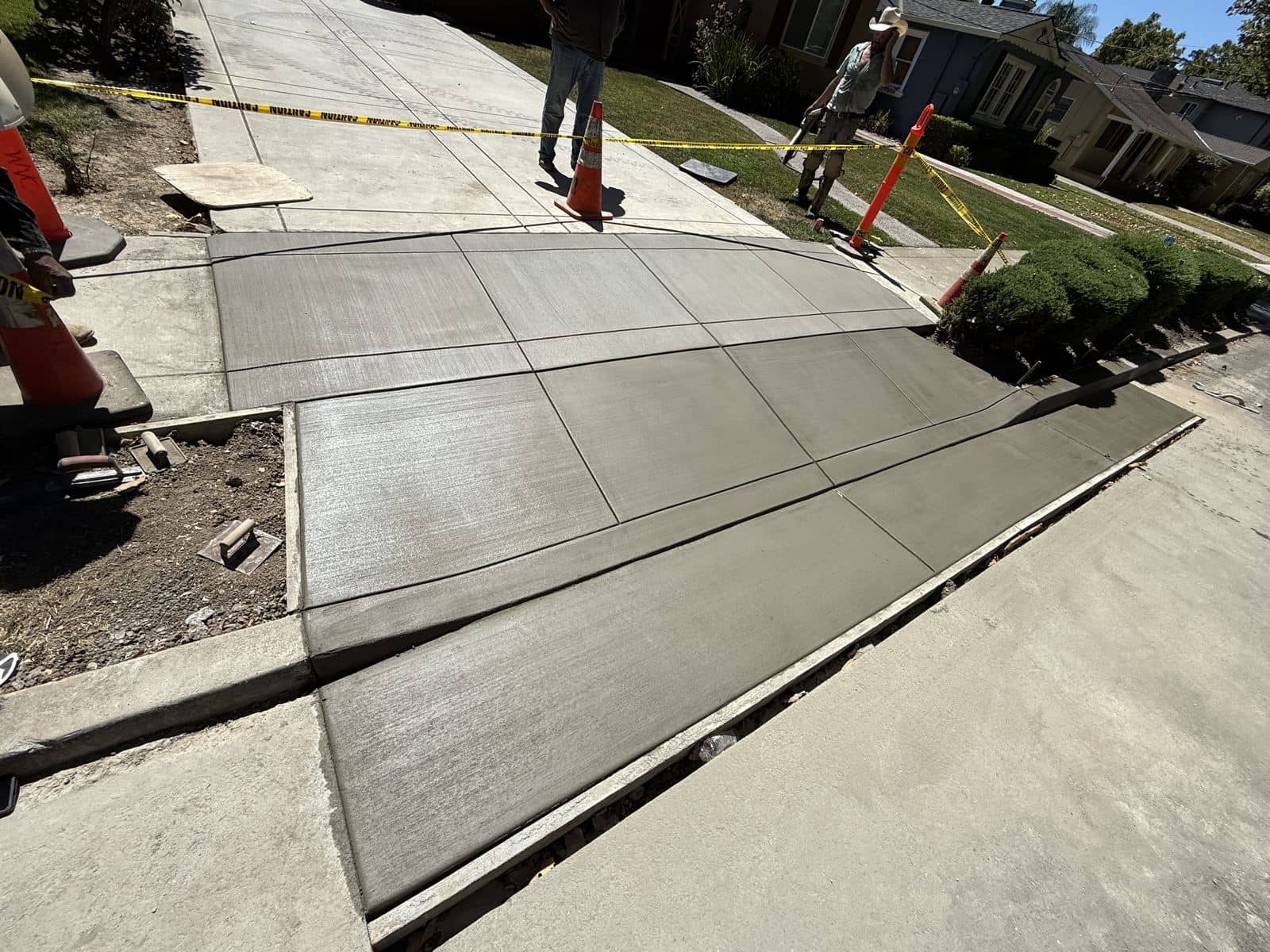
Concrete Driveways
Vehicle-rated driveways with engineered thickness, controlled cracking, and drainage that moves water away from your garage.
 1–2 weeks
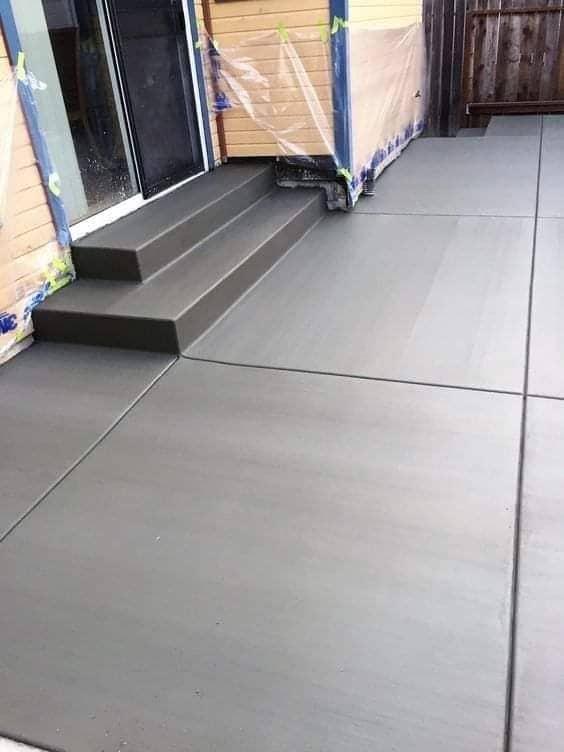
Concrete Patios
Outdoor living surfaces planned around furniture, foot traffic, and how your household actually uses the yard.
 Decorative
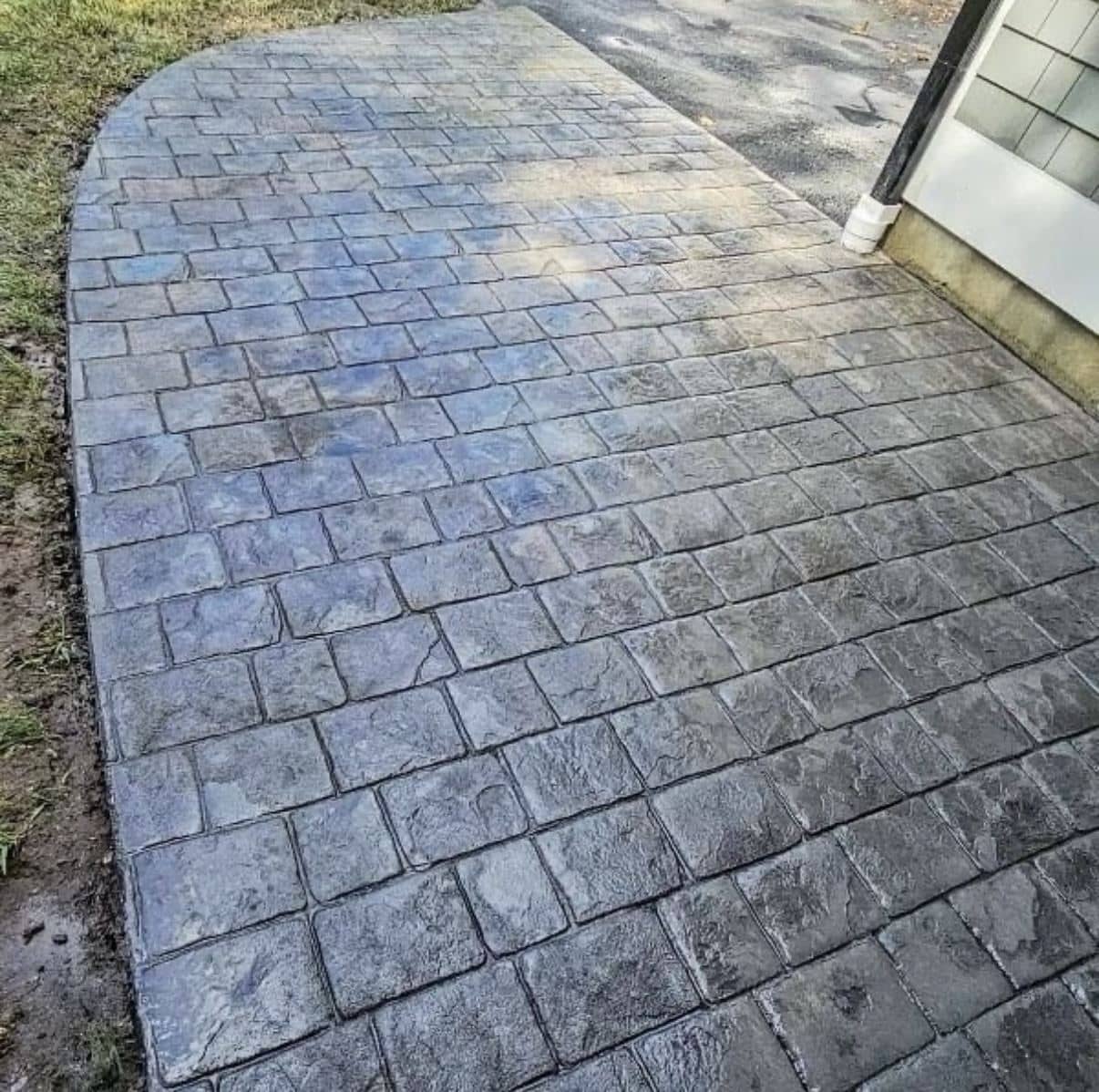
Stamped Concrete
Stone, brick, slate, and plank patterns pressed into fresh concrete, colored in layers and sealed for depth.
 Engineered
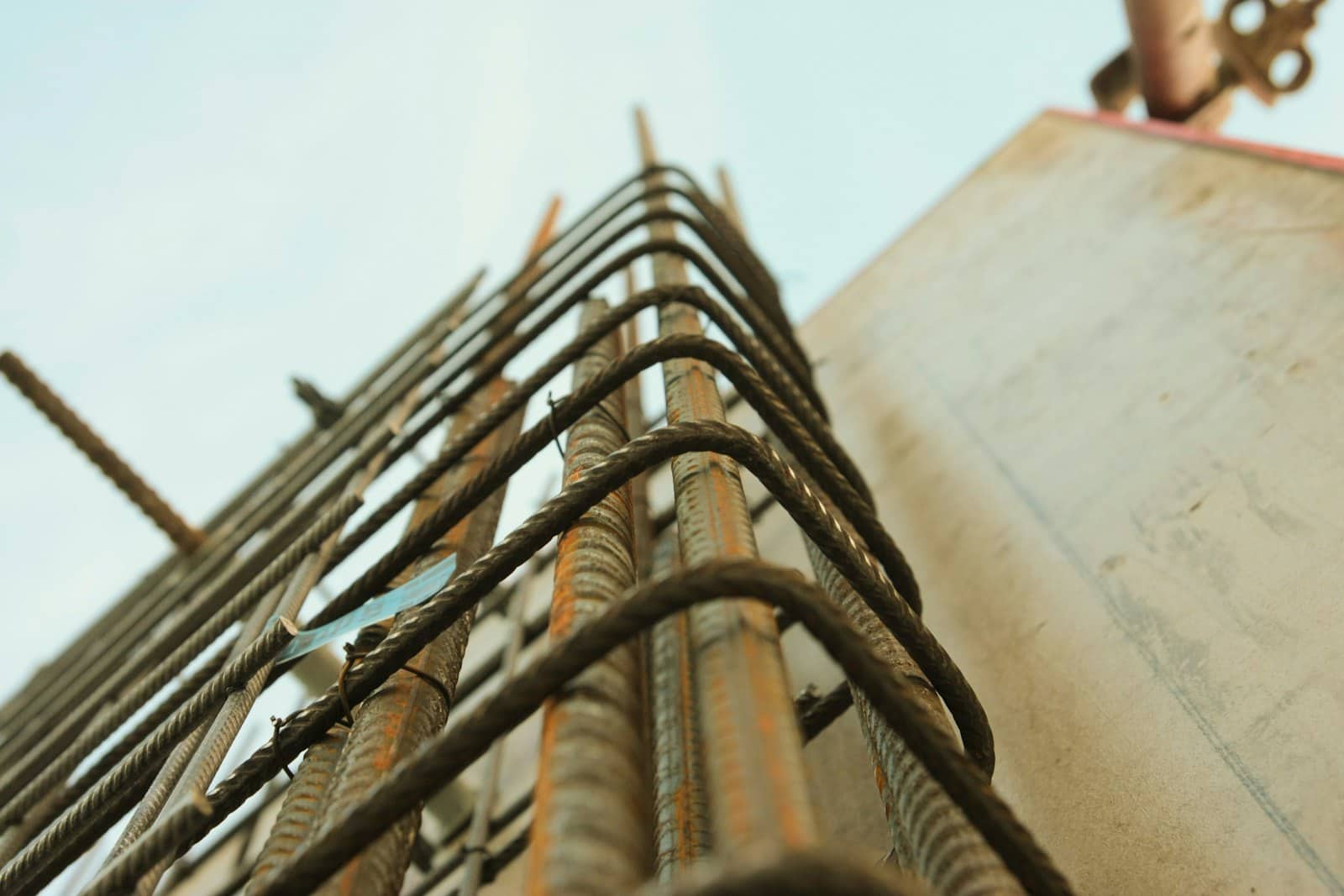
Foundations & Slabs
Structural concrete that carries the building — slab-on-grade, tilt-up panels, cast-in-place walls, and additions.
For Homeowners
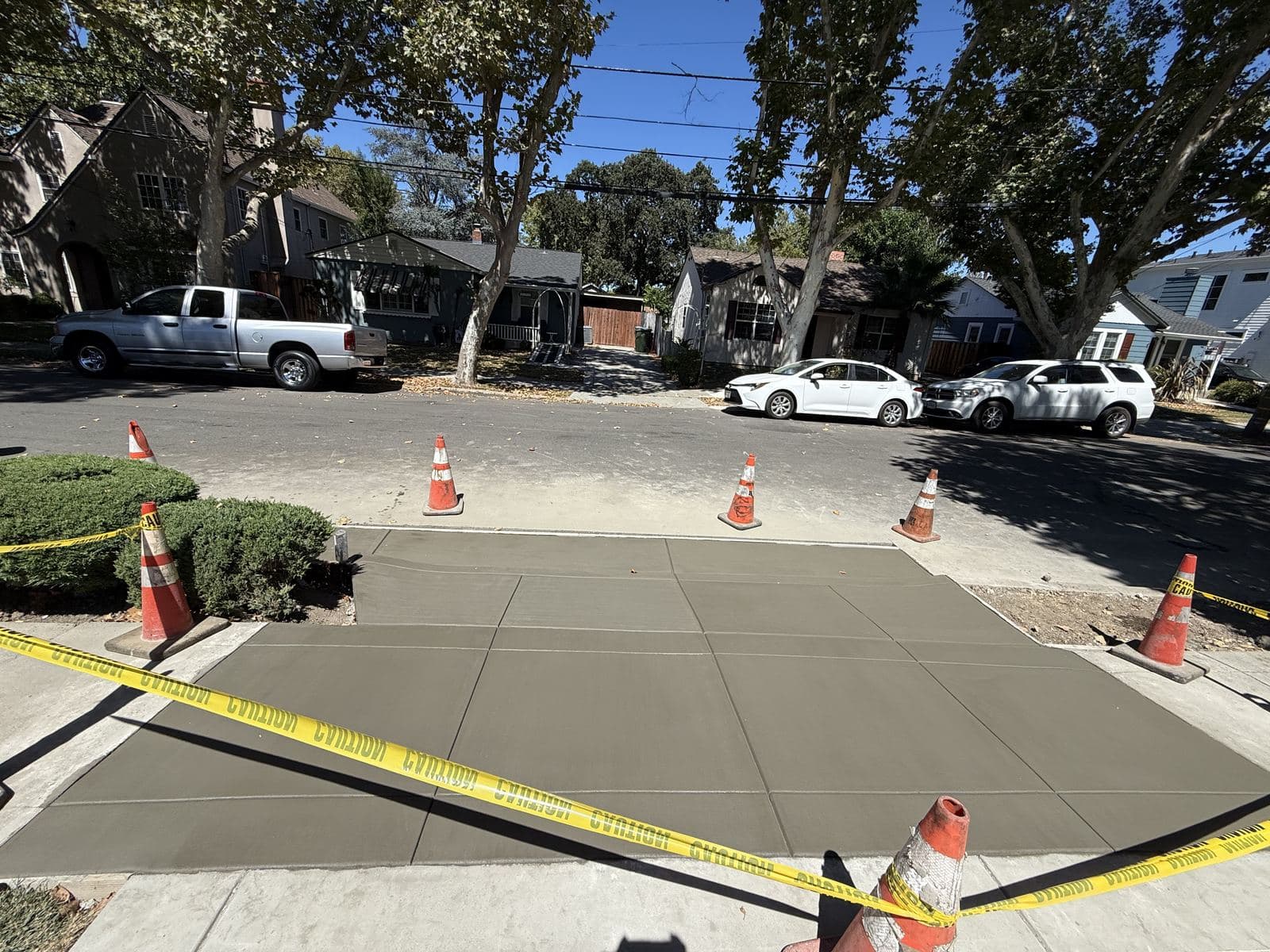
Residential Concrete That Outlives the Mortgage
Most Bay Area homes were built between 1950 and 1980, and the concrete poured then was built for lighter cars, thinner slabs, and less rain than we actually get. Sixty years on, that generation of driveways and walkways is reaching the end of its life all at once.
Replacing it properly is an opportunity, not just a repair. It's the moment to fix the drainage that has been pushing water at your foundation, widen a driveway that never fit two modern vehicles, or turn a cracked slab of a back yard into an outdoor room you actually use.
We work through that with you before quoting: what's failing, why it failed, what the fix costs, and what it would take to make the replacement better than the original rather than the same mistake in fresh concrete.
- Driveways and vehicle aprons
- Patios and outdoor living areas
- Pool decks and surrounds
- Garage and workshop floors
- Hot tub and equipment pads
- Steps, landings, and stoops
For Businesses
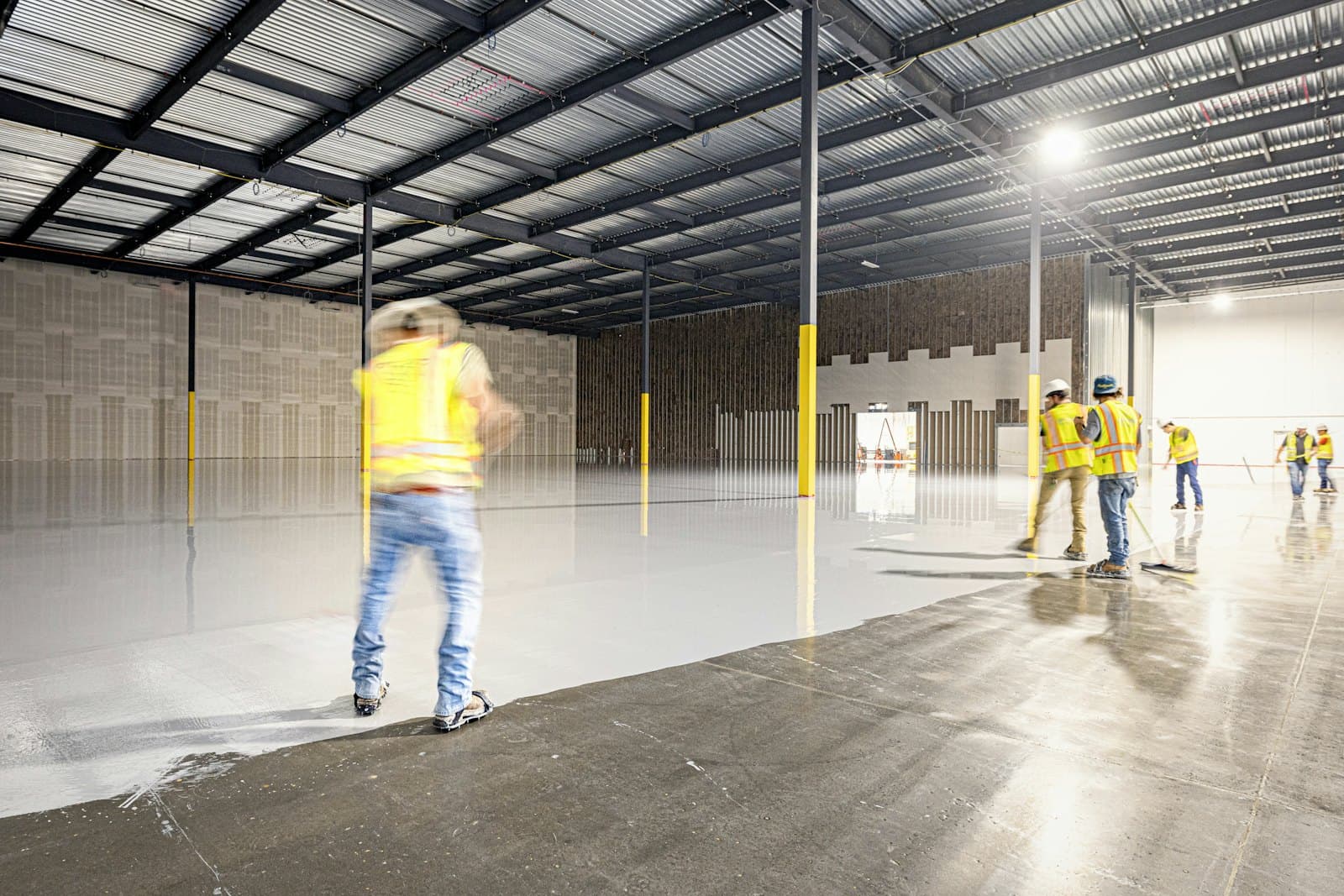
Commercial Concrete Built to the Load It Carries
Commercial work fails for different reasons than residential work. It's rarely the mix — it's a slab designed for cars that ended up carrying delivery trucks, a dock apron with no thickened edge, or a lot that was never given anywhere for water to go.
We start from the load and the traffic pattern, not from a standard detail. That means asking what the heaviest vehicle on the site actually is, where it turns, how often, and what happens to the surface when it rains hard for three days.
We also phase around your operations. Retail frontage, dock aprons, and drive aisles get sequenced so you keep trading, keep receiving, and keep your accessible routes open while the work happens.
- Parking lots and drive aisles
- Loading docks and truck aprons
- Industrial and warehouse floors
- Foundations, footings, and slabs
- Sidewalks and accessible routes
- Curbs, gutters, and wheel stops
- Slab thickness under truck traffic
- 6"+Slab thickness under truck traffic
- PSI standard commercial mix
- 4,000PSI standard commercial mix
For Contractors & Facilities Teams
Business-to-Business Concrete Services
Specialty scopes we're brought in for by other contractors, property managers, and facilities teams — pumping, cutting, restoration, sprayed concrete, and floor treatments rather than a finished driveway or patio.
Concrete Pumping
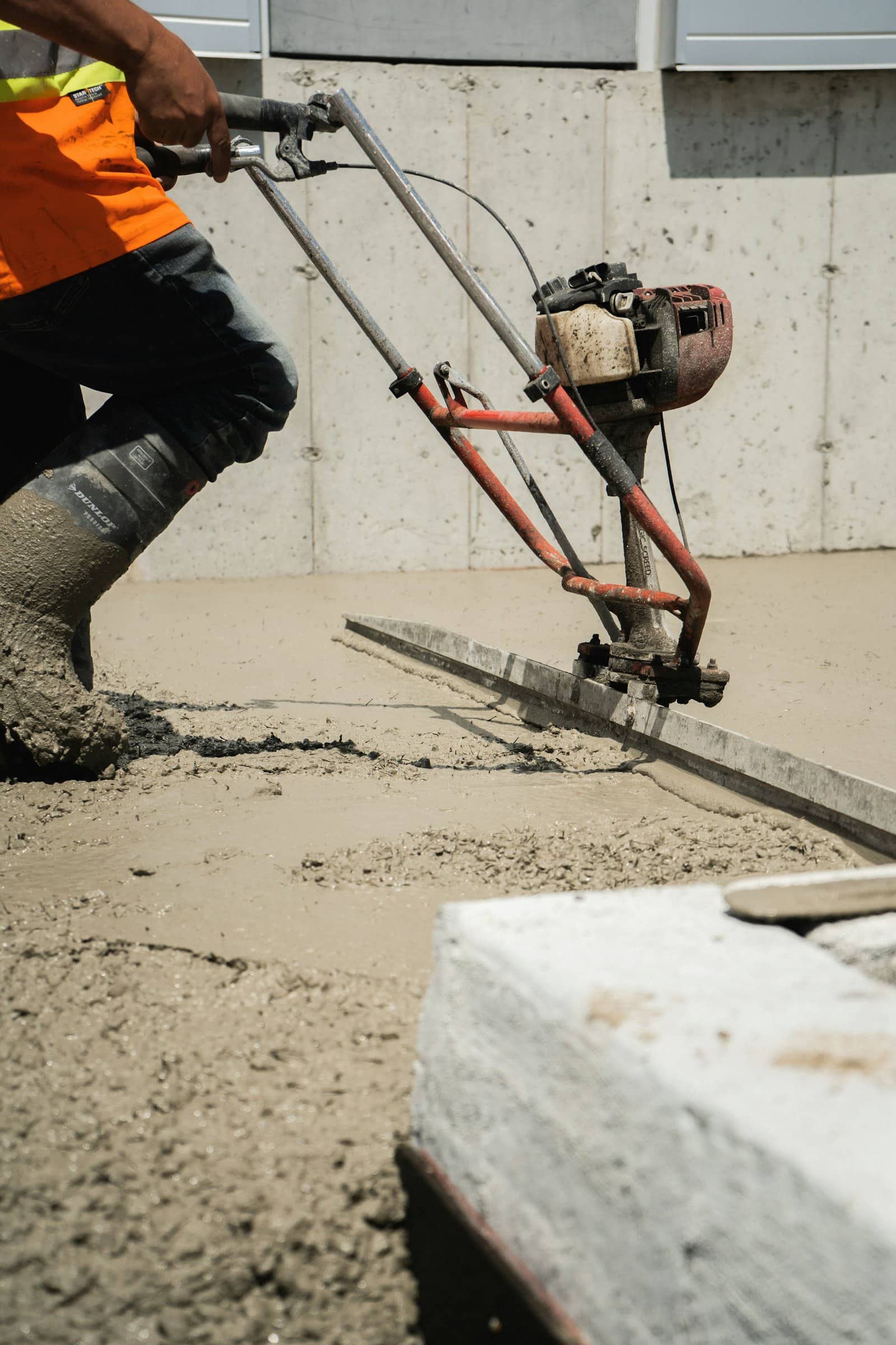
Boom and line pump placement for backyards, hillside lots, and tight side yards a ready-mix chute can't reach.
Sawing & Coring
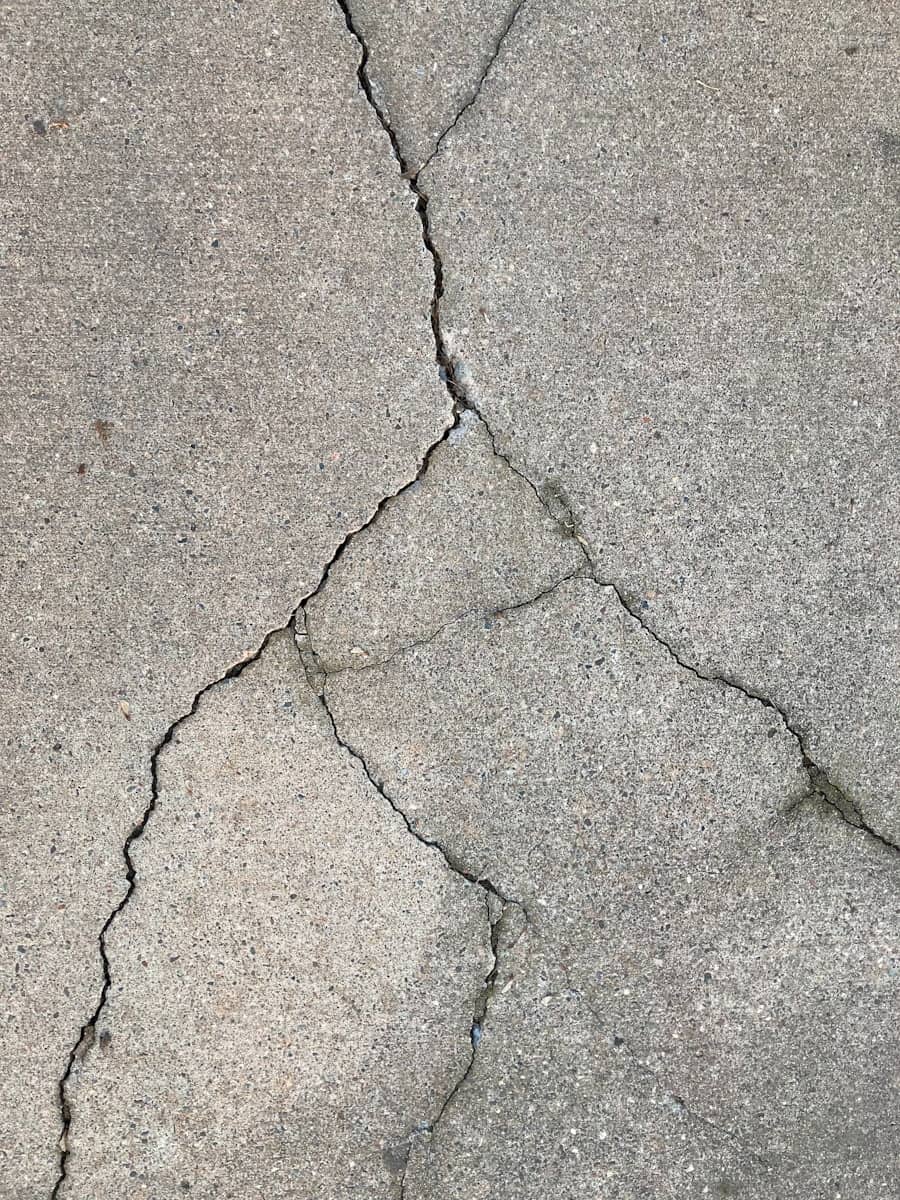
Diamond blade saw cutting and core drilling for joints, utility penetrations, and demo work — scanned for rebar before every cut.
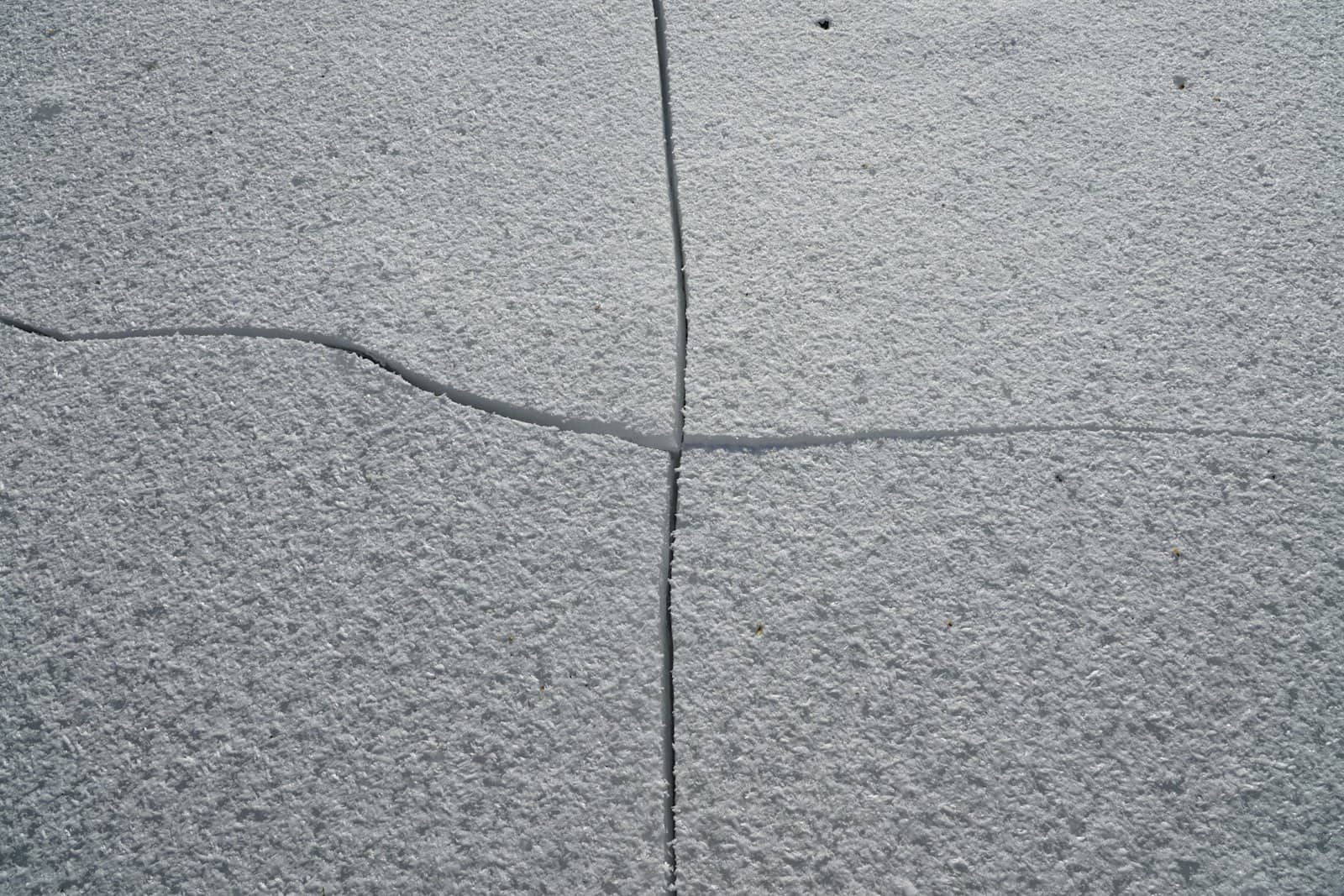
Concrete Restoration
Crack injection, spall repair, and structural patching for concrete that's failing but doesn't need to be torn out.
Gunite & Shotcrete
Sprayed concrete for pool shells, retaining walls, and slope stabilization — placed under pressure where forms aren't practical.
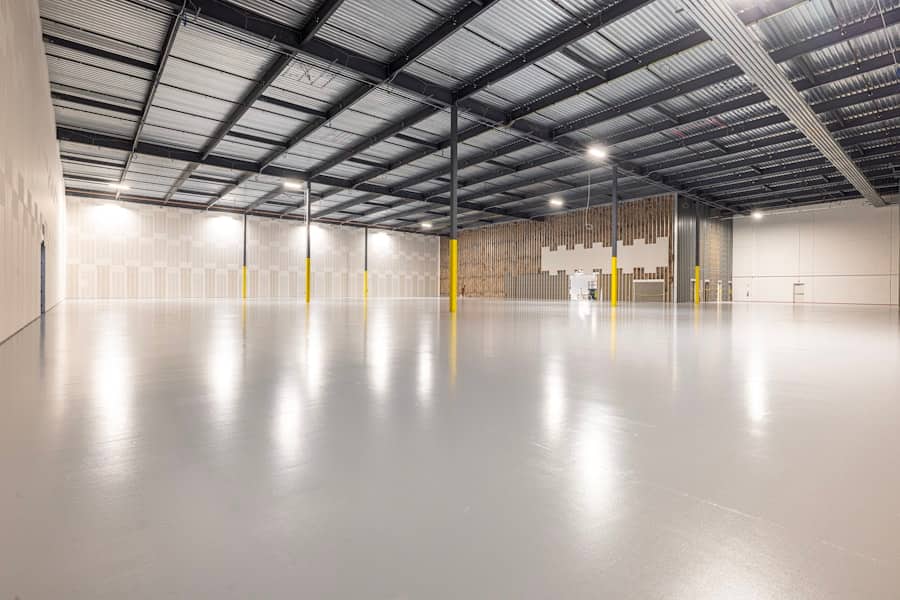
Floor Hardening & Densifying
Chemical densifiers and hardeners for warehouse and industrial floors — extends service life and cuts dusting.
How a Project Actually Runs
The same four stages whether it's a back-yard patio or a commercial parking lot. You'll know what's happening and roughly when at every point.
Site consultation
We walk the site with you, measure, check drainage and access, and flag anything that changes the approach — soil, slope, tree roots, permits, or utilities under the work.
Written estimate & design
A written scope with a fixed price, plus finish and layout options. Where decorative work is involved we bring physical samples so you're choosing from real texture, not a screen.
Demolition, base & forming
Old concrete out, sub-base graded to fall and compacted in lifts, forms set, reinforcement tied and chaired. This is the stage that decides the slab's lifespan.
Pour, finish & cure
Placement, screeding, floating, and the finish you chose. Then controlled curing, joint cutting, a walkthrough, and clear guidance on when you can use it.
Transformations
Before & After
Real projects, same job, two stages — drag the handle across each frame to see the work from start to finish.
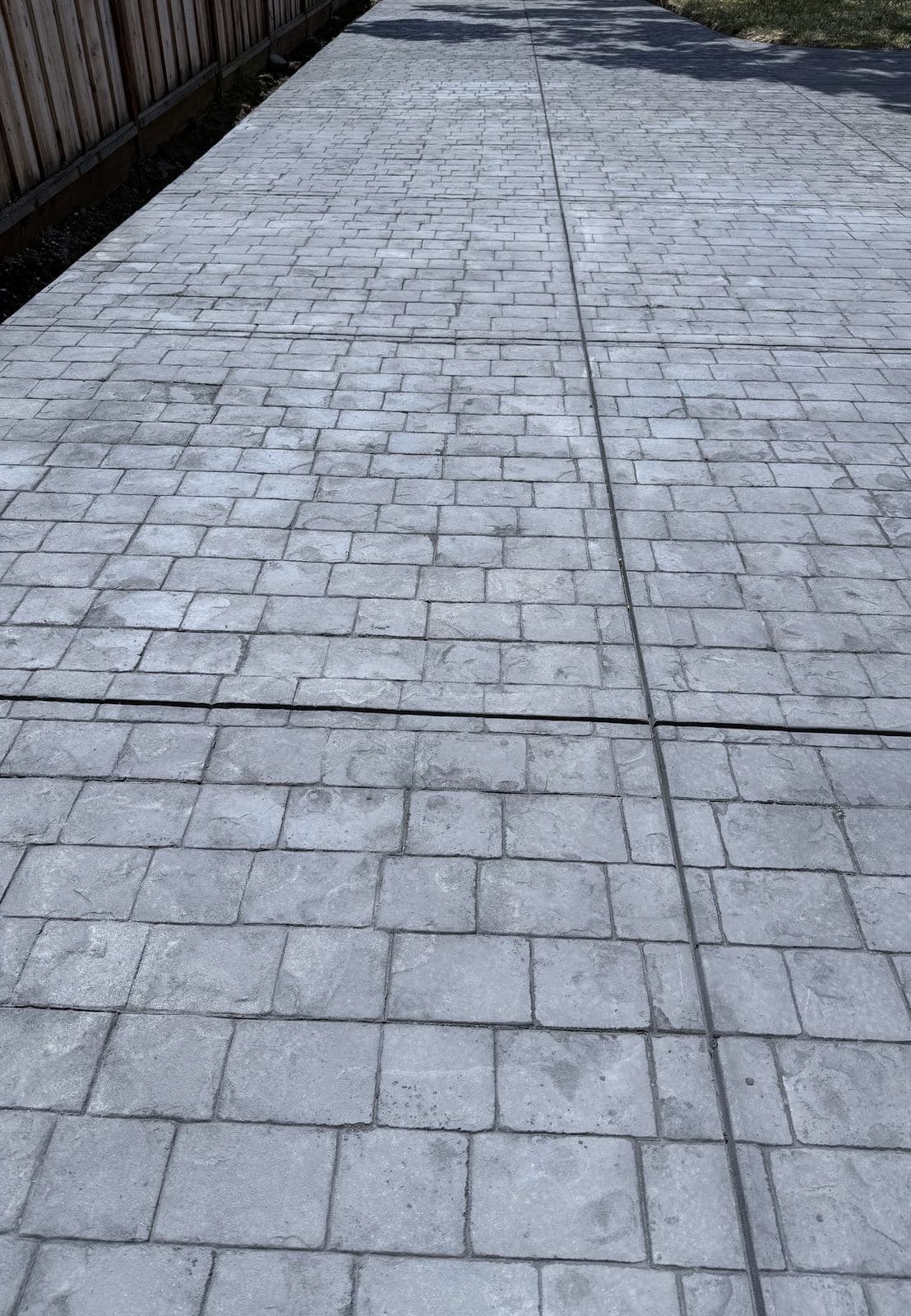
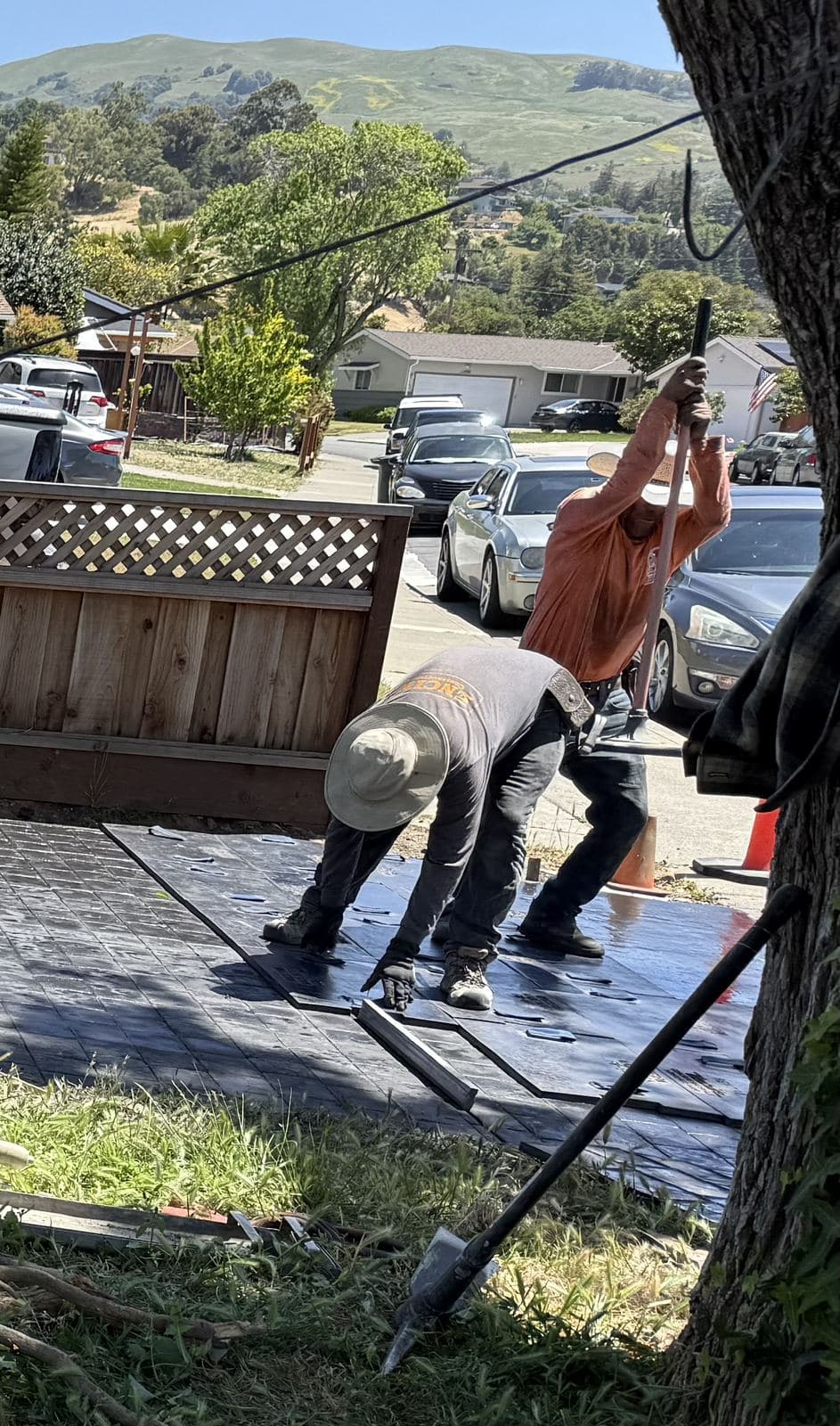
Bay Area driveway build
Stamped driveway installation
Stamping has to happen while the slab is still plastic, which gives a narrow window to set the pattern, texture, and joint lines correctly across the whole pour before it sets up. Cured and sealed, it reads as cut stone rather than poured concrete.
- Ashlar stone pattern set consistently across the full driveway
- Joint lines placed to read as natural stone coursing
- Sealed finish protects the color and texture from tire wear
Backyard build, Bay Area
Outdoor kitchen build
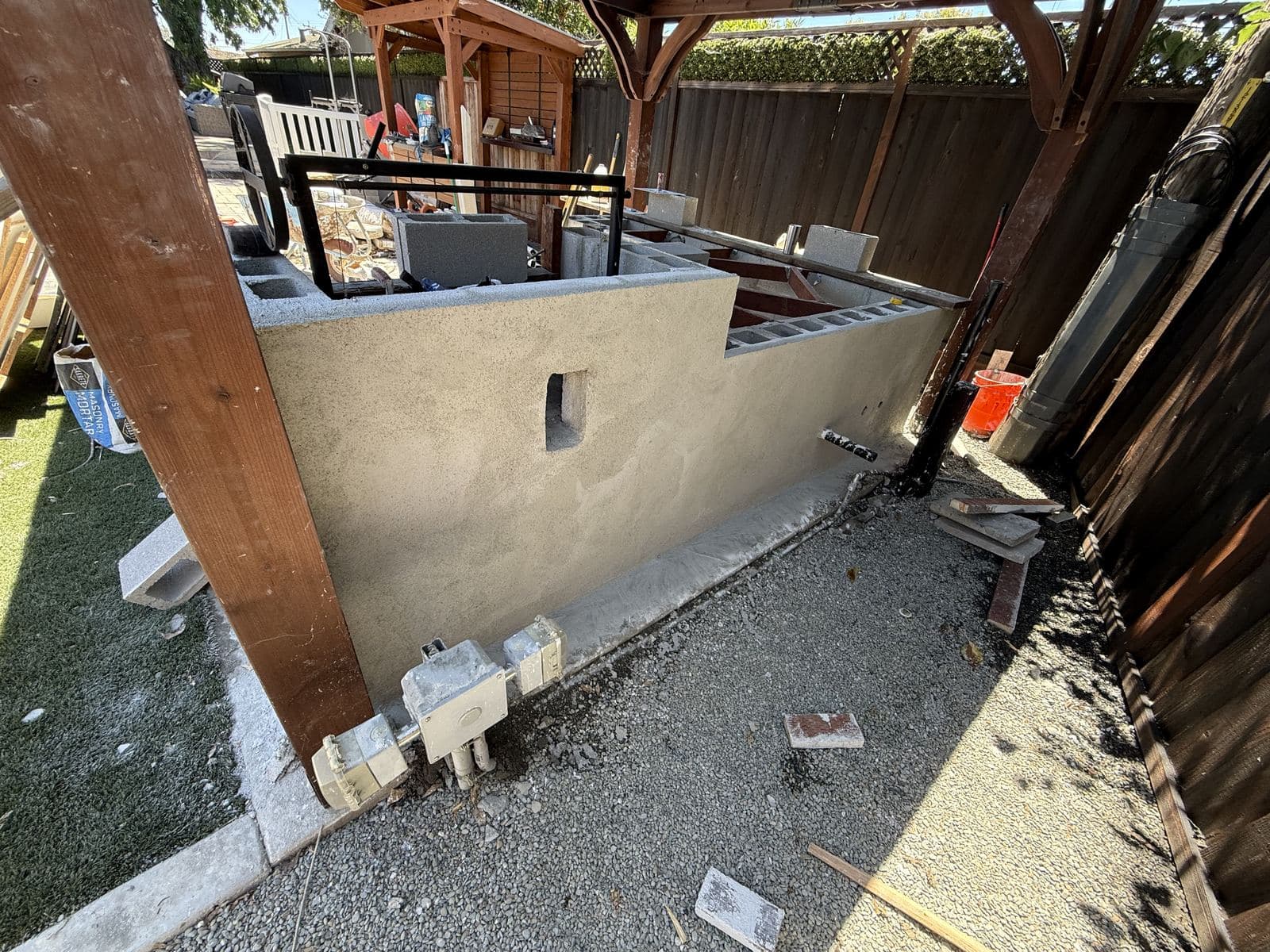
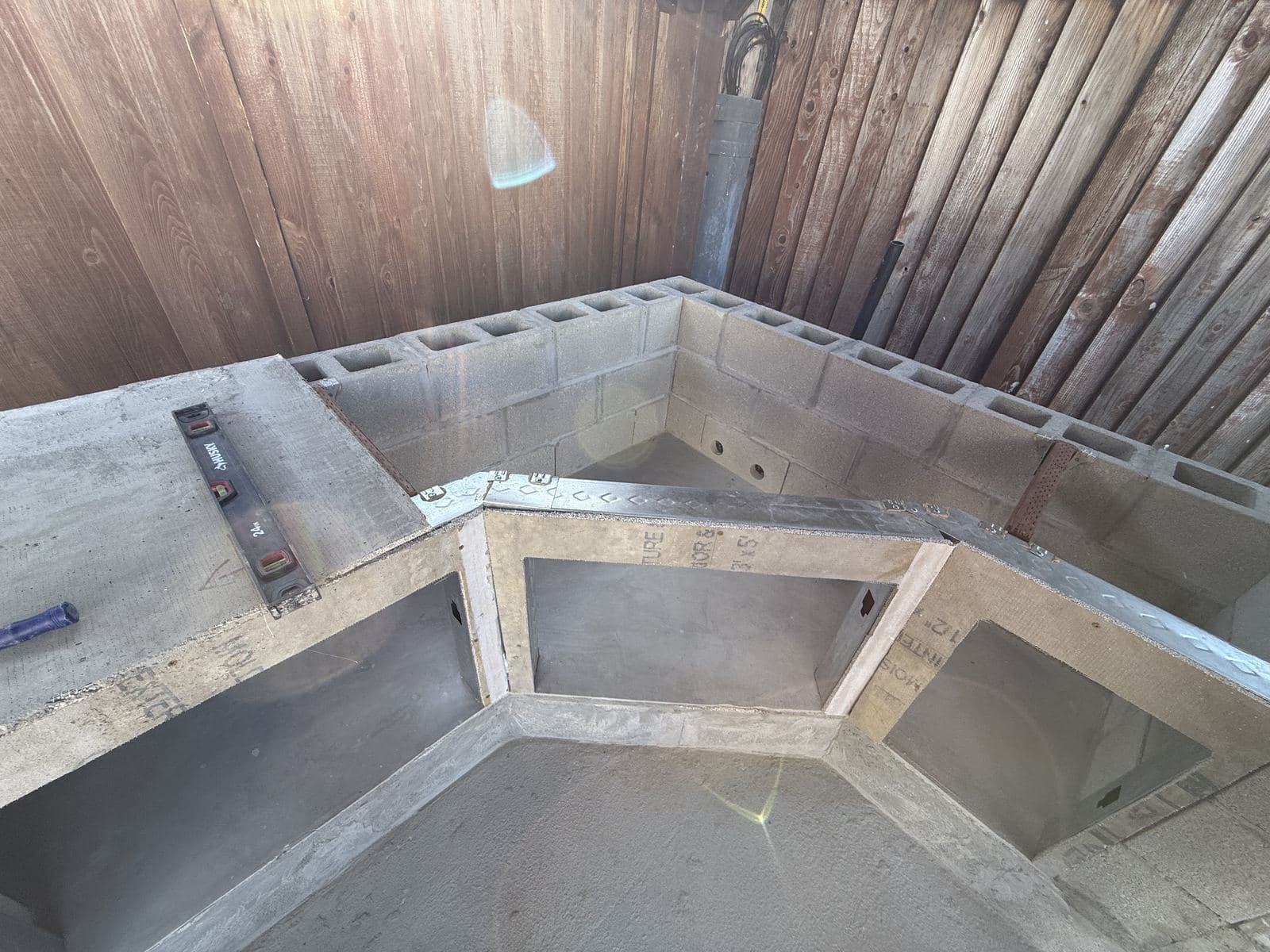
A block-and-mortar outdoor kitchen built from the ground up — CMU block frame, tied reinforcement, and a built-in grill, finished with a stuccoed exterior that matches the home.
- CMU block frame built to hold the grill, counters, and storage
- Reinforced and finished to handle years of outdoor use
- Stuccoed exterior finished to match the home
Backyard walkway build
Walkway construction
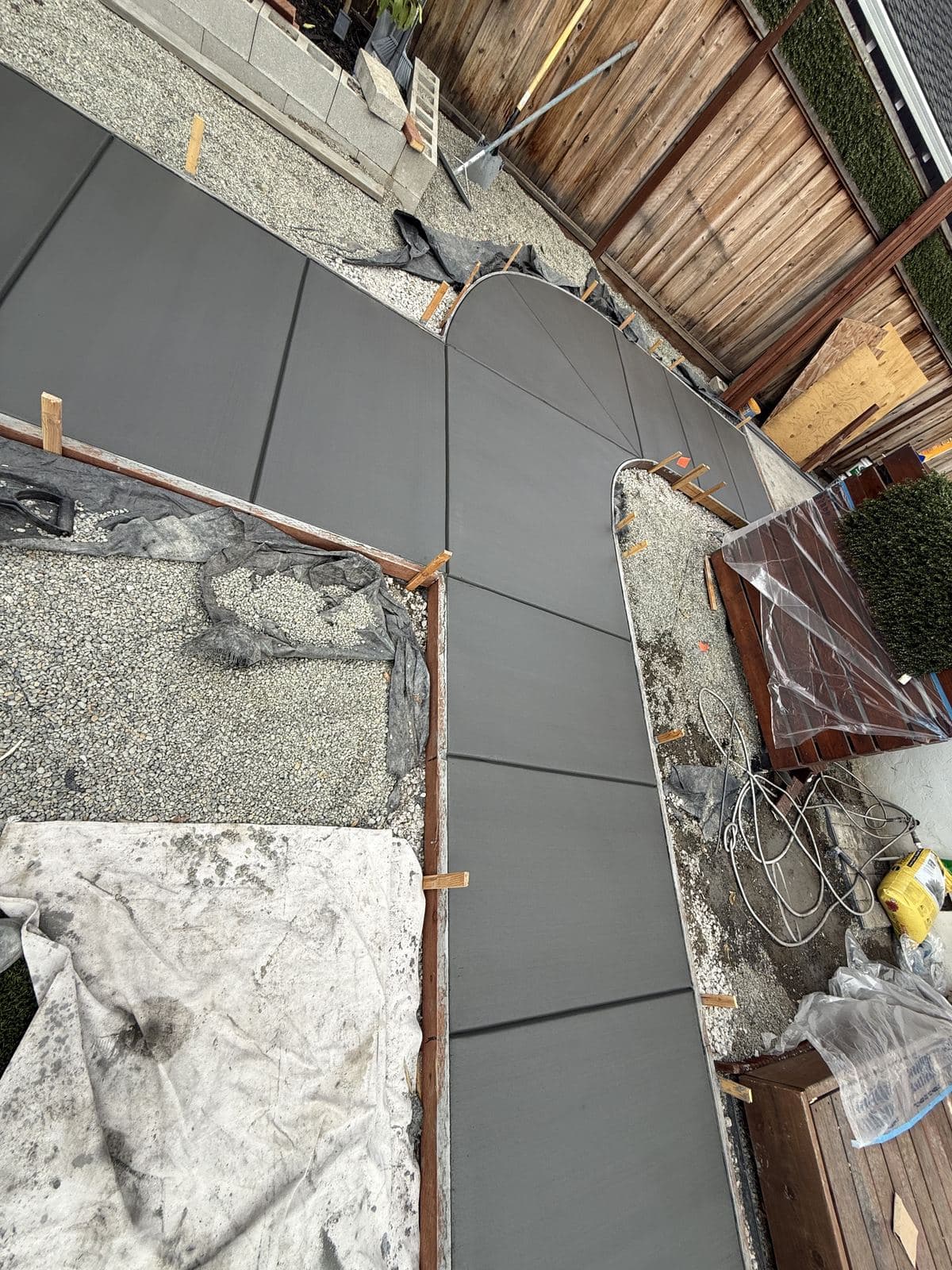
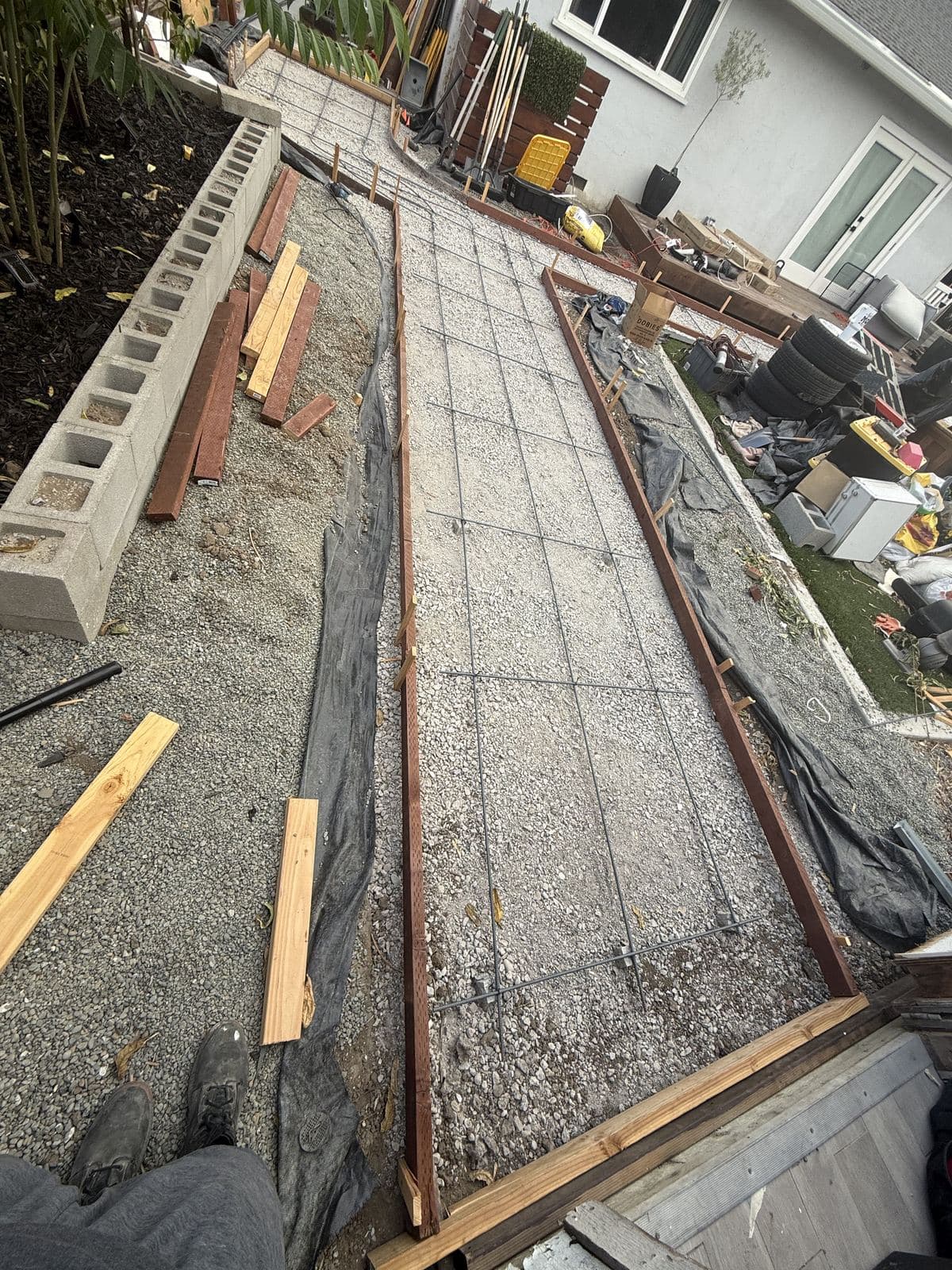
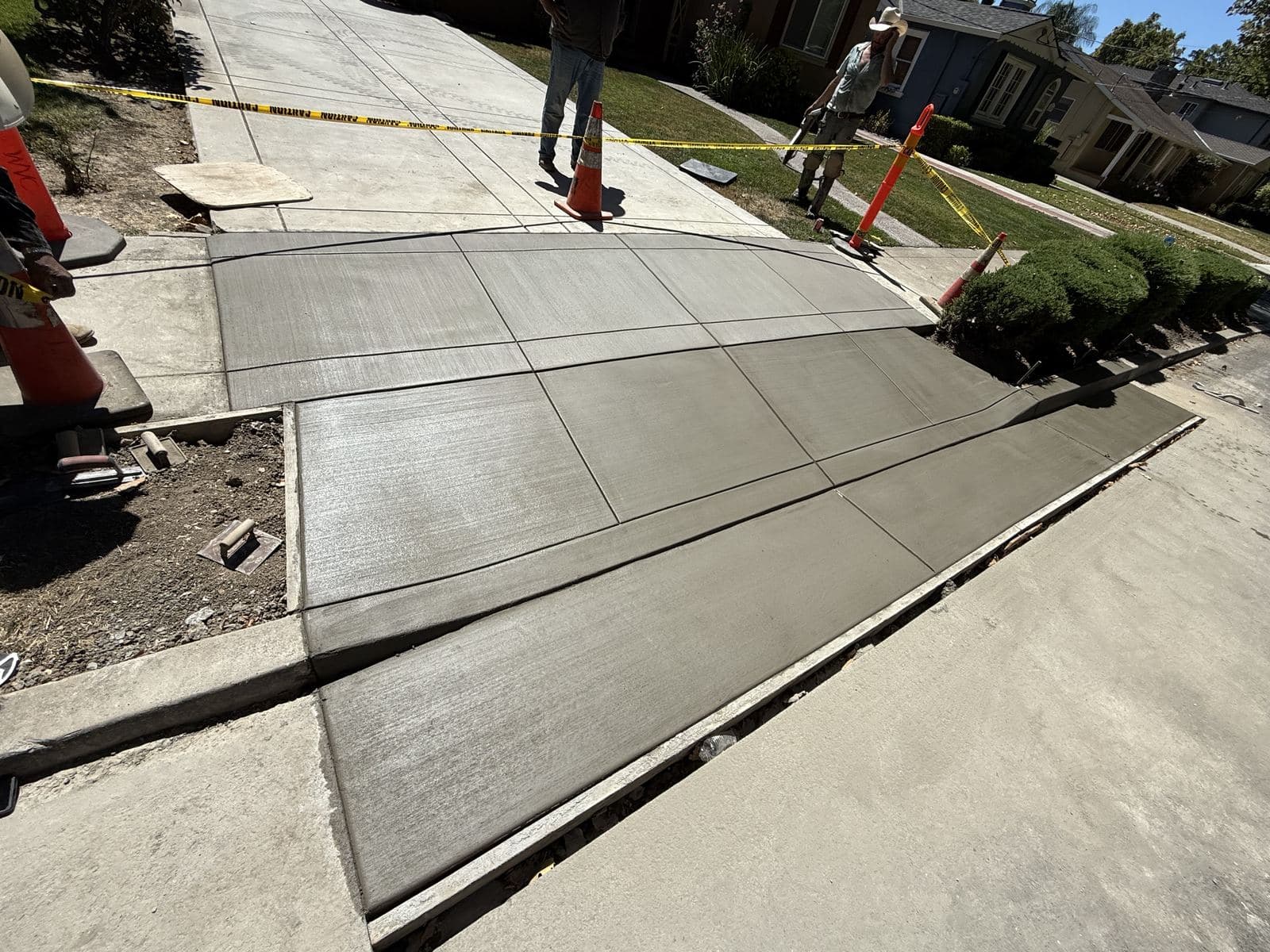
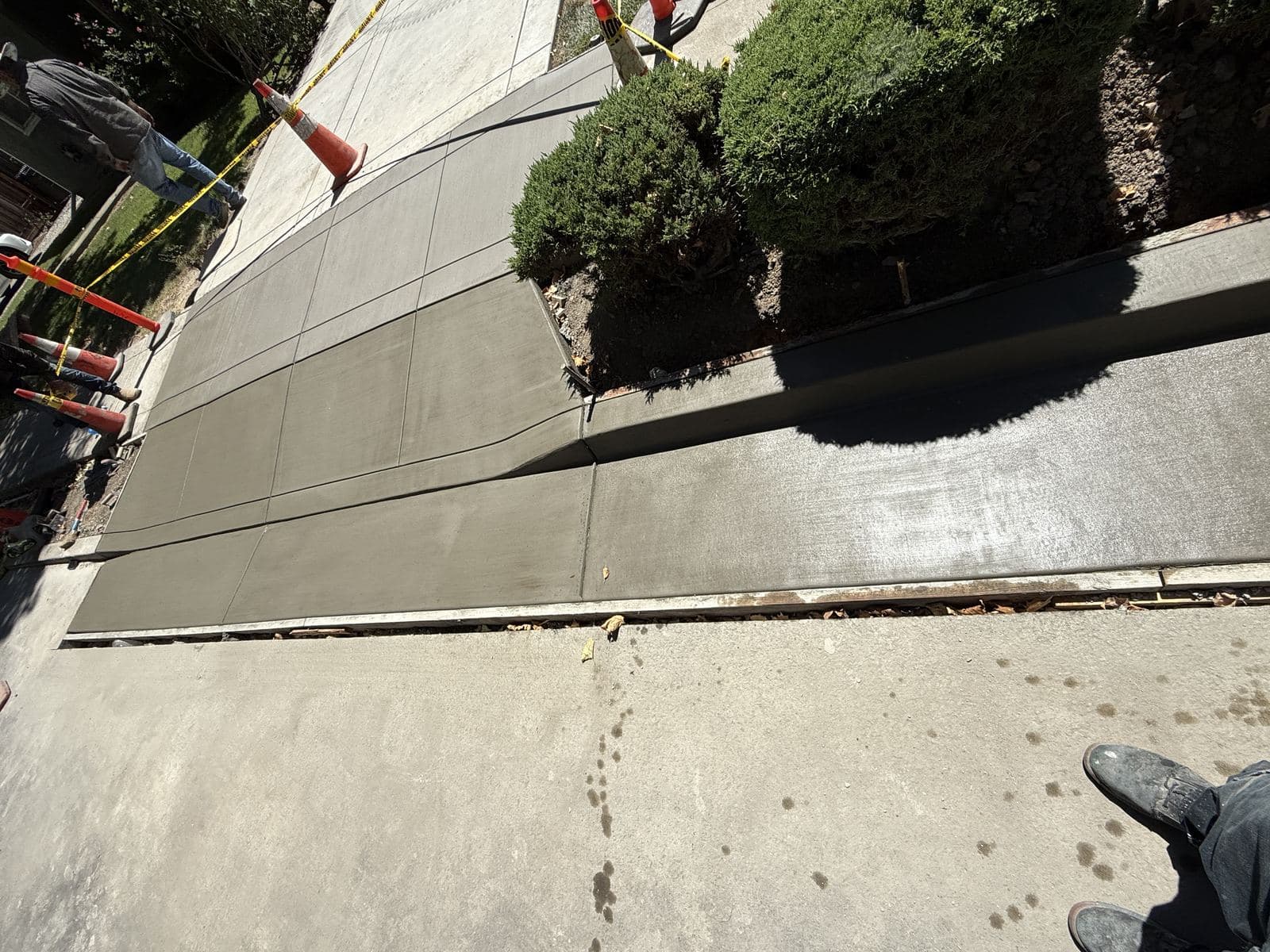
Compacted gravel base and a tied rebar grid, formed to the curve before a single yard of concrete goes down. What's underneath is what decides whether a walkway is flat and crack-free in year twenty.
- Compacted gravel base carries the load evenly
- Rebar grid tied and chaired before the pour, not laid on top
- Curved forms held the layout precisely through the pour
San Jose backyard build
Patio & steps construction
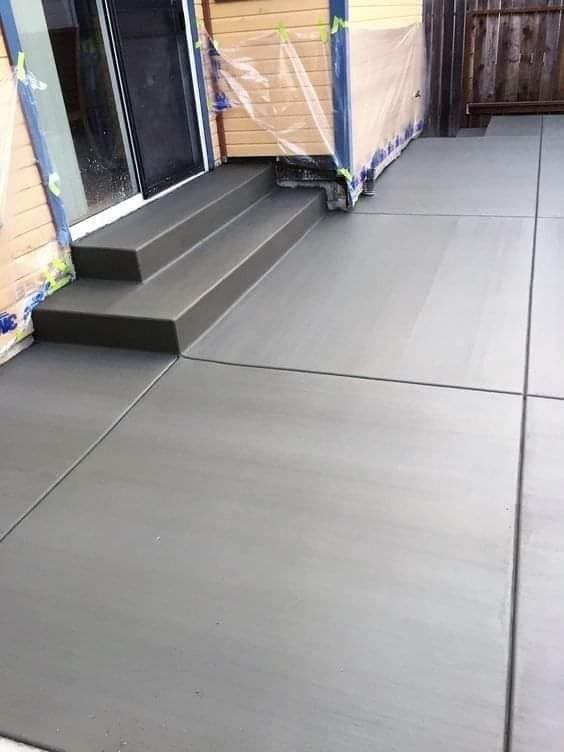
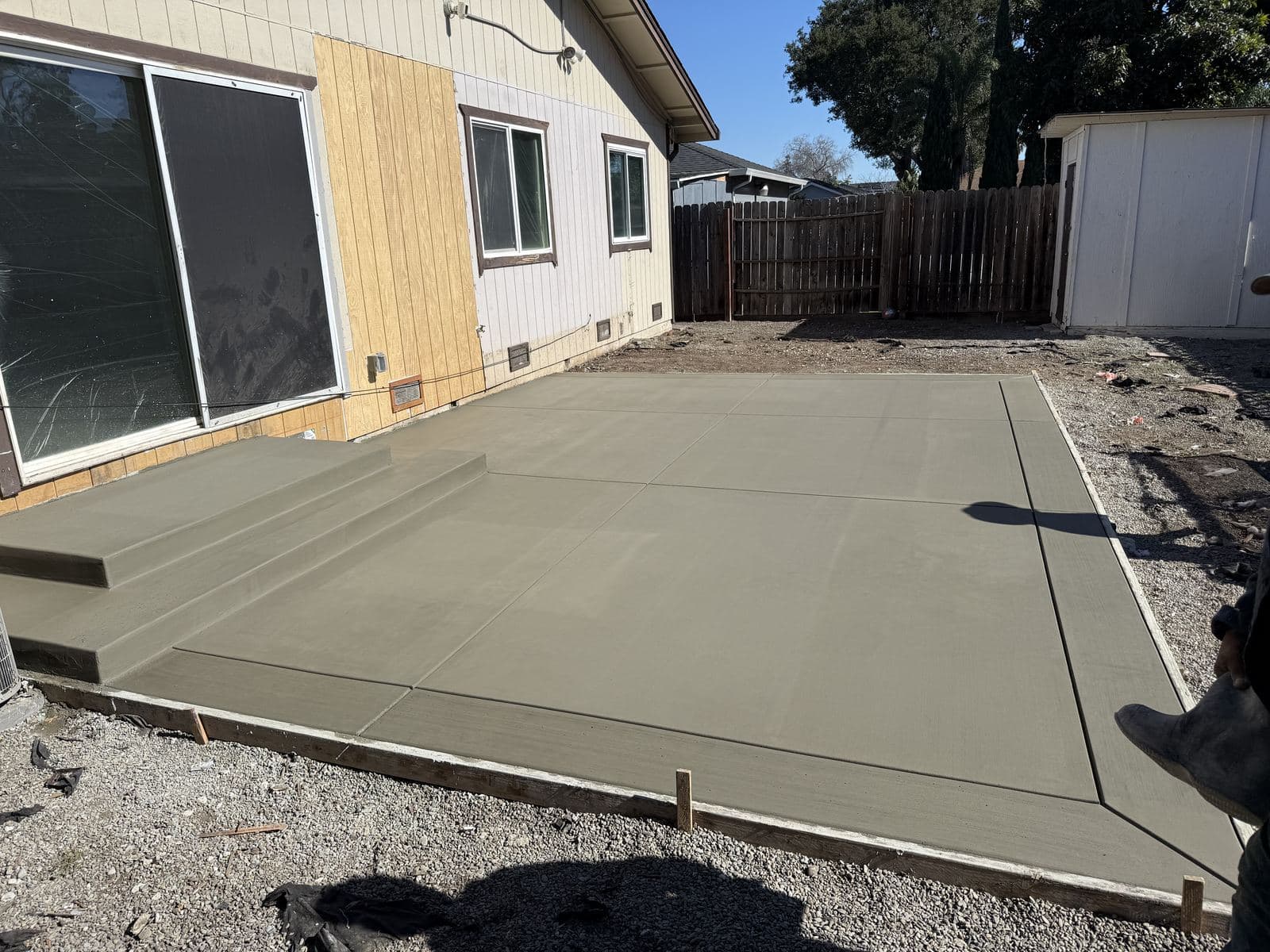
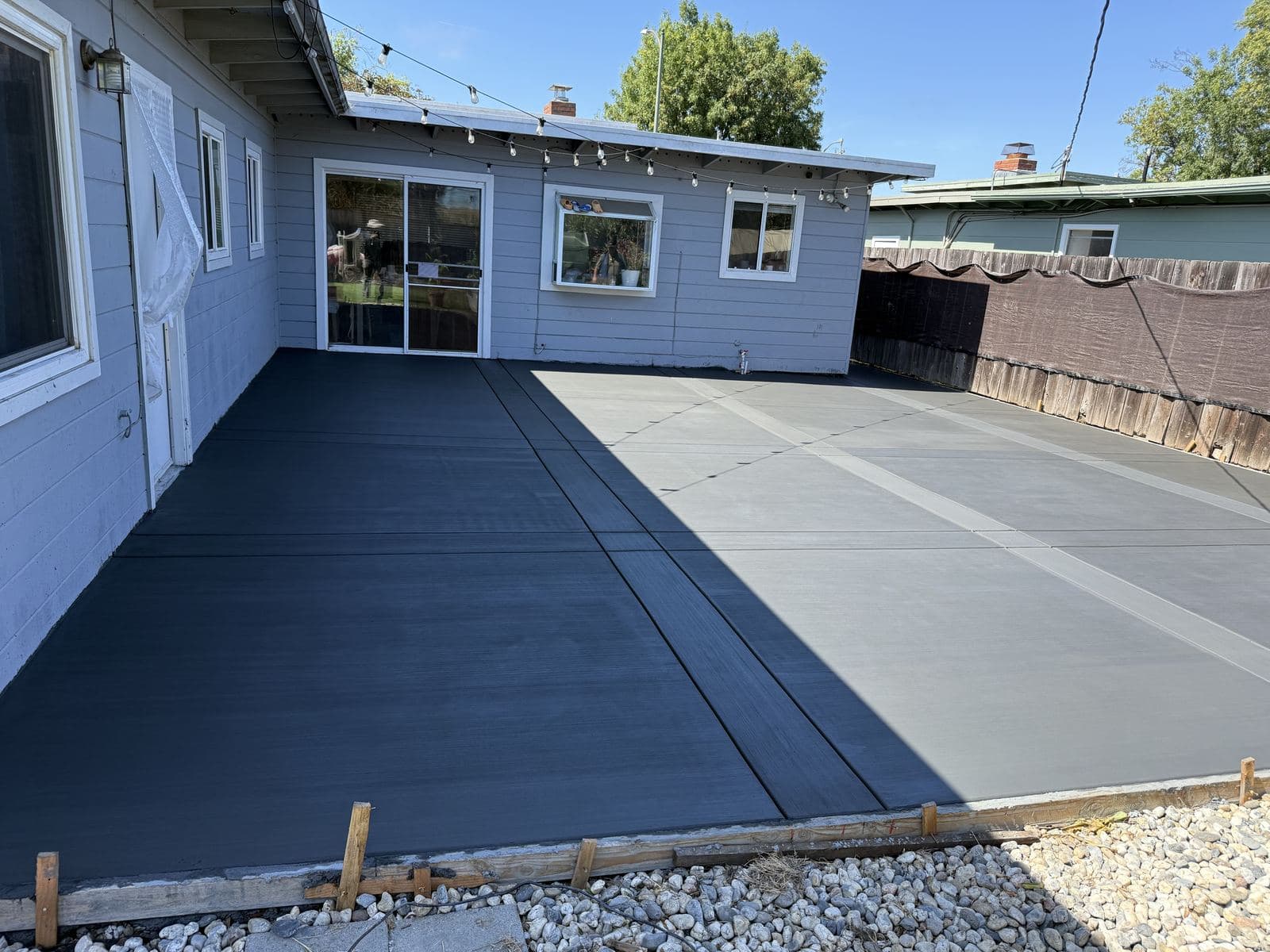
A bare gravel yard poured into a full patio slab with integrated steps up to the sliding door, formed and finished in one continuous pour so the steps and slab read as a single piece rather than an add-on.
- Steps and slab poured together for a seamless transition
- Broom finish carried consistently across steps and slab
- Forms stripped and edges cleaned for a sharp finished line
Drag the handle — or use the arrow keys — to compare the condition before and after.
How Concrete Lasts
What's Underneath Decides Everything
When a slab cracks, settles, or breaks up early, the concrete itself is almost never the culprit. The problem is nearly always one of the layers below it — a base that wasn't compacted, reinforcement sitting on the ground instead of in the slab, or water with nowhere to go.
This is what a slab we build looks like in section. Every layer has a job, and skipping any one of them is how a driveway that should have lasted thirty years starts breaking up in its sixth winter.
What happens when a layer gets skipped
- 5
Concrete slab
3,000–4,000 PSI · 4" home, 6"+ vehicles
Four inches under a delivery truck cracks, every time. Thickness has to match the heaviest thing that will ever sit on it — not the family car.
- 4
Reinforcement
#4 rebar at 18" centers, chaired
Rebar lying on the base does nothing at all. It has to sit in the slab's middle third, where it can hold a crack closed instead of watching one open.
- 3
Vapor barrier
10-mil sheeting under interior slabs
Without it, ground moisture wicks up through the concrete. That delaminates coatings, lifts flooring, and leaves a garage or shop slab that never fully dries.
- 2
Aggregate base
Crushed Class 2 rock, 4–6" in lifts
Pour straight onto soil and water has nowhere to drain. It collects under the slab, softens the ground, and the support the slab was designed around disappears.
- 1
Compacted subgrade
Graded to fall, compacted to 90–95%
Skip the compaction and the slab settles unevenly within a few wet seasons. One side drops, a crack opens across the difference, and no surface repair will hold it.
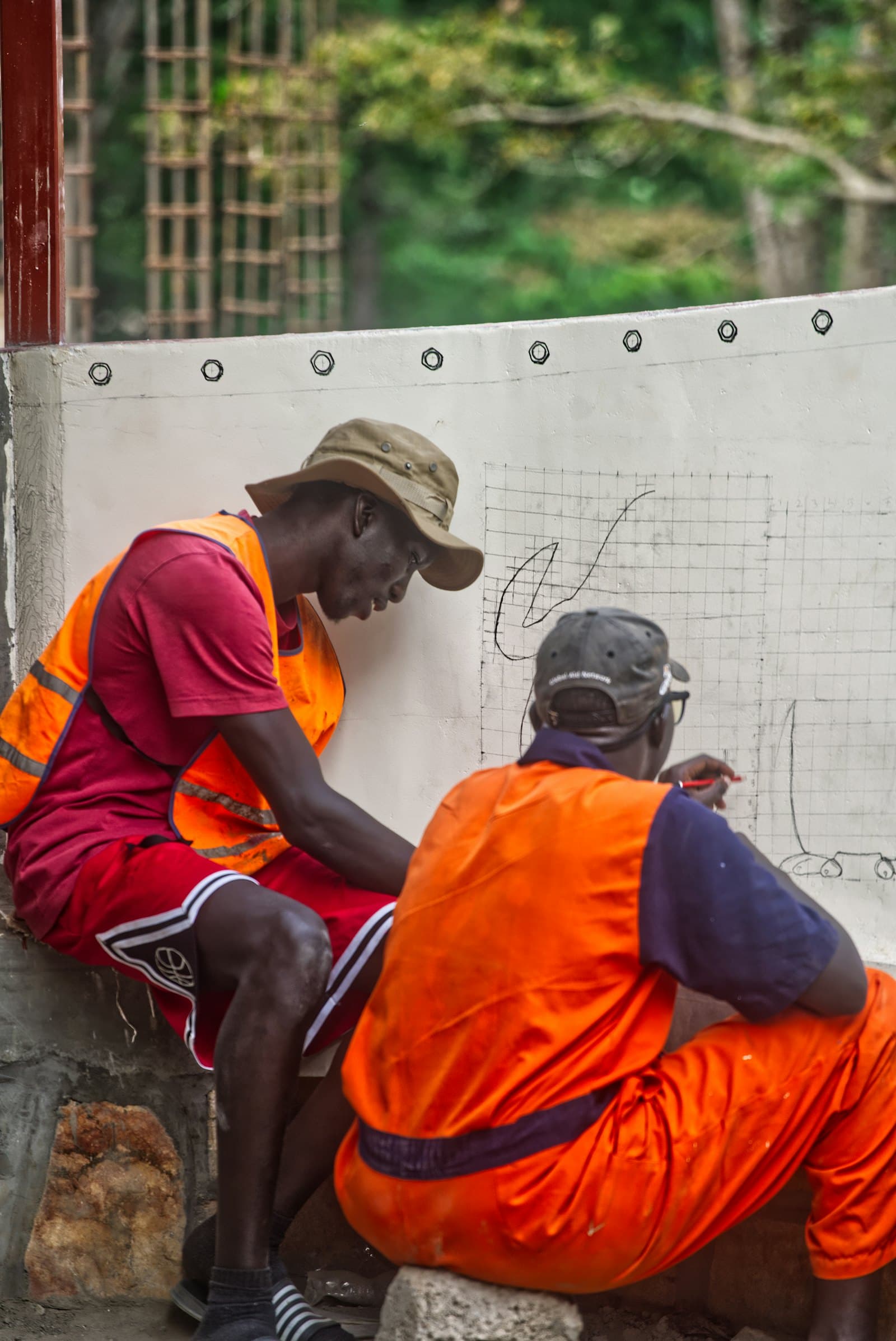
“If a repair solves it, we'll tell you that instead of quoting a replacement. It costs us a job and it earns the next three.”
Decorative & Functional Finishes
Choosing the Right Surface Finish
Finish is not only a look — it decides how grippy the surface is when wet, how hot it gets in August, and how much maintenance it needs. Here's what each one is actually for.
Broom finish
A soft-bristled broom is dragged across the surface as it stiffens, leaving fine parallel ridges.
Best for Driveways, walkways, any sloped or wet-prone surface
Stamped
Textured mats are pressed into the plastic concrete to cast a stone, slate, or plank pattern.
Best for Patios, pool decks, feature entries
Exposed aggregate
The top paste is washed off before it sets, revealing the stone in the mix.
Best for Driveways, pool surrounds, high-traffic paths
Steel trowel
Repeated troweling closes the surface to a hard, dense, near-polished plane.
Best for Garages, interior slabs, covered patios
Rock salt
Coarse salt is broadcast onto the fresh surface and washed out, leaving a shallow pitted texture.
Best for Pool decks and patios in warm, dry positions
Polished
The cured slab is ground with progressively finer diamond tooling, then densified and sealed.
Best for Showrooms, warehouses, interior commercial floors
Specifications
The Materials We Build With
No mystery mixes and no substitutions on site. These are the standard specifications we quote to, and we'll write the ones for your job into the estimate.
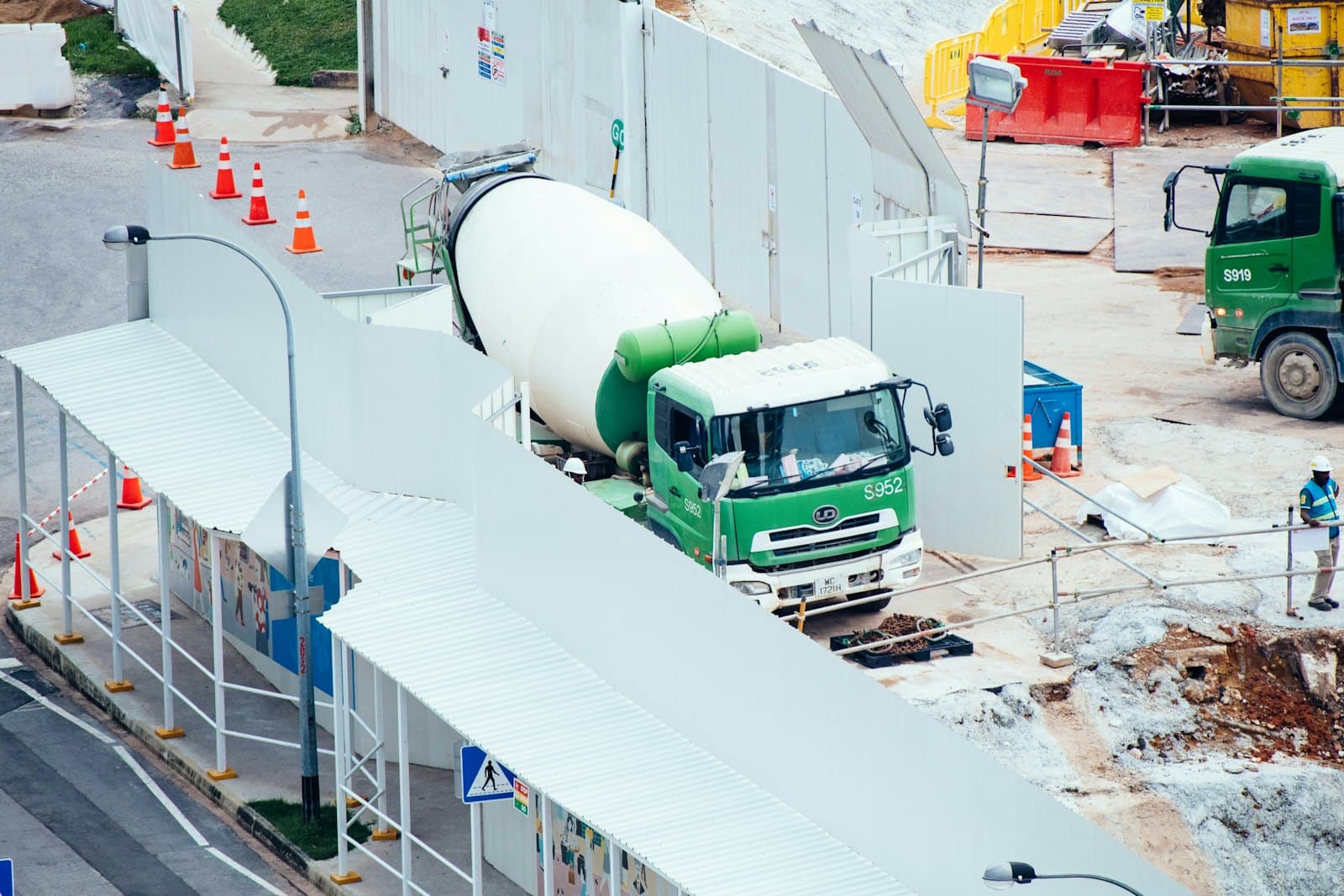
3,000–4,500 PSI
Ready-mix concrete
3,000 PSI for patios and walkways, 4,000 for driveways and commercial flatwork, 4,500 with fiber where the load or exposure justifies it.
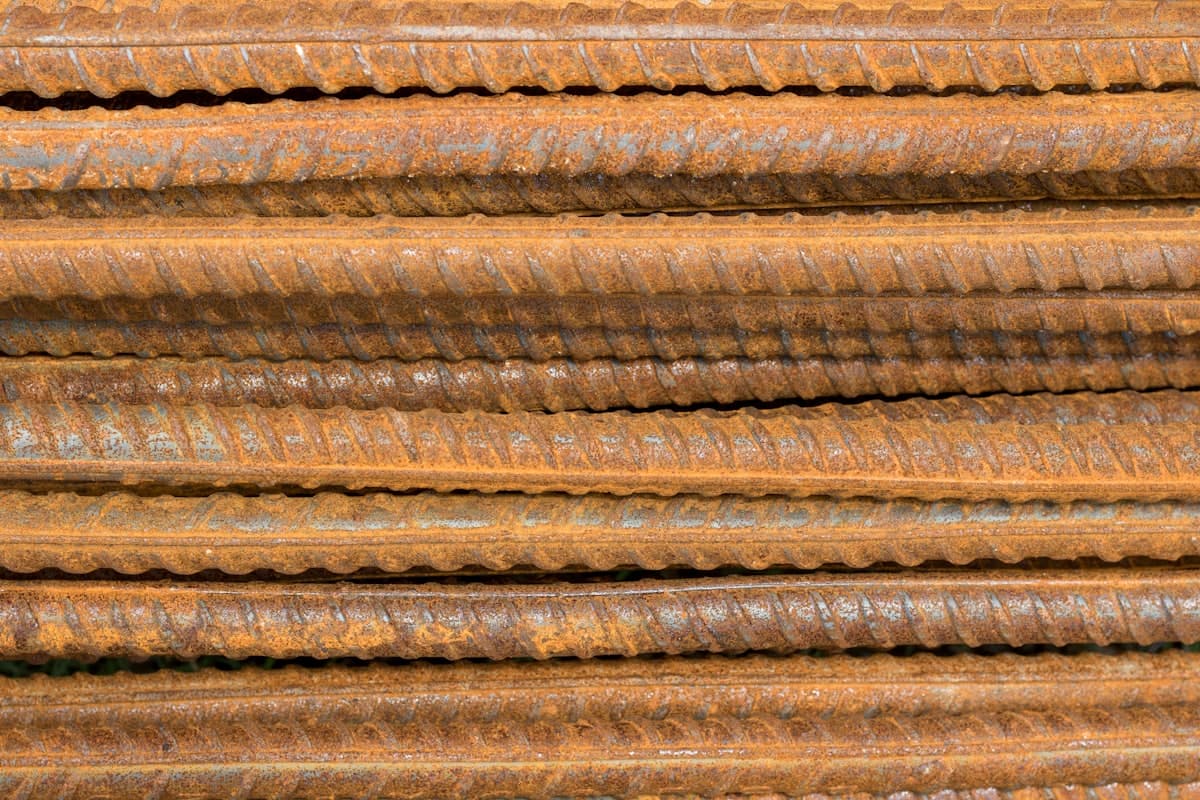
#3–#5 rebar
Reinforcing steel
Deformed bar tied in a grid and chaired into the middle third of the slab, where it can actually resist tension. Never laid on the base and pulled up during the pour.
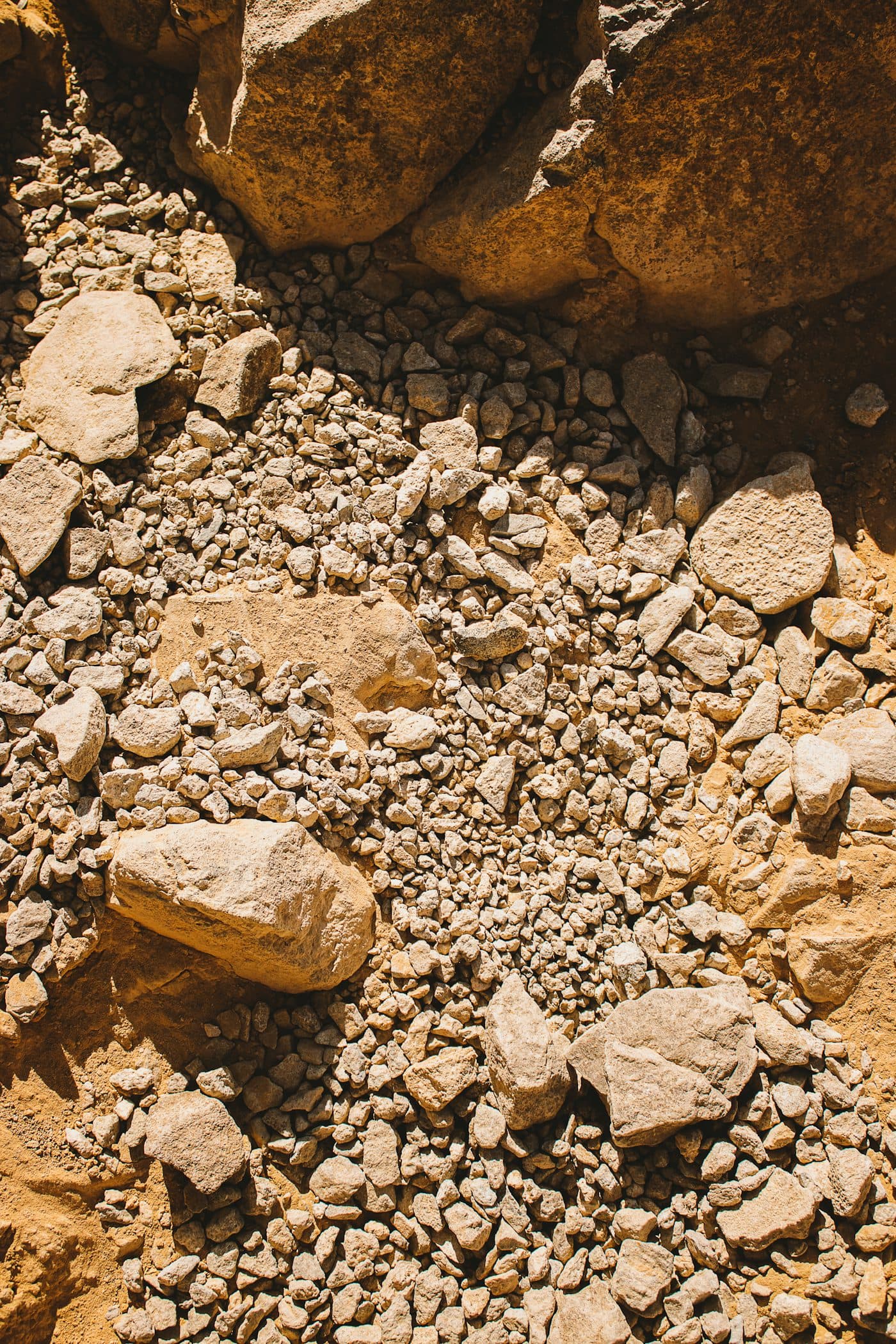
Class 2, 4–6"
Aggregate base
Crushed rock placed and compacted in lifts to 90–95%, graded to fall. This layer carries the load and lets water move instead of collecting under the slab.
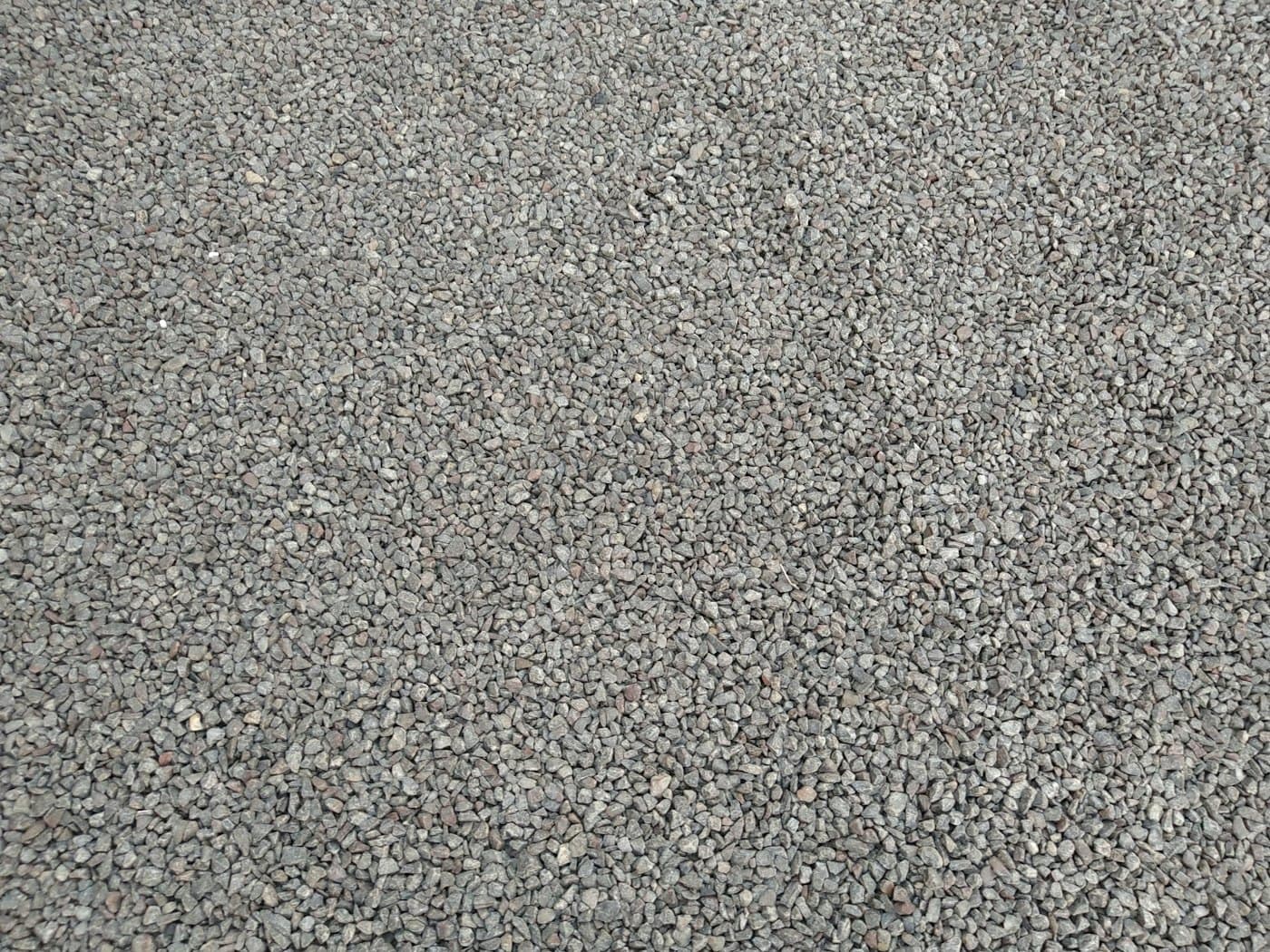
Penetrating silane
Sealers & densifiers
Penetrating sealers on decorative and exposed work, lithium densifiers on polished interior floors. Both protect from within rather than sitting as a film that peels.
Our Commitments
The Quality Promise Behind Every Pour
These aren't marketing lines — they're the terms written into our estimates, and what you can hold us to once the work is done.
Licensed & Fully Insured
General liability and workers' compensation on every job, so nothing happening on your property becomes your exposure. Certificates available on request.
Written Workmanship Warranty
Our work is backed in writing. If something isn't right because of how we built it, we come back and make it right — no argument about whose problem it is.
Free Written Estimates
On-site assessment, written scope, itemized price, no obligation. You'll never get a verbal number from us that drifts upward once the job starts.
Two Decades, Locally Owned
Twenty-plus years working this ground. We know how these soils move, how each city's permitting runs, and what actually fails here.
Site Safety Program
Trained crews, protected work zones, and maintained accessible routes — which matters as much on a residential driveway as it does on a live commercial site.
Site Left Clean
Debris hauled, forms pulled, surrounds swept and washed down. A job isn't finished until the area around it looks like we were never there.
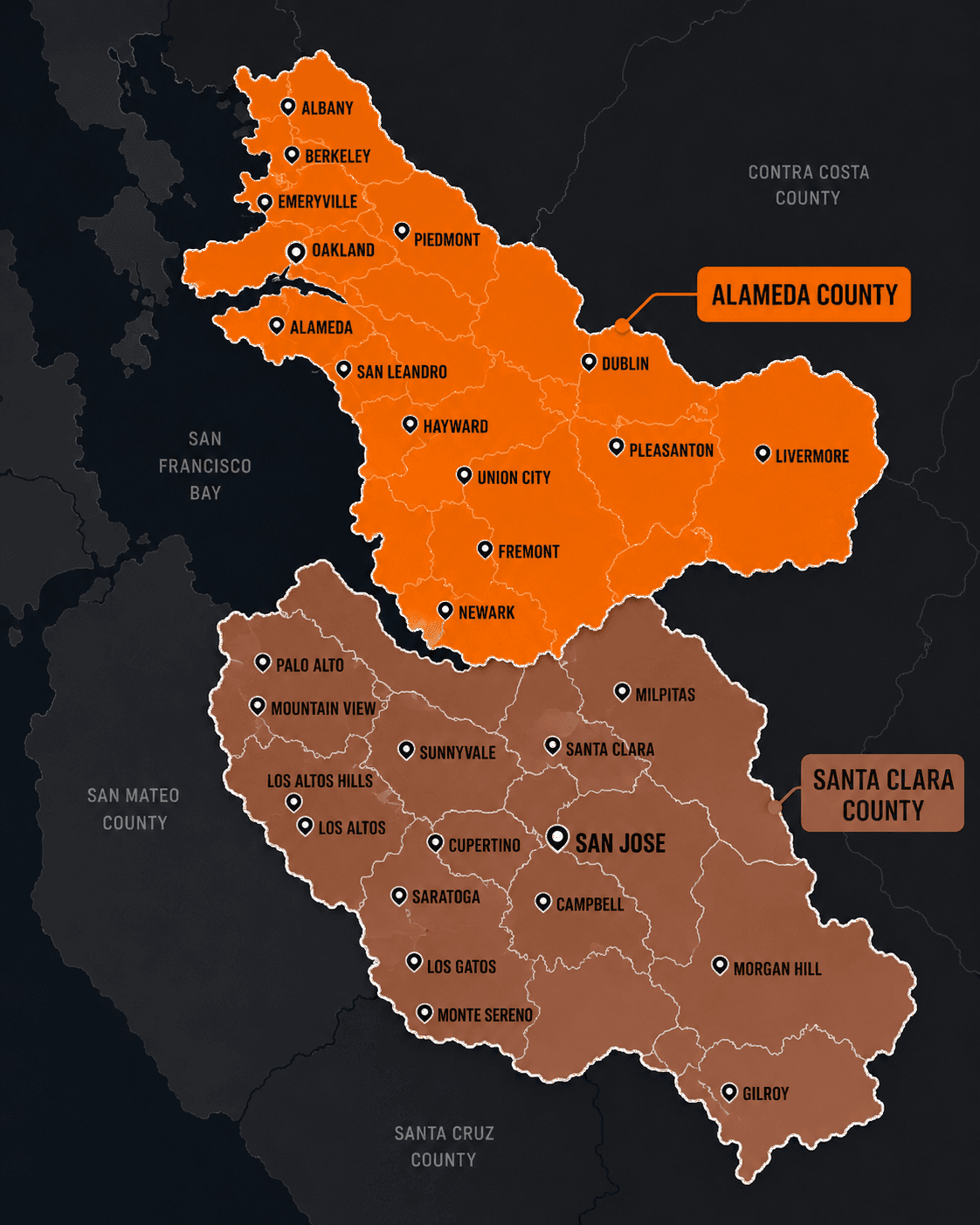
55 Cities Served
Santa Clara, Alameda, San Mateo & Santa Cruz counties
Service Area
Where We Work
We cover 55 cities across Santa Clara, Alameda, San Mateo, and Santa Cruz counties — from Palo Alto and San Jose through Oakland and Berkeley, out to Livermore and Gilroy, and down the Peninsula to Half Moon Bay and Santa Cruz.
Each city has its own page covering the housing stock, ground conditions, and the concrete problems that show up disproportionately there. It's local detail because a hillside driveway in Piedmont and a flat lot in Dublin genuinely aren't the same job.
Counties
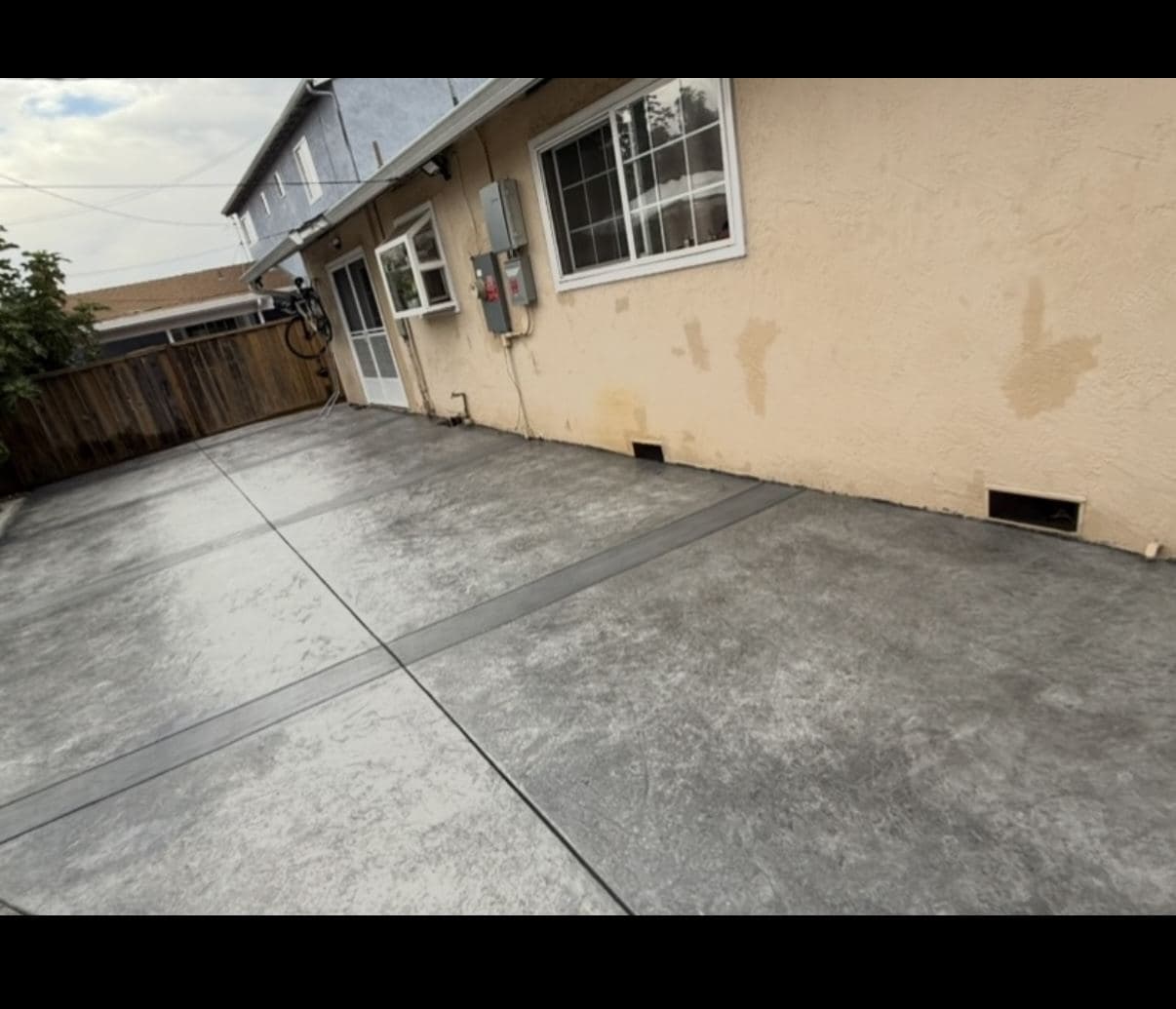
Look After It
Maintenance That Actually Extends Concrete's Life
Concrete is low-maintenance, not no-maintenance. Five habits do almost all of the work of keeping a slab in good condition for decades.
Reseal on a schedule, not on appearance
Every 2–3 yearsBy the time a surface looks like it needs sealing, it has already been absorbing water and de-icing salts for a season or two. Put it on the calendar instead: decorative and stamped work every two years, plain flatwork every three.
Keep joints clean and filled
AnnuallyControl joints exist so the slab cracks where you chose. Once they pack with grit and weeds, they stop moving freely and the slab cracks somewhere else. Clear them out and refill with a flexible sealant each year.
Move water away from the slab edge
Before each rainy seasonMost Bay Area concrete failures are water failures. Check that downspouts discharge past the concrete, that soil hasn't built up above the slab edge, and that the fall still runs away from the house before the first big storm.
Wash off oil and rust promptly
As it happensPetroleum breaks down the paste at the surface and rust stains penetrate deep enough to become permanent. Degreaser and a stiff brush within a few days is the difference between a clean slab and a marked one.
Skip rock salt entirely
AlwaysIt rarely gets cold enough here to need it, and salt drives chloride into concrete and corrodes the reinforcement underneath. If you ever do need traction, use sand — it costs nothing and does no damage.
Industries We Work With
Commercial concrete across the property types that make up the Bay Area's built environment.
Retail & Restaurants
Parking, storefront frontage, outdoor dining surfaces, and accessible entries — phased to keep you trading through the work.
Warehousing & Distribution
Industrial floor slabs, loading dock aprons, and truck circulation built to the equipment loads actually running on them.
Multifamily & HOA
Common-area walkways, drive aisles, and accessible route upgrades, with the documentation boards need for their records.
Healthcare & Schools
Accessible routes, entries, and parking built to code on properties where compliance genuinely isn't optional.
Every Scope We Handle
Smaller pieces of work that sit within the services above rather than having pages of their own. If it's flat, structural, and concrete, it's on this list.
Residential
- Driveways and vehicle aprons
- Patios and outdoor living areas
- Pool decks and surrounds
- Garage and workshop floors
- Hot tub and equipment pads
- Steps, landings, and stoops
- RV and boat parking pads
Commercial
- Parking lots and drive aisles
- Loading docks and truck aprons
- Industrial and warehouse floors
- Foundations, footings, and slabs
- Sidewalks and accessible routes
- Curbs, gutters, and wheel stops
- Trash enclosure and equipment pads
- Courtyards and pedestrian plazas
Every Service, in One Place
Flatwork covers the surfaces you walk and park on. Structural concrete carries buildings and heavy commercial loads.
Concrete Knowledge Center
Guides Worth Reading Before You Hire Anyone
Written to be genuinely useful whether or not you use us — how to compare quotes, when repair beats replacement, and what actually makes concrete last.
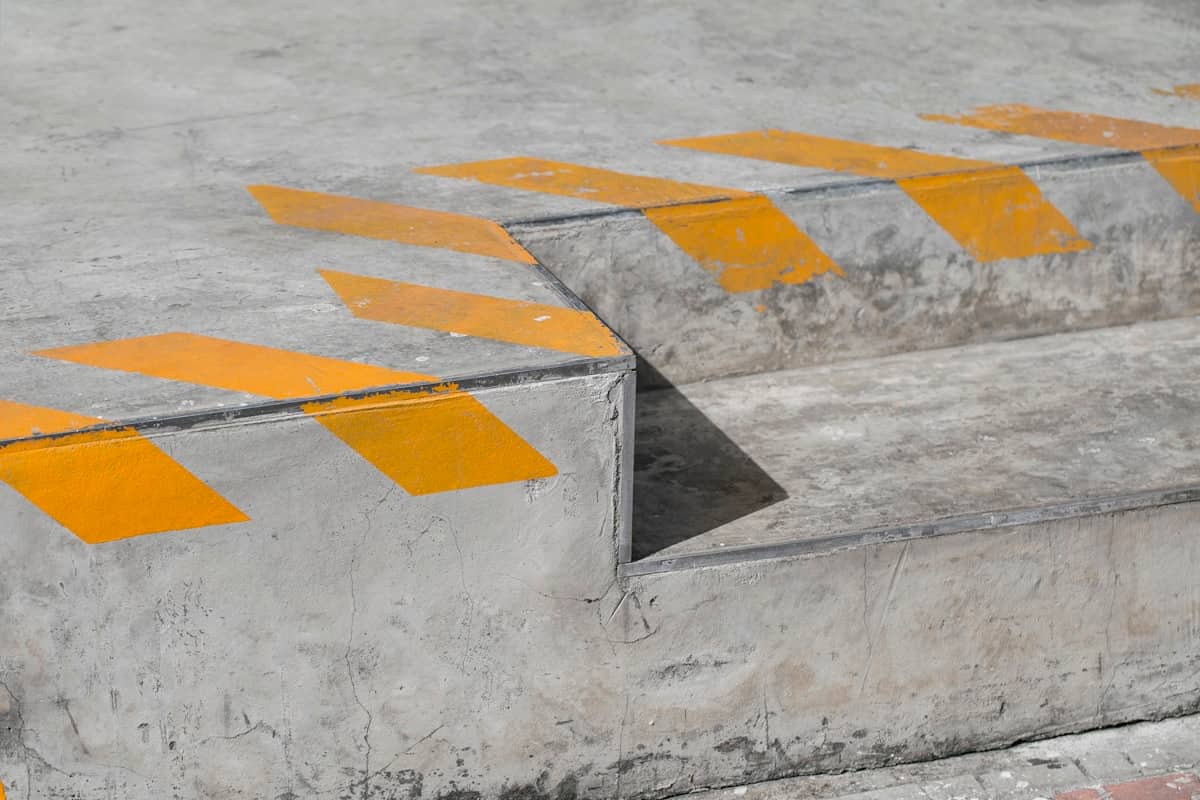 Guide
GuideWhat Is Concrete? A Plain-English Explanation
What concrete is actually made of, why it isn't cement, and what happens chemically between the pour and thirty years later.
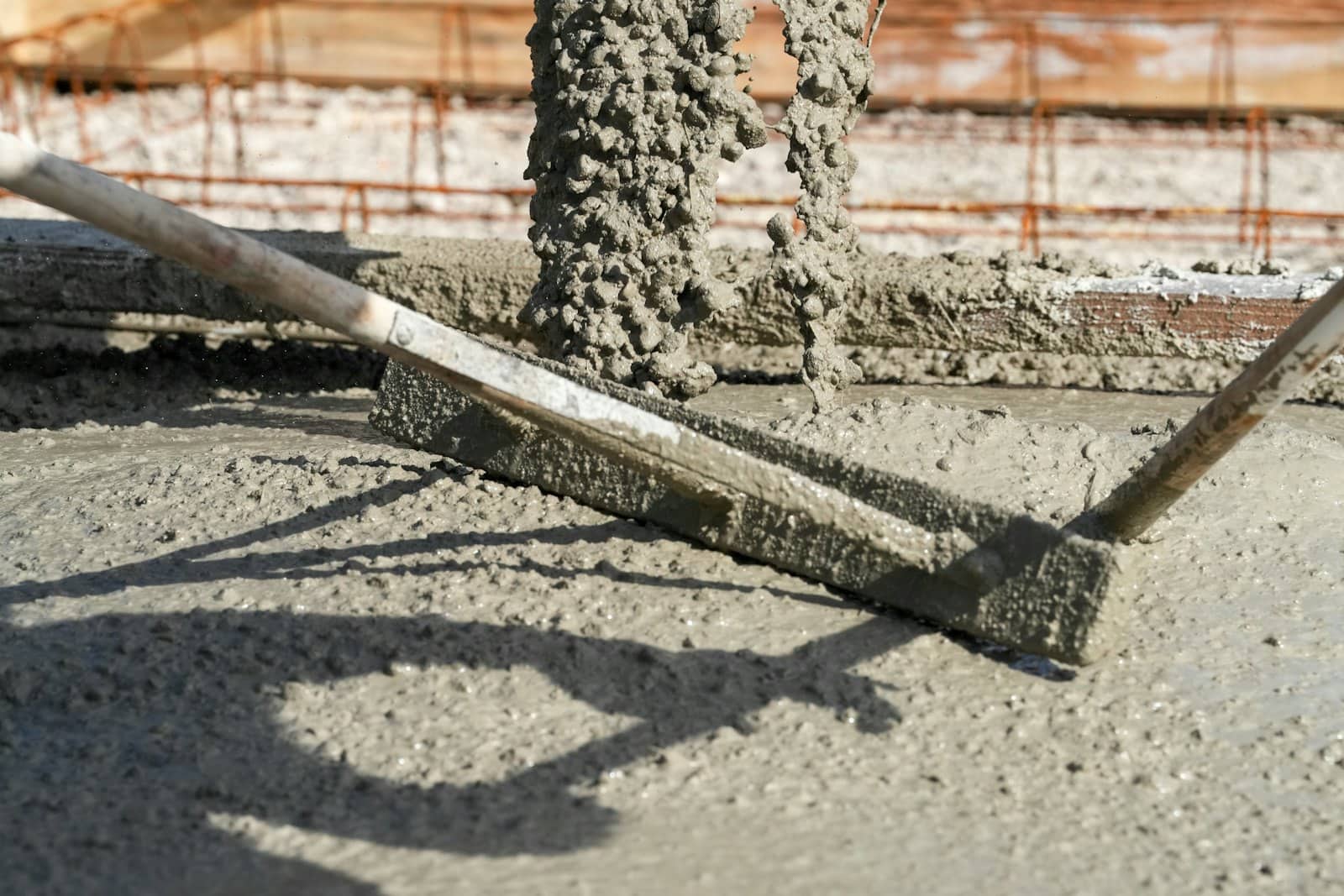 Guide
GuideHow Long Does Concrete Take to Cure?
When you can walk on it, drive on it, park heavy loads on it, and seal it — with the reasoning behind each number.
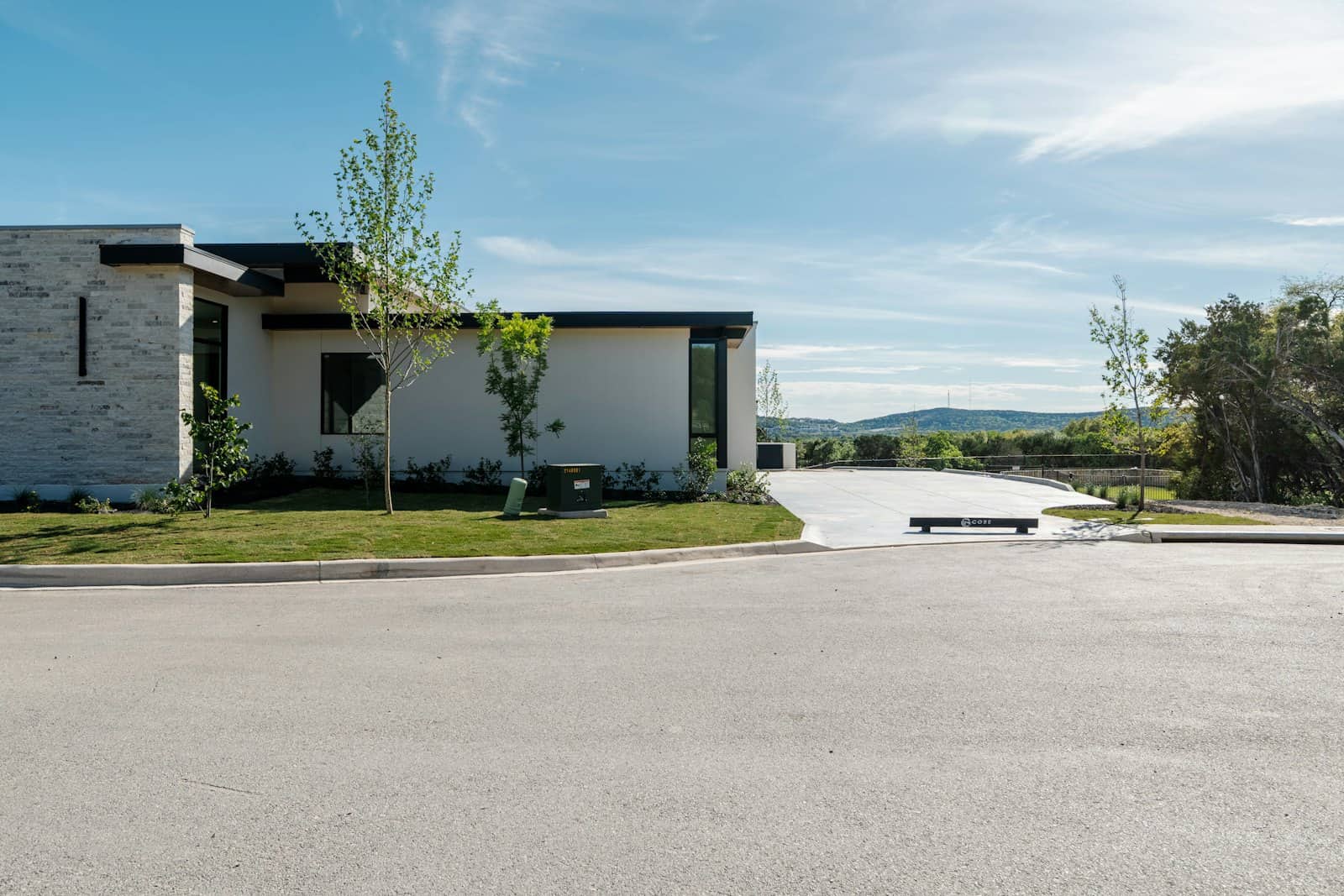 Guide
GuideHow Long Does a Concrete Driveway Last?
The honest lifespan range, the five variables that decide where you land in it, and how to tell which one your driveway got.
Common Questions
Quick answers to what we get asked most. Our full FAQ covers considerably more ground.
Get a Free Written Estimate
Call or text (669) 200-9478, or send us the details and we'll come back to you the same business day. Serving San Jose & the greater Bay Area.
Everything, One Click Away
Explore the Whole Site
22 concrete services, 55 cities across 4 counties, and 35 in-depth guides — indexed here so you never have to hunt for anything.