Quick answer
Is a concrete driveway better than asphalt?
For most Bay Area homeowners, yes. Concrete lasts 30–50 years against asphalt's 15–20, needs far less routine maintenance, and offers decorative options asphalt can't match. Asphalt costs roughly half as much to install, tolerates ground movement better, and can be resurfaced cheaply — which makes it the better choice for long rural drives, very tight budgets, and unstable ground.
- Concrete lifespan
- 30–50 years
- Asphalt lifespan
- 15–20 years
- Install cost ratio
- Asphalt ≈ half
- 30-year total cost
- Concrete usually lower
We pour concrete for a living, so it's worth being upfront: there are real situations where asphalt is the better answer, and we'll say so on a site visit rather than sell you a slab you don't need. The comparison below is written to be useful whichever way you end up going.
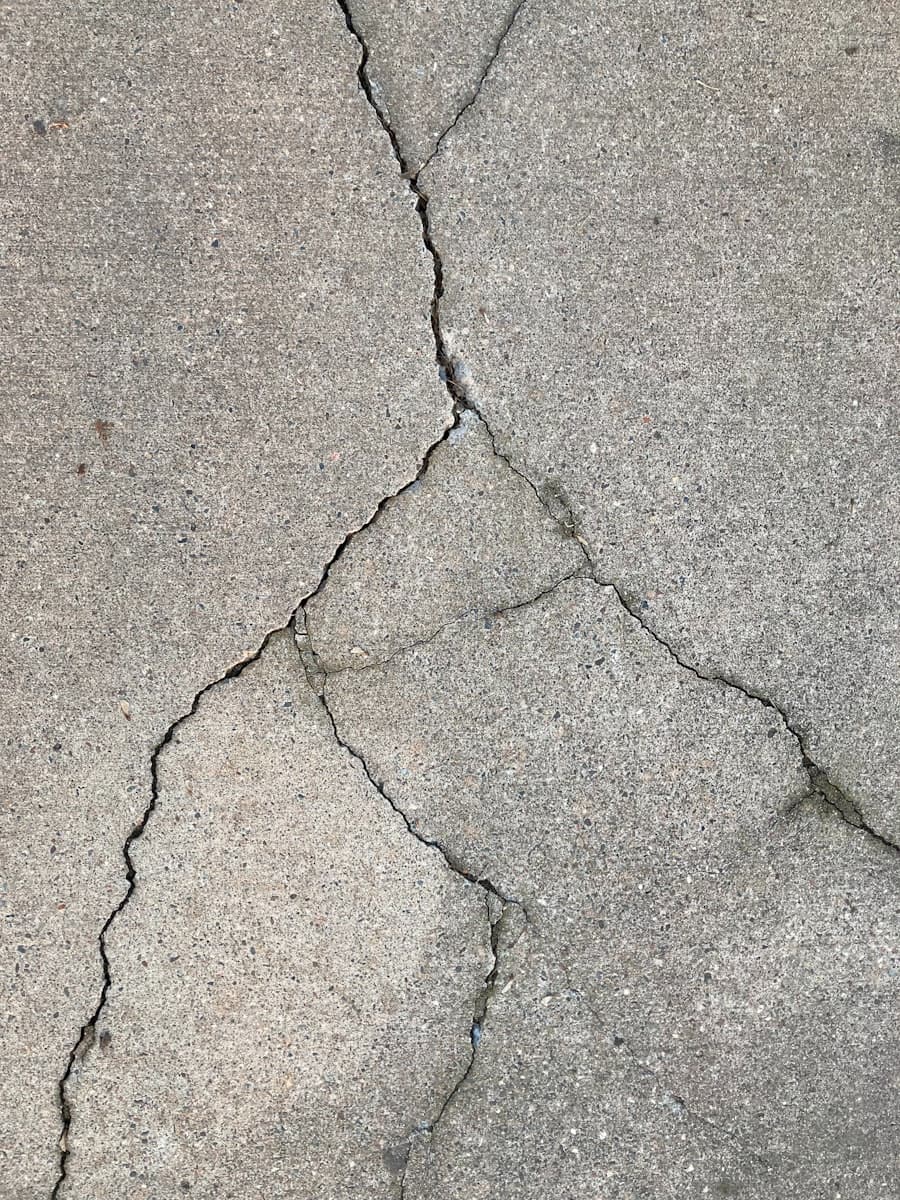
The two materials fail differently, which is the key to the whole comparison. Concrete is rigid — it distributes load across a wide area and resists deformation, but when the ground beneath it moves unevenly, it cracks. Asphalt is flexible — it deforms with the ground rather than cracking, but it also deforms under sustained load, softens in heat, and oxidises in sunlight from the day it's laid.
Cost and lifespan side by side
The comparison, line by line
| Concrete | Asphalt | |
|---|---|---|
| Install cost (Bay Area) | $12–$18 / sq ft | $6–$10 / sq ft |
| Service life | 30–50 years | 15–20 years |
| Routine maintenance | Seal every 2–3 years, fill cracks as needed | Sealcoat every 2–3 years, crack fill annually, resurface at 10–15 |
| Time before use | 7 days for cars, 28 for heavy loads | 24–72 hours, though it stays soft for months |
| Appearance options | Color, stamping, exposed aggregate, staining, banding | Black. Fades to gray. |
| Heat behavior | Stays cool, reflects light | Absorbs heat, softens above roughly 120°F surface temperature |
| Ground movement | Cracks — repairs are visible | Flexes and follows — repairs blend in |
| Repairability | Patches are visible; panel replacement is clean | Patches blend after sealcoating; resurfacing is cheap |
| Oil and fuel resistance | Stains if unsealed, but structurally unaffected | Petroleum dissolves the binder — spills cause real damage |
| Resale perception | Reads as a permanent improvement | Reads as a serviceable surface |
The thirty-year arithmetic
Install price is the number everyone compares, and it's the least informative one. Run both materials over a realistic ownership period on a 600 square foot driveway and the picture inverts.
Concrete: roughly $9,000 to install. Resealing every three years at around $400 a time is about $4,000 over thirty years. Occasional crack repair, call it $1,000. Total in the region of $14,000, and at the end of it you still have a driveway.
Asphalt: roughly $4,800 to install. Sealcoating every three years at around $500 is $5,000 over thirty years. A resurface at year 15 is another $3,000 or so. A full replacement at year 20 to 25 is $5,000 more, with its own sealcoating schedule following. Total in the region of $18,000, and the surface is mid-life again.
Those are indicative numbers, not a quote, and they'll shift with your specific site. But the shape of the comparison is consistent: asphalt is cheaper on the day and more expensive across the life of a house.
Where each material genuinely wins
Both materials have real advantages. The right answer depends on your site, your budget horizon, and what you want the driveway to look like.
Concrete
Rigid, long-lived, and the only option with meaningful design possibilities.
Pros
- Two to three times the service life
- Far lighter maintenance burden — no annual crack filling, no sealcoating a soft surface
- Stays cool underfoot and reflects light, which matters in an inland summer
- Decorative options: color, stamping, exposed aggregate, saw-cut banding, borders
- Unaffected by oil, fuel, and hot tires
- Reads as a permanent property improvement at resale
Cons
- Roughly double the install cost
- Repairs and patches are visible — color matching old concrete is effectively impossible
- Needs 7 days before cars and 28 before heavy loads
- Cracks rather than flexing when the ground moves
Verdict — The right call for the large majority of Bay Area residential driveways, where ground conditions are manageable and the driveway is a visible part of the property.
Asphalt
Flexible, cheap to install, cheap to resurface, and forgiving of movement.
Pros
- About half the install cost
- Usable within a couple of days
- Flexes with ground movement instead of cracking
- Patches and repairs disappear after sealcoating
- Resurfacing is inexpensive — a new wearing course over a sound base
- Cost-effective over long runs where square footage is large
Cons
- Half to a third of the lifespan
- Continuous maintenance commitment — sealcoating every 2–3 years, indefinitely
- Softens in heat; stands, jacks, and kickstands leave permanent dents
- Petroleum spills dissolve the binder
- Fades from black to gray and stays gray between sealcoats
- No design options at all
Verdict — Genuinely the better choice for long rural drives, sites with active ground movement, and situations where the upfront budget is the binding constraint.
How to decide
Five questions that resolve the choice for most people.
How long will you own the house?
Under seven years and asphalt's lower entry price is hard to argue with — you won't reach the point where concrete's longevity pays. Over fifteen, concrete is almost always the better financial decision.
How visible is the driveway?
A short driveway in front of the house is a major visual element and a decorative concrete finish transforms the frontage. A long approach behind a gate is a surface, and asphalt is a perfectly good surface.
How big is it?
The cost difference scales with area. On 500 square feet the gap is a few thousand dollars. On 3,000 square feet of rural driveway, it's the difference between a project and a non-starter.
What's the ground doing?
Documented ground movement, an active slide, or heavily expansive soil that's already broken a previous slab is a genuine argument for asphalt, which follows the ground rather than fighting it.
How much maintenance will you actually do?
Be honest here. Asphalt punishes neglect quickly and visibly; unsealed asphalt deteriorates within a few years. Concrete tolerates being ignored far better — it just gets stained and dull rather than failing.
What about pavers and gravel?
The comparison isn't strictly binary, and two other options come up often enough to address.
Interlocking pavers cost more than concrete — typically $18–$30 per square foot installed — and share concrete's need for excellent base preparation. Their real advantage is repairability: a settled area can be lifted, the base corrected, and the same pavers reset invisibly. Their disadvantage is joints, which need sand topping up and grow weeds, and a surface that's harder to shovel, sweep, and roll things across.
Gravel is by far the cheapest option and has a legitimate place on long rural drives. It needs topping up, migrates into the surrounding landscape, is poor for wheelchairs, strollers, and bikes, and creates dust in summer and ruts in winter. For a suburban driveway it's a false economy, but on a quarter-mile approach it can be the only sensible answer.
Concrete vs. asphalt questions
If concrete is the answer
Key takeaways
- Concrete lasts 30–50 years; asphalt 15–20. Asphalt costs about half as much to install.
- Over thirty years, concrete is usually the cheaper option once recurring sealcoating and resurfacing are counted.
- Asphalt's flexibility is its real advantage — it belongs on moving ground and long rural drives.
- The Bay Area's lack of freeze-thaw removes asphalt's main climate advantage; our inland summers work against it.
- Never pour concrete directly onto asphalt, and be sceptical of asphalt laid over old concrete.
- If you're selling within seven years, asphalt's lower entry cost is a reasonable call. Beyond fifteen, concrete wins.
Still deciding?
Ask us about your specific project
We'll give you a straight answer on the phone, including when that means telling you that you don't need the work you asked about. Free written estimates across San Jose & the greater Bay Area.