Flatwork
Concrete Restoration — Injection, Spall Repair & Structural Patching
Crack injection, spall repair, and structural patching for concrete that's failing but doesn't need to be torn out.
- Methods
- Injection, patching, structural repair
- Crack repair
- Epoxy dormant · urethane active
- Prep
- Saw-cut edges, never feathered
- Estimates
- Free & written
Concrete Restoration — At a Glance
Crack injection, spall repair, and structural patching for concrete that's failing but doesn't need to be torn out. Dueling Trowels Concrete Solutions provides concrete restoration services across 55 cities in Santa Clara, Alameda, San Mateo, and Santa Cruz counties, including San Jose, Oakland, Fremont, and Sunnyvale. Licensed, insured, and backed by a written workmanship warranty. Free written estimates.
Restore vs. Replace
Failing Concrete Isn't Automatically Finished Concrete
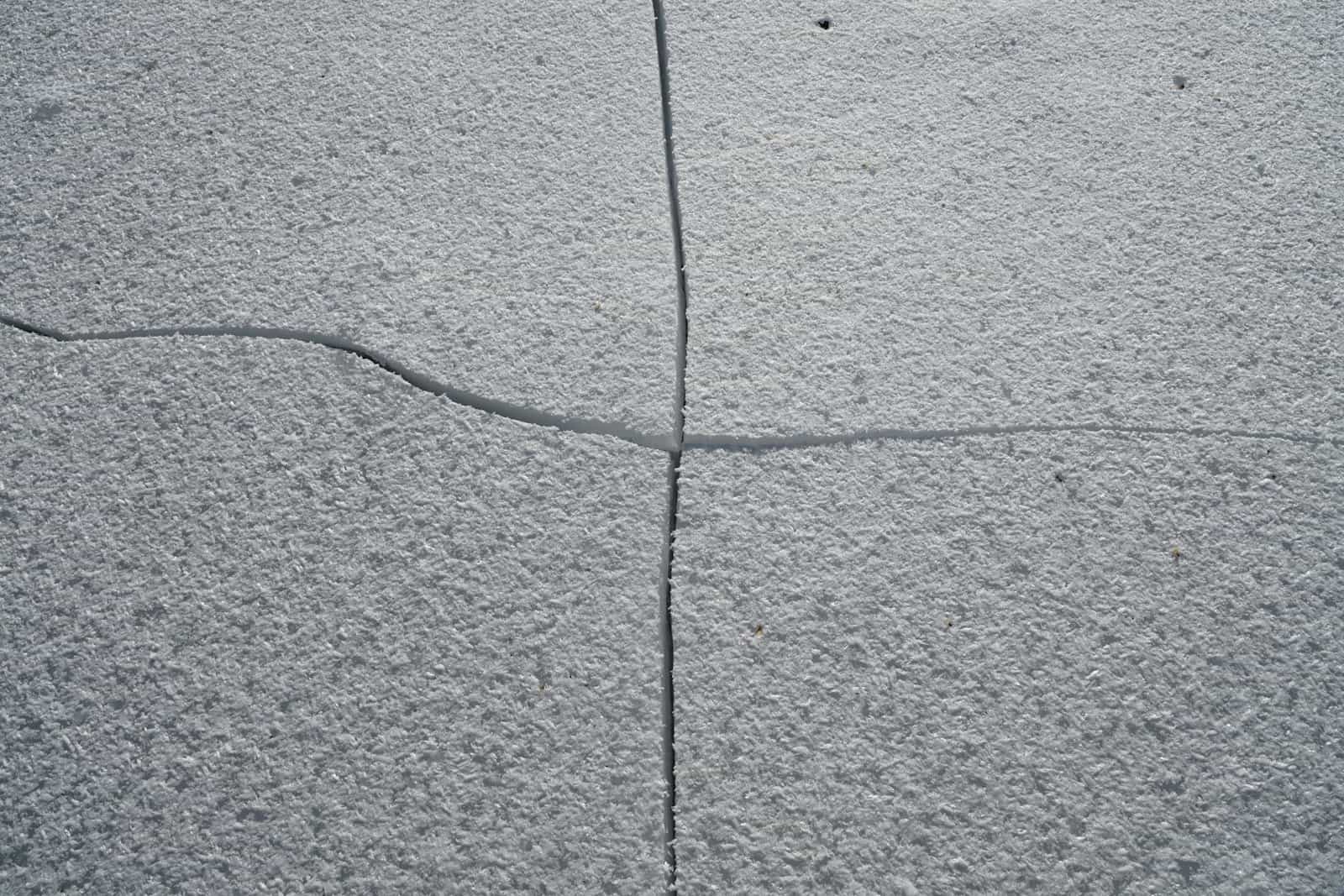
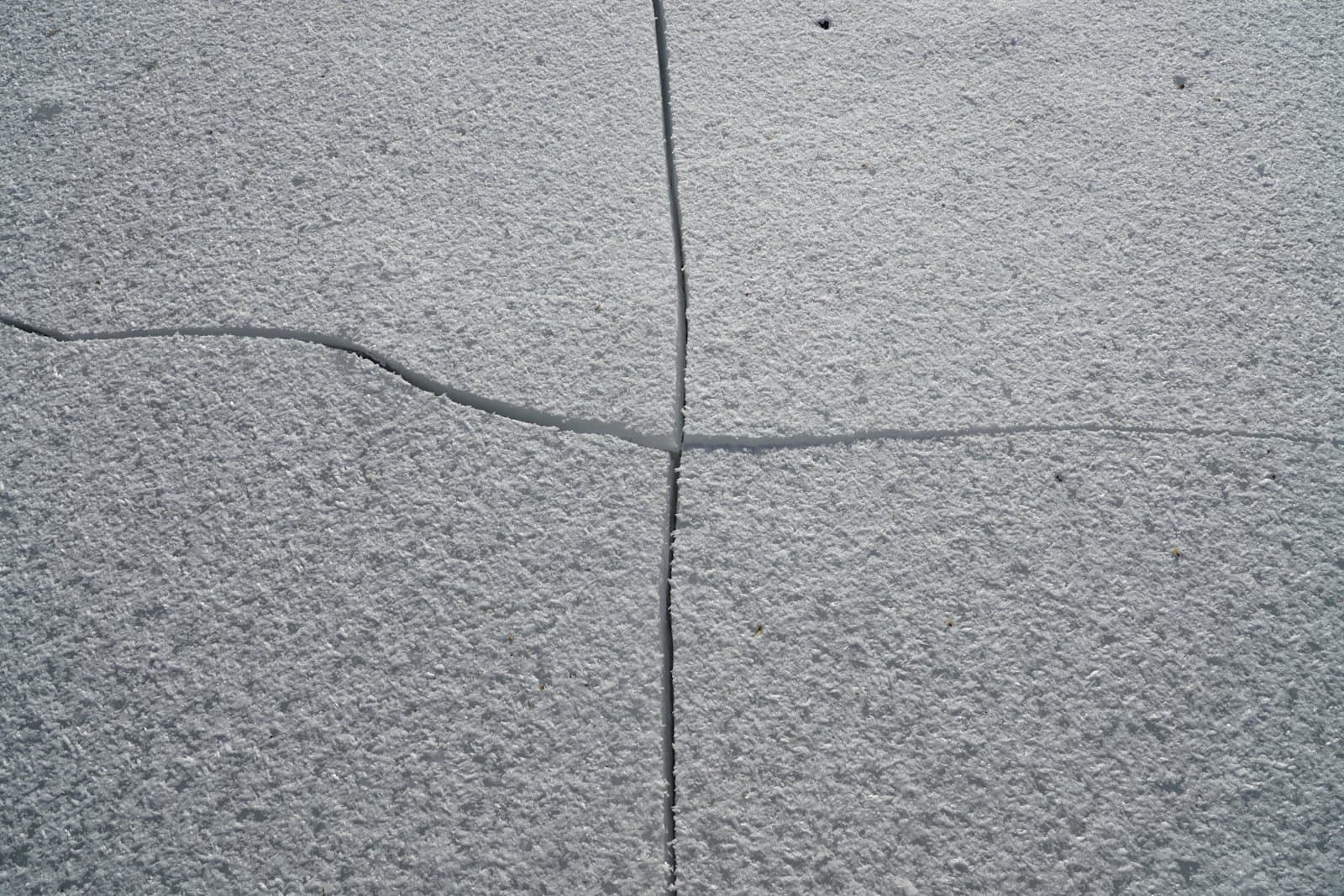
Restoration is the middle ground between sealing a cosmetic crack and demolishing a slab. It applies when concrete has real damage — cracks that run deep, corners breaking away, rebar starting to rust through the cover — but the element underneath is still sound enough to keep carrying what it was built to carry.
That distinction is worth money. Tearing out and repouring a loading dock, a garage slab, or a foundation wall means demolition, haul-off, new material, and the downtime that comes with all of it. Restoring the same element is a fraction of the disruption when the concrete qualifies — and the honest part of this work is telling you when it doesn't.
What we won't do is patch over a symptom. If a slab is cracking because the soil under one corner is moving, injection is decoration. The restoration only holds when the cause has been dealt with first.
- Cracks injected rather than routed and caulked
- Spalled areas cut back to sound concrete, not feathered
- Corroding rebar cleaned and coated before patching
- Cause diagnosed before any repair material is ordered
The Three Repairs That Cover Most Restoration Work
Different failures need genuinely different materials. Using the wrong one is the reason so many previous repairs are sitting failed on the slab we're asked to look at.
Epoxy Injection
A structural repair. Low-viscosity epoxy is injected under pressure into a dormant crack through surface ports, filling it end to end and bonding the two faces back into one monolithic element. Cured epoxy is stronger than the concrete around it — which is why it's only appropriate on cracks that have stopped moving.
Polyurethane Injection
A water-stopping repair. Polyurethane reacts with moisture and foams to fill an actively leaking crack in a basement wall, retaining wall, or below-grade slab. It stays flexible, so it tolerates a crack that still moves seasonally — but it seals water out rather than restoring structural continuity.
Spall & Patch Repair
For concrete that has broken away at a joint, edge, or corner, or delaminated in sheets. The area is saw-cut back to a square shoulder, chipped to sound material, any exposed rebar cleaned and coated, then rebuilt with a bonded polymer-modified repair mortar matched to the slab's strength.
How a Restoration Job Actually Runs
The order matters. Most failed repairs we're called to inspect skipped one of the first two steps.
Diagnose the cause
Crack pattern, width, depth, and whether it's still moving. We mark and measure across the crack and, where the history is unclear, come back to check it rather than guessing. Diagonal, stepped, and widening cracks get treated as structural until proven otherwise.
Sound the surrounding concrete
Chain drag or hammer sounding maps the delaminated area, which is almost always larger than the part that has visibly broken away. Patching only what you can see is how a repair ends up ringing hollow six months later.
Prepare to sound material
Saw-cut a square perimeter at least a half inch deep — no feathered edges, which fail first — then remove the unsound concrete back to solid material and profile the substrate so the repair mortar has something to grip.
Treat exposed reinforcement
Where corroding rebar caused the spall, the bar is exposed fully around its circumference, cleaned back to bright steel, and coated. Patching over rusting steel guarantees the same spall returns, because the corrosion keeps expanding underneath.
Inject, patch, and cure
Cracks injected port to port until they refuse material; patches placed in lifts against a bonding agent and finished to match the surrounding texture. Repair mortars are cured on the same discipline as new concrete — most patch failures are cure failures.
When Restoration Is the Right Call
We give this assessment in writing, including the case where the answer costs us the restoration job.
Restore When
- The damage is localized — joints, edges, corners, isolated cracking
- The slab or wall is still structurally sound outside the damaged area
- Movement has stopped, or the cause has been corrected
- Reinforcement corrosion is limited to specific, reachable bars
- Downtime matters more than resetting the clock on the element
Replace When
- Cracking is widespread across the slab rather than in defined areas
- The base or subgrade under it has failed and needs rebuilding
- Repairs already cover a large share of the surface area
- Reinforcement is corroded through over a broad area
- Grade, drainage, or thickness were wrong from the original pour
A Crack That's Still Moving Won't Hold Epoxy
Epoxy injection bonds a crack rigidly. If the concrete is still moving — seasonal soil expansion, ongoing settlement, thermal cycling on an unjointed slab — the element will simply crack again beside the repair, and now you have two cracks. Establishing whether a crack is dormant is the first thing we do, and on an ambiguous one that means monitoring it over time rather than injecting it on the first visit.
Where Restoration Gets Called For
Restoration work concentrates on the elements that take the most abuse and the ones where replacement is most disruptive.
Residential
- Garage slabs cracked or spalling at the door line
- Foundation and stem walls with dormant cracks that need closing
- Retaining walls weeping water through a crack after a wet winter
- Pool deck and patio edges breaking away at joints
- Steps and landings with broken nosings and exposed rebar
Commercial
- Joint spalling in warehouse floors under forklift traffic
- Loading dock edges and truck aprons broken at the impact line
- Parking structure slabs with delamination and corroding rebar
- Below-grade walls with active water infiltration
- Equipment pads cracked around anchor bolts
Concrete Restoration Questions
More Concrete Flatwork Services
Related work we handle, often on the same project as this one.
Often Quoted Alongside This
Work from our other category that regularly shows up on the same site visit.
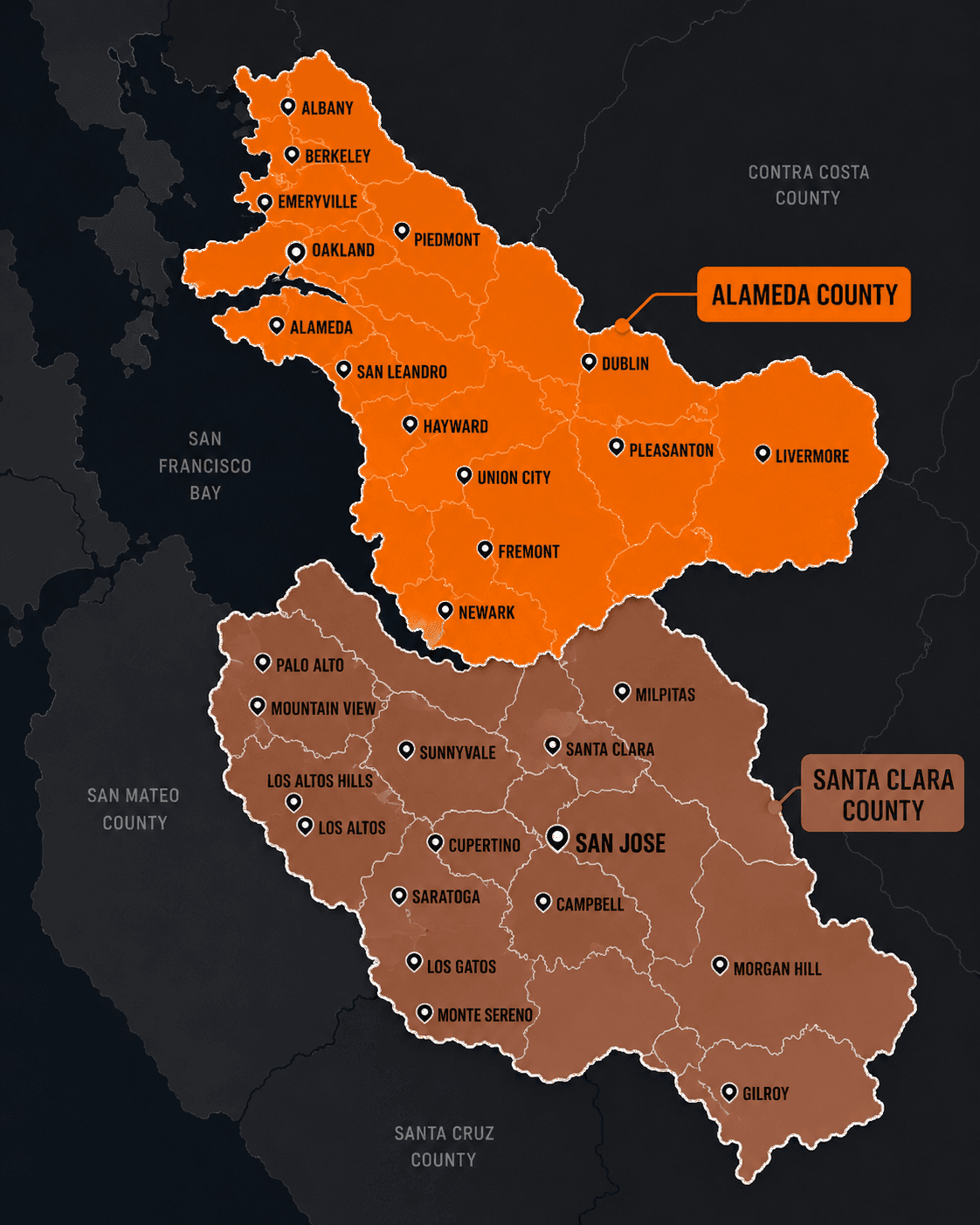
55 Cities Served
Santa Clara, Alameda, San Mateo & Santa Cruz counties
Service Area
Where We Provide Concrete Restoration
We provide concrete restoration across 55 cities in Santa Clara, Alameda, San Mateo, and Santa Cruz counties. Ground conditions, permitting, and the failure modes we see vary city by city, so each has its own page.
Counties
Read Before You Decide
Guides from our Learning Center that bear directly on this kind of work.
Send Us Photos of the Damage
A few clear photos and a rough age for the concrete are usually enough for us to tell you whether you're looking at a restoration, a resurfacing, or a replacement — before anyone comes out.