Flatwork
Concrete Sawing, Cutting & Core Drilling
Diamond blade saw cutting and core drilling for joints, utility penetrations, and demo work — scanned for rebar before every cut.
- Core diameter
- 1" to 12"+
- Joint depth
- Quarter of slab thickness
- Scanning
- GPR or X-ray before structural cuts
- Estimates
- Free & written
Sawing & Coring — At a Glance
Diamond blade saw cutting and core drilling for joints, utility penetrations, and demo work — scanned for rebar before every cut. Dueling Trowels Concrete Solutions provides sawing & coring services across 55 cities in Santa Clara, Alameda, San Mateo, and Santa Cruz counties, including San Jose, Oakland, Fremont, and Sunnyvale. Licensed, insured, and backed by a written workmanship warranty. Free written estimates.
01
Two Different Jobs That Both Cut Concrete
Saw cutting and core drilling solve different problems and use different equipment, even though both remove cured concrete with a diamond edge.
Saw cutting uses a diamond blade — wet-cut on a walk-behind or handheld saw — to make a straight linear cut. That's how control joints get placed, how a slab gets flush-cut for a utility trench, how a section gets isolated for demo without cracking the surrounding concrete, and how a decorative score line gets scribed into a driveway.
Core drilling uses a hollow diamond bit spinning on a rig, water-fed to keep the bit cool, to bore a clean round hole straight through a slab or wall. Cores run anywhere from about an inch up to twelve inches or more in diameter, and they're how plumbing stacks, electrical conduit, and HVAC lines get through existing concrete without breaking out a section by hand.
Both are precision work in a way that demolition isn't. A saw cut that wanders off line ruins a joint pattern. A core drilled six inches off center misses the pipe run it was supposed to clear. We lay out every cut and every core off actual measurements before the blade or bit ever touches the slab.
The Equipment Behind Both Techniques
Real numbers, because they're what determine what a given job needs.
Wet Diamond Blade Saws
Walk-behind saws cut control and expansion joints typically 1/8" to 1/4" wide and a quarter of the slab depth. Handheld saws handle flush cuts and demo isolation lines in tighter spots a walk-behind can't reach.
Diamond Core Bits
Water-cooled bits from roughly 1" diameter for anchor bolts and small conduit up to 12"+ for HVAC penetrations and structural investigation cores. The rig anchors to the slab so the hole comes out round and plumb, not oval.
Slurry Containment
Wet cutting and coring produce a cement slurry that has to be vacuumed and contained as it's generated, not hosed off into a drain. We run wet-vac extraction on every cut so the slurry doesn't dry into dust or wash into a storm system.
We Scan Before We Cut
Cutting or coring blind into a slab that has rebar or post-tension cable in it is how you sever structural steel or, worse, hit a live conductor buried in a tensioned floor. Before any cut near a load-bearing element, joint, or existing utility, we run ground-penetrating radar or X-ray scanning to map what's underneath and mark a safe path. It's a step that takes an hour and prevents a repair bill — or an injury — that costs a great deal more.
When This Gets Called For
Cutting and coring show up constantly on existing slabs — new construction rarely needs either, since joints and sleeves get planned in before the pour.
Residential
- Retrofitting control joints into a slab that was never jointed correctly and is now cracking randomly
- Coring for a new plumbing line, drain, or electrical conduit under an existing patio or garage floor
- Flush-cutting a trench line for irrigation or a gas line run
- Isolating a cracked or spalled section for repair without disturbing the rest of the slab
- Decorative score lines added to an existing plain slab
Commercial
- HVAC and plumbing penetrations through elevated slabs and warehouse floors
- Anchor bolt holes for racking, equipment pads, or structural bracing
- Utility trenching across a parking lot or loading area
- Structural investigation cores pulled for lab testing before a renovation or addition
- Saw-cut demo lines that isolate a section for tenant improvement work without cracking adjacent slab
The Joint-Layout Problem This Actually Fixes
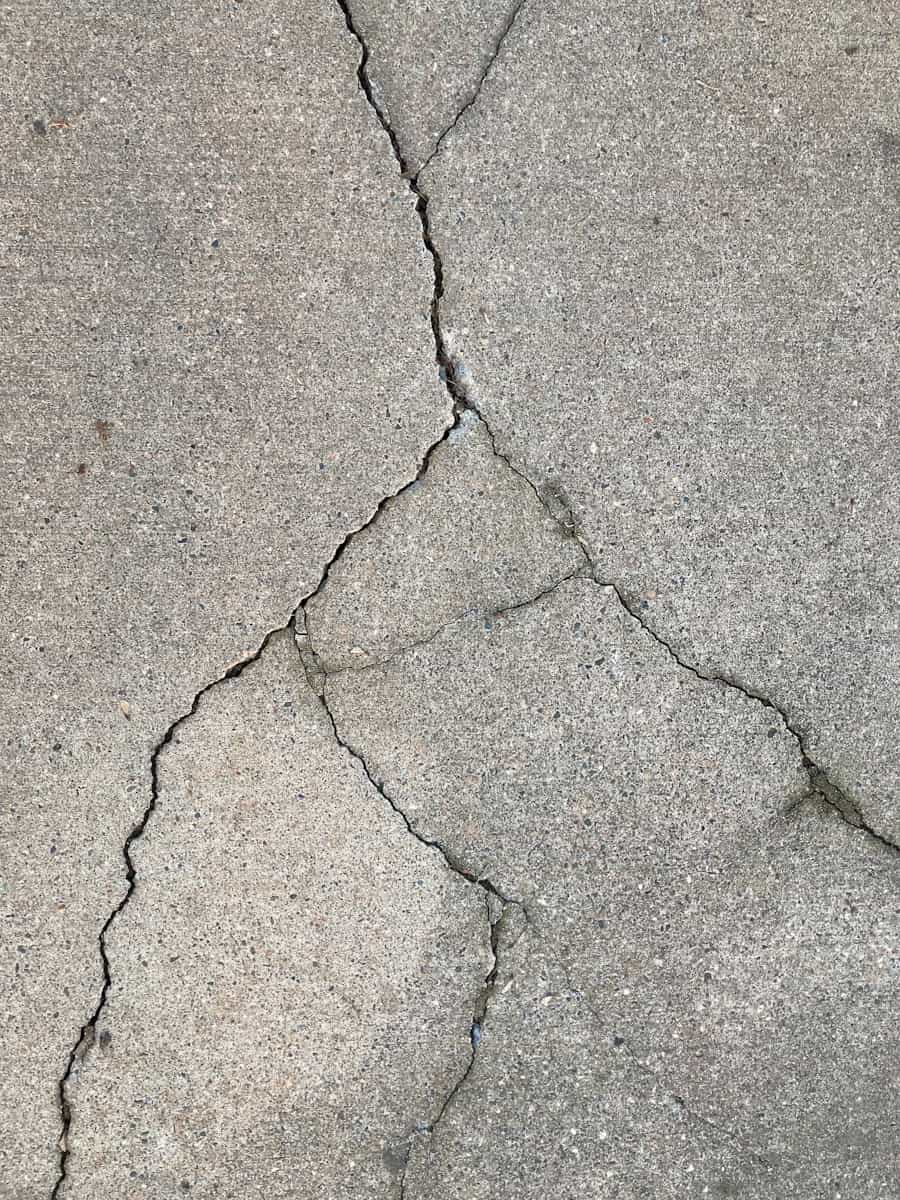
A recurring issue we see on existing flatwork: a slab was poured with joints spaced too far apart, or not cut deep enough, or not cut at all, and it's now cracking in random locations instead of the joint lines that should have controlled it. Once concrete has already cracked, you can't undo that — but you can retrofit joints into the uncracked sections to keep the rest of the slab from following the same pattern.
That's a saw-cutting job, not a repair or replacement job, and it's usually the cheapest fix available for a slab that's otherwise structurally sound. It only works as a preventive measure, though — cutting a joint after a crack has already formed next to where the joint should have been doesn't repair the existing crack.
How a Cutting or Coring Job Runs
The scanning step is non-negotiable — everything else follows from knowing what's in the slab.
Site consultation and utility review
We review as-built drawings, utility maps, or any other documentation about what's in or under the slab. Where drawings don't exist or are unreliable, we plan to scan.
GPR or X-ray scanning
Ground-penetrating radar maps rebar, conduit, and post-tension cable in the slab before any cut is marked. On sensitive structural elements or thicker slabs, X-ray is used instead. The scan print becomes the cut-layout sheet.
Layout and mark
Cut lines and core centers are laid out off hard measurements, not estimated by eye. Every line is marked on the slab so the saw or drill operator is following a defined path, not making a judgment call.
Cut or core with water suppression
Wet diamond blade or wet-core drill, with slurry vacuumed continuously as it's generated. No dry cutting, no slurry run to the drain.
Slurry extraction and site cleanup
Cement slurry has to be contained and removed, not left to dry on site or washed into a storm system. We extract it during the cut and dispose of it off site.
Sleeve placement or handoff
For utility penetrations, sleeves are set in the core before we leave so the trade following us has a clean, sized opening to work from. For structural investigation cores, the sample is packaged and labeled for lab testing.
Cutting & Coring Questions
More Concrete Flatwork Services
Related work we handle, often on the same project as this one.
Often Quoted Alongside This
Work from our other category that regularly shows up on the same site visit.
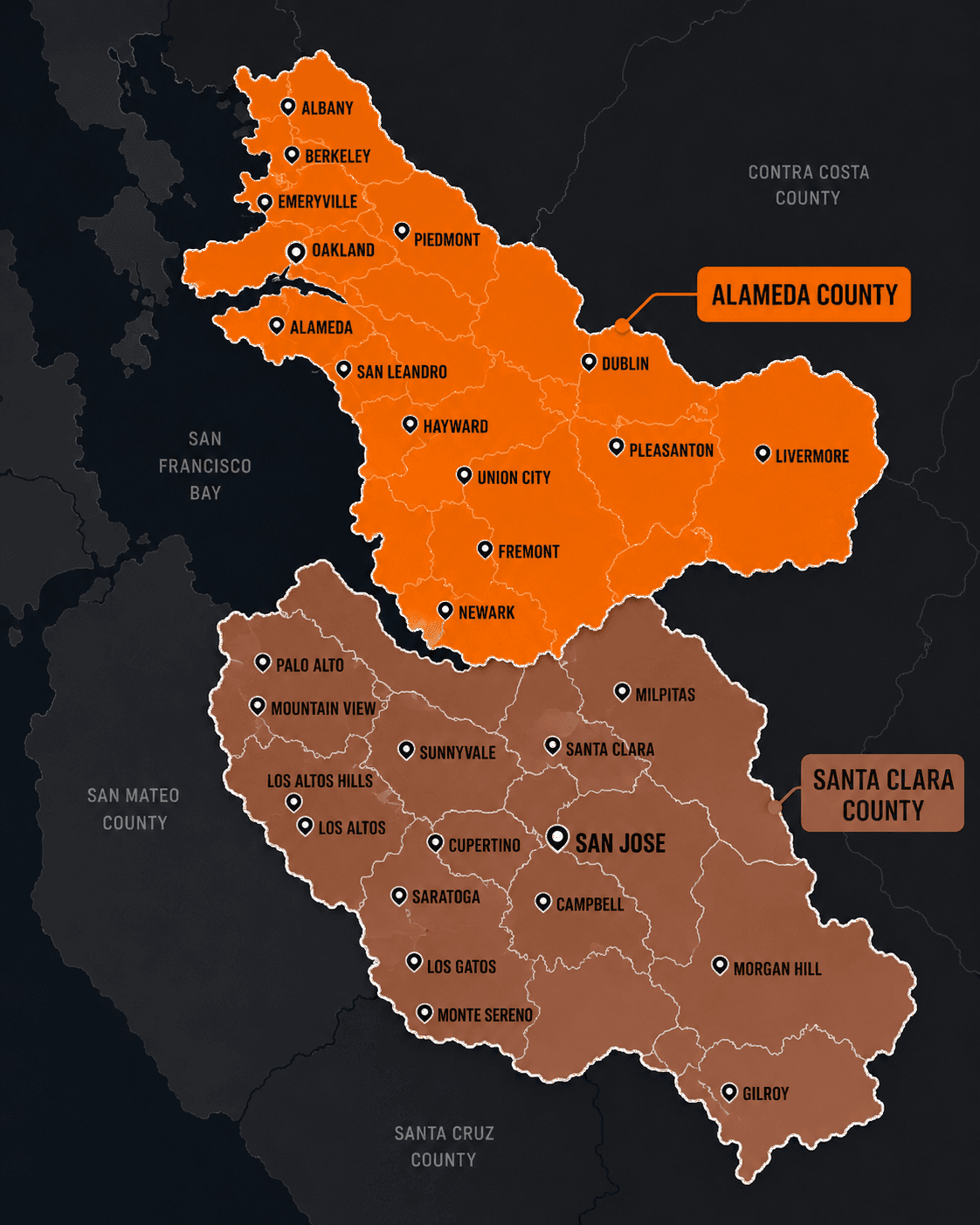
55 Cities Served
Santa Clara, Alameda, San Mateo & Santa Cruz counties
Service Area
Where We Provide Sawing & Coring
We provide sawing & coring across 55 cities in Santa Clara, Alameda, San Mateo, and Santa Cruz counties. Ground conditions, permitting, and the failure modes we see vary city by city, so each has its own page.
Counties
Read Before You Decide
Guides from our Learning Center that bear directly on this kind of work.
Need a Precise Cut or Core?
Send us the layout — utility drawings if you have them — and we'll scan the slab, mark the cuts, and give you a written estimate before anything gets touched.