
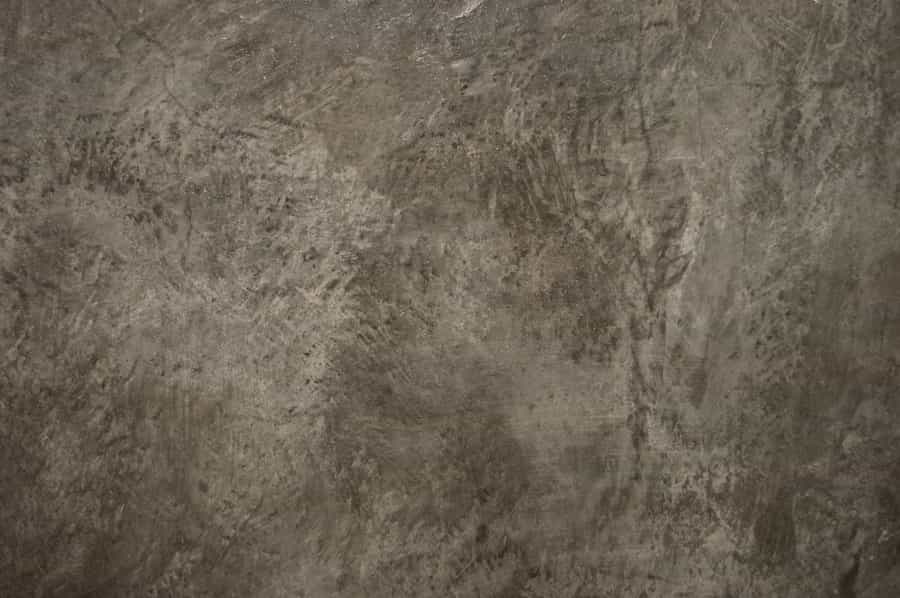
Decorative Finish
Concrete Staining for New and Existing Slabs
Penetrating color that becomes part of the slab — a way to transform existing concrete without replacing it.
- Stain types
- Reactive acid · water-based
- Penetration
- Chemically bonds into the slab
- On-site time
- 2–4 days including cure
- Maintenance
- Reseal every 2–3 years
Concrete Staining — At a Glance
Penetrating color that becomes part of the slab — a way to transform existing concrete without replacing it. Dueling Trowels Concrete Solutions provides concrete staining contractor services across 55 cities in Santa Clara, Alameda, San Mateo, and Santa Cruz counties, including San Jose, Oakland, Fremont, and Sunnyvale. Licensed, insured, and backed by a written workmanship warranty. Free written estimates.
Two Kinds of Stain, Two Different Results
This is the first decision, and it determines almost everything about how the finished floor will look.
Acid-Based Stain
- Chemically reacts with lime in the concrete to form permanent color
- Produces mottled, variegated, marble-like tones
- Limited palette — earth tones, tans, browns, soft blue-greens
- Every slab reacts differently; results are never fully predictable
- Extremely durable because the color is a chemical change, not a layer
- Requires careful neutralization and rinsing after application
Water-Based Stain
- Pigment particles penetrate the pores rather than reacting chemically
- Much broader color range, including bright and non-natural tones
- More uniform and predictable coverage
- Can be layered and blended for custom effects
- Slightly less depth and translucency than a good acid stain
- Simpler application with no neutralization step
What Stain Will and Won't Do
Stain is genuinely transformative on the right slab and disappointing on the wrong one. The difference is worth understanding before you commit.
Stain colors concrete. It does not resurface it. Because stain is translucent and penetrates rather than covers, everything already on the slab stays visible underneath — cracks, patches, trowel marks, oil shadows, and the ghost outline of anything that sat there long enough to leave a mark.
For some people that's exactly the appeal. The variation and history in the slab is what gives stained concrete its character, and a perfectly uniform result would look like paint. For others who expect stain to hide a decade of driveway stains, it's a real letdown.
The honest test is to hose the slab down and look at it wet. That's roughly how the imperfections will read once stained and sealed. If you like what you see wet, you'll probably like it stained. If the flaws bother you wet, stain will not fix them — and you're better served by a resurfacing overlay, which we can talk you through instead.
Is Your Slab a Good Candidate?
A quick self-assessment before booking an estimate.
Good Candidates
- Structurally sound with no active settling or movement
- Bare concrete that has never been sealed, painted, or coated
- Interior floors protected from weather and UV
- Newer slabs with a consistent, clean surface
- Surfaces where natural variation is welcome, not a problem
- Garage and basement floors being converted to living space
Poor Candidates
- Slabs with heavy oil or grease penetration
- Concrete previously sealed or painted (must be fully stripped first)
- Surfaces with large patches in a different concrete mix
- Slabs with active cracking or ongoing movement
- Power-troweled floors so dense the stain can't penetrate
- Anywhere a perfectly uniform color is the requirement
Preparation Is Most of the Job
Staining fails from bad prep far more often than from bad product. Anything left on the surface blocks penetration and shows up in the result.
Stripping and Cleaning
Any existing sealer, paint, adhesive, or curing compound has to come off completely. Stain can't penetrate through a coating, and partial removal produces blotchy results.
Profiling the Surface
Dense, hard-troweled slabs are lightly ground or etched to open the pores. Without this step the stain sits on top instead of soaking in, and it will wear off.
Moisture Testing
Slabs on grade without a vapor barrier can push moisture up from below. That moisture will lift a sealer off the surface later, so we test before committing to a system.
04
Indoors and Outdoors Behave Differently
Interior stained floors are the easy case. Out of the weather and out of direct UV, the color stays stable for a very long time and the sealer isn't fighting sun or rain. Interior work is where stained concrete really shines — converted garages, basements, sunrooms, and modern living spaces where a polished-looking floor with genuine depth is the goal.
Outside, expectations need adjusting. UV gradually fades surface-applied color, and acid stain, though far more stable, still shifts over years of full sun. Exterior sealers wear faster and need reapplying more often. None of that makes exterior staining a bad idea — it's a well-proven way to refresh a tired patio — but it is a finish with an ongoing maintenance relationship, not a one-time job.
Anywhere the slab gets wet, exterior sealer should include a slip-resistant additive. Stained and sealed concrete can be genuinely slick underfoot, and that's an easy problem to prevent up front and an annoying one to fix later.
How a Staining Job Runs
The prep stage takes longer than the stain itself — that's intentional. Rushing it is the main reason stained concrete disappoints.
Surface assessment and slab condition check
We look at the existing surface — whether it's been sealed, painted, or coated, where the cracks and patches are, and how the concrete was finished. On slabs on grade, we test for moisture vapor transmission before committing to a sealer system.
Strip and clean
Any existing coating, sealer, adhesive, or curing compound is removed mechanically or chemically. Stain can only penetrate bare concrete — partial removal leaves blotchy, uneven results.
Profile and open the surface
Dense power-troweled slabs get lightly ground or etched to open the pores. Without this, stain sits on the surface instead of soaking in, and it wears off.
Apply stain and monitor dwell time
Acid stain is applied wet and kept saturated while the chemical reaction runs — typically 30 minutes to several hours depending on the product. Water-based stain is applied in controlled passes and allowed to penetrate.
Neutralize (acid stain) and rinse
Acid stain residue has to be neutralized with a baking soda or ammonia solution, then rinsed completely clean. Any residue left on the surface hazes the sealer. Water-based products skip this step.
Seal with the correct topcoat
Interior work typically gets a penetrating or polyurethane sealer for durability without gloss buildup. Exterior surfaces get a UV-stable sealer with a slip-resistant additive — stained concrete can be genuinely slick when wet.
Staining Questions
Transformations
Concrete Staining: Before & After
Representative comparisons of the condition we're typically called to, and what the finished work achieves. Drag the handle across each frame.
Shaded rear yard
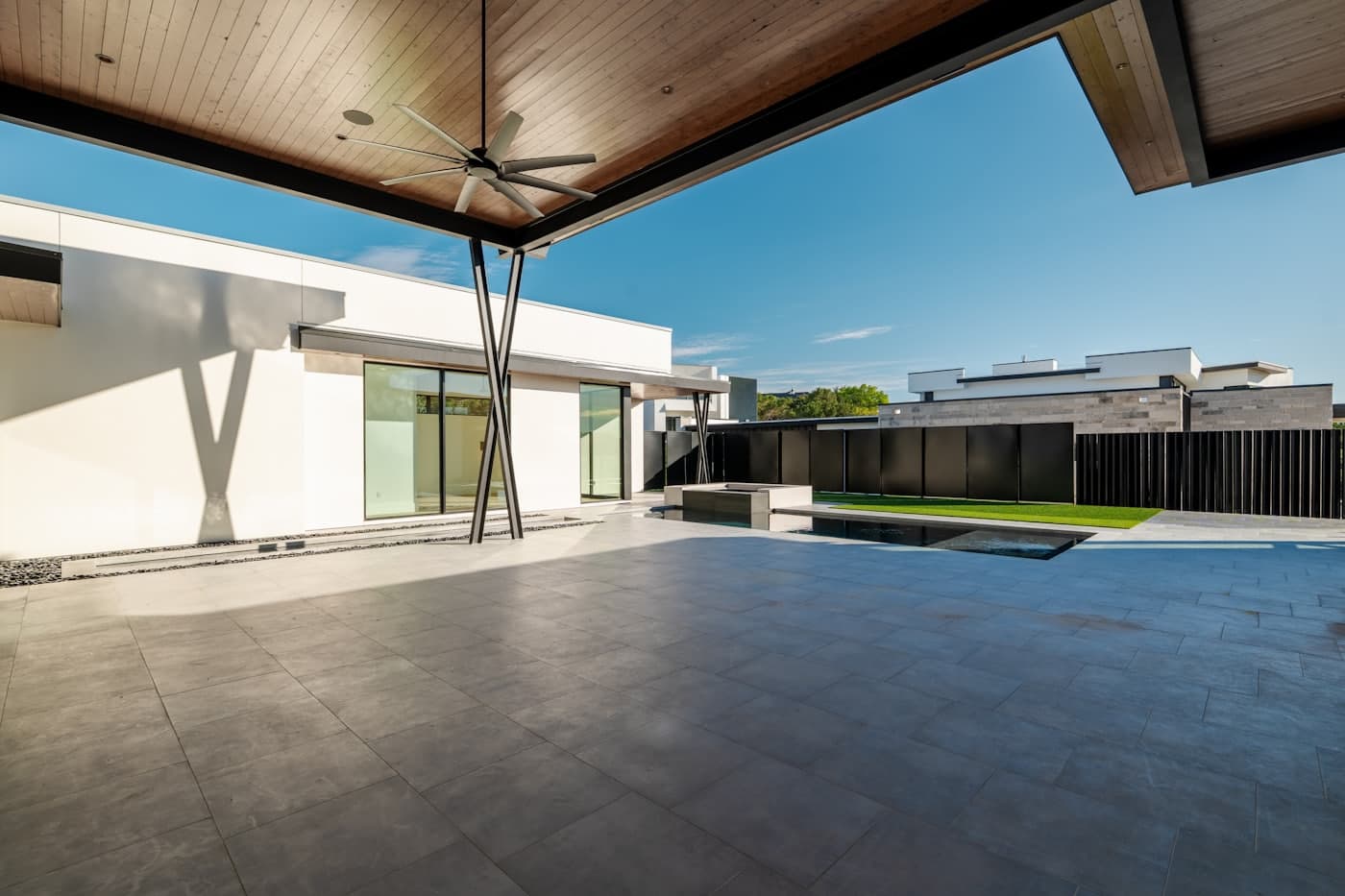
Patio rebuild
A north-facing patio that stayed damp year round, growing moss in the joints and holding water against the house wall. Rebuilt with fall built into the slab, a wider footprint, and a sealed decorative finish that sheds water instead of holding it.
- Positive fall away from the building, no standing water
- Sealed surface that resists moss and organic staining
- Footprint extended to take a full outdoor dining setting
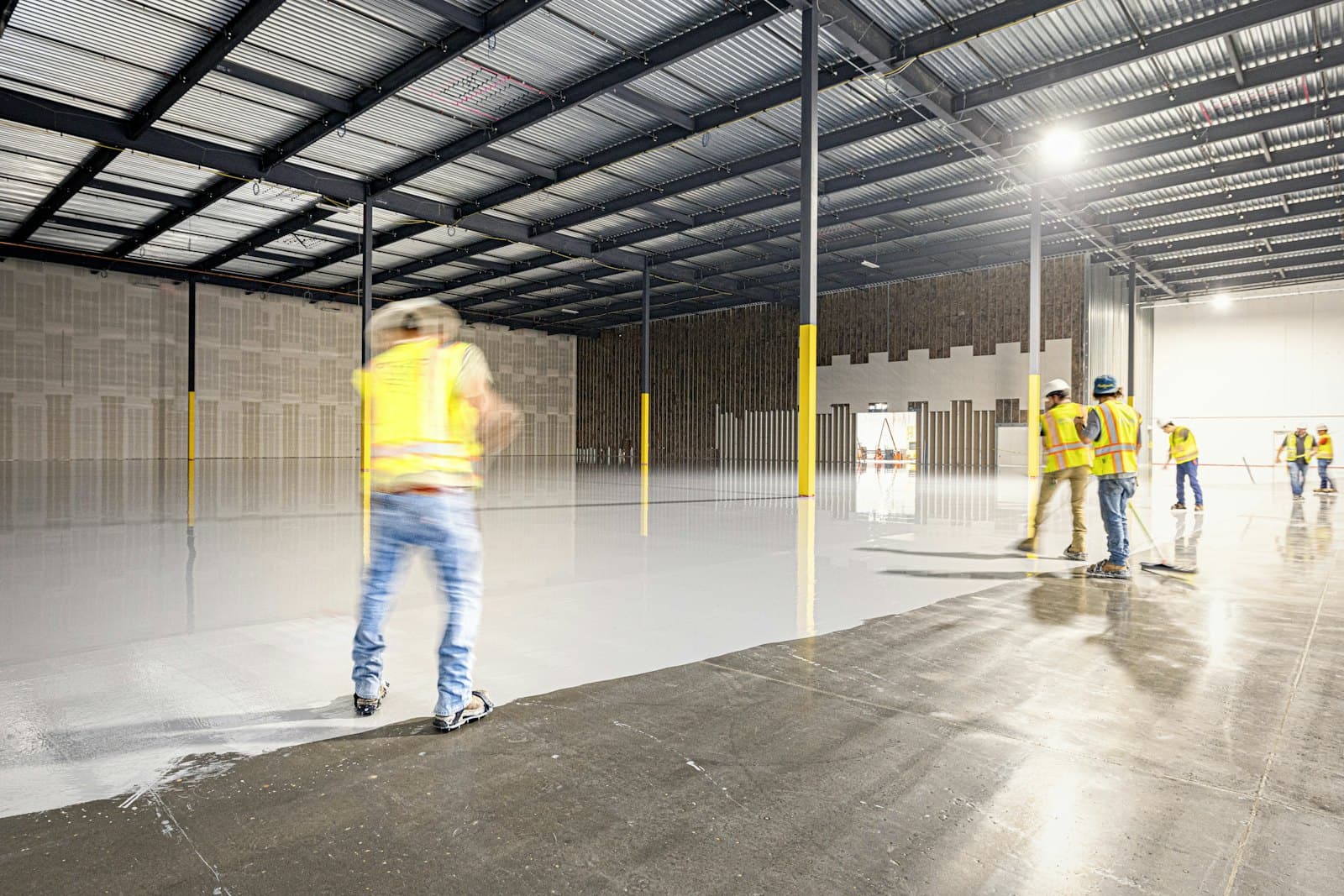
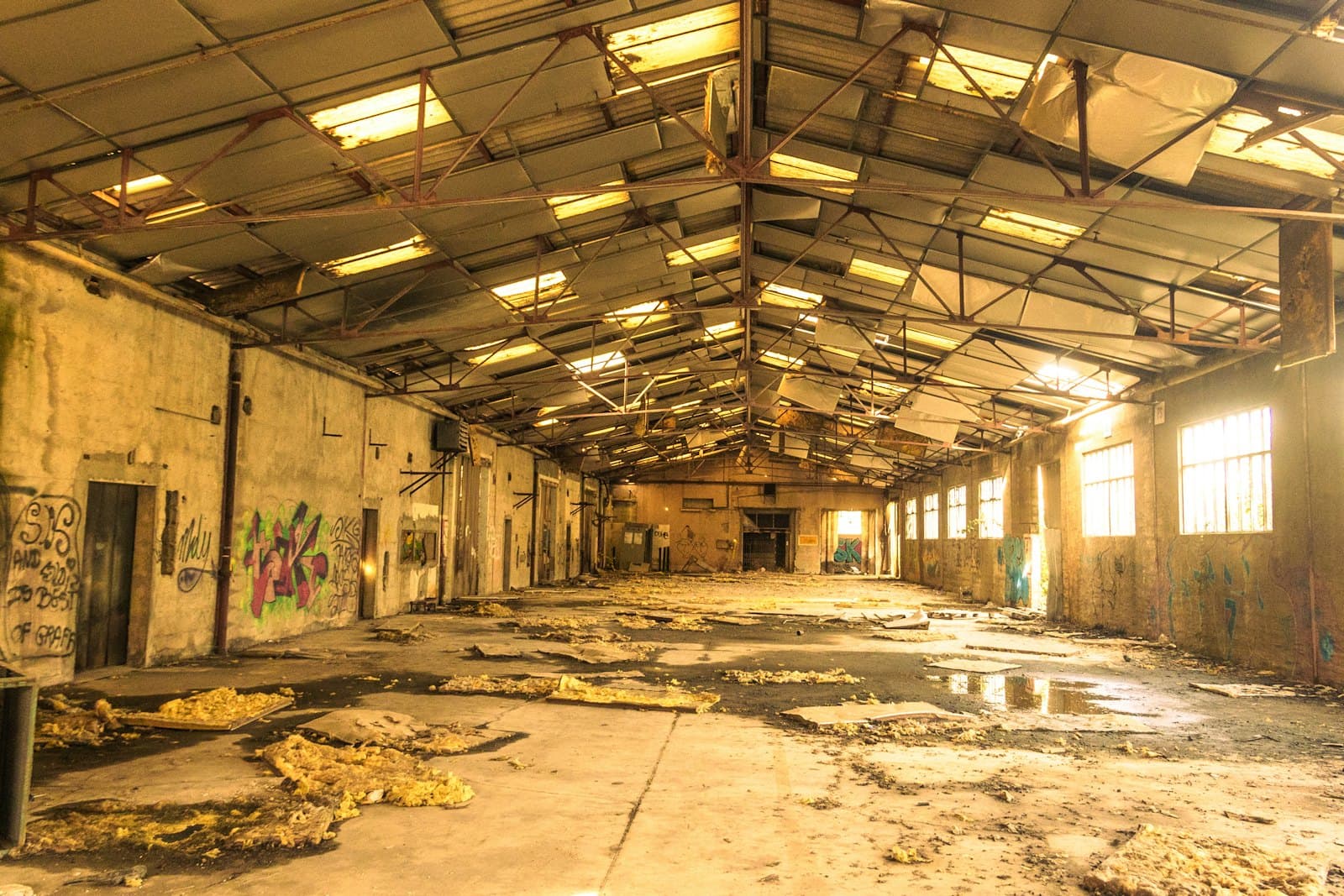
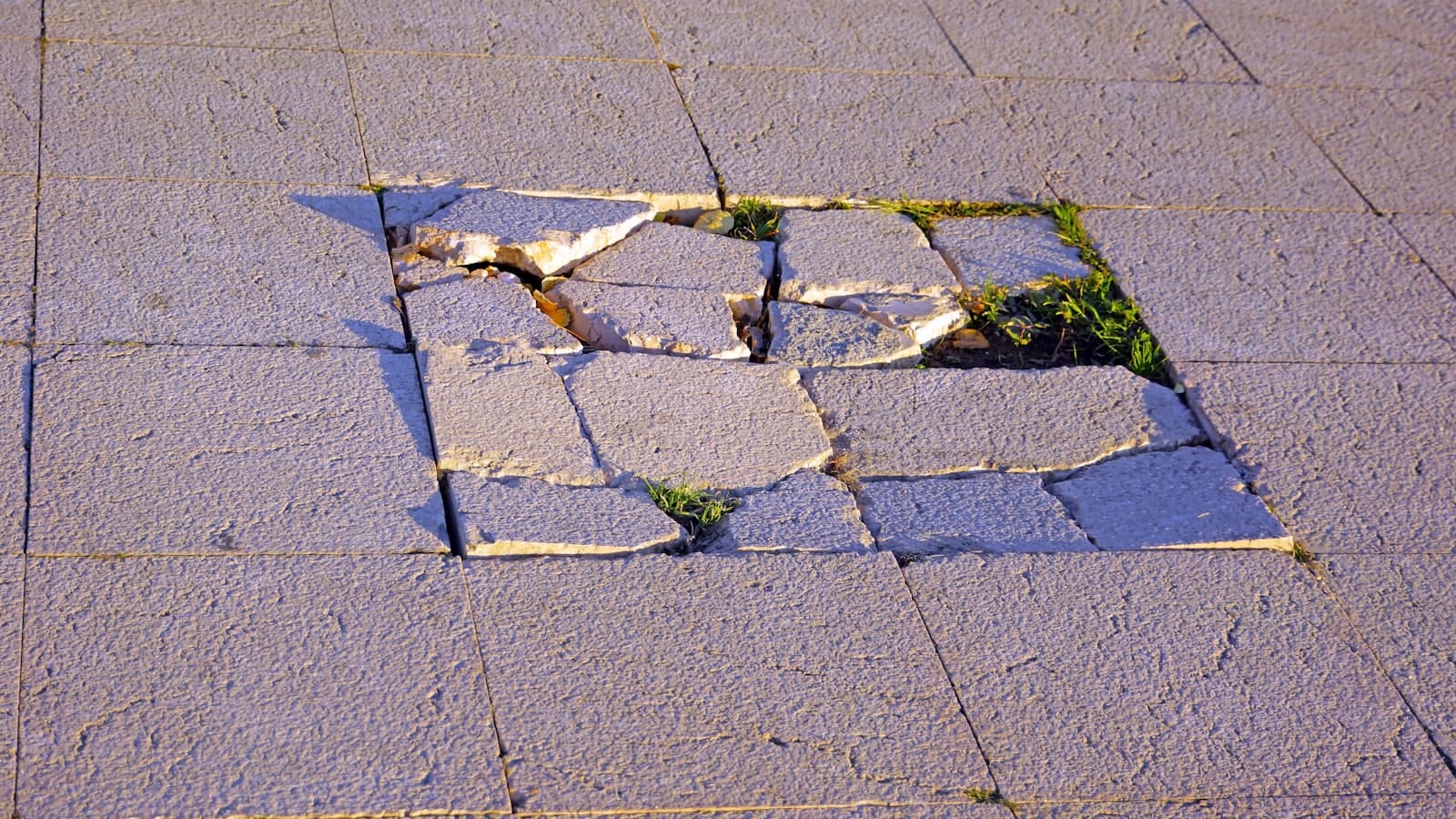
Distribution warehouse
Industrial floor slab
A worn warehouse slab with spalled joints that were shaking forklifts apart and a surface too dusty to keep clean. Joints were rebuilt with armored edges, the slab ground flat, then densified and polished.
- Armored joints that stop edge spalling under wheel loads
- Flatness restored to specification across the racking aisles
- Densified surface — no more slab dust in the operation
Drag the handle — or use the arrow keys — to compare the condition before and after.
More Concrete Flatwork Services
Related work we handle, often on the same project as this one.
Often Quoted Alongside This
Work from our other category that regularly shows up on the same site visit.

55 Cities Served
Santa Clara, Alameda, San Mateo & Santa Cruz counties
Service Area
Where We Provide Concrete Staining
We provide concrete staining across 55 cities in Santa Clara, Alameda, San Mateo, and Santa Cruz counties. Ground conditions, permitting, and the failure modes we see vary city by city, so each has its own page.
Counties
Read Before You Decide
Guides from our Learning Center that bear directly on this kind of work.
People Also Ask
The questions we're asked most about concrete staining, each answered in full.
Wondering If Your Slab Can Be Stained?
Send us a photo or have us take a look in person. We'll tell you honestly whether staining is the right call — or whether resurfacing would serve you better.