Quick answer
How much does a concrete patio cost?
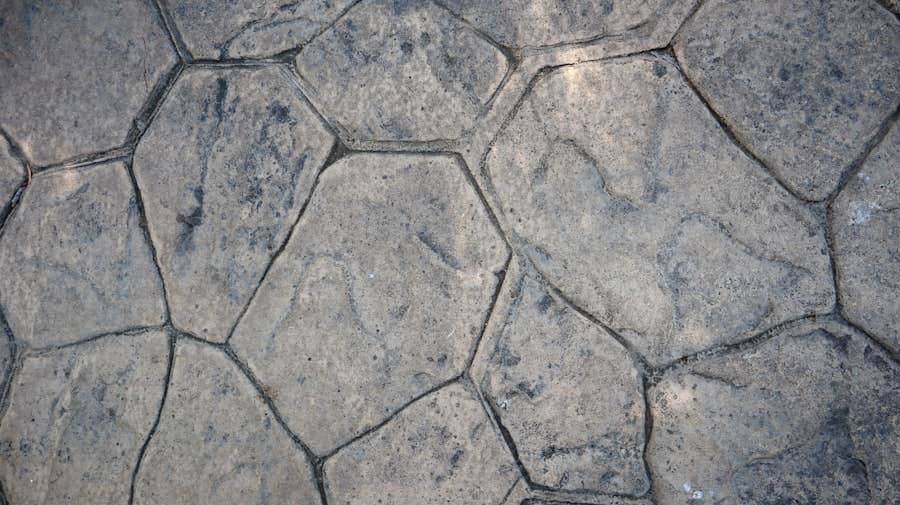
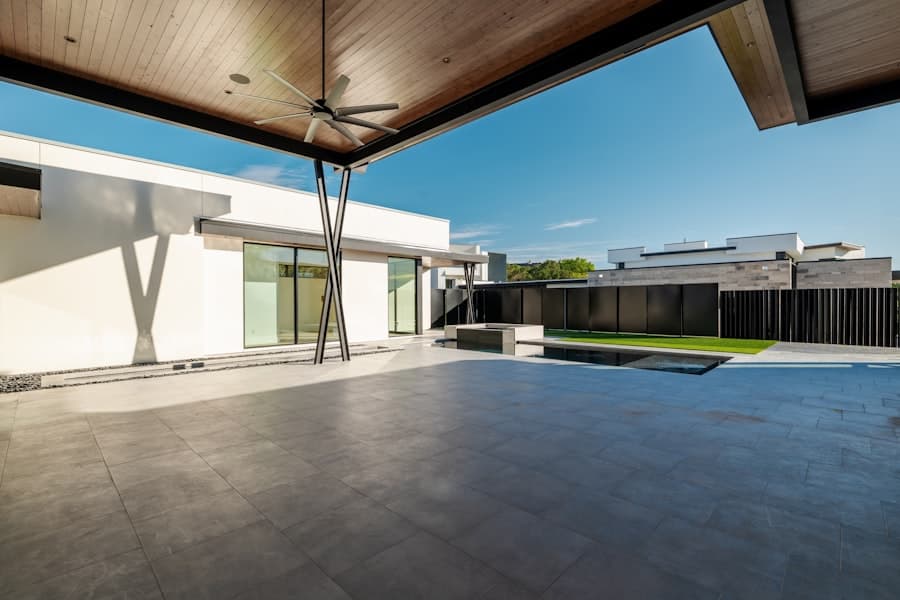
In the Bay Area, a plain broom-finished concrete patio typically costs $10–$16 per square foot installed, including excavation, base preparation, reinforcement, and finishing. Stamped and colored patios run $16–$26. A common 16 x 20 foot patio — 320 square feet — therefore lands around $3,200 to $5,100 plain, or $5,100 to $8,300 stamped.
- Broom finish
- $10–$16 / sq ft
- Exposed aggregate
- $13–$20 / sq ft
- Stamped & colored
- $16–$26 / sq ft
- Typical 320 sq ft patio
- $3,200–$8,300
Patios cost less per square foot than driveways because they carry people rather than vehicles — a 4-inch slab is genuinely adequate, the base requirement is lighter, and reinforcement can be more modest. Against that, patios are usually harder to get to. A driveway has a concrete truck parked at the end of it; a back garden patio often means wheelbarrowing every yard through a side gate, or hiring a pump.
That access question is the single most variable line item in patio pricing, and it's why a quote given over the phone from a square-footage number is worth very little. Two identical patios can differ by 30% based purely on whether a truck can get within fifty feet of the pour.
Bay Area patio cost ranges
Installed cost per square foot including excavation, base, reinforcement, pour, finish, and joint cutting. Assumes reasonable access.
- Broom finish, 4" slab$10–$16
The practical default. Good traction, low maintenance.
- Saw-cut pattern + border$12–$18
Broom finish with a designed joint layout. Best value upgrade available.
- Integrally colored$12–$19
Pigment through the whole mix — color that can't wear off.
- Exposed aggregate$13–$20
Excellent wet traction. Popular around pools.
- Stamped and colored$16–$26
Strongest visual result. Commits you to resealing every 2–3 years.
- Acid-stained over new concrete$15–$24
Mottled, variegated color. Every slab comes out unique.
- Resurfacing an existing sound slab$6–$14
Only where the slab underneath is structurally intact.
per square foot installed
Santa Clara and Alameda county pricing as of 2026. Difficult access, demolition, drainage work, retaining, and steps sit on top of these figures.
What moves the number
Beyond finish choice, five things account for most of the variation between patio quotes.
The real cost drivers
| Factor | Effect | Why |
|---|---|---|
| Access | Up to +30% | If the truck can't reach, concrete gets wheeled by hand or pumped. Pumping is a fixed day rate that hits small jobs hardest. |
| Size | Lower rate as area grows | Mobilisation, forming setup, and crew day rates are largely fixed. A 150 sq ft patio costs noticeably more per foot than a 500 sq ft one. |
| Demolition | +$2–$5 / sq ft | Breaking out and disposing of an existing slab or deck. Disposal is charged by weight and it isn't cheap here. |
| Grade change | Variable, sometimes large | Sloping sites need retaining, steps, or fill. This is where patio budgets most often get away from people. |
| Drainage work | +$500–$3,000 | Where water has to be actively collected and taken somewhere — channel drains, area drains, and a run to daylight or a dry well. |
| Steps and seat walls | $150–$400 per linear foot | Formed and poured separately from the slab, with their own reinforcement and finish. |
Where the money goes
Patio vs. the alternatives
Concrete isn't the only way to build an outdoor floor, and it's worth knowing where it sits.
Pavers run roughly $16–$30 per square foot installed here. They're repairable in a way concrete isn't — a settled area can be lifted, the base corrected, and the same pavers reset invisibly — but they need the same base work, have joints that grow weeds and need sand topping up, and are harder to sweep and move furniture across.
Timber decking sits around $30–$60 per square foot for anything built to current code, with a 15–25 year life on composite and less on softwood, plus annual maintenance. It's the right answer where a level surface has to sit well above grade; it's expensive and short-lived where the ground is already close to level.
Gravel or decomposed granite is cheapest by a wide margin and genuinely pleasant in the right setting, but it migrates, holds furniture badly, and is poor for anyone using a wheelchair, a walker, or a stroller.
Concrete vs. pavers for a patio
The two most common finalists, honestly compared.
Poured concrete
Pros
- Lower cost per square foot
- Seamless surface — nothing to weed, no sand to top up
- Furniture sits flat and slides easily
- Decorative options: color, stamping, exposed aggregate, saw-cut patterns
- Faster installation — typically two to three days on site
Cons
- Repairs are visible; matching aged concrete is effectively impossible
- Cracks where the ground moves unevenly
- Needs 7 days before normal use
Verdict — The better choice for most patios — lower cost, less ongoing fuss, and more design range than people expect.
Interlocking pavers
Pros
- Individually replaceable — repairs are invisible
- Flexes with minor ground movement rather than cracking
- Usable immediately after installation
- Wide range of colors and formats off the shelf
Cons
- 40–70% more expensive installed
- Joints need sand topping up and grow weeds
- Harder to sweep, and furniture legs catch on joints
- Requires the same base preparation — the cost saving people expect isn't there
Verdict — Worth the premium where invisible repairability genuinely matters, or where the ground is known to move.
Where to spend, where to save
If the budget is tight, there's a clear order of priority — and it's not the one most people start with.
Never save on base preparation or drainage. Both are buried, both are permanent, and both determine whether the patio is still flat in fifteen years. A patio that drains toward the house isn't a patio problem, it's a foundation problem waiting to happen.
Do consider saving on the finish. A broom-finished slab with a well-planned saw-cut pattern and a border costs a fraction of stamping and looks considerably better than a plain rectangle. And if you want decorative later, a sound slab can be stained or overlaid at any point — the option stays open in a way that base depth doesn't.
Size is the other lever, and it's the one people get wrong in both directions. Building a patio too small to hold the furniture you own is the most common regret we hear; building a vast slab you use a quarter of is the most common waste.
Patio cost questions
Plan your patio
Key takeaways
- Bay Area patios run $10–$16 per square foot broom-finished, $16–$26 stamped.
- Access is the biggest variable — a patio the truck can't reach can cost 30% more.
- Fixed costs mean small patios cost more per foot. Pour everything you'll want in one go.
- Never economise on base preparation or drainage. Both are permanent and buried.
- A saw-cut pattern over a broom finish is the best-value decorative option by a wide margin.
- Pavers cost 40–70% more installed and need the same base work.
Still deciding?
Ask us about your specific project
We'll give you a straight answer on the phone, including when that means telling you that you don't need the work you asked about. Free written estimates across San Jose & the greater Bay Area.