Quick answer
How much does stamped concrete cost?
Stamped concrete typically costs $16–$28 per square foot installed in the Bay Area, which is about $6–$12 more than a plain broom finish. Patios usually land at $16–$26 and driveways at $18–$28 because they're thicker and more heavily reinforced. A 320 square foot stamped patio runs roughly $5,100–$8,300, and a 600 square foot stamped driveway about $11,000–$17,000. Plan on resealing every two to three years to keep the color.
- Installed range
- $16–$28 / sq ft
- Premium over plain
- +$6–$12 / sq ft
- 320 sq ft patio
- $5,100–$8,300
- Reseal
- Every 2–3 years
Stamped concrete prices by project
Typical Bay Area installed prices including base, reinforcement, color, stamping, and the first seal coat.
- Stamped patio$16–$26
Most common stamped project.
- Stamped driveway$18–$28
Thicker slab and vehicle-rated reinforcement.
- Stamped walkway$16–$28
Small areas cost more per foot.
- Plain broom finish (for comparison)$10–$18
Patio low end, driveway high end.
per square foot installed
Why stamped costs more than plain concrete
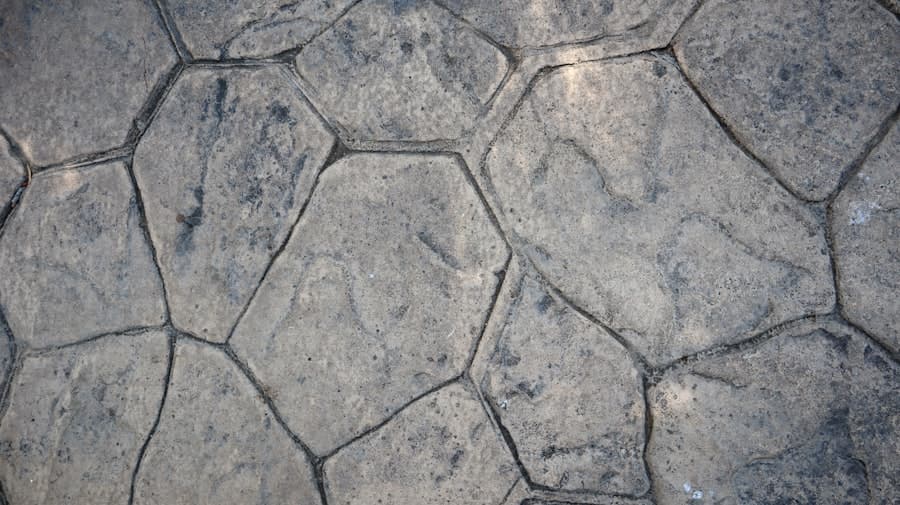
Stamping isn't a coating added at the end — it's a different day on site. After the concrete is placed and floated, color hardener is broadcast and worked into the surface, a release agent is applied so the mats don't stick, and a crew works across the slab pressing patterned mats into the concrete in the short window while it's still plastic. Edges and corners are detailed by hand. The next day the release is washed off, joints are cut along the pattern, and the surface is sealed.
That process needs more people on site at once, more materials, and more skill than a broom finish. The stamping window is roughly one to three hours depending on the weather, and a crew that's too small for the slab will run out of time — which is why pricing rises with crew size rather than just square footage.
Most of the premium — usually $6–$12 per square foot over plain — is labor and decorative materials, not extra concrete.
The stamping process
What raises or lowers the price
| Factor | Effect | Why |
|---|---|---|
| Single base color | Lower | One hardener, one release |
| Multiple colors / antiquing | Higher | More materials and hand work |
| Simple pattern (ashlar, slate) | Lower | Faster to stamp |
| Complex pattern or borders | Higher | More detailing and mat changes |
| Large open area | Lower per sq ft | Efficient stamping |
| Small or cut-up areas | Higher per sq ft | More edges and hand texturing |
| Demolition of old concrete | Higher | Breaking out and disposal |
| Driveway vs patio | Higher for driveway | Thicker slab, more reinforcement |
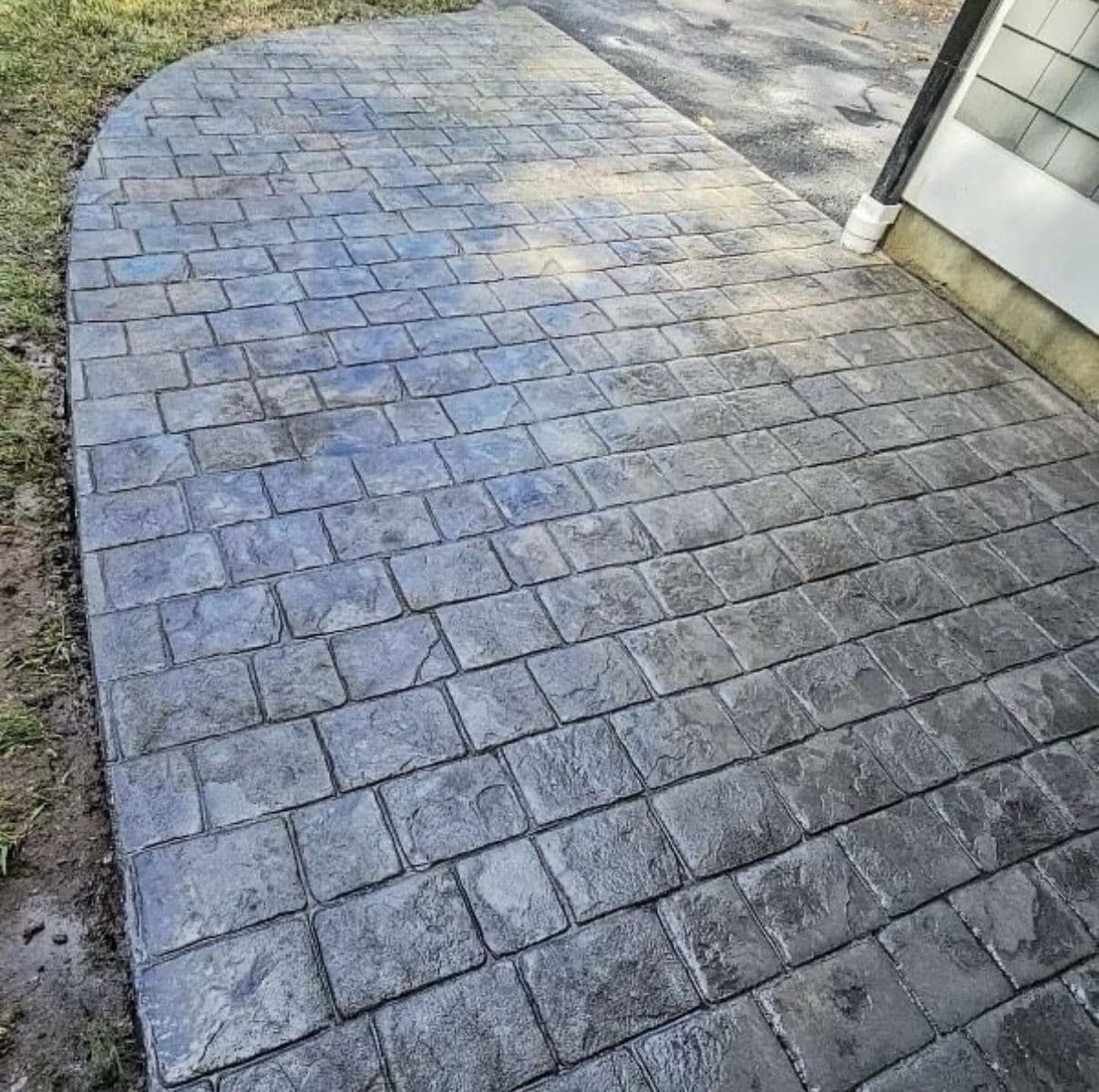
Pattern choice affects cost
The long-term cost: resealing
Stamped concrete's color and texture are protected by a sealer, and that sealer wears. Outdoors it needs recoating every two to three years — every two in full sun. Skipping it lets the color fade and the surface absorb water, and a neglected stamped slab looks tired within a few years.
Resealing is a modest cost compared with the installation, but it's a recurring one, and it belongs in the comparison against plain concrete or exposed aggregate. Over 20 years, a stamped patio will typically be resealed six to ten times. Exposed aggregate and broom finishes need sealing too, but they don't depend on it for their appearance in the same way.
Is stamped concrete worth the cost?
Stamped concrete
Pros
- Stone, brick, or wood look at lower cost than real stone or pavers
- Single slab — no joint sand or weeds
- Strong curb appeal
Cons
- $6–$12 per sq ft more than plain
- Must be resealed every 2–3 years
- Cracks are harder to hide than in plain concrete
Verdict — Worth it where appearance matters and you'll keep up the sealing.
Alternatives
Pros
- Broom finish with saw-cut pattern and colored border: designed look for less
- Exposed aggregate: decorative, grippy, low upkeep
Cons
- Less dramatic than a stone-look pattern
Verdict — Strong value if resealing every two years doesn't appeal.
Ways to control stamped concrete costs
- Stamp the main area and use a plain or broom border
- Choose one base color with a release-agent accent
- Pick a repeating pattern over a custom design
- Keep the layout simple with fewer cut-up areas
- Combine with other work to share mobilization
- Budget for resealing from the start
A worked example: a stamped backyard patio
Consider a 16 by 20 foot backyard patio — 320 square feet — replacing an old cracked slab behind a 1960s San Jose ranch house, stamped in an ashlar slate pattern with a single gray base color and a darker release accent.
The project starts with breaking out and hauling the old slab, then excavating and setting the grade so the new surface falls away from the house. A compacted aggregate base goes in, forms are set, and rebar is placed on chairs. On pour day a larger crew than a plain slab would need places and floats the concrete, works color hardener into the surface, applies the release, and stamps the whole area within the working window. Edges are hand-textured.
The next day the release is washed off, joints are cut along the pattern, and the first coat of sealer goes down once the surface is ready. At $16–$26 per square foot, the project lands roughly between $5,100 and $8,300, depending mainly on access, demolition, and how much hand detailing the layout needs.
The same patio in a plain broom finish would land around $3,200–$5,100. The difference is almost entirely the decorative labor and materials.
Color choices and their cost
Stamped concrete usually gets its color in one of two ways. Color hardener is a dry, pigmented powder broadcast onto the fresh surface and floated in; it gives intense color and a harder wearing surface. Integral color is pigment mixed into the whole batch at the plant; it colors the full depth, so chips and wear reveal the same color underneath.
Many projects use both: integral color as a base and a contrasting release agent to highlight the texture. Each additional color adds material and labor, and multi-color hand-applied effects add more. A single base color with a contrasting release is the most cost-effective way to get depth.
Darker colors absorb more heat and fade more visibly in strong sun. In warmer inland areas, mid-tone and lighter colors stay cooler and hold their appearance longer between reseals.
Stamped concrete cost vs alternatives
| Option | Typical installed cost | Upkeep |
|---|---|---|
| Plain broom concrete | $10–$18 / sq ft | Seal every 2–3 years |
| Exposed aggregate | $13–$22 / sq ft | Seal every 2–3 years |
| Stamped concrete | $16–$28 / sq ft | Reseal every 2–3 years — essential |
| Interlocking pavers | $18–$30 / sq ft | Joint sand, weeds, sealing |
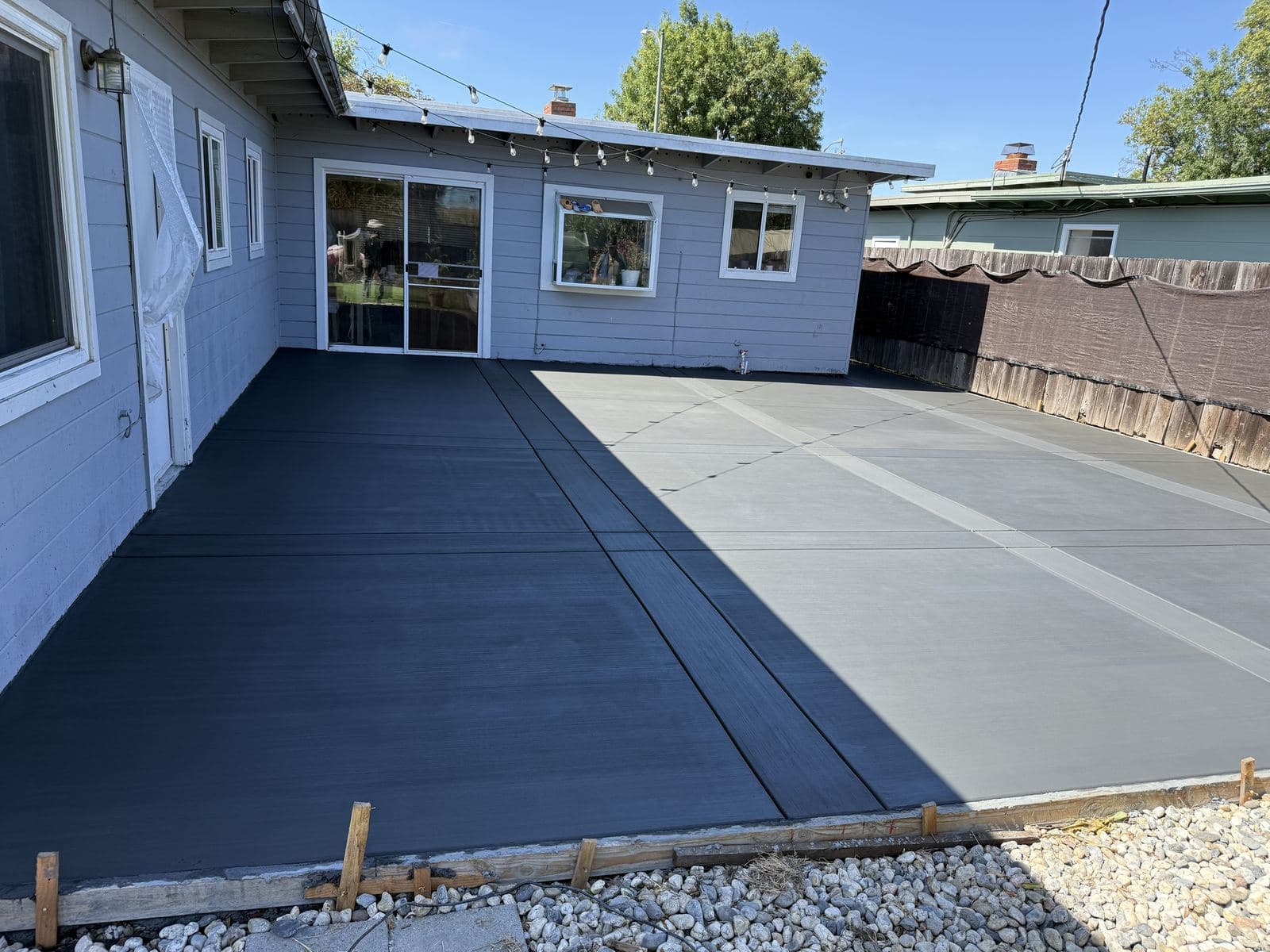
A stamped patio in context
Stamped overlays on existing concrete
If your existing slab is level and structurally sound, a stamped overlay — a thin layer of polymer-modified cementitious material applied over the old slab and then stamped — can give a decorative surface without demolition. It avoids breakout and disposal costs and keeps the existing slab's base.
Overlays have limits. They follow the slab underneath, so existing cracks that are still moving will come through. They add height at doors and garage thresholds. And they need the same resealing schedule as stamped concrete. On a cracked or settled slab, replacement is the better investment.
Owning stamped concrete over 10 years
Day 1–3
Installation
Pour, color, stamp, wash, cut joints.
~Month 1
First seal or recoat
Sealer applied once the surface is ready.
Years 2–3
First reseal
Clean and reseal; earlier in full sun.
Years 4–6
Second reseal
Inspect for cracks; seal joints.
Years 6–9
Third reseal
Consider a color refresh if faded.
Year 10
Ongoing
Well-maintained stamped work still looks close to new.
Stamped concrete on driveways vs patios
Driveways cost more per square foot than patios because the slab is thicker — commonly five inches versus four — and more heavily reinforced to carry vehicles. Joint layout is more critical too, and the area near the garage and apron sees the most stress.
Driveways also wear sealer faster in tire paths, so resealing is especially important. Hot tires can soften some acrylic sealers; choosing a sealer suited to vehicle traffic helps. Many homeowners opt for a stamped border with a broom-finished or exposed-aggregate field in the tire paths, which gives the decorative look where it shows most while keeping the high-wear area practical.
Repairing and refreshing stamped concrete
Faded stamped concrete can usually be refreshed rather than replaced. Cleaning, stripping failed sealer, and applying a tinted sealer or a color stain can bring back much of the original depth. This is a fraction of the cost of new stamping.
Cracks in stamped concrete are harder to hide than in plain concrete because the eye reads them across the pattern. Small cracks can be sealed and color-matched; cracks that open or step indicate base movement and may need section replacement, which is difficult to match perfectly.
That's another reason to spend on base preparation and joint layout at installation: on decorative concrete, avoiding cracks is worth more than repairing them.
Questions to ask a stamped concrete contractor
- Can I see photos and addresses of stamped work you did several years ago?
- Color hardener, integral color, or both?
- How many colors, and how will the accent be applied?
- How big is the crew on stamping day?
- Where will control joints go in the pattern?
- Is the first seal coat included, and what sealer?
- What base depth and reinforcement are included?
Regional and seasonal pricing
Decorative concrete prices vary within the Bay Area. Hillside and tight-access lots cost more because concrete may need pumping and materials have to be carried further. Large, open, flat suburban lots are the most efficient. Inland areas with hot summers may require early-morning pours and more crew to beat the stamping window, which also affects pricing.
Season matters too. In peak spring and summer demand, schedules fill and stamping crews are booked out. Fall can be a good time to schedule — still warm enough for reliable curing, with more flexibility in crew availability. Stamping in winter is possible between storms but carries weather risk on decorative work, where rain on a fresh surface is especially damaging.
Is stamped concrete a good investment?
Compared with natural stone or premium pavers, stamped concrete gives a similar look for less money and without joints for weeds. Compared with plain concrete, it costs more and requires a resealing commitment. The investment makes the most sense on the surfaces people see and use most: the front entry, the main patio, and the driveway's visible edges.
Where appearance matters less — side yards, utility pads, service paths — plain or broom-finished concrete is the better use of budget. Combining stamped focal areas with practical finishes elsewhere is how many homeowners get the look without the cost of stamping everything.
Key points on stamped concrete cost
- Stamped concrete runs $16–$28 per square foot installed in the Bay Area.
- That's roughly $6–$12 more than a plain broom finish.
- Patios cost less per square foot than driveways.
- Colors, patterns, and layout complexity drive the price.
- Budget for resealing every two to three years.
What happens on stamping day
Stamping day starts early. Concrete is placed and screeded to grade, then bull-floated. Once the bleed water evaporates, color hardener is broadcast in passes and floated into the surface. Release agent — a colored powder or a clear liquid — is applied so the mats don't stick and to add contrasting color in the low spots.
Then the crew lays mats in sequence across the slab, tamping each one into the surface while the concrete is firm enough to hold the texture but soft enough to take it. Edges and corners that the mats can't reach are textured with flexible 'flops' or hand tools. The whole slab has to be stamped within the working window, so the crew size is set by the slab's area and the day's temperature.
The next day, the release is washed off, joints are cut along the pattern, and the surface cures before sealing. That sequence is why stamped work needs more people and more skill than a plain pour.
Warranties and what they cover
A workmanship warranty on stamped concrete typically covers defects in how the work was done — scaling from finishing errors, sealer failures caused by application, or structural cracking from inadequate preparation. It generally doesn't cover normal hairline cracking, fading from skipped maintenance, or damage from deicers, heavy equipment, or ground movement outside the contractor's control.
Ask what the warranty covers in writing and what maintenance is expected to keep it valid. Keeping records of when you reseal helps if a claim ever arises.
Stamped concrete cost questions
Next steps
Standards & references
The published standards and code sections this guide draws on. Requirements vary by jurisdiction — your local building department has the final word.
- ACI 310R-13: Guide to Decorative Concrete — American Concrete Institute
- ACI 515.2R-13: Guide to Selecting Protective Treatments for Concrete — American Concrete Institute
Still deciding?
Ask us about your specific project
We'll give you a straight answer on the phone, including when that means telling you that you don't need the work you asked about. Free written estimates across San Jose & the greater Bay Area.