
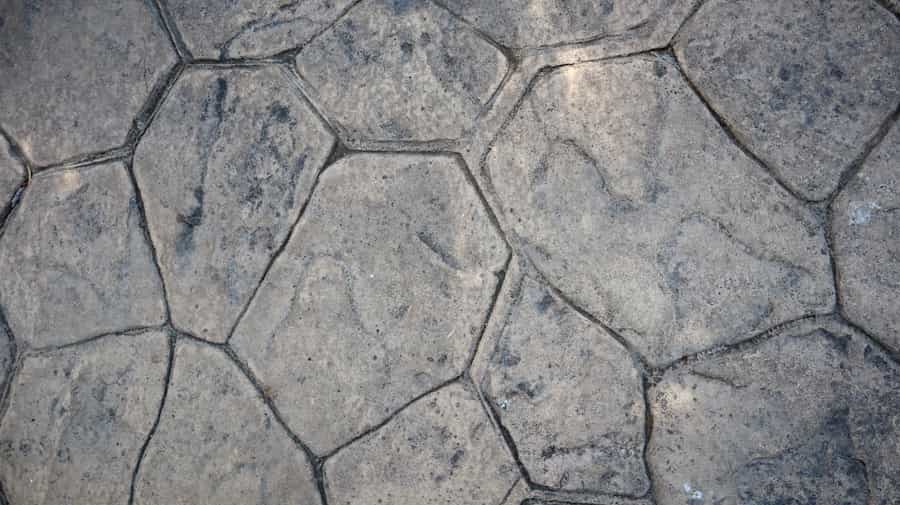
Decorative Finish
Stamped Concrete Patios, Driveways & Walkways
Stone, brick, slate, and plank patterns pressed into fresh concrete, colored in layers and sealed for depth.
- Pattern options
- Ashlar, flagstone, plank, cobble
- Color method
- Integral + release, not paint
- On-site time
- 4–7 days
- Resealing
- Every 2–3 years
Stamped Concrete — At a Glance
Stone, brick, slate, and plank patterns pressed into fresh concrete, colored in layers and sealed for depth. Dueling Trowels Concrete Solutions provides stamped concrete contractor services across 55 cities in Santa Clara, Alameda, San Mateo, and Santa Cruz counties, including San Jose, Oakland, Fremont, and Sunnyvale. Licensed, insured, and backed by a written workmanship warranty. Free written estimates.
How Concrete Ends Up Looking Like Stone
Stamping is a timing-critical process that happens in roughly a two-hour window while the slab is still plastic.
The pour starts like any other slab. What changes is what happens next. Once the concrete is placed and floated, color hardener is broadcast across the surface and worked in, giving the top layer both its base color and a denser, harder wearing surface than the concrete underneath.
Then a release agent goes down — a powder or liquid that does two jobs at once. It stops the stamp mats from sticking to the concrete, and because it settles into the low points of the texture, it leaves behind the secondary color that gives stamped work its depth and variation. Without it, the surface would read as one flat tone and look obviously fake.
The mats themselves are flexible molds cast from real stone, brick, or timber. Crews press them into the surface in sequence, aligning the pattern as they go. Get the timing wrong in either direction and the result shows permanently: too early and the impression closes back up, too late and the mats won't seat to full depth.
Once cured, the surface is washed to remove excess release agent and sealed. The sealer is what brings the color to full saturation and gives stamped concrete the sheen most people associate with it.
In Practice
Pattern, Color, and Texture
Stamped concrete is three decisions, and getting any one of them wrong is what makes it look fake.
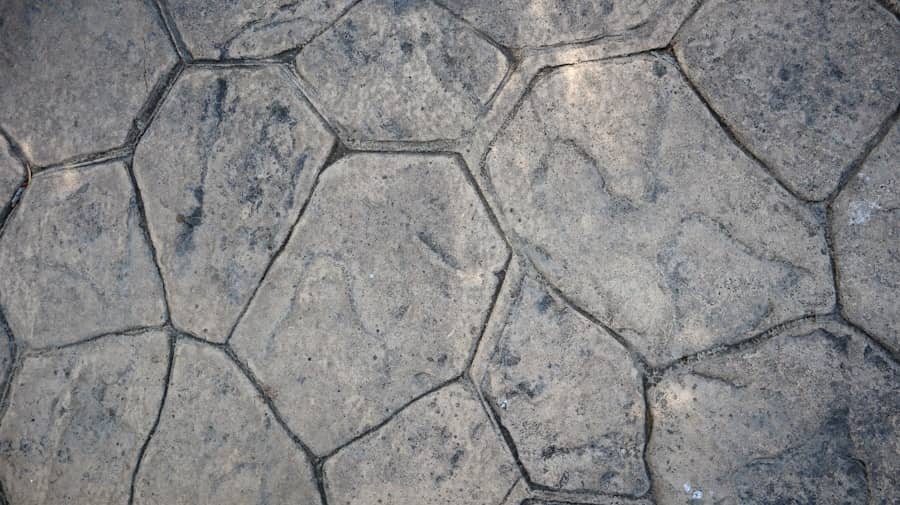
The pattern
Scale matters more than style. A large flagstone on a small patio reads as one or two stones and looks wrong immediately.
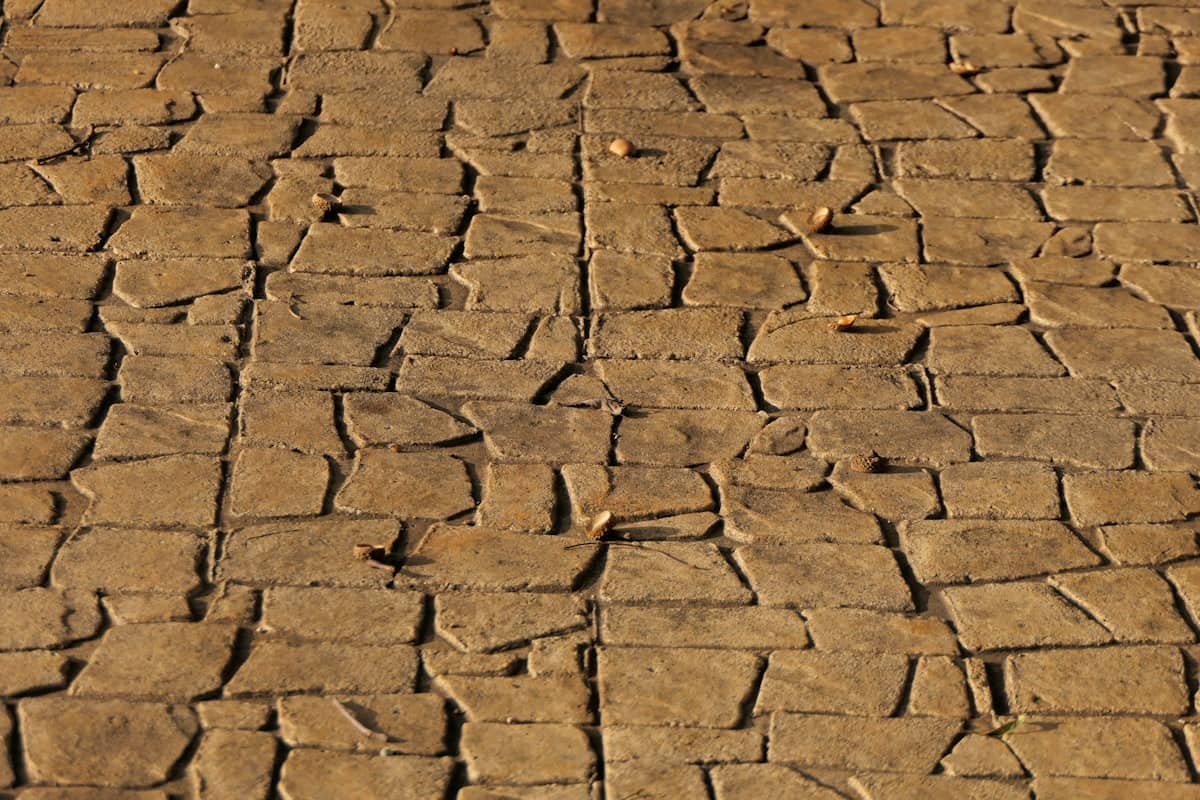
The color
Integral color through the whole slab plus a release for secondary tone. Chips and wear then reveal more color, not gray.
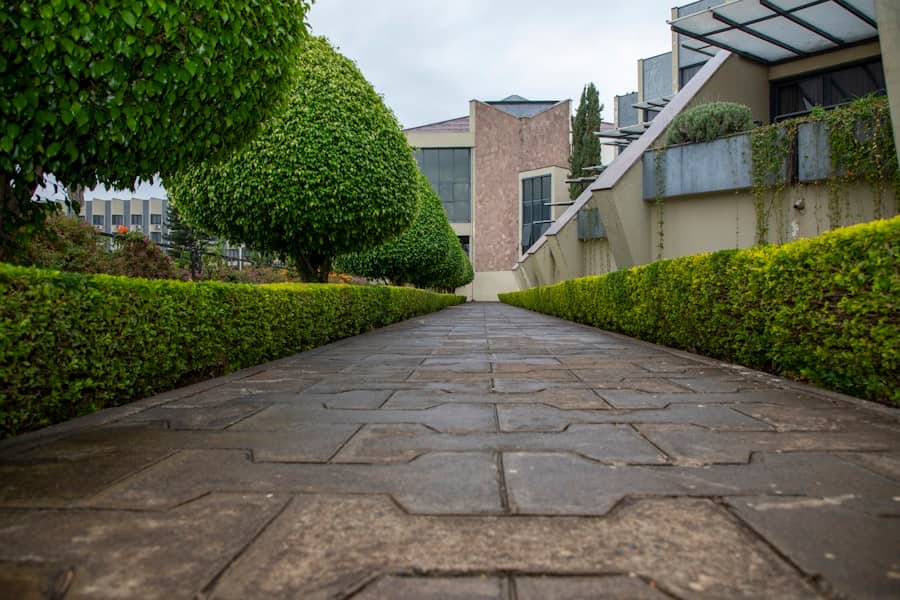
The layout
Patterns are set out from the most visible edge, and joints are cut into the grout lines so they disappear.
Stamping Day, Hour by Hour
Stamping is not a process that can be paused. Once the pour starts, the whole sequence has to run to completion.
Place and screed
Concrete is placed into the forms and screeded flat to grade. From this moment the clock is running on a fixed working window.
Float and apply color hardener
The surface is floated smooth, then color hardener is broadcast in stages and worked in, building the base color into the top layer of the slab.
Broadcast release agent
Release powder or liquid is applied across the surface — preventing the mats from bonding and depositing the accent color that creates variation.
Stamp the pattern
Mats are laid in sequence and tamped to full depth, working across the slab and keeping the pattern aligned. Edges and perimeters are detailed by hand.
Cure, wash, and seal
The slab cures, excess release is washed off, and sealer is applied — usually a few days to a couple of weeks later depending on conditions.
Pattern Families
Most stamped work falls into one of these groups. Scale matters as much as pattern — a large pattern on a small patio reads oddly.
| Pattern Family | Character | Works Well On |
|---|---|---|
| Ashlar Slate | Regular rectangular blocks with slate texture | Formal patios and entryways; the most widely used pattern |
| Random Flagstone | Irregular natural stone shapes | Garden paths, informal patios, and pool surrounds |
| Running Bond Brick | Traditional staggered brick courses | Walkways and driveway borders, especially on older homes |
| Cobblestone | Rounded, old-world stone units | Driveway aprons and accent bands |
| Wood Plank | Grain and knots in long board shapes | Contemporary patios and areas transitioning to decking |
| Seamless Texture | Overall stone texture with no unit lines | Large areas where a repeating pattern would look artificial |
Where the Color Actually Comes From
Stamped concrete color is built in layers. Understanding them explains why it looks the way it does — and why it changes over time.
Base Color
Color hardener broadcast into the surface, or pigment mixed through the whole slab. This is the dominant tone and the most permanent layer, integrated into the concrete itself.
Accent Color
Release agent settling into the pattern's low points and crevices. This creates the tonal variation that makes the surface read as natural material rather than tinted concrete.
Sealer
Saturates the colors beneath and adds sheen. It's also the only layer that wears out — as it thins, the surface looks progressively flatter and duller until it's recoated.
Stamped Concrete Against Real Stone
An honest comparison. Stamped concrete wins on some fronts and genuinely loses on others.
Stamped Concrete
- Substantially lower installed cost for the same visual effect
- Continuous slab — no joints for weeds to grow through
- Faster installation than laying individual stone units
- Pattern and color can be tuned to match the house
- Needs resealing every two to three years to hold appearance
- Damage is harder to repair invisibly — patches tend to show
Natural Stone
- Genuine material with true depth and irregularity
- Individual units can be lifted and replaced when damaged
- No sealer dependency for basic appearance
- Significantly higher material and labor cost
- Joints require ongoing weed and sand maintenance
- Settling over time can produce uneven, trip-prone surfaces
Stamped and Decorative Work
Patterns and colors from completed decorative projects.
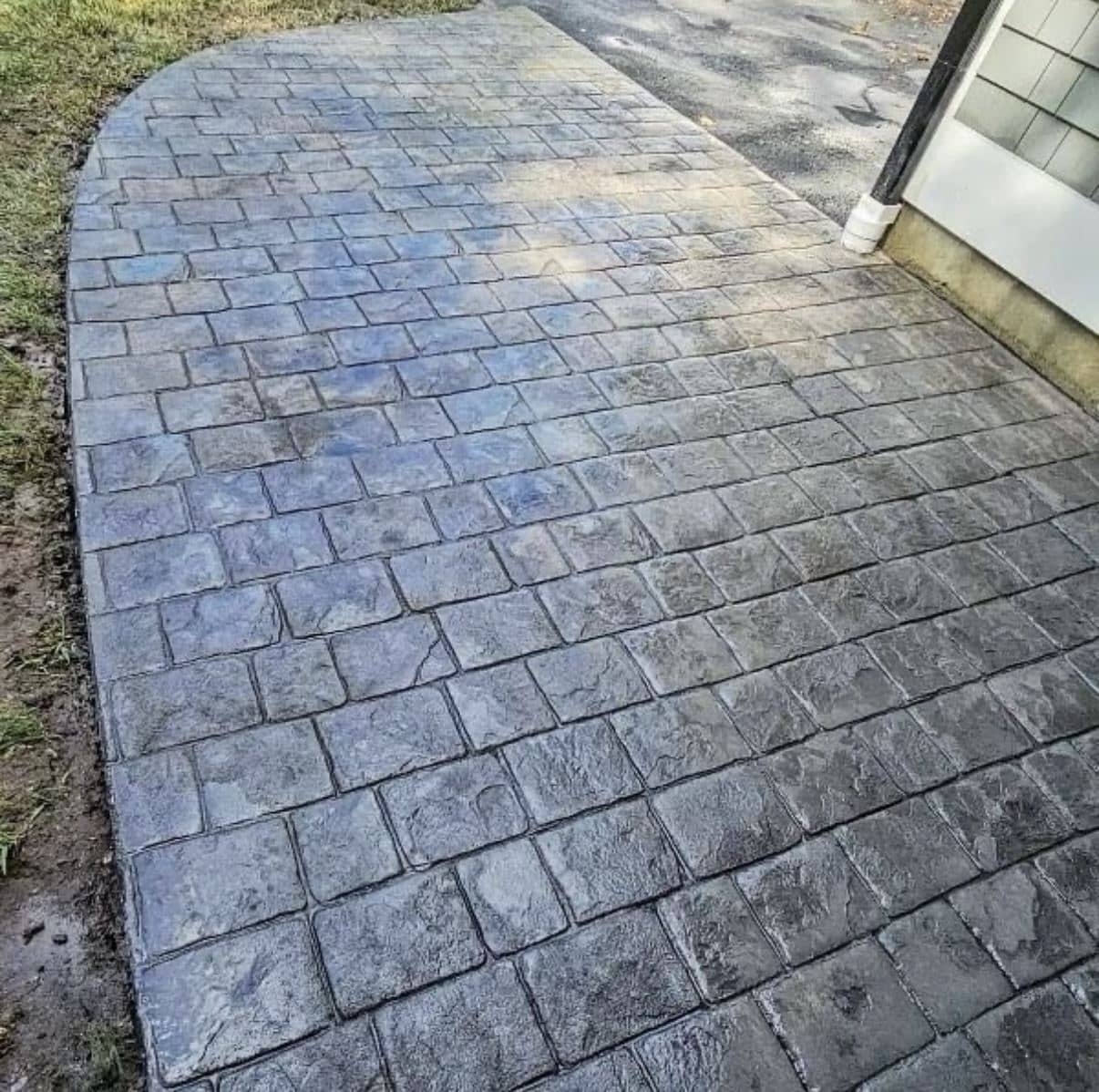 Stamped Concrete
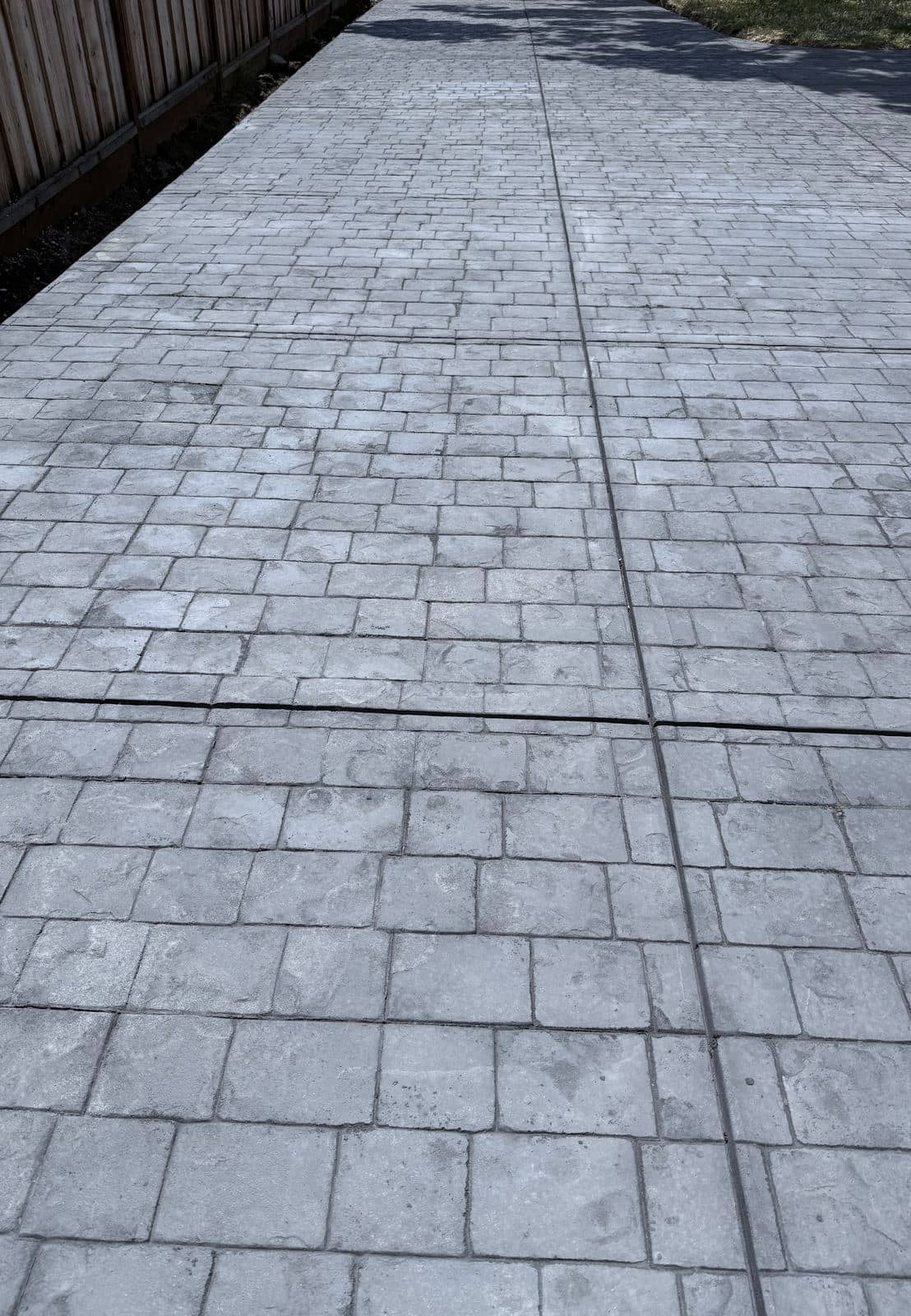 Stamped Concrete
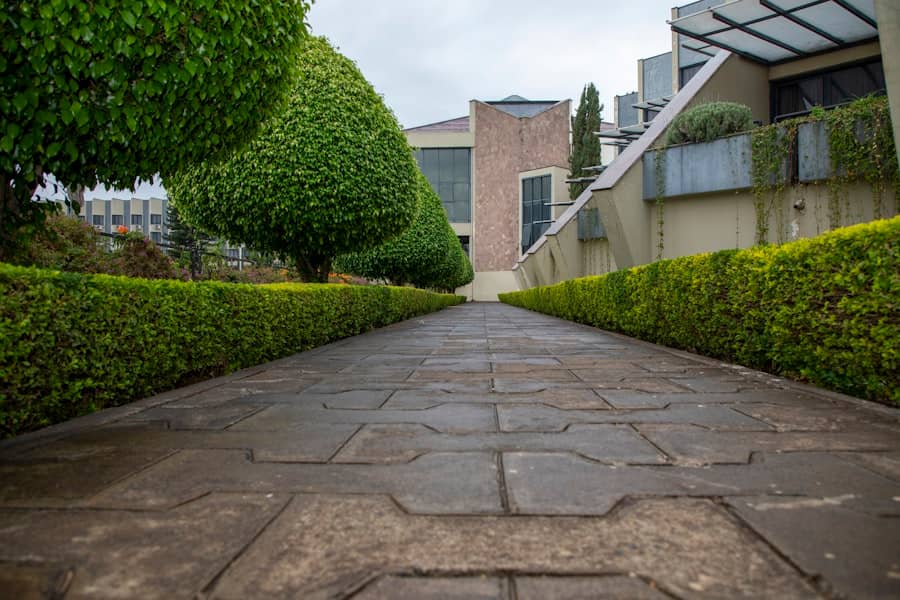 Stamped Concrete
Stamped Concrete Questions
Transformations
Stamped Concrete: Before & After
Representative comparisons of the condition we're typically called to, and what the finished work achieves. Drag the handle across each frame.
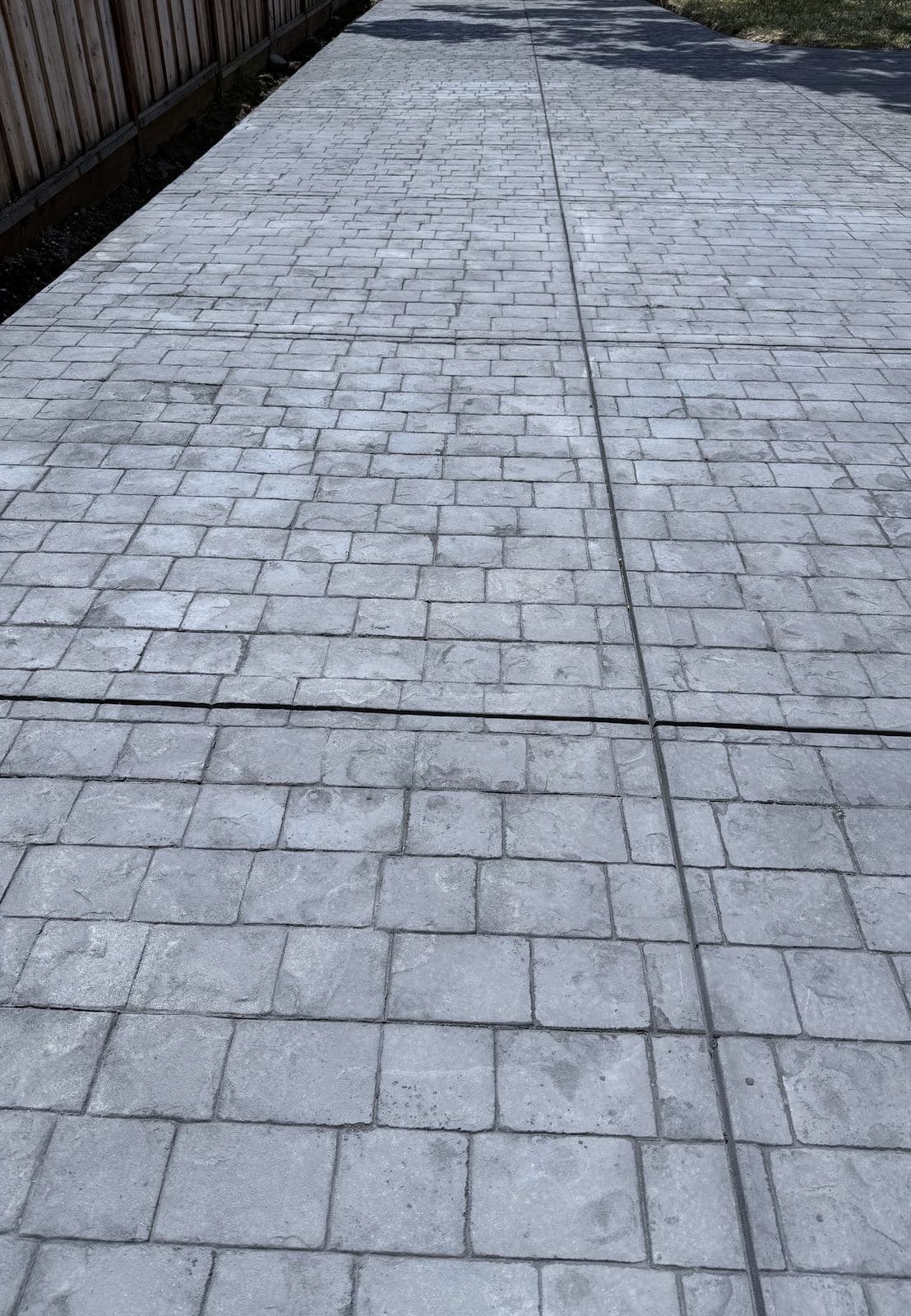
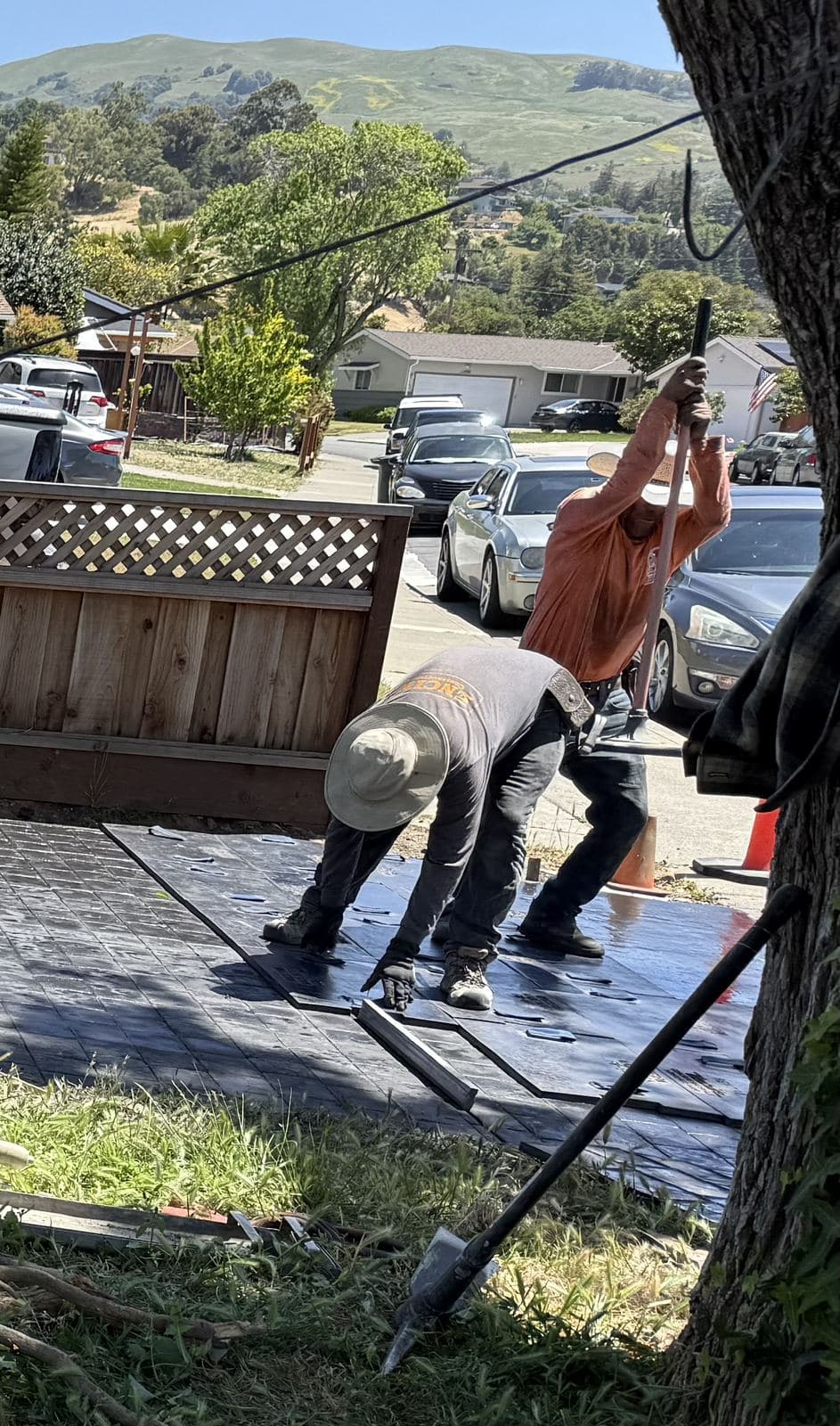
Bay Area driveway build
Stamped driveway installation
Stamping has to happen while the slab is still plastic, which gives a narrow window to set the pattern, texture, and joint lines correctly across the whole pour before it sets up. Cured and sealed, it reads as cut stone rather than poured concrete.
- Ashlar stone pattern set consistently across the full driveway
- Joint lines placed to read as natural stone coursing
- Sealed finish protects the color and texture from tire wear
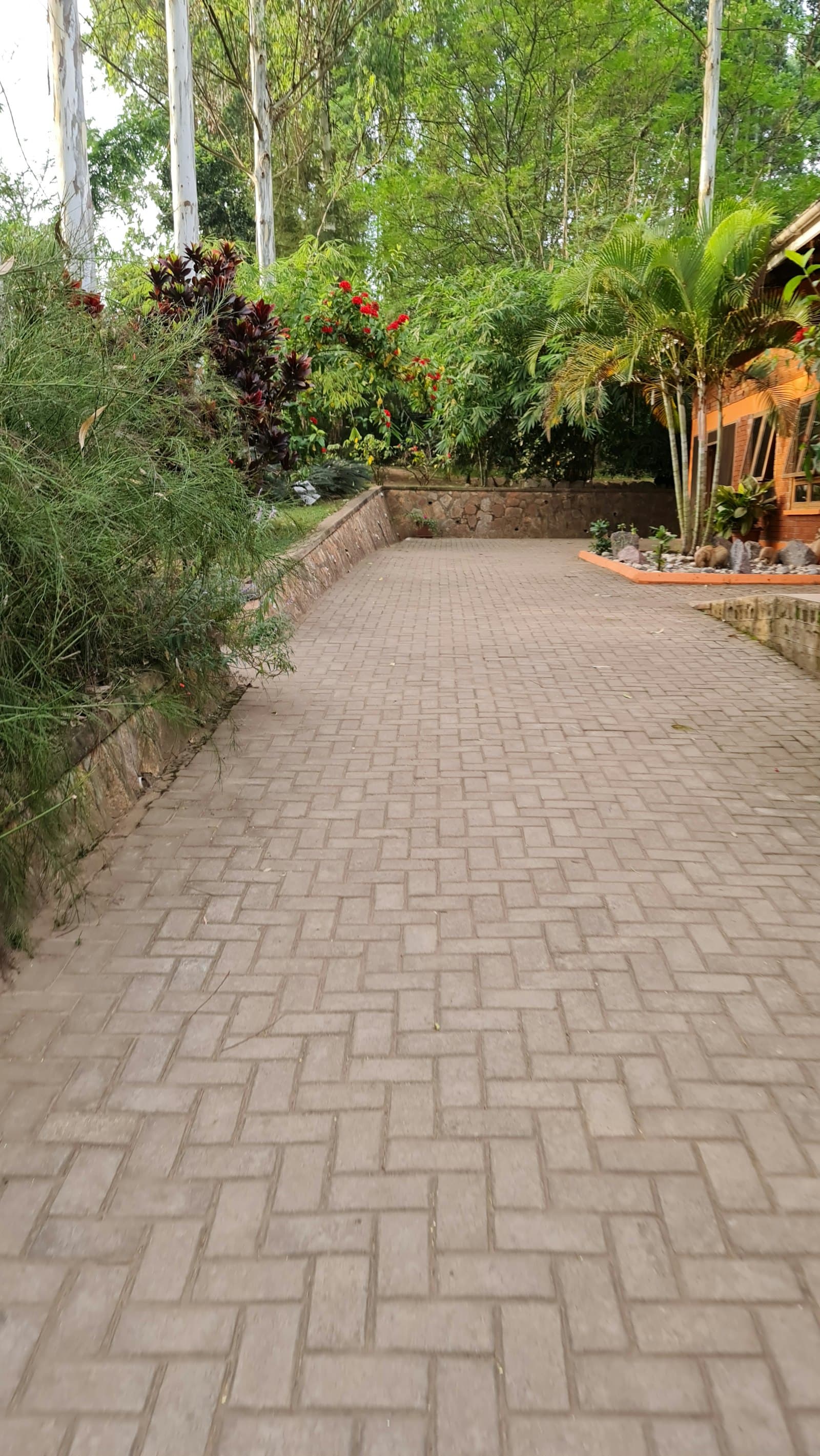
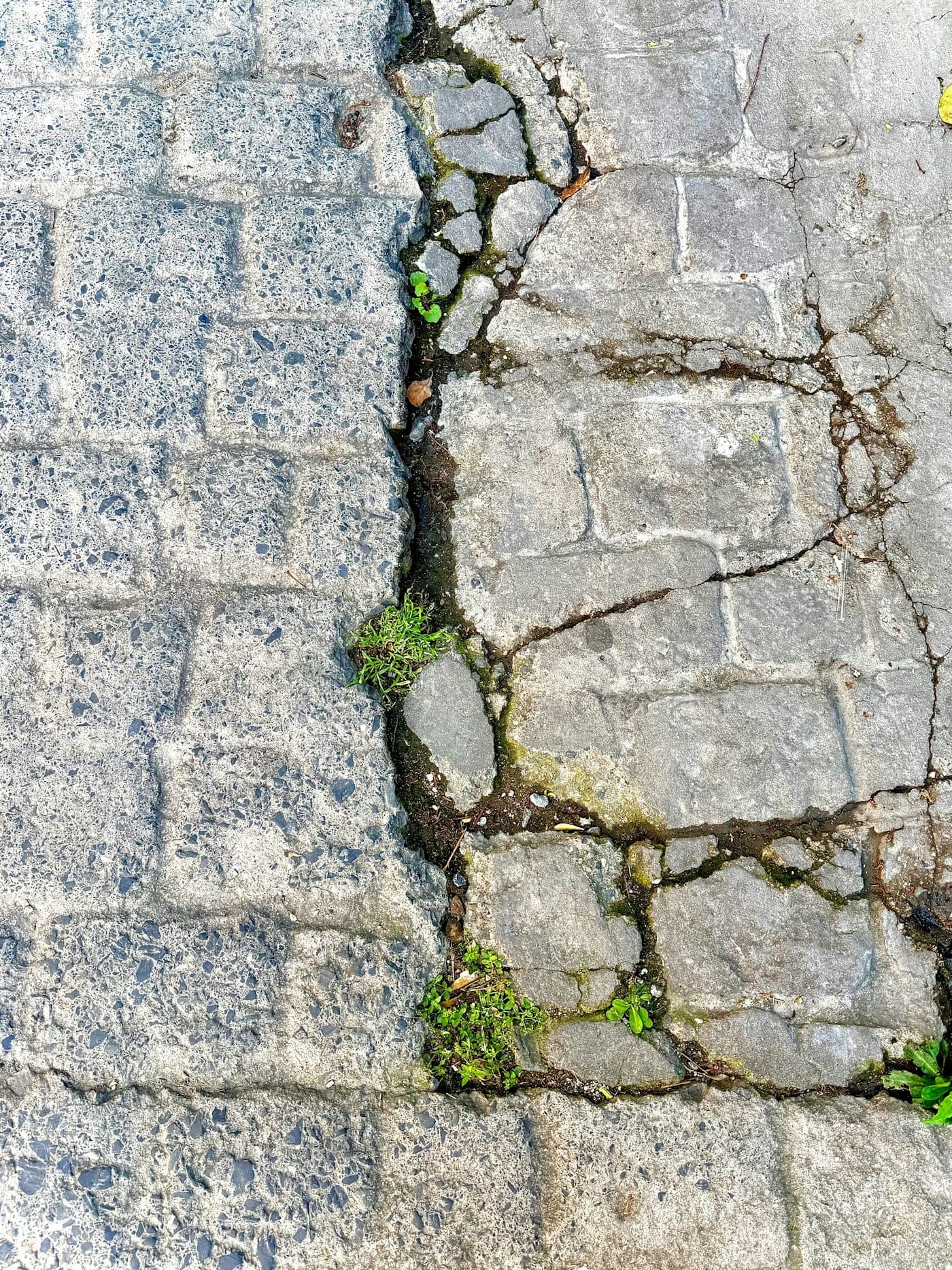
Mature street-tree frontage
Front walkway & entry
Root heave from a protected street tree had lifted three panels into a trip hazard and opened the joints to weeds. Replaced with a root barrier, a flexible joint at the tree side, and a patterned finish that ties the entry to the house.
- Trip hazard removed and the accessible route reinstated
- Root barrier installed without harming the protected tree
- Decorative finish that lifts the whole entry approach
Drag the handle — or use the arrow keys — to compare the condition before and after.
More Concrete Flatwork Services
Related work we handle, often on the same project as this one.
Often Quoted Alongside This
Work from our other category that regularly shows up on the same site visit.
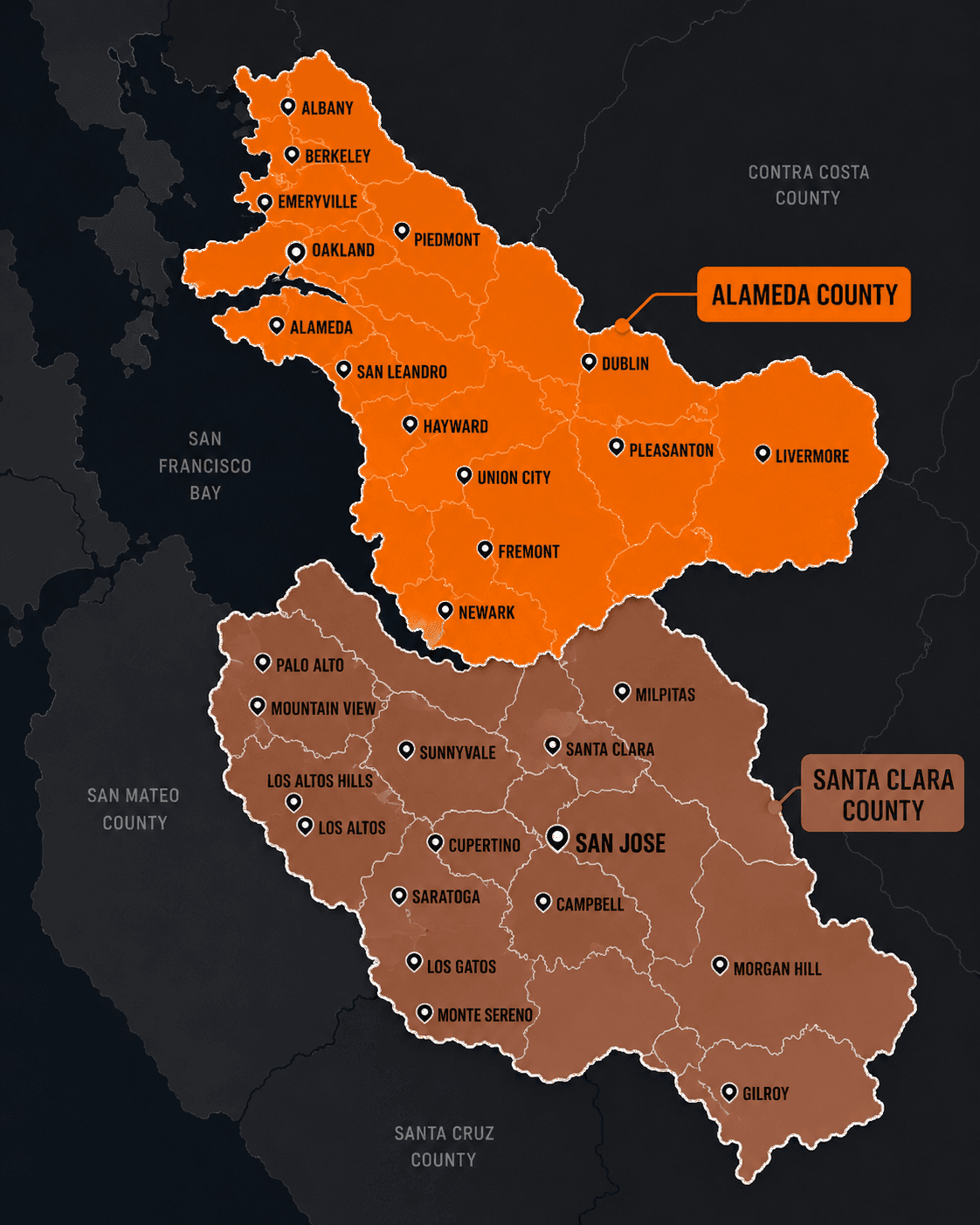
55 Cities Served
Santa Clara, Alameda, San Mateo & Santa Cruz counties
Service Area
Where We Provide Stamped Concrete
We provide stamped concrete across 55 cities in Santa Clara, Alameda, San Mateo, and Santa Cruz counties. Ground conditions, permitting, and the failure modes we see vary city by city, so each has its own page.
Counties
Read Before You Decide
Guides from our Learning Center that bear directly on this kind of work.
People Also Ask
The questions we're asked most about stamped concrete, each answered in full.
See Stamped Samples in Person
Pattern and color choices are much easier with physical samples in your hands, on site, in your own light. We'll bring them to your free estimate.