Interior Surfaces
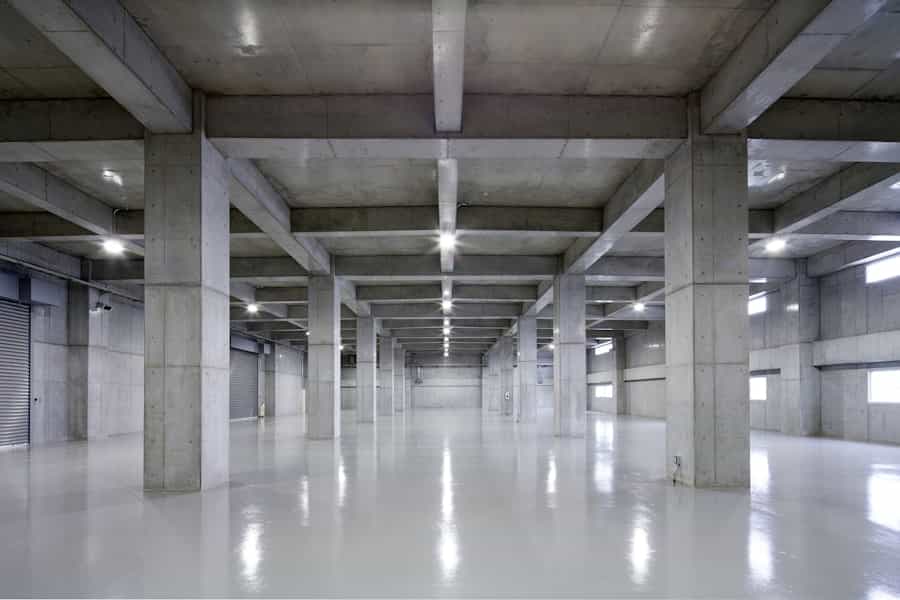
Polished Concrete Flooring for Homes and Businesses
Mechanically ground and polished interior floors — durable, low-maintenance, and made from the slab already in place.
- Process
- Diamond grind, densify, polish
- Gloss levels
- Matte through high polish
- Maintenance
- Dust mop and neutral cleaner
- Lifespan
- Decades with no recoating
Concrete Flooring — At a Glance
Mechanically ground and polished interior floors — durable, low-maintenance, and made from the slab already in place. Dueling Trowels Concrete Solutions provides polished concrete flooring contractor services across 55 cities in Santa Clara, Alameda, San Mateo, and Santa Cruz counties, including San Jose, Oakland, Fremont, and Sunnyvale. Licensed, insured, and backed by a written workmanship warranty. Free written estimates.
Polished Concrete Isn't a Coating
It's the same slab, refined. Nothing is added on top — the finish is created by progressively grinding the surface itself.
The process runs a series of diamond abrasives across the floor, each finer than the last. Early passes cut through the soft surface layer and flatten the slab. Later passes refine the exposed surface until it develops a sheen from the density of the concrete itself, not from a film sitting on top of it.
A densifier is applied partway through — a liquid that penetrates and chemically hardens the concrete, making the surface substantially more resistant to abrasion and dusting. This is why a properly polished floor holds up under decades of traffic while a painted or epoxy-coated floor eventually chips, peels, and needs redoing.
How aggressively the first cut goes determines the look. A light cut leaves a mostly smooth surface with occasional small aggregate showing. A deeper cut removes the entire cream layer and exposes the stone throughout, producing a terrazzo-like appearance. That decision is permanent, so it's worth deciding deliberately rather than discovering.
Gloss Levels
Polish level is a specification, not a vague preference. These are the four standard grades.
| Level | Appearance | Typical Use |
|---|---|---|
| Level 1 — Flat | Matte, no reflection | Warehouses and back-of-house areas where function is all that matters |
| Level 2 — Satin | Low sheen, soft light return | Garages, workshops, and interiors wanting an understated look |
| Level 3 — Semi-Polished | Clear reflection at an angle | Retail spaces, offices, and most residential interiors |
| Level 4 — Highly Polished | Mirror-like, sharp reflections | Showrooms and feature spaces where the floor is a design element |
Where Polished Concrete Makes Sense
Living Spaces
Converted garages, basements, sunrooms, and open-plan interiors. Pairs particularly well with radiant floor heating, since concrete stores and releases heat efficiently.
Garages and Workshops
A sealed, densified floor doesn't produce concrete dust, resists oil staining far better than bare concrete, and sweeps clean instead of holding grit in the pores.
Commercial Interiors
Retail floors, offices, restaurants, and showrooms where the floor needs to handle constant foot traffic without looking worn within a few years.
What Your Slab Needs to Be a Candidate
Not every existing floor can be polished successfully. These are the practical requirements.
- Structurally sound with no active cracking or ongoing settlement
- Reasonably flat — significant dips and humps limit how evenly it can be ground
- Free of existing coatings, or budgeted for the removal of them
- Acceptable moisture vapor transmission, verified by testing
- Consistent concrete throughout — large patches in a different mix will always stand out
- Aggregate you'd actually want exposed if a deeper cut is planned
- Clear access for grinding equipment, which is large and heavy
- Realistic expectations about existing stains, which grinding may or may not remove
The Grinding and Polishing Sequence
Assess and Prepare
Moisture testing, coating removal, and repair of any cracks or spalls before grinding starts. Prep decides the ceiling on the final result.
Coarse Grinding
Metal-bonded diamonds cut the surface flat and open it up, establishing whether the finished floor shows cream, salt-and-pepper, or full aggregate.
Densify and Harden
A chemical densifier penetrates the open surface and reacts internally, hardening the concrete and preparing it to take a polish.
Fine Polishing
Progressively finer resin-bonded diamonds refine the surface to the specified gloss level, followed by a guard or protective treatment.
Test for Moisture Before You Commit
Slabs poured directly on grade without a vapor barrier — common in older Bay Area homes and converted garages — can continuously move moisture upward from the soil below. That moisture will eventually push any surface treatment off the floor, no matter how well it was applied. A moisture vapor test costs very little and takes a few days. Skipping it is how people end up paying twice.
Concrete Flooring Questions
Transformations
Concrete Flooring: Before & After
Representative comparisons of the condition we're typically called to, and what the finished work achieves. Drag the handle across each frame.
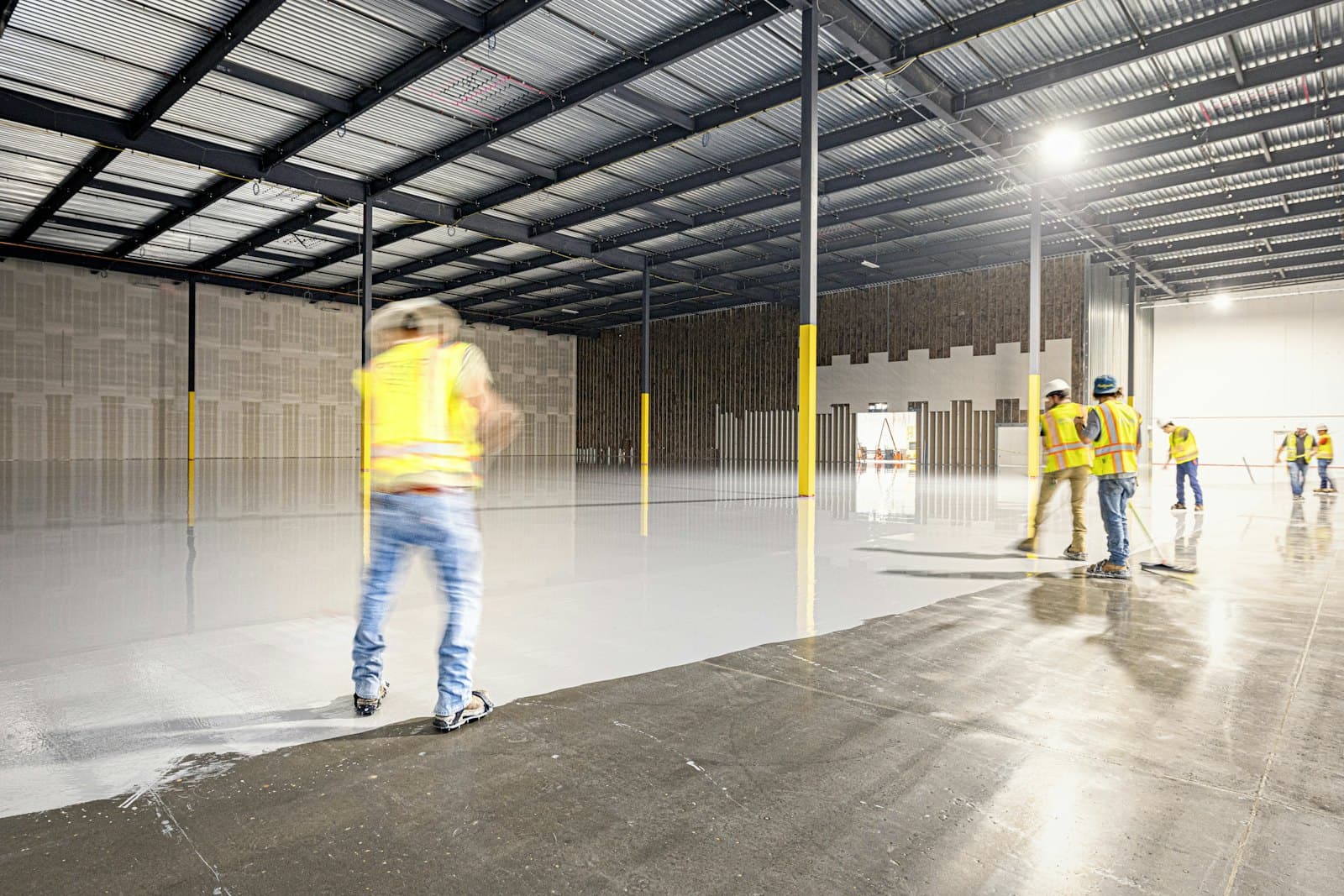
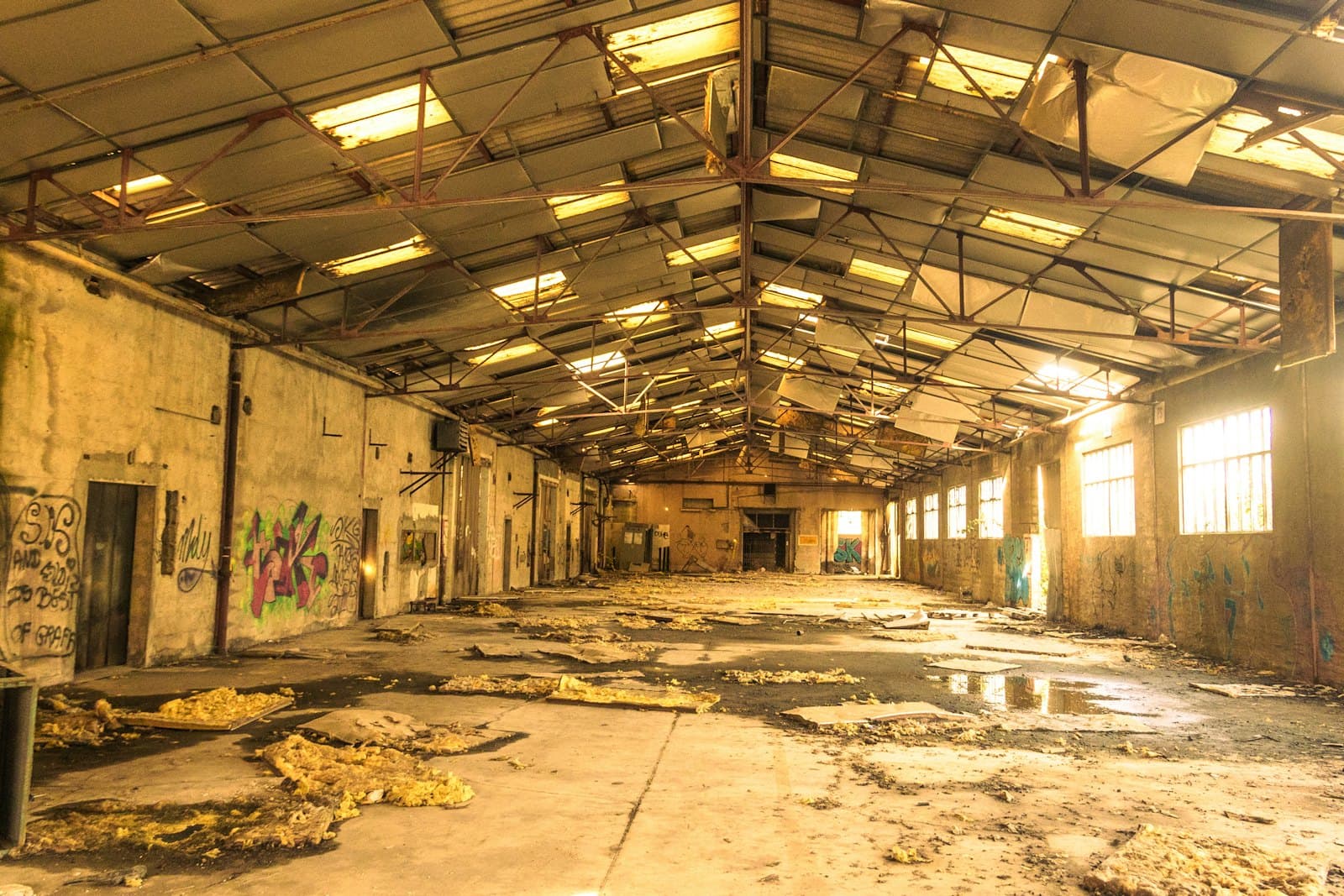
Distribution warehouse
Industrial floor slab
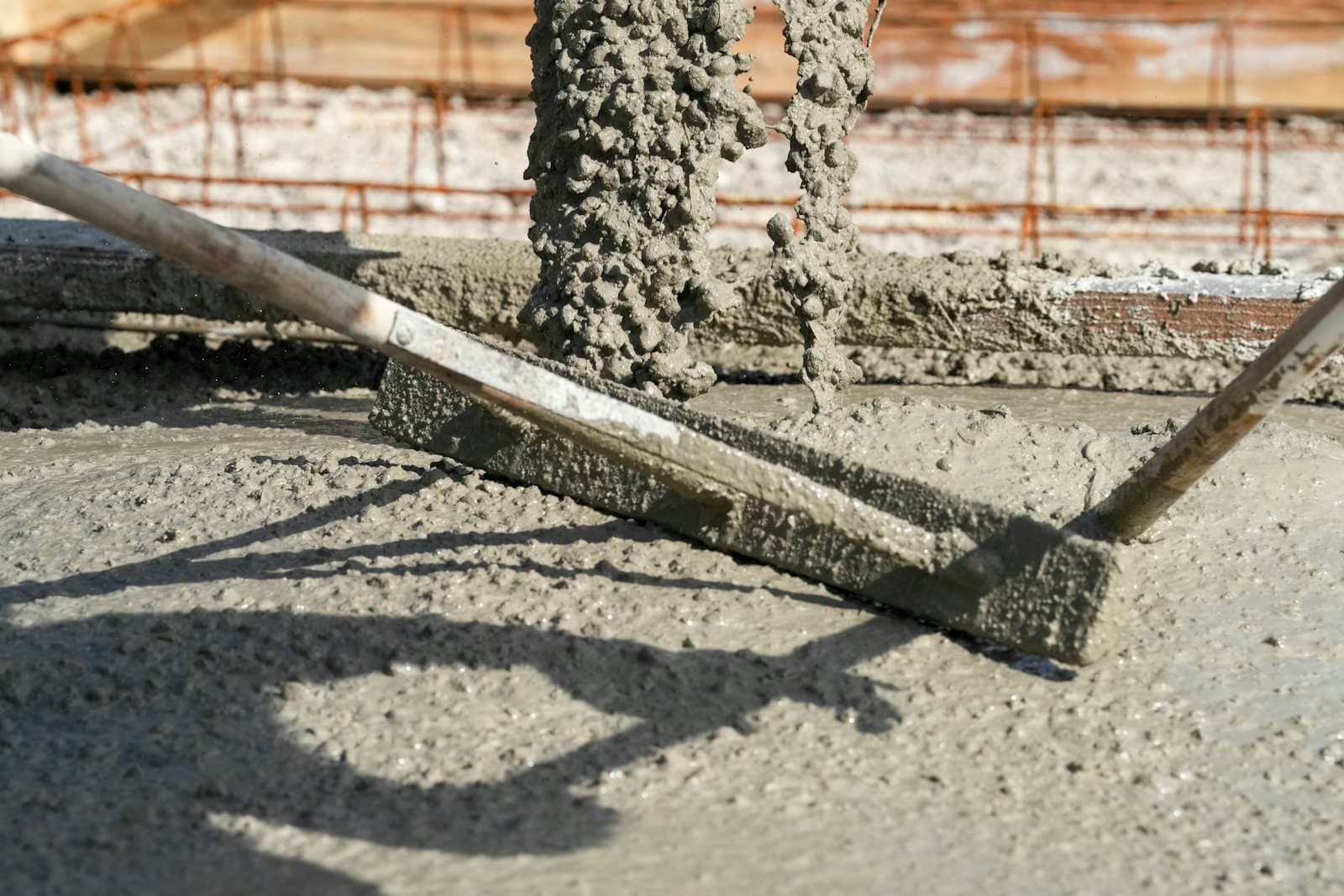
A worn warehouse slab with spalled joints that were shaking forklifts apart and a surface too dusty to keep clean. Joints were rebuilt with armored edges, the slab ground flat, then densified and polished.
- Armored joints that stop edge spalling under wheel loads
- Flatness restored to specification across the racking aisles
- Densified surface — no more slab dust in the operation
Side-yard utility slab
Structural slab repair
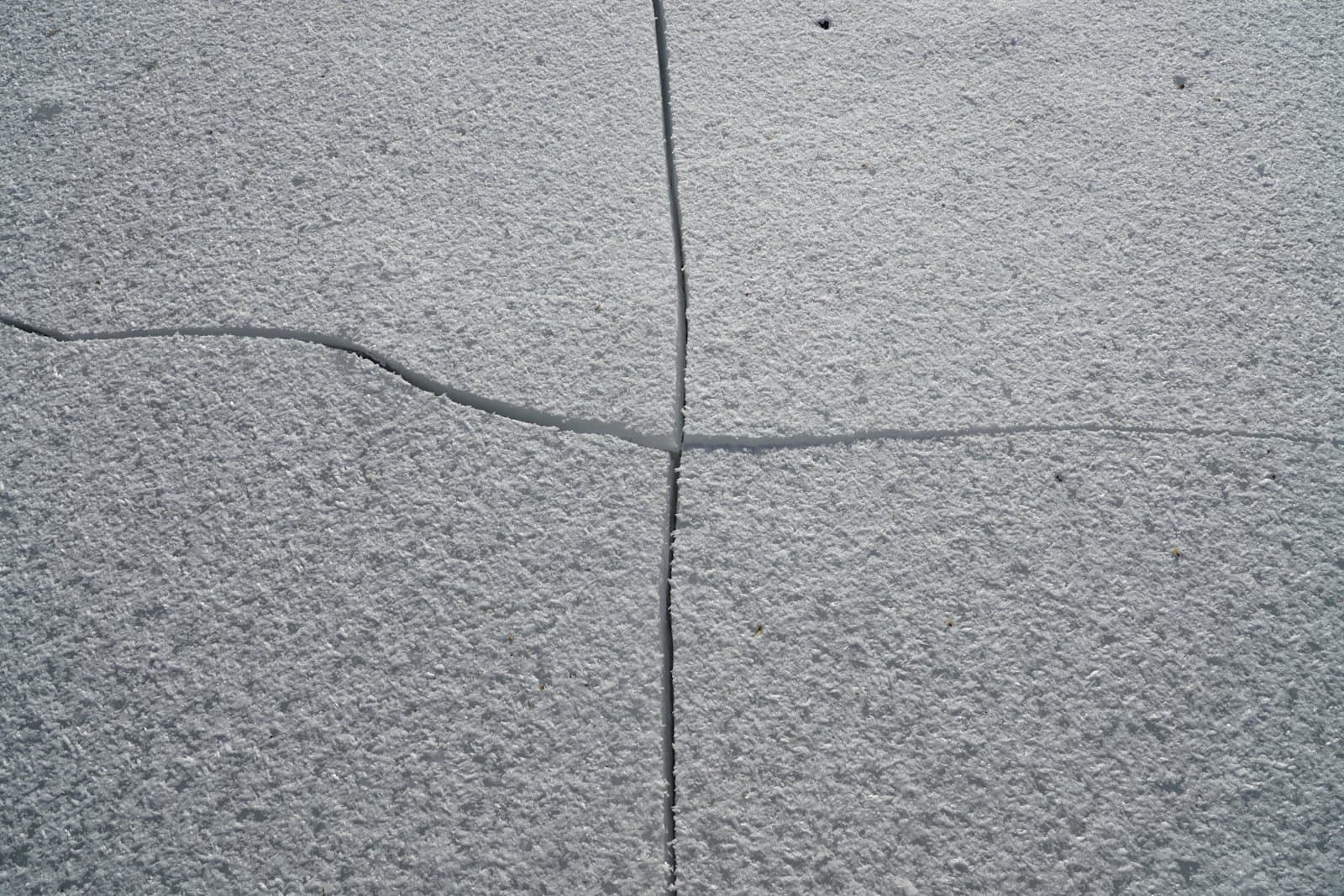
A slab with a wide crack and a visible height difference across it — the tell that the ground beneath had moved rather than the concrete simply shrinking. Repair was the wrong answer here, so the affected bay was removed, the base rebuilt, and the section repoured.
- Root cause fixed in the base, not covered over at the surface
- Only the failed bay replaced, keeping cost down
- New section tied to the old with dowelled joints
Drag the handle — or use the arrow keys — to compare the condition before and after.
More Concrete Flatwork Services
Related work we handle, often on the same project as this one.
Often Quoted Alongside This
Work from our other category that regularly shows up on the same site visit.
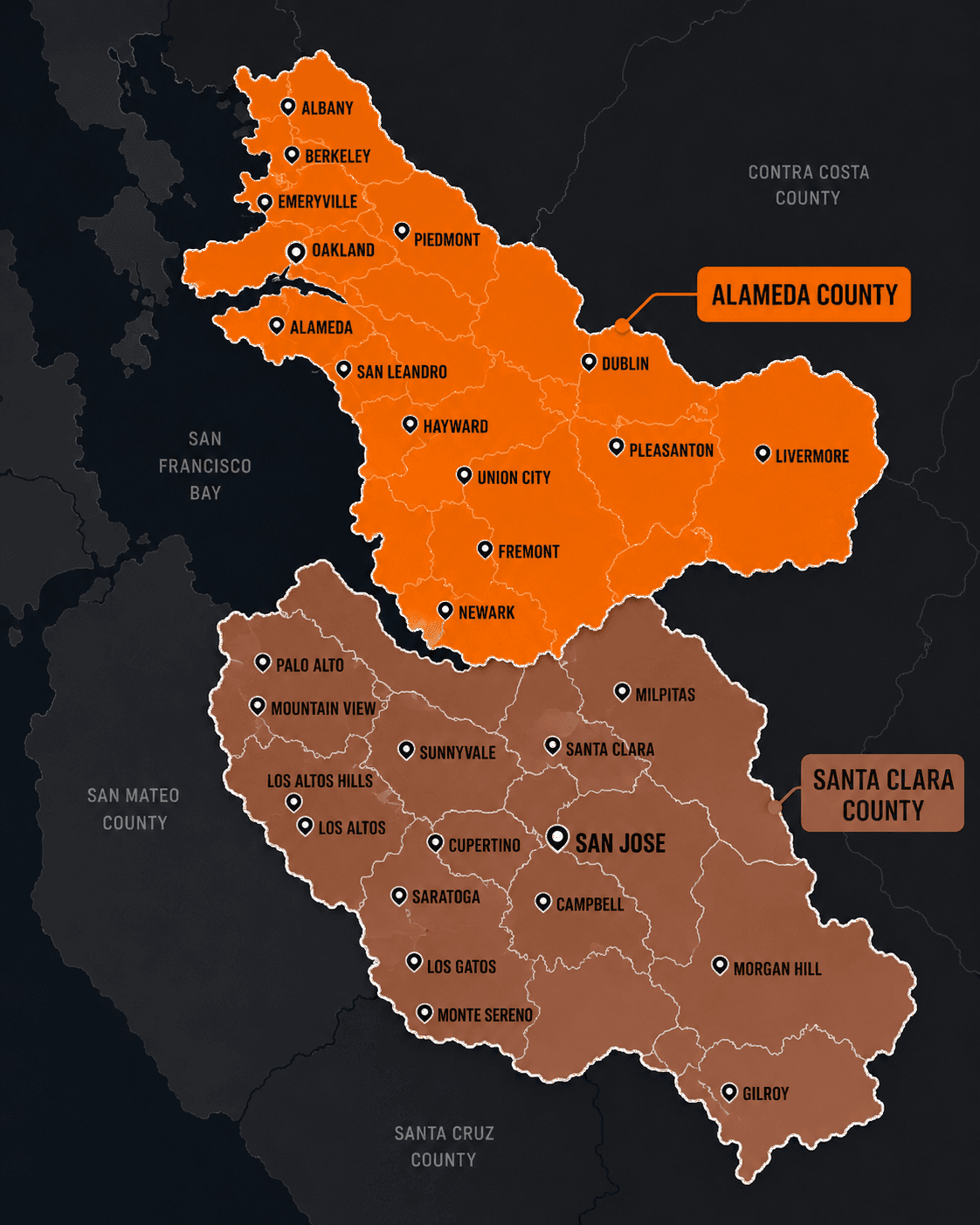
55 Cities Served
Santa Clara, Alameda, San Mateo & Santa Cruz counties
Service Area
Where We Provide Concrete Flooring
We provide concrete flooring across 55 cities in Santa Clara, Alameda, San Mateo, and Santa Cruz counties. Ground conditions, permitting, and the failure modes we see vary city by city, so each has its own page.
Counties
Read Before You Decide
Guides from our Learning Center that bear directly on this kind of work.
People Also Ask
The questions we're asked most about concrete flooring, each answered in full.
Thinking About Polishing an Existing Slab?
We'll assess the floor, run a moisture test, and tell you what result is realistically achievable before you spend anything.