Quick answer
How much do polished concrete floors cost?
Polished concrete typically costs $5–$12 per square foot when it uses the slab you already have. The low end is a sound, clean slab polished to a satin finish; the high end includes removing old coatings or adhesives, repairing cracks, adding color, and polishing to high gloss. Epoxy coatings cost less upfront at about $3–$8 per square foot, but polished concrete lasts far longer because there's no coating to peel.
- Polished concrete
- $5–$12 / sq ft
- Epoxy coating
- $3–$8 / sq ft
- Polished lifespan
- 25–40+ years
- Epoxy lifespan
- 3–10 years
Polished concrete cost ranges
- Satin polish on a clean, sound slab$5–$7
Lowest cost — minimal prep.
- Semi-gloss to high gloss$7–$10
More passes with finer diamonds.
- With coating or adhesive removal$8–$12
Grinding off old flooring residue.
- Epoxy coating (for comparison)$3–$8
Lower upfront, shorter life.
per square foot
Small rooms cost more per square foot because equipment setup is the same.
What you're paying for
Polishing turns the existing slab into the finished floor. The process starts with coarse diamond grinding to remove the surface skin, old coatings, and minor imperfections, then works through progressively finer grits. A densifier — usually lithium silicate — is applied partway through to harden the surface, and the final passes bring it up to the chosen sheen. A penetrating guard finishes it against stains.
Most of the cost is machine time and labor. Each step from coarse to fine is a full pass over the floor, so a higher gloss means more passes. Preparation is the big variable: a new slab with no coatings polishes quickly, while a floor with carpet glue, tile thin-set, paint, or old epoxy can need hours of extra grinding before polishing even starts.
Before and after
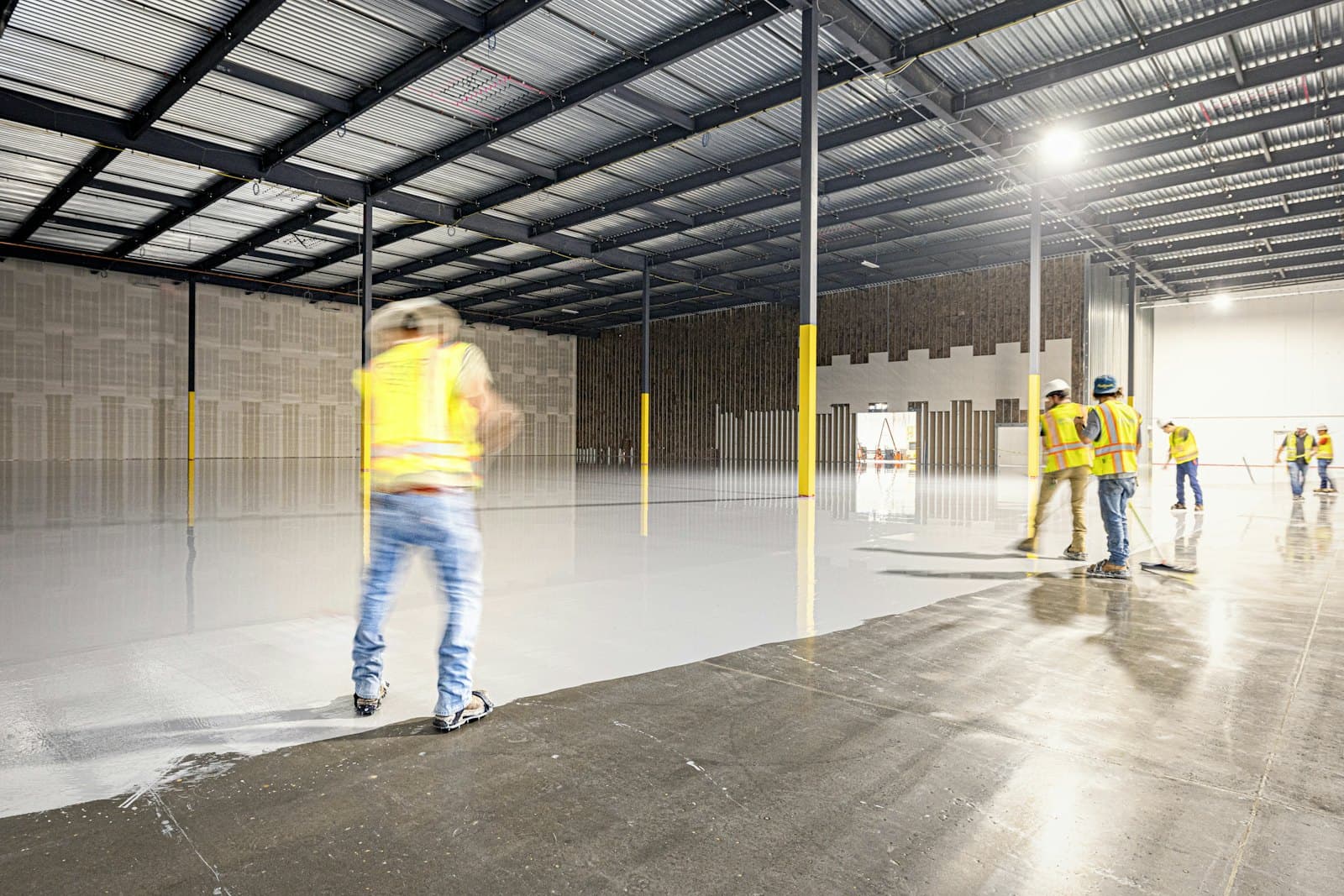
What drives the price
| Factor | Effect on cost |
|---|---|
| Existing coatings, glue, or thin-set | Adds grinding time |
| Cracks and holes to repair | Adds patching |
| Gloss level | Higher gloss = more passes |
| Aggregate exposure (salt & pepper vs. full stone) | Deeper grind = more time |
| Color or dye | Adds a step |
| Room size and layout | Small, cut-up rooms cost more per sq ft |
| Slab condition and flatness | Uneven slabs need more grinding |
Polished concrete vs. other floors
Polished concrete
Pros
- Uses the existing slab
- Nothing to peel or delaminate
- Very low maintenance
- 25–40+ year life
Cons
- Higher upfront than epoxy
- Shows slab character and repairs
- Hard underfoot
Epoxy coating
Pros
- Lower upfront cost
- Wide range of colors and flakes
- Good chemical resistance when intact
Cons
- Peels with moisture or hot tires
- Needs recoating in 3–10 years
- Prep is critical
Tile, vinyl, or wood over the slab
Pros
- Softer or warmer feel
- Many styles
Cons
- Added material cost
- Replacement cycles
- Moisture sensitivity on slabs
Garages, homes, and commercial floors
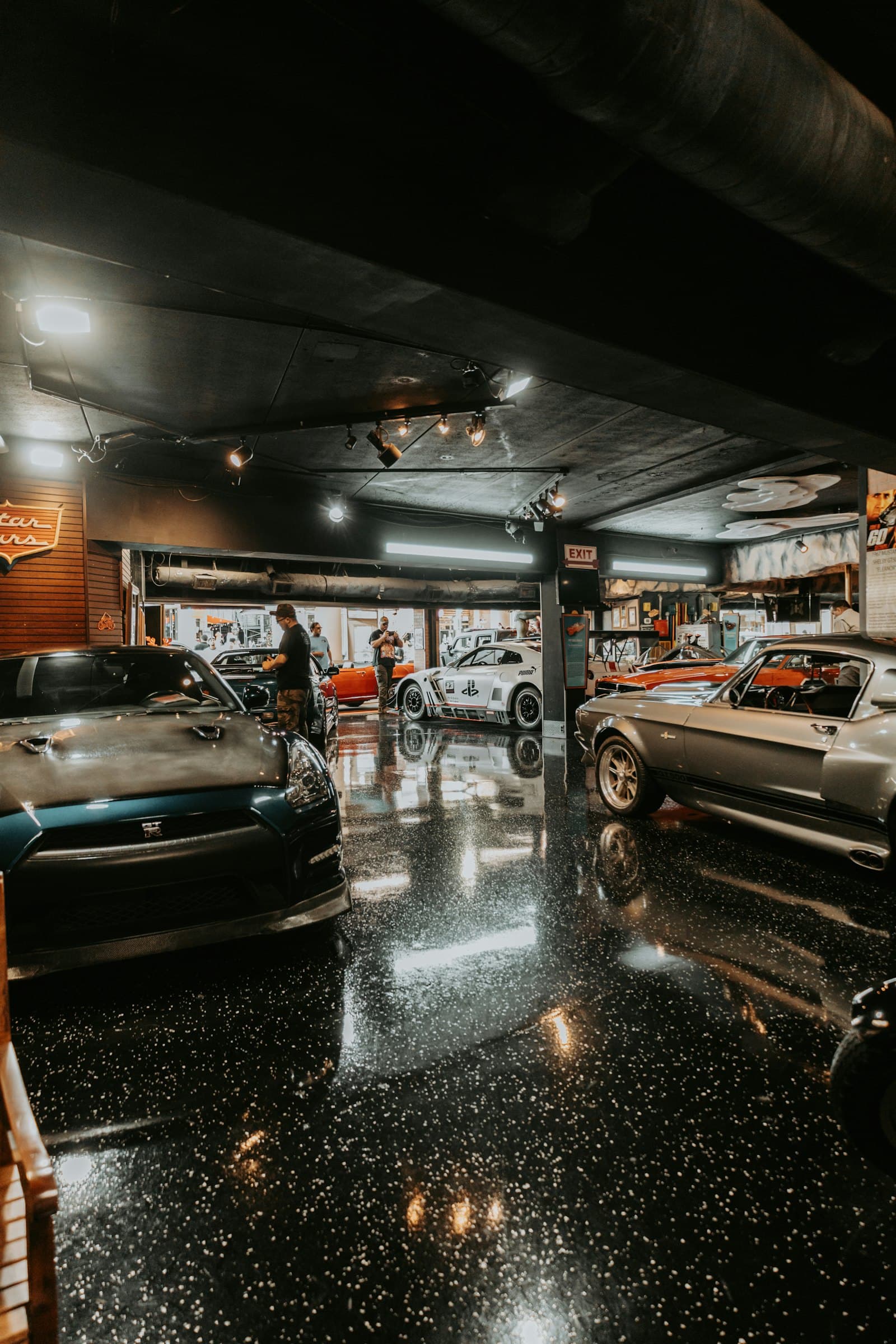
Garages are one of the most popular uses. Polished concrete handles hot tires and moisture coming up through the slab better than epoxy, and spills wipe up from the densified surface. A lighter satin finish keeps traction reasonable.
In homes, polished floors appear most often after carpet or tile is removed from a slab-on-grade house, and in open-plan living areas, kitchens, and ADUs. Radiant floor heating works well under polished concrete.
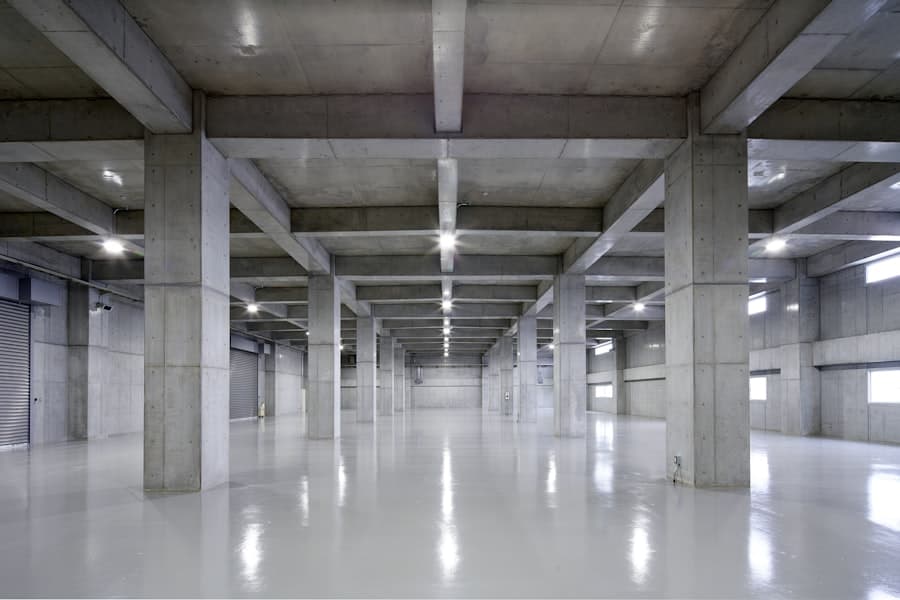
Commercial and warehouse floors benefit from the low maintenance and light reflectivity. Large open areas are the most cost-efficient per square foot, and densifying alone is an option where dust control matters more than shine.
The polishing process, step by step
Every polished floor follows the same basic sequence. The number of passes is what changes the cost.
Assess and test
Check slab hardness, flatness, moisture, and existing coatings. Test a small area to see how the slab grinds.
Remove coatings and adhesives
Strip epoxy, paint, carpet glue, or thin-set with aggressive grinding tooling.
Repair the slab
Fill cracks, holes, and joints with a compatible repair material so they grind flush.
Coarse grinding
Metal-bond diamonds flatten the surface and set the aggregate exposure level.
Densify
Apply a lithium silicate densifier to harden the surface for polishing and wear.
Hone and polish
Resin-bond diamonds in progressively finer grits bring up the sheen.
Guard and burnish
Apply a penetrating stain guard and burnish to the final gloss.
Gloss levels and aggregate exposure
| Choice | What it looks like | Cost effect |
|---|---|---|
| Matte / satin | Low sheen, soft reflection | Fewest passes |
| Semi-gloss | Clear reflection of lights | More passes |
| High gloss | Mirror-like reflection | Most passes |
| Cream (no exposure) | Smooth, uniform paste surface | Light grind |
| Salt & pepper | Fine sand and small aggregate visible | Moderate grind |
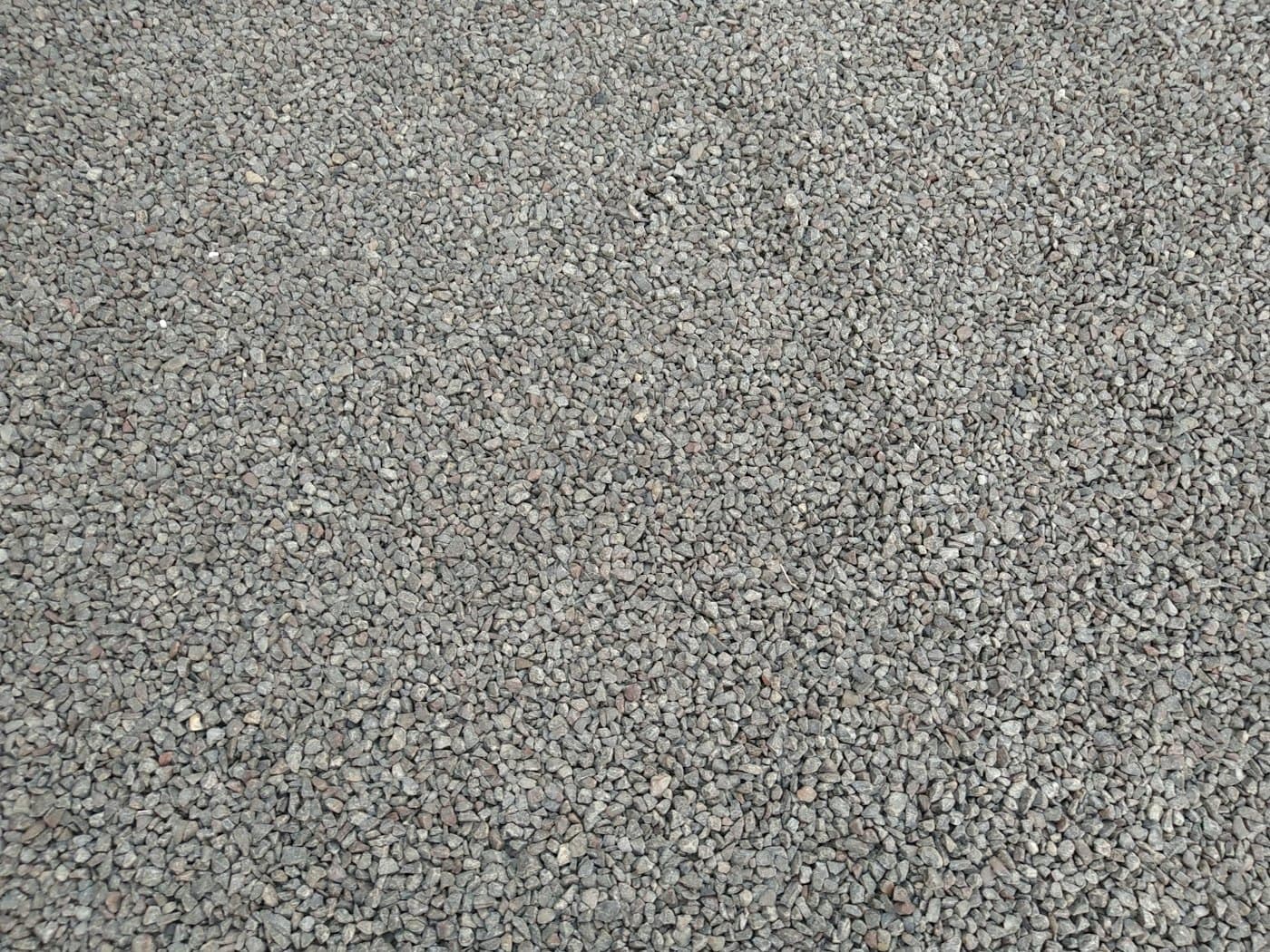
| Full aggregate exposure | Larger stones exposed | Deep grind, most time |
Moisture and older slabs
Moisture vapor rising through a slab is the most common reason epoxy and other coatings fail on older Bay Area homes, many of which were built before modern vapor barriers were standard. Polished concrete handles that moisture much better because there's no film on top to blister or peel; the slab can breathe.
Moisture still matters for some steps — dyes and certain guards perform differently on damp slabs — so testing is part of the assessment. Where moisture is high, the system can be adjusted rather than abandoned.
Garage floors
Residential floors after flooring removal
In slab-on-grade houses, removing worn carpet or old tile reveals a concrete floor that can often become the finished floor. It's a common choice in open-plan living areas, kitchens, and ADUs because it's durable, easy to clean, and works well with radiant heating.
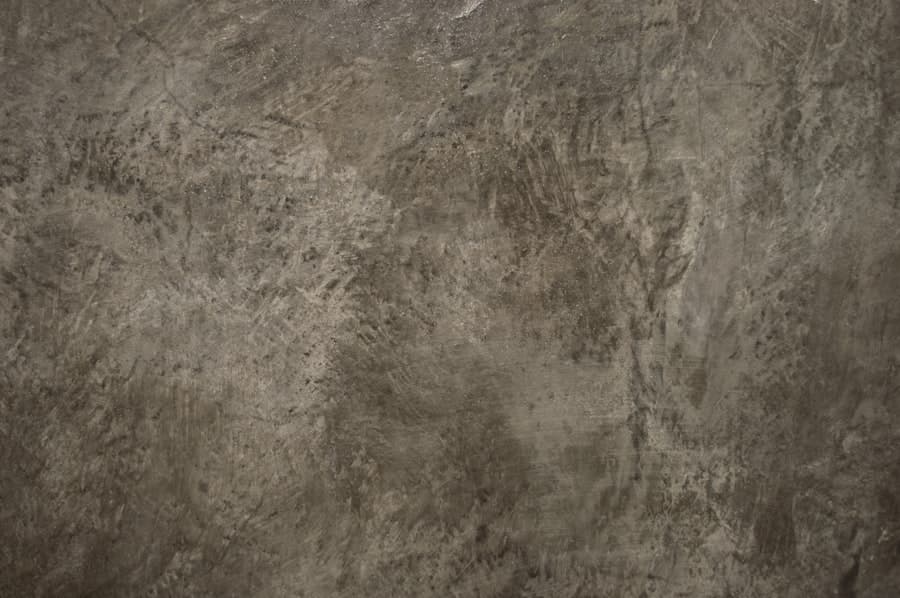
Expect some history to show: tack-strip holes along walls, old patch lines, and slight color variations where walls or cabinets once stood. Grinding and patching soften these, and dyes can blend them, but polished concrete always shows some character. For many owners that's the appeal; for others, a thin overlay before polishing gives a more uniform canvas at added cost.
Furniture pads and entry mats protect the finish, and a dust mop handles daily care. Polished concrete is hard underfoot, so rugs in seating areas make rooms more comfortable.
Commercial and warehouse floors
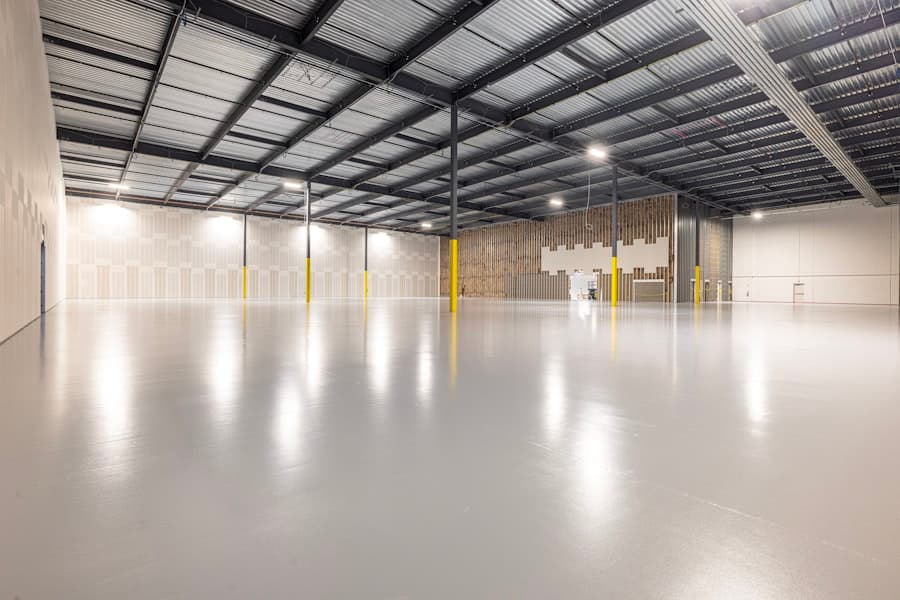
In commercial spaces the economics shift. Large open floors polish efficiently, and low maintenance costs over years often outweigh the upfront price. Retail spaces value the reflectivity, which brightens the space; warehouses value dust control and abrasion resistance.
Not every industrial floor needs a full polish. Densifying and a light hone can deliver most of the dust-control and durability benefit at lower cost. Joints in busy forklift aisles should be filled with a semi-rigid filler before polishing so the edges are protected.
Work can be phased in zones so a business keeps operating, which affects scheduling and price.
Maintaining a polished floor
Daily: dust mop or use a microfiber pad to remove grit, which is the main thing that dulls the surface. Weekly: damp mop with a pH-neutral cleaner made for polished concrete. Avoid acidic cleaners, vinegar, and harsh degreasers, which can etch the surface or strip the guard.
High-traffic areas benefit from periodic re-burnishing with a high-speed burnisher to restore gloss, and the stain guard can be reapplied as needed. Compared with recoating epoxy or replacing other floor coverings, this upkeep is minimal.
Polished concrete in new construction
Polishing is easiest and most economical when it's planned before the slab is poured. The concrete mix, finishing, curing, and protection during construction all affect the final result. A slab planned for polishing is finished flatter, cured without materials that stain the surface, and protected from trades who would otherwise drag equipment, spill paint, or leave plumbing primer stains.
For new homes, additions, and ADUs, telling the builder and concrete crew early that the floor will be polished avoids expensive corrective grinding later. It also lets you decide on aggregate exposure in advance — a full stone exposure needs the right aggregate near the surface.
Polished concrete vs. other hard floors
| Floor | Upfront cost | Lifespan | Upkeep |
|---|---|---|---|
| Polished concrete | $5–$12 / sq ft | 25–40+ years | Dust mop, neutral cleaner, occasional burnish |
| Epoxy coating | $3–$8 / sq ft | 3–10 years | Recoat; watch for peeling |
| Densified only | Lower than full polish | Long-lived | Low; matte appearance |
Common surprises and how to avoid them
The most common surprise is how much of the slab's history shows: old patches, cracks, and color variation. The second is that removing old coatings can take far longer than expected, especially thick epoxy or mastic glues. The third is that some slabs are softer than others and won't reach a high gloss without extra densifying and passes.
All three are reduced by a test area. Grinding and polishing a small section before committing shows how the slab responds, what the aggregate looks like, and how much prep the coatings need. It's a small cost that sets realistic expectations.
Commercial polished floors
How long a polishing project takes
Time on site depends on area, preparation, and gloss level. A typical residential room or garage takes one to three days. Floors with thick coatings or adhesives can add a day or more of grinding. Commercial floors are often scheduled in zones over several days or nights so a business can keep running.
Unlike coatings, polished concrete has no long cure time before use. Once the final guard is applied and dry, the floor can generally take foot traffic, and furniture can return soon after. That quick return to service is part of its appeal for occupied homes and businesses.
Adding color and design
Color can be introduced with dyes during polishing, giving anything from subtle earth tones to bold colors. Dyes penetrate the densified surface and are protected by the guard, but some are less UV-stable, so floors in strong direct sunlight may favor certain products or tones.
Saw-cut lines, scored patterns, and borders can be added for a tile-like layout. Logos and graphics are possible in commercial spaces. Aggregate exposure itself is a design choice: a cream finish reads smooth and modern, a salt-and-pepper finish adds subtle texture, and full exposure gives a terrazzo-like look.
Key points on polished concrete cost
- Polished concrete typically costs $5–$12 per square foot on an existing slab.
- Coating removal, repairs, gloss level, and aggregate exposure drive the price.
- Epoxy costs less upfront ($3–$8) but needs recoating far sooner.
- Polished floors last 25–40+ years with simple maintenance.
- A test area shows how your slab will look before you commit.
Densified-only floors: a lower-cost option
Not every space needs a full polish. Densifying a slab — cleaning it, applying a lithium or sodium silicate densifier, and lightly honing or burnishing — hardens the surface, stops dusting, and improves stain resistance at a lower cost than a multi-step polish. The appearance stays matte, closer to the original slab.
This is a good fit for garages and workshops where function matters more than shine, for warehouses with dusting problems, and for floors you may want to polish later. It also prepares the surface well for a future polish.
Questions to ask before hiring
Ask how the contractor will handle existing coatings and adhesives, what grit sequence and final gloss they'll deliver, which densifier and guard they use, how cracks and joints will be filled, and what aggregate exposure to expect. Ask to see a floor they polished a few years ago, not just new work, and whether they'll do a test area.
Clarify dust control too. Professional grinders use dust extraction, but furniture and adjoining rooms still need protection, and occupied homes should plan for some disruption on grinding days.
Resale and long-term value
Polished concrete appeals to buyers looking for durable, low-maintenance floors, particularly in modern homes, lofts, and ADUs. Because it doesn't wear out the way carpet or coatings do, a well-maintained polished floor still looks good years later, which helps when a home is listed. The main consideration is style — in traditional homes, buyers may prefer warmer finishes in living spaces, so polished concrete often makes the most sense in garages, kitchens, and open-plan areas.
Radiant heating and polished concrete
Polished concrete pairs well with in-floor radiant heating. Concrete stores and releases heat evenly, and with no covering on top, heat transfers efficiently into the room. That combination addresses the most common complaint about concrete floors — that they feel cold — and is popular in new homes and ADUs.
Radiant systems need to be planned before the slab is poured, with tubing placed at the right depth so later grinding doesn't reach it. If you're considering both, tell the designer and the concrete contractor early so the slab, tubing, and finish are coordinated from the start.
Polished concrete cost questions
Next steps
Standards & references
The published standards and code sections this guide draws on. Requirements vary by jurisdiction — your local building department has the final word.
- ACI 302.1R-15: Guide to Concrete Floor and Slab Construction — American Concrete Institute
- ACI 310R-13: Guide to Decorative Concrete — American Concrete Institute
Still deciding?
Ask us about your specific project
We'll give you a straight answer on the phone, including when that means telling you that you don't need the work you asked about. Free written estimates across San Jose & the greater Bay Area.