Structural
Concrete Floor Hardening and Densifying for Industrial Slabs
Chemical densifiers and hardeners for warehouse and industrial floors — extends service life and cuts dusting.
- Chemistry
- Silicate reaction, not a coating
- Return to traffic
- Same day on most floors
- Best timing
- New slabs, before first traffic
- Estimates
- Free & written
Floor Hardening & Densifying — At a Glance
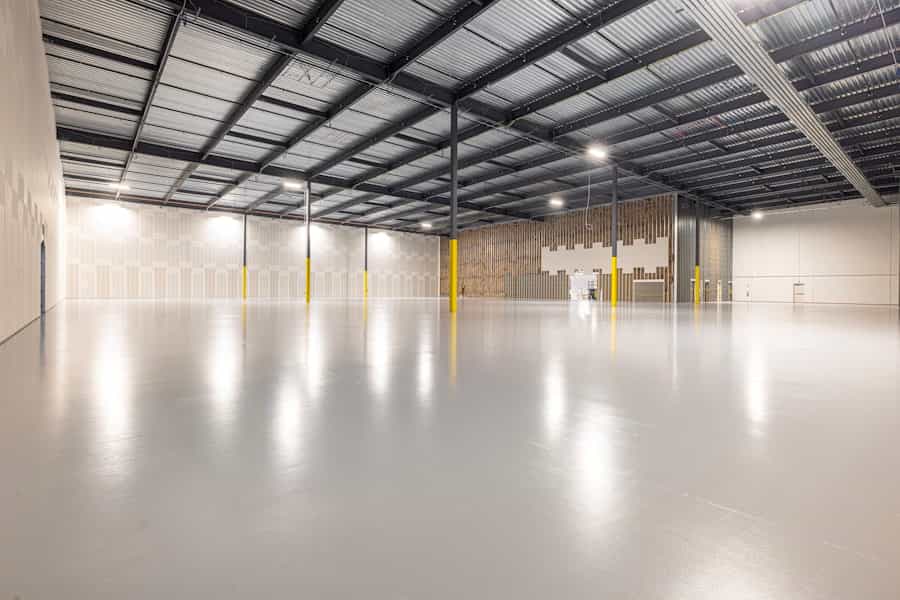
Chemical densifiers and hardeners for warehouse and industrial floors — extends service life and cuts dusting. Dueling Trowels Concrete Solutions provides floor hardening & densifying services across 55 cities in Santa Clara, Alameda, San Mateo, and Santa Cruz counties, including San Jose, Oakland, Fremont, and Sunnyvale. Licensed, insured, and backed by a written workmanship warranty. Free written estimates.
The Dusting Problem
If Your Floor Leaves White Powder on Everything, It's Wearing Out
Concrete cures with a network of tiny capillary pores running through the surface layer. On a warehouse or manufacturing floor, forklift wheels, pallet jacks, and dropped loads grind that weak surface paste loose a fraction at a time. The result is the fine white dust that settles on inventory, gets pulled into equipment, coats racking, and shows up on every audit.
The dust isn't cosmetic — it's the floor itself leaving. Once the surface paste is gone, the aggregate below is exposed and abrasion accelerates, joints start to ravel, and you're on a path toward grinding and overlaying a slab that was structurally fine.
Densifying stops that at the chemistry. A silicate solution flooded onto the floor reacts with free calcium hydroxide left over from cement hydration and forms additional calcium silicate hydrate — the same compound that gives concrete its strength — inside the pores. The surface layer becomes denser and measurably harder, and it stops giving up powder.
- Downtime for racking removal in most zones
- 0Downtime for racking removal in most zones
- Return to traffic on most applications
- Same dayReturn to traffic on most applications
- Reaction — not a surface film
- PermanentReaction — not a surface film
The Three Silicates, and When Each One Fits
All three react the same way. They differ in molecule size, how deep they penetrate, and how much scrubbing and rinsing the application requires.
Lithium Silicate
The smallest molecule, so it penetrates deepest and reacts most completely. It leaves no residue, which means no scrubbing or rinsing after application — a real advantage on a floor that has to go back into service the same day. The most expensive of the three per square foot, and usually the right answer on a floor that's staying exposed.
Sodium Silicate
The traditional and lowest-cost option. It works, but the larger molecule sits nearer the surface and leaves a residue that has to be scrubbed and rinsed off, which adds labor and water to the job. Best suited to large areas where cost per square foot drives the decision and the schedule allows for the cleanup.
Potassium Silicate
The middle ground on both penetration and price, and commonly the densifier of choice ahead of polishing because it works well with the grinding sequence. Requires less cleanup than sodium and costs less than lithium.
How the Application Runs
This is a same-day process on most floors, and it's usually sequenced zone by zone so operations keep running.
Clean and open the surface
Existing coatings, curing compounds, sealers, and oil have to come off — a densifier can only react with concrete it actually reaches. On a floor with a sealer or membrane on it, that means mechanical removal first.
Flood and keep it wet
The silicate is applied at the manufacturer's coverage rate and kept wet on the surface for the specified dwell time, typically worked with a soft broom or microfiber so the whole area stays saturated while it reacts.
Scrub and rinse, or don't
Sodium and potassium products leave residue that has to be scrubbed and picked up before it dries into a haze. Lithium generally doesn't — the floor is simply left to dry, which is why it wins on floors that can't be shut down long.
Cure and return to service
The reaction continues for a period after application. Foot traffic is typically fine within hours and forklift traffic the same day or the next, but the floor keeps getting harder over the following days as the silicate finishes reacting.
Densifier vs. Coating
These solve different problems, and the wrong choice is expensive in both directions.
A Densifier Is Right When
- The problem is dusting, abrasion, and general surface wear
- You want no film to peel, chip, or delaminate later
- The floor has to stay in service through the work
- Forklift and pallet traffic is the main load on the surface
- You want the concrete itself improved rather than covered
A Coating Is Right When
- You need chemical resistance against oils, acids, or solvents
- The floor needs to be a specific color or fully sealed for hygiene
- You need a seamless, non-porous, washdown-rated surface
- The slab is already too worn or contaminated to densify usefully
- A specific slip resistance has to be engineered into the surface
A Densifier Won't Fix a Damaged Floor
Densifying hardens the surface paste — it doesn't fill cracks, rebuild spalled joints, level an out-of-tolerance floor, or repair delamination. On a floor with joint raveling or spalling, the repairs come first and the densifier goes on afterward. Applied to a floor that's already failing mechanically, a densifier is money spent on a surface that's about to come apart anyway.
Where This Pays for Itself
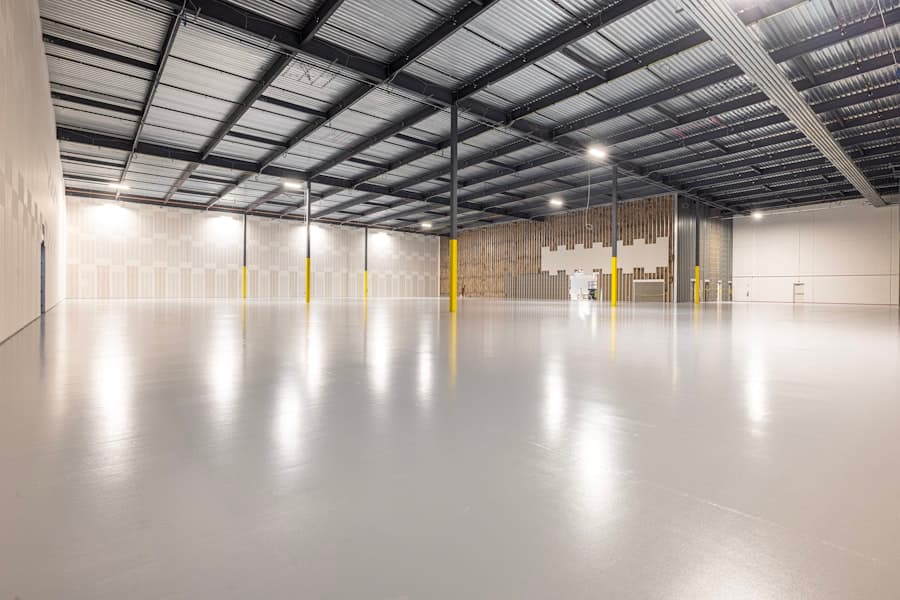
Densifying is at its most cost-effective on a new slab, before any wear has happened. It still pays on an older floor that's sound.
Best Candidates
- New warehouse and distribution slabs, densified before first occupancy
- Manufacturing floors where dust contaminates product or equipment
- Sound older slabs that are dusting but not cracked or spalling
- Floors being polished — densifying is part of that sequence anyway
- Garage and workshop floors where a coating isn't wanted
Repair First
- Joints that are raveling or spalling under wheel traffic
- Delaminated areas that sound hollow when chained
- Cracks wide enough to catch a wheel or admit water
- Slabs with an existing coating or curing membrane still on them
- Areas saturated with oil that will block the reaction
Floor Hardening Questions
More Structural & Foundational Services
Related work we handle, often on the same project as this one.
Often Quoted Alongside This
Work from our other category that regularly shows up on the same site visit.
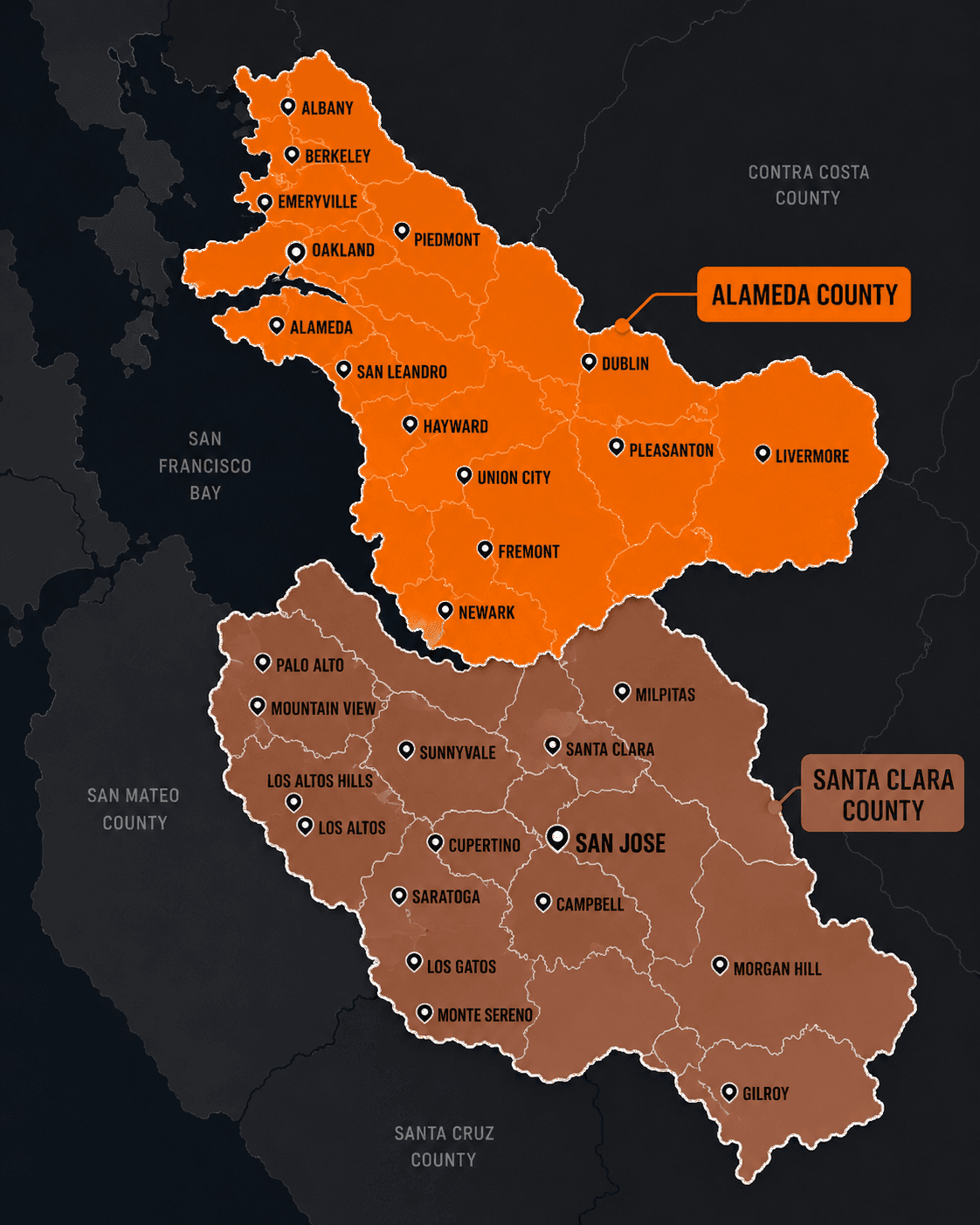
55 Cities Served
Santa Clara, Alameda, San Mateo & Santa Cruz counties
Service Area
Where We Provide Floor Hardening & Densifying
We provide floor hardening & densifying across 55 cities in Santa Clara, Alameda, San Mateo, and Santa Cruz counties. Ground conditions, permitting, and the failure modes we see vary city by city, so each has its own page.
Counties
Read Before You Decide
Guides from our Learning Center that bear directly on this kind of work.
Dusting Floor? Get an Honest Assessment
We'll walk the floor, sound the joints, and tell you whether you need a densifier, repairs first, or a coating — with the square footage priced either way.