Structural
Industrial and Warehouse Concrete Floors
Heavy-duty floor slabs engineered around forklift traffic, racking loads, and flatness tolerances.
- Slab thickness
- 6–8" for racking & forklifts
- Joints
- Armored edges, dowelled
- Surface
- Densified, polished or coated
- Scheduling
- Phased or out-of-hours
Industrial Floors — At a Glance
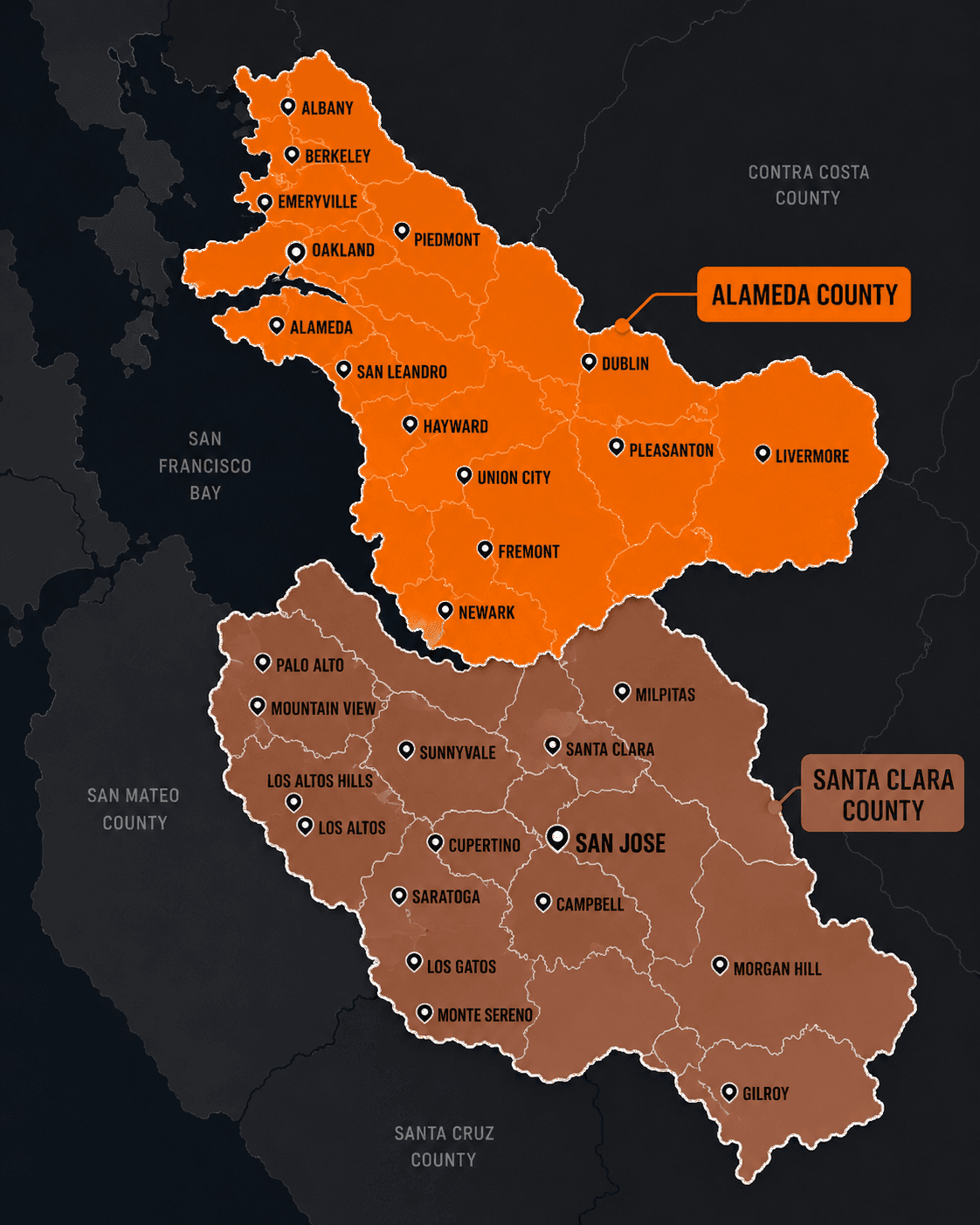
Heavy-duty floor slabs engineered around forklift traffic, racking loads, and flatness tolerances. Dueling Trowels Concrete Solutions provides industrial concrete flooring contractor services across 55 cities in Santa Clara, Alameda, San Mateo, and Santa Cruz counties, including San Jose, Oakland, Fremont, and Sunnyvale. Licensed, insured, and backed by a written workmanship warranty. Free written estimates.
An Industrial Floor Is Equipment, Not Just a Surface
In a distribution or manufacturing facility, the floor is a piece of operating infrastructure. When it underperforms, everything running on it underperforms too.
A warehouse floor carries concentrated loads that dwarf anything in residential construction. Racking legs transmit tens of thousands of pounds through contact plates a few inches square. Forklifts run the same aisles thousands of times a year with hard wheels that punish every joint and imperfection they cross.
The failures that actually shut operations down are rarely dramatic. They're joint edges spalling until pallet jacks catch on them, surface dusting that contaminates product and clogs equipment, and floors flat enough for people but not flat enough for narrow-aisle turret trucks reaching thirty feet up.
So the specification matters more than the square footage. Slab thickness, reinforcement, joint layout, flatness tolerance, and surface treatment all get determined by what will actually operate on the floor — and those decisions are made before anyone orders concrete.
In Practice
Where Industrial Floors Fail
Almost always at the joints, almost never in the middle of a panel.
Joint spalling
Unprotected joint edges break down under hard wheels, then shake every forklift that crosses them. Armored edges stop it.
Flatness in racking aisles
Narrow-aisle trucks lift high loads. A few millimeters out of level at floor height becomes a real sway at the top of the mast.
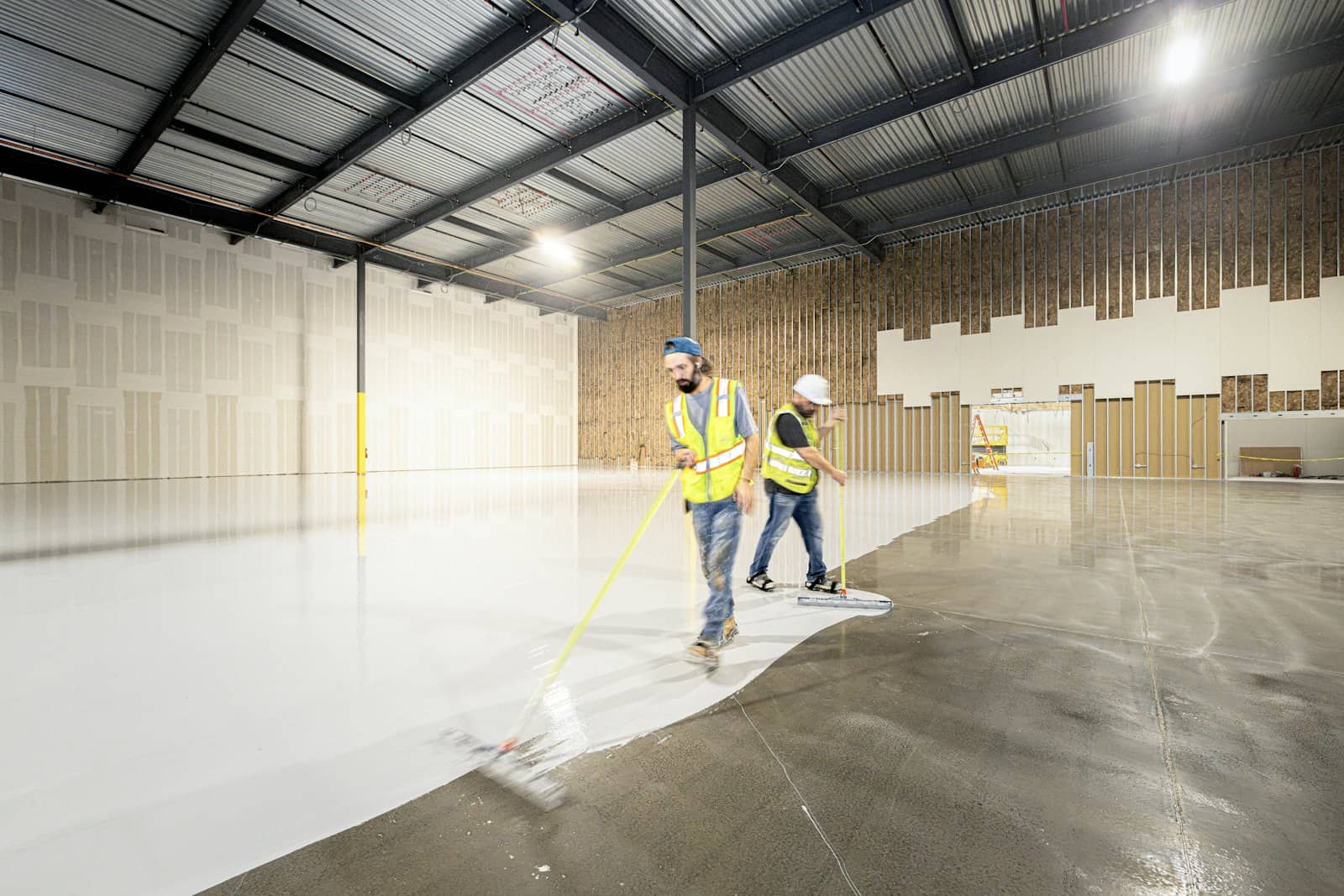
Surface dust
A soft, unsealed surface sheds fine dust into everything you store and every machine you run. Densifying hardens it from within.
The Three Specifications That Matter Most
Flatness and Levelness
Measured as FF (flatness) and FL (levelness) numbers. Ordinary warehouse floors and narrow-aisle high-bay floors have very different requirements, and the tolerance has to be set before the pour, not assessed after.
Joint Design
Joints are where industrial floors fail first. Layout, spacing, load-transfer dowels, and armored edges in heavy-traffic areas determine whether joints stay intact or spall under wheel traffic.
Surface Treatment
Hardeners, densifiers, and sealers matched to the actual exposure — abrasion from wheels, chemical spills, thermal cycling, or wash-down. The right system depends on what happens on the floor daily.
Matching Floor Spec to Facility Type
General guidance on how requirements scale with operation type. Your specific numbers come from the equipment manufacturer and the project engineer.
| Facility Type | Primary Demand | Specification Priority |
|---|---|---|
| General Warehouse | Pallet jacks, counterbalance forklifts, moderate racking | Standard flatness, solid joint detailing, dust-proofed surface |
| Narrow-Aisle Distribution | Turret trucks operating at significant lift heights | Superflat defined-traffic tolerances — the most demanding requirement |
| Manufacturing Floor | Fixed equipment, point loads, possible vibration | Load capacity, anchor detailing, and chemical-resistant surface |
| Cold Storage | Thermal cycling and continuous low temperature | Insulation detailing, thermal movement joints, moisture control |
| Food and Beverage | Frequent wash-down, sanitation standards | Sealed, non-porous surface with drainage falls and coved detailing |
| Auto and Repair Shops | Oil, solvents, and hoist point loads | Chemical-resistant sealer and reinforced anchor zones |
Tell Us These Before We Quote
The answers change the specification substantially — and the price. Better to establish them upfront than discover them mid-project.
- The heaviest equipment that will operate on the floor
- Racking configuration, leg loads, and base plate dimensions
- Maximum lift height for any narrow-aisle equipment
- Wheel type on your material handling fleet — hard wheels are far harder on joints
- Any chemical, oil, or thermal exposure the floor will see
- Whether the facility must stay operational during construction
- Existing floor condition if this is a replacement or overlay
- Any flatness requirement your equipment supplier has specified
Working Around a Running Facility
Most industrial floor work happens in buildings that can't simply shut down for a month.
Zone the Work
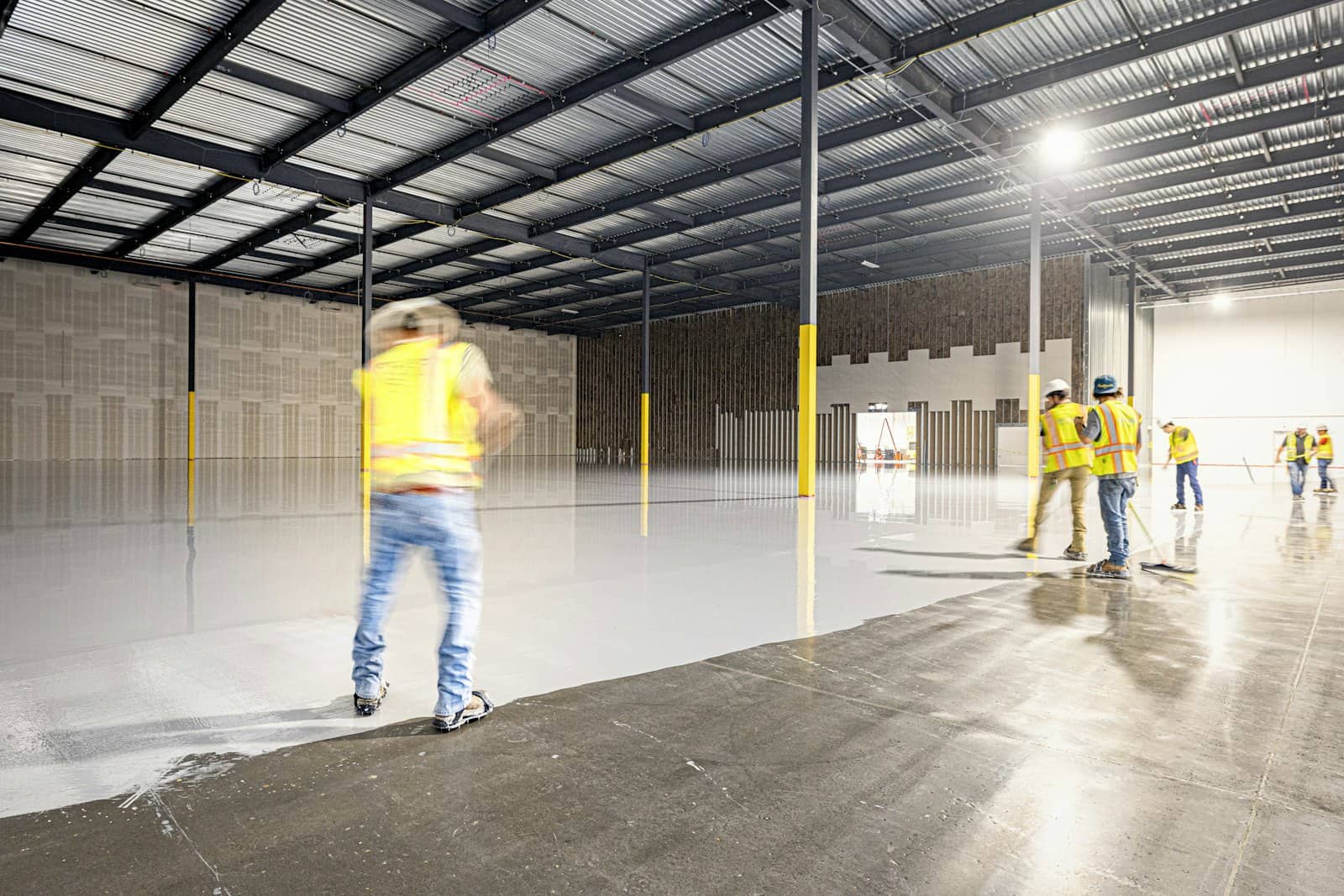
The floor area is divided into pours that let operations continue in the remaining space, sequenced around your busiest aisles and dock doors.
Sequence Around Operations
Work is scheduled against your actual operating calendar — nights, weekends, or seasonal slow periods where that reduces disruption.
Isolate and Protect
Active work zones are separated with dust containment and barriers so adjacent operations keep running safely alongside.
Stage the Return
Each zone is returned to service as it reaches the strength required for the equipment that will run on it, rather than waiting for the whole floor.
Joints Are the Maintenance Item Everyone Forgets
In our experience, more industrial floors are effectively ruined by neglected joints than by anything that happens to the slab itself. Joint filler shrinks and pulls away, the unsupported concrete edge starts to chip under hard-wheeled traffic, and once spalling begins it accelerates — each pass makes the next one worse. Inspecting and refilling joints on a schedule is unglamorous and cheap, and it extends floor life by years.
Industrial Floor Questions
Transformations
Industrial Floors: Before & After
Representative comparisons of the condition we're typically called to, and what the finished work achieves. Drag the handle across each frame.
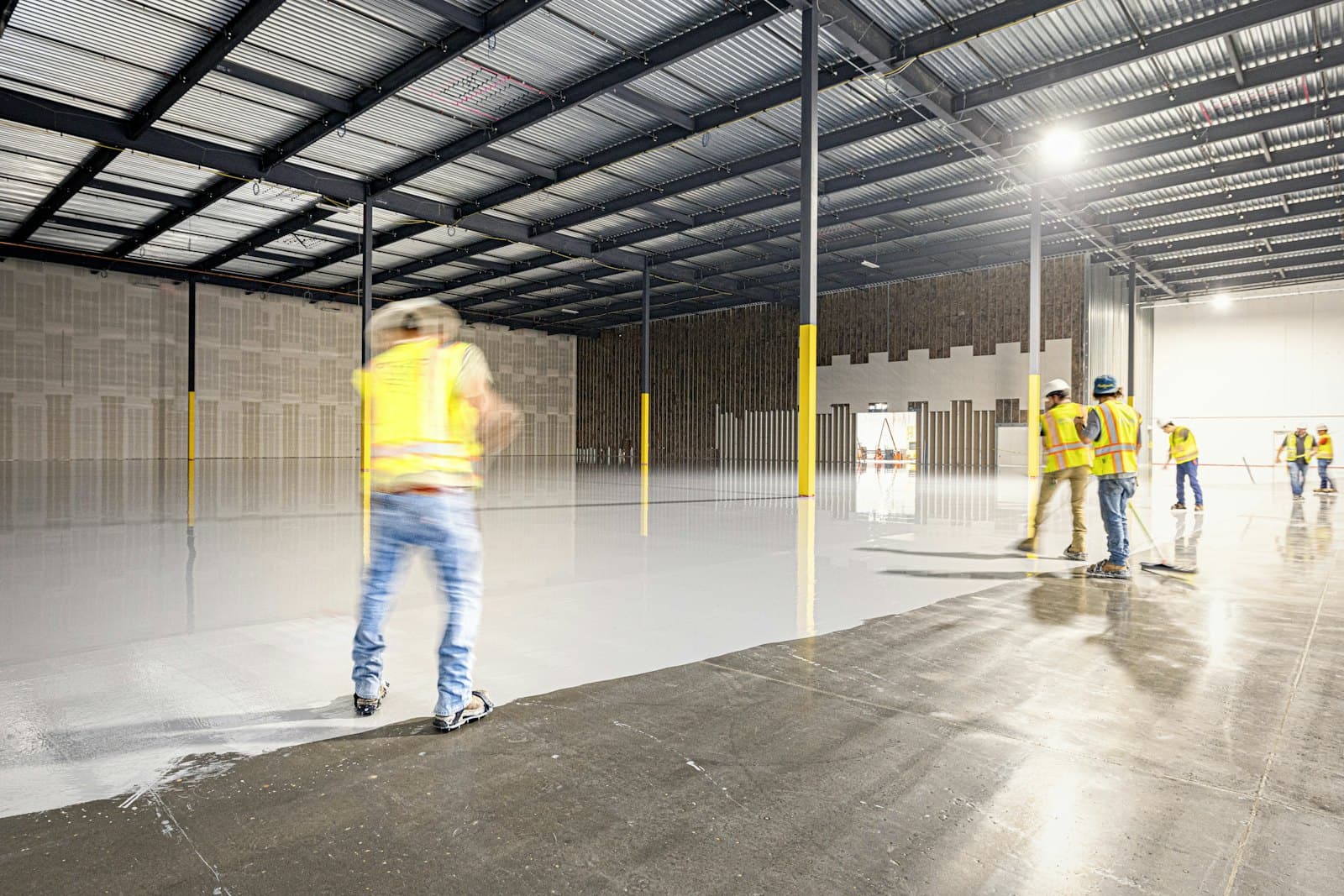
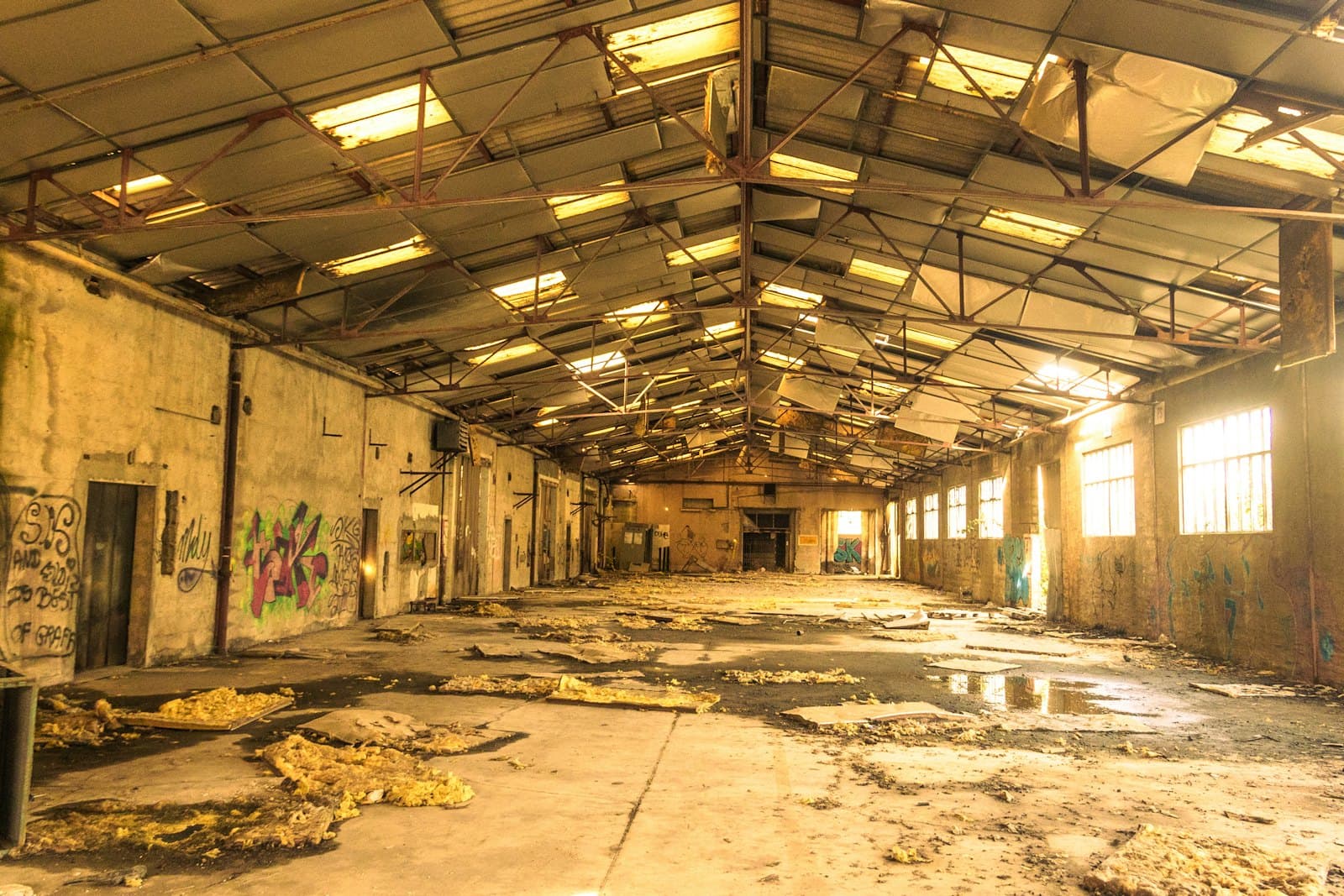
Distribution warehouse
Industrial floor slab
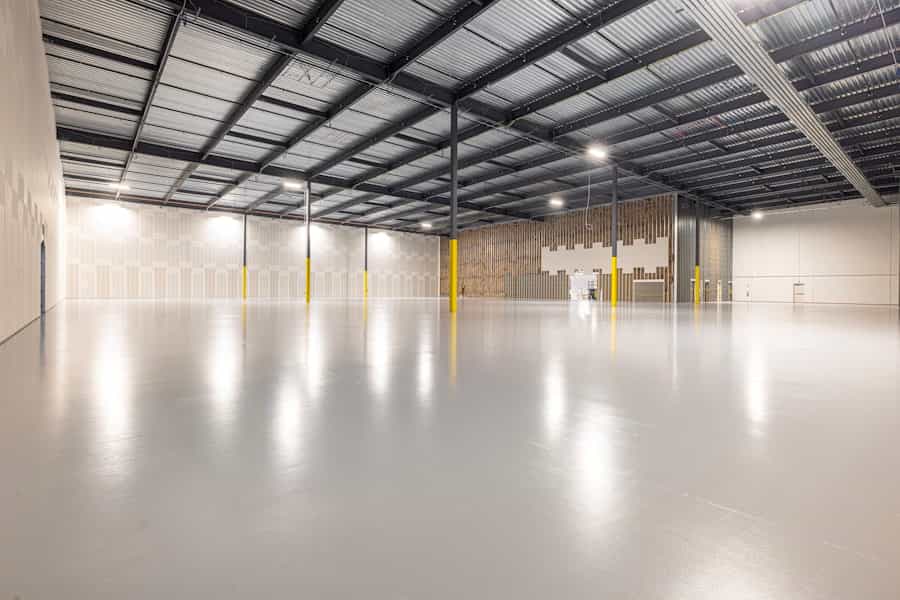
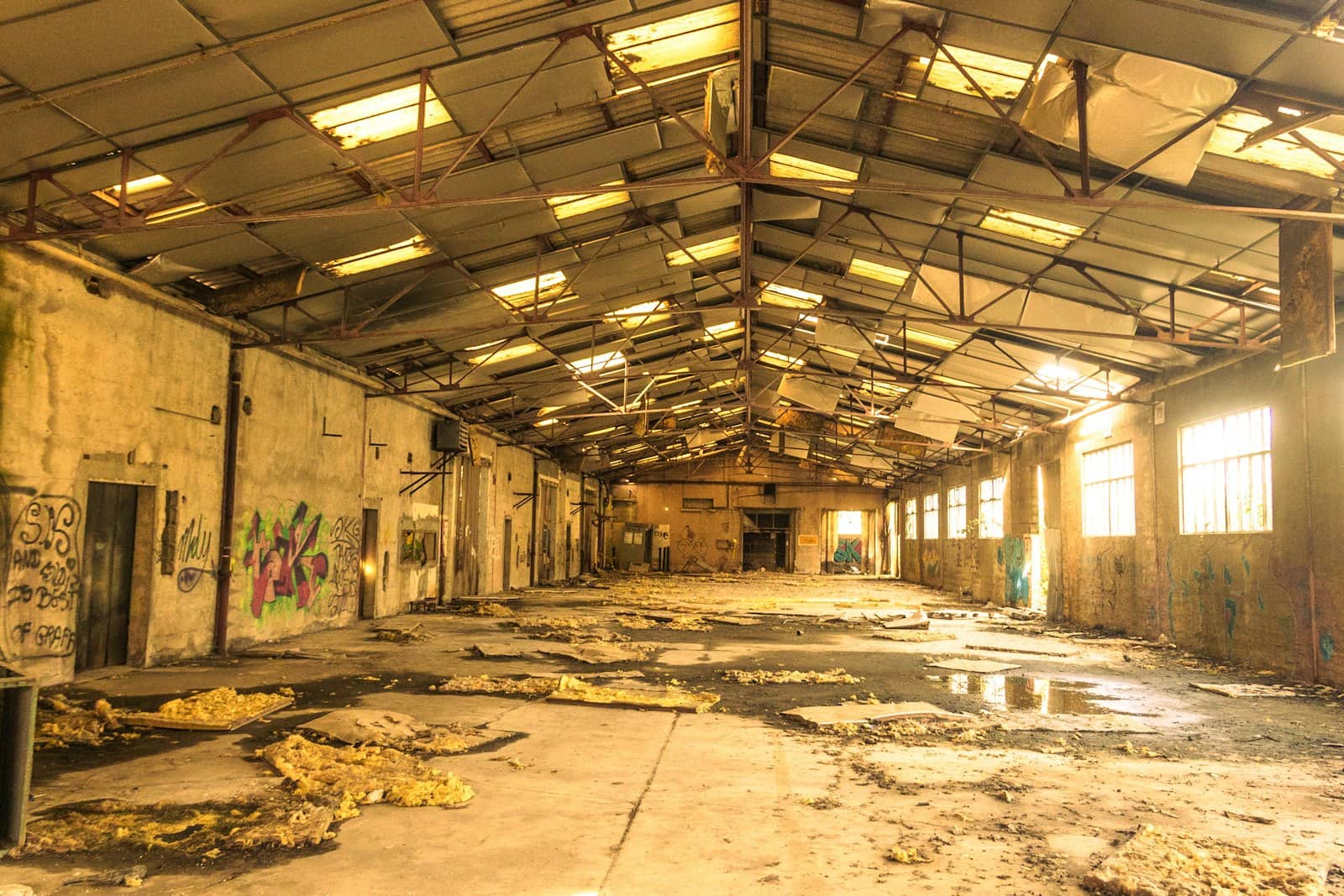
A worn warehouse slab with spalled joints that were shaking forklifts apart and a surface too dusty to keep clean. Joints were rebuilt with armored edges, the slab ground flat, then densified and polished.
- Armored joints that stop edge spalling under wheel loads
- Flatness restored to specification across the racking aisles
- Densified surface — no more slab dust in the operation
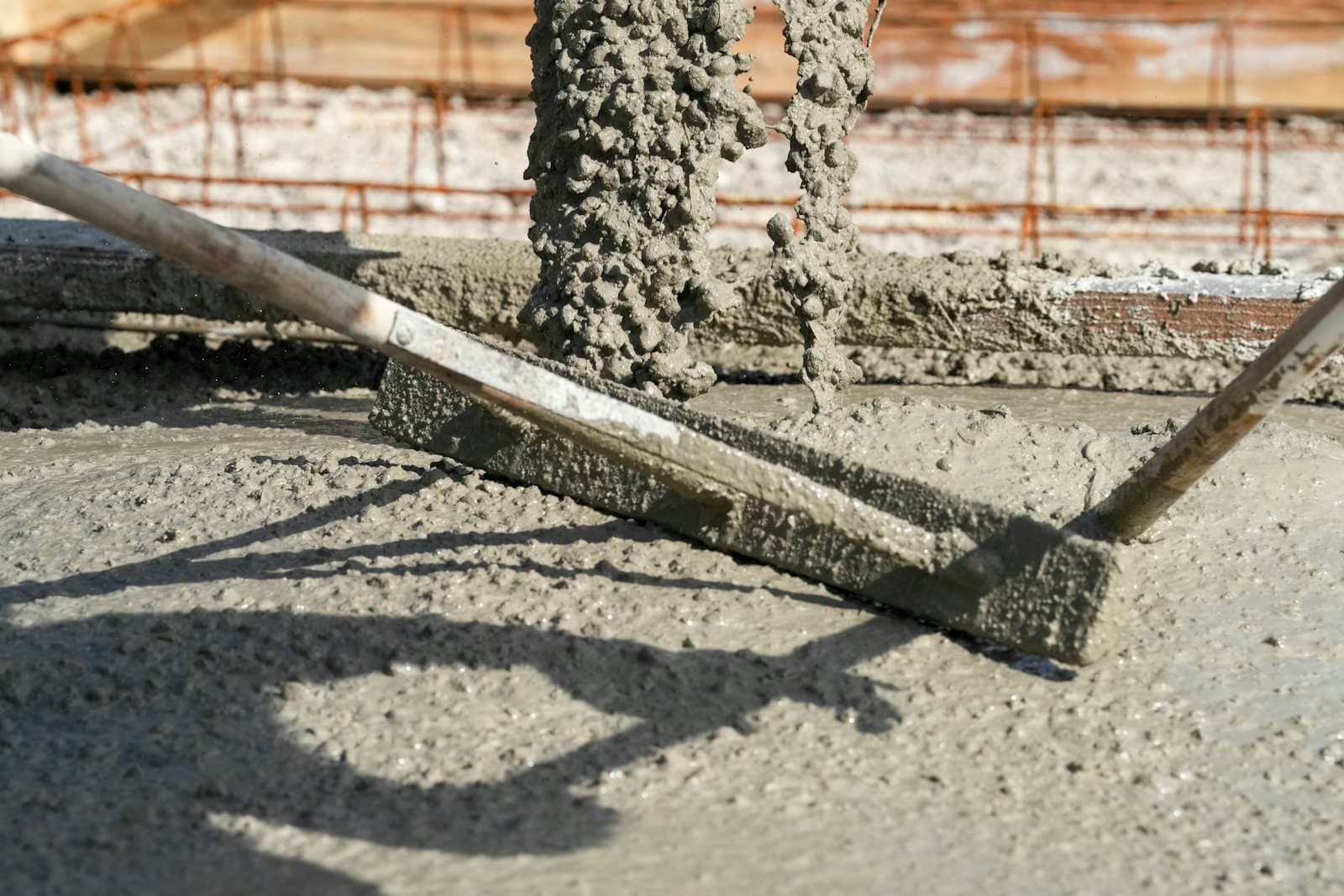

Side-yard utility slab
Structural slab repair
A slab with a wide crack and a visible height difference across it — the tell that the ground beneath had moved rather than the concrete simply shrinking. Repair was the wrong answer here, so the affected bay was removed, the base rebuilt, and the section repoured.
- Root cause fixed in the base, not covered over at the surface
- Only the failed bay replaced, keeping cost down
- New section tied to the old with dowelled joints
Drag the handle — or use the arrow keys — to compare the condition before and after.
More Structural & Foundational Services
Related work we handle, often on the same project as this one.
Often Quoted Alongside This
Work from our other category that regularly shows up on the same site visit.
55 Cities Served
Santa Clara, Alameda, San Mateo & Santa Cruz counties
Service Area
Where We Provide Industrial Floors
We provide industrial floors across 55 cities in Santa Clara, Alameda, San Mateo, and Santa Cruz counties. Ground conditions, permitting, and the failure modes we see vary city by city, so each has its own page.
Counties
Read Before You Decide
Guides from our Learning Center that bear directly on this kind of work.
People Also Ask
The questions we're asked most about industrial floors, each answered in full.
Specifying an Industrial Floor?
Tell us what will run on it and we'll help you land on a specification that fits the operation and the budget.