Quick answer
How much does a concrete driveway cost?
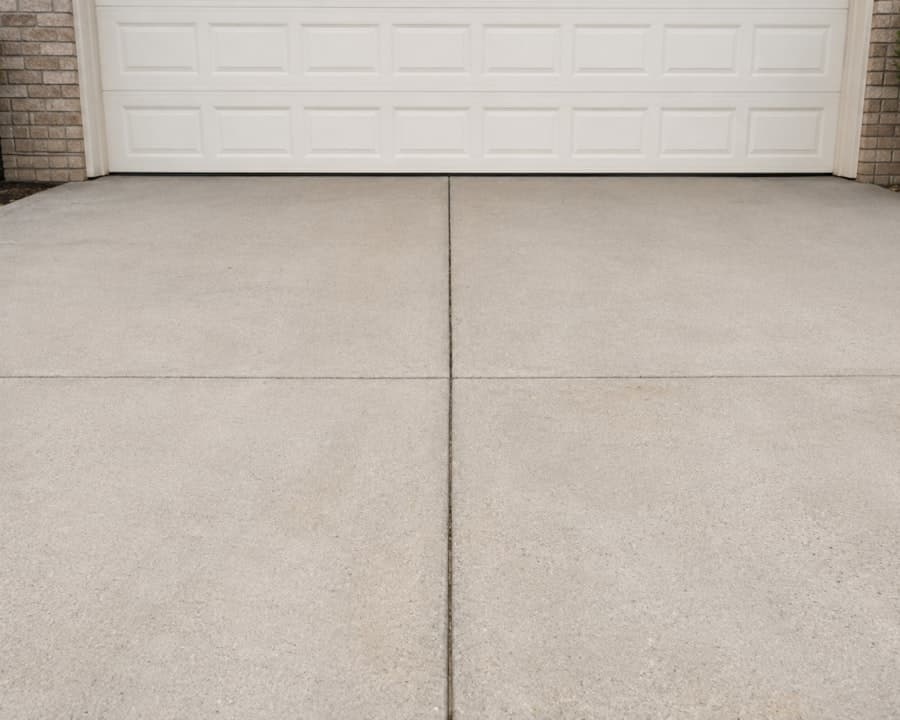
In the Bay Area, a standard broom-finished concrete driveway typically costs $12–$18 per square foot installed, including demolition of the old slab, base preparation, reinforcement, and finishing. Decorative finishes run $18–$28. A typical 600 square foot two-car driveway therefore lands somewhere between $7,000 and $11,000 plain, or $11,000 to $17,000 stamped.
- Standard broom finish
- $12–$18 / sq ft
- Exposed aggregate
- $15–$22 / sq ft
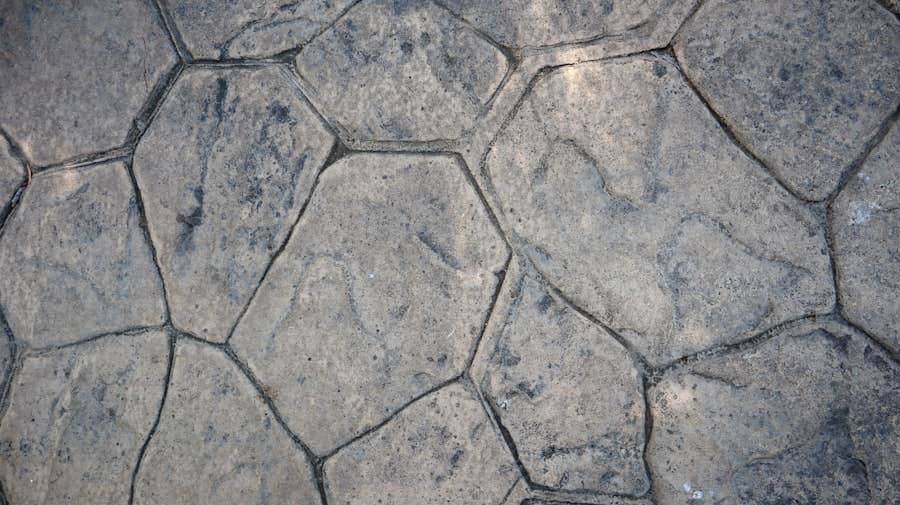
- Stamped & colored
- $18–$28 / sq ft
- Typical 600 sq ft job
- $7,000–$17,000
Bay Area concrete pricing sits well above the national averages you'll find quoted online, and it's worth saying why rather than pretending otherwise. Labour costs here are among the highest in the country, disposal fees for broken-out concrete are significant, permit requirements are stricter than in most markets, and the licensing and insurance a legitimate contractor carries costs real money. A national average of $8 per square foot is a real number — it's just not a number from here.
The more useful thing than a single figure is understanding what moves the number, because the range within any one market is enormous and most of the spread is explained by specification rather than by margin. Two quotes for the same driveway can legitimately differ by 40% and both be honest.
Where the money goes
Bay Area cost ranges by finish
Installed cost per square foot, including demolition and haul-off of an existing slab, base preparation, reinforcement, pour, finish, and joint cutting.
- Broom finish, 4" slab$12–$16
The standard residential driveway. Textured for traction, low maintenance.
- Broom finish, 6" slab$15–$19
For trucks, RVs, and trailers. Includes deeper base.
- Integrally colored$14–$19
Pigment through the whole mix. Color that can't wear off.
- Exposed aggregate$15–$22
Excellent traction and hides staining well. Popular on sloped driveways.
- Stamped and colored$18–$28
Pattern and color. Commits you to a 2–3 year resealing cycle.
- Resurfacing an existing sound slab$6–$12
Only viable where the slab underneath is structurally intact.
per square foot installed
Ranges reflect Santa Clara and Alameda county pricing as of 2026. Access, slope, demolition volume, and drainage work move these figures meaningfully. Every estimate we issue is a fixed written scope, not a per-foot rate.
What's actually in the price
A driveway quote covers considerably more than concrete and a crew. Understanding the line items makes it much easier to see what a cheaper bid has removed.
The line items behind a driveway quote
| Item | Roughly | What it covers |
|---|---|---|
| Demolition and disposal | 10–18% | Breaking out the existing slab, loading, hauling, and tipping fees. Concrete disposal is charged by weight and it is not cheap here. |
| Excavation and base | 15–22% | Machine time, grading to fall, Class 2 aggregate, and compaction in lifts. The layer that determines lifespan. |
| Concrete | 20–30% | Ready-mix delivered, priced per cubic yard by strength. Thickness changes this line directly. |
| Reinforcement and forming | 10–15% | Rebar, chairs, ties, form lumber and stakes, and the labour to set both. |
| Placement and finishing | 20–28% | The crew on the day. Decorative finishes concentrate their extra cost almost entirely here. |
| Permits, overheads, insurance | 5–12% | City permits where the apron or sidewalk is involved, licensing, general liability and workers' compensation cover, warranty provision. |
Percentages are indicative for a straightforward replacement. Jobs with drainage work, retaining, or difficult access shift the balance considerably.
What pushes a quote up
Some cost drivers are choices you make. Others are conditions on your property that nobody chose, and a contractor who ignores them is quoting a job they'll have to renegotiate halfway through.
Cost factors specific to your site
Any of these that apply to you should appear in a thorough quote. Their absence usually means the estimator hasn't been out.
0 of 10 checked
How to compare two quotes properly
Line them up side by side and check the same five things. Most price gaps explain themselves within ten minutes.
Check the square footage each quote is based on
Different contractors measure differently, particularly around the apron and any turnaround area. Normalise to the same area before comparing anything else.
Compare slab thickness
An inch of difference on 600 square feet is around two cubic yards of concrete plus the extra excavation and disposal. It's frequently the whole price gap.
Compare base depth and material
"Compacted native soil" is not a base. Look for a stated depth of Class 2 aggregate base, compacted in lifts.
Compare reinforcement
Rebar size and spacing, or mesh, or fiber. These are three different products at three different price points, and quotes rarely make the distinction obvious.
Check what's excluded
Demolition, disposal, permits, drainage correction, and haul-off of spoil are the usual exclusions that turn a low bid into a change order. Ask specifically.
Verify license, insurance, and warranty in writing
California license number on the contract, current general liability and workers' compensation certificates, and a stated workmanship warranty period. All three are quick to confirm and all three cost money to carry.
Repair, resurface, or replace — the cost comparison
Replacement isn't always the right answer, and the cost difference between the options is large enough that it's worth establishing which situation you're in before you start collecting quotes.
If the slab is structurally sound and only the surface has failed — scaling, staining, a dated finish, fine surface cracking — resurfacing typically runs 40–60% of replacement cost and produces a genuinely new-looking driveway. If panels have settled relative to each other, or cracks have height differences across them, the problem is underneath and no surface treatment reaches it.
Partial replacement is often overlooked. If two panels out of ten have failed and the rest are sound, replacing just those panels is entirely reasonable. The trade-off is color: new concrete will not match twenty-year-old concrete, and it takes a year or more to weather closer. Some people find that acceptable and save thousands; others don't.
Option costs on a typical 600 sq ft driveway
| Option | Typical cost | When it makes sense |
|---|---|---|
| Crack filling and resealing | $600–$1,400 | Slab is sound, cracks are tight and level. Annual-to-triennial maintenance. |
| Partial panel replacement | $1,500–$3,500 | A small number of failed panels in an otherwise sound driveway. Expect a color mismatch. |
| Resurfacing / overlay | $3,600–$7,200 | Structurally sound slab with a failed or dated surface. Can add color and pattern. |
| Full replacement, broom finish | $7,200–$10,800 | Base or drainage has failed, or damage is widespread. |
| Full replacement, stamped | $10,800–$16,800 | Replacement plus a decorative finish, with a resealing commitment attached. |
Figures assume 600 square feet and typical Bay Area access. Drainage correction, retaining, and permit costs sit on top where they apply.
Payback and property value
Concrete driveways are one of the few exterior improvements that reliably return most of their cost at resale, largely because a cracked, settled driveway is the first thing a buyer sees and reads as deferred maintenance across the whole property.
The more useful way to think about it, though, is annualised. A $9,000 driveway that lasts 40 years costs $225 a year. A $5,000 asphalt driveway that needs sealcoating every three years and full replacement at 18 costs closer to $400 annually once the recurring work is counted. Upfront price and lifetime cost point in opposite directions here, which is exactly why the cheapest bid so often isn't.
Cost questions
Next steps
Key takeaways
- Bay Area broom-finished driveways run $12–$18 per square foot installed; decorative finishes $18–$28.
- Concrete is under a third of the total — a dramatically cheaper bid is cutting base, steel, or thickness, not concrete.
- Compare quotes on five things: area, slab thickness, base depth, reinforcement, and exclusions.
- Spend spare budget on base depth and slab thickness before finish. Only the finish can be changed later.
- Resurfacing costs 40–60% of replacement, but only works where the slab beneath is structurally sound.
- Annualised over its life, concrete is usually cheaper than asphalt despite costing roughly twice as much to install.
Still deciding?
Ask us about your specific project
We'll give you a straight answer on the phone, including when that means telling you that you don't need the work you asked about. Free written estimates across San Jose & the greater Bay Area.