Quick answer
How much does a concrete slab cost per square foot?
In the Bay Area, a plain broom-finished concrete slab typically costs $10–$16 per square foot installed for patios and walkways and $12–$18 for driveways, including excavation or demolition, base preparation, reinforcement, the concrete, finishing, and joint cutting. Exposed aggregate adds about $3–$6 per square foot, and stamped and colored slabs run $16–$28. The concrete itself is only one part of that price; labor, base work, and site access usually matter more.
- Patio / walkway slab
- $10–$16 / sq ft
- Driveway slab
- $12–$18 / sq ft
- Stamped & colored
- $16–$28 / sq ft
- Biggest cost driver
- Labor, base & access
Installed concrete slab prices in the Bay Area
Typical installed prices for residential flatwork with reasonable access. Your price depends on the site, so treat these as planning ranges.
- Patio or walkway, broom finish (4")$10–$16
The most common residential slab.
- Driveway, broom finish (5")$12–$18
Thicker slab and heavier reinforcement for vehicles.
- Exposed aggregate$13–$22
Retarder and washing add a day of labor.
- Stamped and colored$16–$28
Color hardener, release, stamping crew, sealer.
- Section replacement after demolition$14–$22
Includes breaking out and hauling the old slab.
per square foot installed
Bay Area prices sit well above national averages quoted online, because labor, disposal, insurance, and permit costs here are higher.
Why the price per square foot isn't the price of concrete
When people search for concrete prices, they often find the cost of ready-mix concrete by the cubic yard and try to multiply it out. That number is real, but it's only the material delivered to the curb. It doesn't include anything that turns it into a slab that lasts.
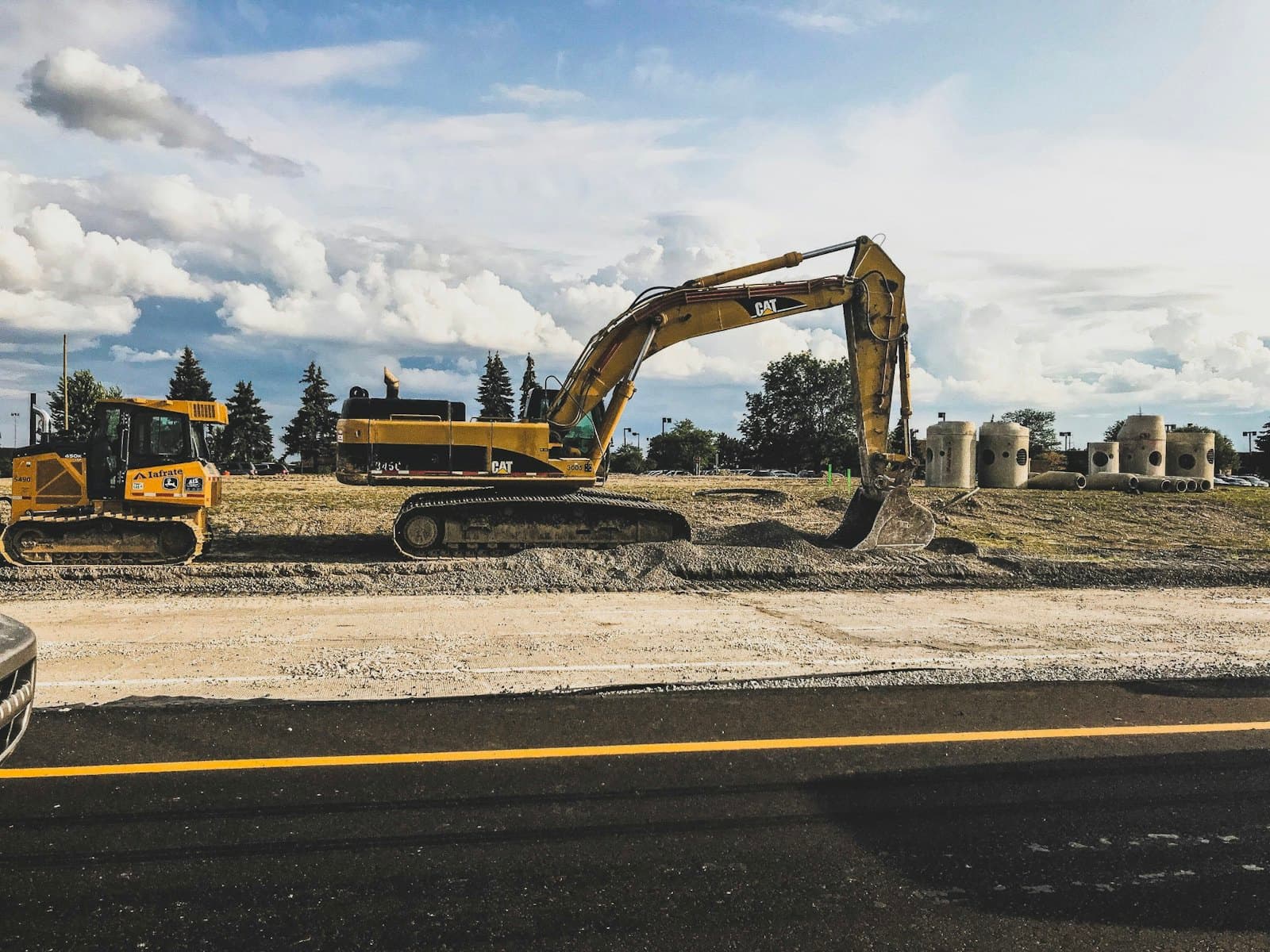
An installed price covers excavation or demolition of what's there, hauling it away, grading, bringing in and compacting a gravel base, building forms, placing reinforcement on chairs, the concrete itself, the crew to place and finish it, cutting control joints, curing, and cleanup. On many residential jobs, the concrete is a minority of the total — labor and base preparation are the larger share.
That's also why two quotes can differ by thousands for what looks like the same slab. One may include a proper four- to six-inch compacted base and rebar on chairs; another may pour four inches of concrete straight onto loosened dirt. On the day, they look identical. Five years later, they don't.
Where the money goes
What changes the price of a slab
| Factor | Effect on price | Why |
|---|---|---|
| Demolition of an old slab | Raises it | Breaking out, loading, and disposal fees |
| Site access | Raises it if poor | No truck access means pumping or wheelbarrows |
| Slab thickness | Raises it | More concrete and heavier reinforcement |
| Base repair | Raises it | Soft or wet ground has to be dug out and replaced |
| Slope or steps | Raises it | More forming, more labor, sometimes retaining |
| Decorative finish | Raises it | Color, stamping, exposure, and sealing |
| Larger area | Lowers it per sq ft | Mobilization spread over more footage |
| Permits and city apron work | Raises it | Encroachment permit and inspection |
The part you never see
Cost by project size
Small jobs cost more per square foot. A crew, a truck, forms, and a pump or concrete minimum cost roughly the same whether the slab is 80 square feet or 400, so a tiny pad for an AC unit or trash cans can easily land well above the per-foot ranges above.
As a guide: a 10 x 12 foot shed pad is 120 square feet; a common 16 x 20 foot patio is 320 square feet, which lands around $3,200–$5,100 with a broom finish; a typical two-car driveway is about 600 square feet, which runs roughly $7,000–$11,000 plain or $11,000–$17,000 stamped.
Commercial paving is priced differently again — typically $9–$16 per square foot for parking areas, depending on thickness, base, drainage, and access, with truck aisles and dock aprons at the top of the range or above.
Example slab costs
| Project | Size | Typical installed cost |
|---|---|---|
| Shed or equipment pad | 10 x 12 ft (120 sq ft) | Often above per-foot ranges due to minimums |
| Patio, broom finish | 16 x 20 ft (320 sq ft) | $3,200–$5,100 |
| Patio, stamped | 16 x 20 ft (320 sq ft) | $5,100–$8,300 |
| Two-car driveway, broom | ~600 sq ft | $7,000–$11,000 |
| Two-car driveway, stamped | ~600 sq ft | $11,000–$17,000 |
Where it's worth spending, and where it isn't
Spend on the base, the thickness that matches the use, reinforcement placed properly, and drainage. Those decide whether the slab lasts 30 years or cracks and settles in eight, and they can't be added later.
You can save on finish. A broom finish with a saw-cut pattern and a colored border costs a little over plain and looks far more designed than a bare gray slab. Stamping is a lifestyle choice, not a durability one — it looks best but needs resealing every two to three years.
You usually can't save meaningfully by doing your own demolition. The time saved for the crew is real but small, and a disturbed, poorly re-graded base often costs more to correct than the demo was worth.
What a complete slab quote should include
- Demolition and haul-off of any existing concrete
- Excavation and grading to a drainage plan
- Compacted aggregate base, with depth stated
- Slab thickness and concrete strength (PSI)
- Reinforcement type, size, spacing, and chairs
- Control joint layout and timing
- Finish and any color or sealer
- Curing method
- Permits, if any work reaches the public right-of-way
- Cleanup and a written workmanship warranty
Breaking down an installed price, line by line
It helps to walk through what a contractor is actually pricing when they give you a number per square foot. Take a 320 square foot backyard patio replacing an old cracked slab.
The first line is demolition: breaking out the old concrete, loading it, and paying the disposal or recycling fee. Old slabs are heavy — a four-inch slab weighs roughly fifty pounds per square foot — so a 320 square foot patio is several tons of material leaving the site. Where there's no driveway access to the back yard, it may leave by wheelbarrow, which takes far longer.
Next is excavation and grading: digging to the depth needed for the base and slab, setting the grade so the finished surface falls away from the house, and removing the excess soil. Then the base: imported crushed rock spread in layers and compacted with a plate compactor. A four- to six-inch compacted base is one of the cheapest parts of the job in materials and one of the most important for longevity.
Forming comes next — lumber or steel forms set to line and grade, with any curves bent in. Then reinforcement placed on chairs and tied. Then the pour itself: the concrete order, pumping if needed, and the finishing crew. After that, joint cutting, curing, form removal, backfilling the edges, and cleanup. Overhead — insurance, licensing, vehicles, and warranty — is spread across all of it.
When you see the list laid out, it becomes clear why a quote that seems high per square foot isn't padding. And why a quote that seems low usually skips one of these lines.
What happens on a typical slab job
Day 1
Demolition and excavation
Old concrete removed and hauled away; ground excavated to depth.
Day 1–2
Grading and base
Grade set for drainage; aggregate base placed and compacted in lifts.
Day 2
Forms and reinforcement
Forms set to line and grade; rebar or mesh placed on chairs.
Day 3
Pour and finish
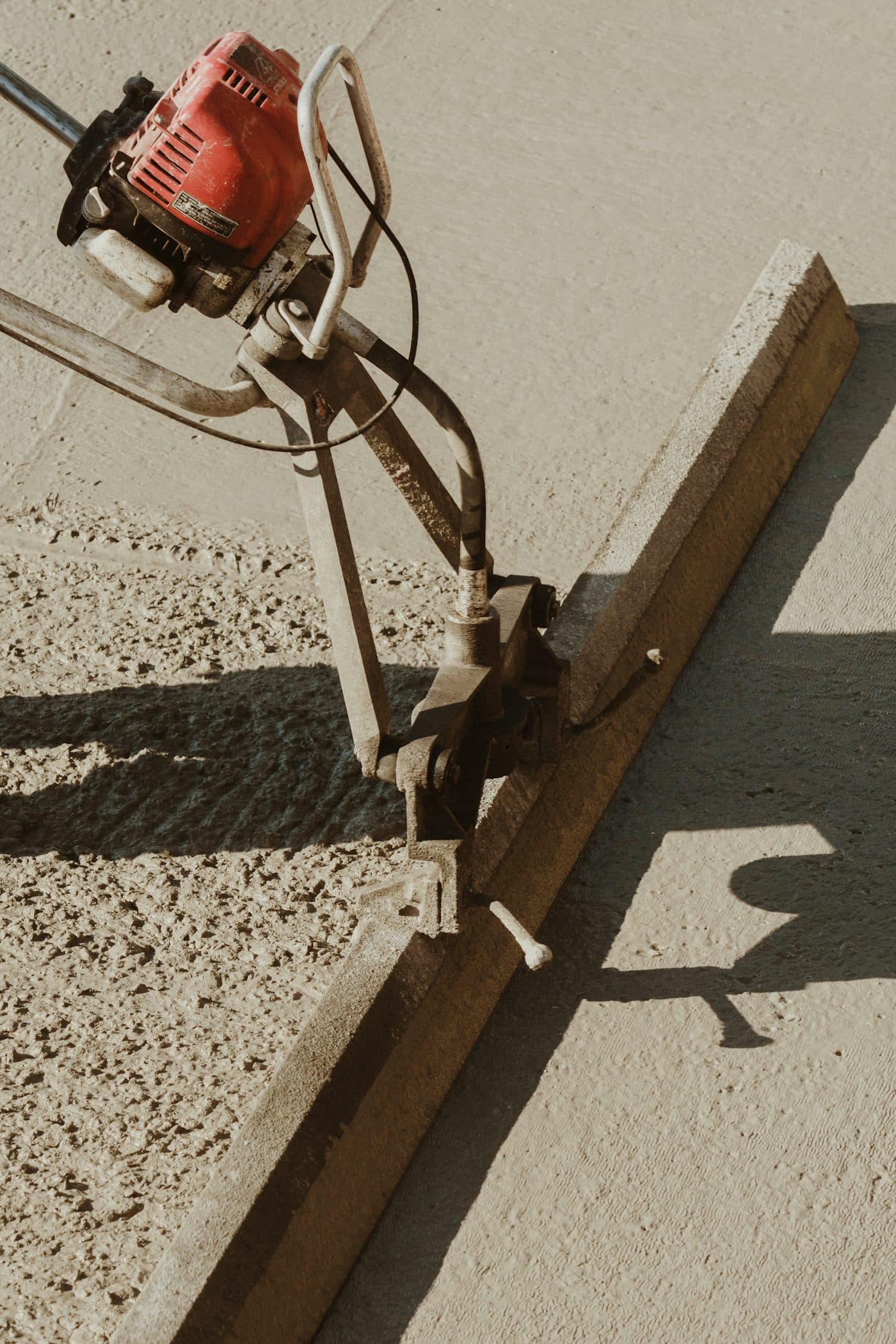
Concrete placed, screeded, floated, and finished; joints cut the same day.
Days 3–10
Curing
Kept moist; foot traffic after 24–48 hours, cars after about seven days.
Day 28+
Full strength and sealing
Design strength reached; first seal applied if specified.
Why Bay Area concrete costs more than national averages
If you've searched online, you've probably seen national averages well below the ranges on this page. Those numbers aren't wrong; they just describe a different market. Labor is the largest cost in concrete work, and Bay Area wages, insurance premiums, and workers' compensation rates are among the highest in the country.
Disposal costs more here too. Landfill and recycling fees for broken concrete, plus the truck time to get there through traffic, add up. Many Bay Area sites have tight access — narrow side yards, steep driveways, no room for a ready-mix truck — which turns a simple chute pour into a pumped pour or a wheelbarrow job.
Permitting adds cost wherever work reaches the public right-of-way. Replacing a driveway apron or sidewalk means an encroachment permit and an inspection from the city, and sometimes specific city standards for thickness and finish.
None of this means you should pay more than necessary. It means comparing a local quote with a national average is comparing two different things. Compare local quotes with each other, on written specifications.
Common upgrades and what they add
| Upgrade | Typical added cost | Worth it when |
|---|---|---|
| Thicker slab (4" → 5") | Modest share of total | Vehicles or heavy loads |
| Rebar instead of mesh | Small | Driveways, clay soil |
| Integral color | +$2–$4 / sq ft | You want color without stamping |
| Exposed aggregate | +$3–$6 / sq ft | Slopes, pool decks, stain-hiding |
| Stamping | +$6–$12 / sq ft | Stone or brick look matters to you |
| Saw-cut pattern + border | Small premium | Designed look on a budget |
| Sealer at completion | Small | Decorative or stain-prone surfaces |
Red flags in a low concrete quote
A quote dramatically below others deserves questions, not suspicion alone. Sometimes a contractor has a crew nearby or a slow week. But some patterns show up repeatedly in slabs that fail early.
Watch for quotes that don't mention base material or compaction, list 'wire' without saying how it will be supported, give no slab thickness, or say nothing about joints. Be cautious of a contractor who asks for a large deposit — California limits home improvement down payments to $1,000 or 10% of the contract, whichever is less — or who won't provide a license number you can check with the Contractors State License Board.
And be wary of pressure to decide on the spot. A good contractor gives you a written scope you can compare at your own pace.
Estimating concrete volume for your own planning
If you want to sanity-check a quote, the volume calculation is simple. Multiply length by width in feet to get square feet, multiply by the thickness in feet (a four-inch slab is 0.33 feet; five inches is 0.42), and divide by 27 to convert cubic feet to cubic yards. A 16 by 20 foot patio at four inches is about 320 × 0.33 ÷ 27, or roughly four cubic yards.
Contractors order slightly more than the calculated volume — typically five to ten percent — to account for uneven base grade and spillage, because running short mid-pour is far worse than having a little left over. Thickened edges, footings, and steps add volume that a simple length-times-width calculation misses.
Remember that the concrete is only part of the price. Knowing the volume helps you understand a quote, but it won't let you reverse-engineer a fair installed price from the cost of ready-mix alone.
Timing your project to control cost
Spring and early summer are the busiest season for flatwork in the Bay Area, and scheduling can stretch out. Late summer and fall are often easier to book, and the weather is still reliable. Winter pours are entirely possible between storms, but rain delays are part of the plan.
Bundling work saves money. A driveway, front walk, and side-yard path poured together share one mobilization, one pump if needed, and one crew setup. Planning future work now — such as a conduit sleeve under a new driveway for later landscape lighting or EV charging — costs very little today and avoids cutting the slab later.
And ask about the slab's purpose up front. A slab that will someday hold a hot tub, a shed, or a car port needs to be designed for that load from the start; upgrading later means replacement.
Key points on slab cost
- Plain residential slabs typically run $10–$18 per square foot installed in the Bay Area.
- Decorative finishes add roughly $3–$12 per square foot depending on the finish.
- Labor and base preparation usually cost more than the concrete itself.
- Small jobs cost more per square foot because of fixed setup costs.
- Compare quotes on written specs: base, thickness, reinforcement, PSI, joints, curing.
Finishing is where crew skill shows
Concrete cost questions
Related pricing guides
Standards & references
The published standards and code sections this guide draws on. Requirements vary by jurisdiction — your local building department has the final word.
- ACI 332-20: Residential Code Requirements for Structural Concrete — American Concrete Institute
- ACI 302.1R-15: Guide to Concrete Floor and Slab Construction — American Concrete Institute
Still deciding?
Ask us about your specific project
We'll give you a straight answer on the phone, including when that means telling you that you don't need the work you asked about. Free written estimates across San Jose & the greater Bay Area.