Flatwork
Concrete Pumping for Sites a Chute Truck Can't Reach
Boom and line pump placement for backyards, hillside lots, and tight side yards a ready-mix chute can't reach.
- Boom reach
- 28–61m depending on rig
- Equipment
- Boom truck or trailer line pump
- Best for
- Gated, hillside & backyard access
- Estimates
- Free & written
Concrete Pumping — At a Glance
Boom and line pump placement for backyards, hillside lots, and tight side yards a ready-mix chute can't reach. Dueling Trowels Concrete Solutions provides concrete pumping services across 55 cities in Santa Clara, Alameda, San Mateo, and Santa Cruz counties, including San Jose, Oakland, Fremont, and Sunnyvale. Licensed, insured, and backed by a written workmanship warranty. Free written estimates.
01
Not Every Site Can Be Poured From a Chute
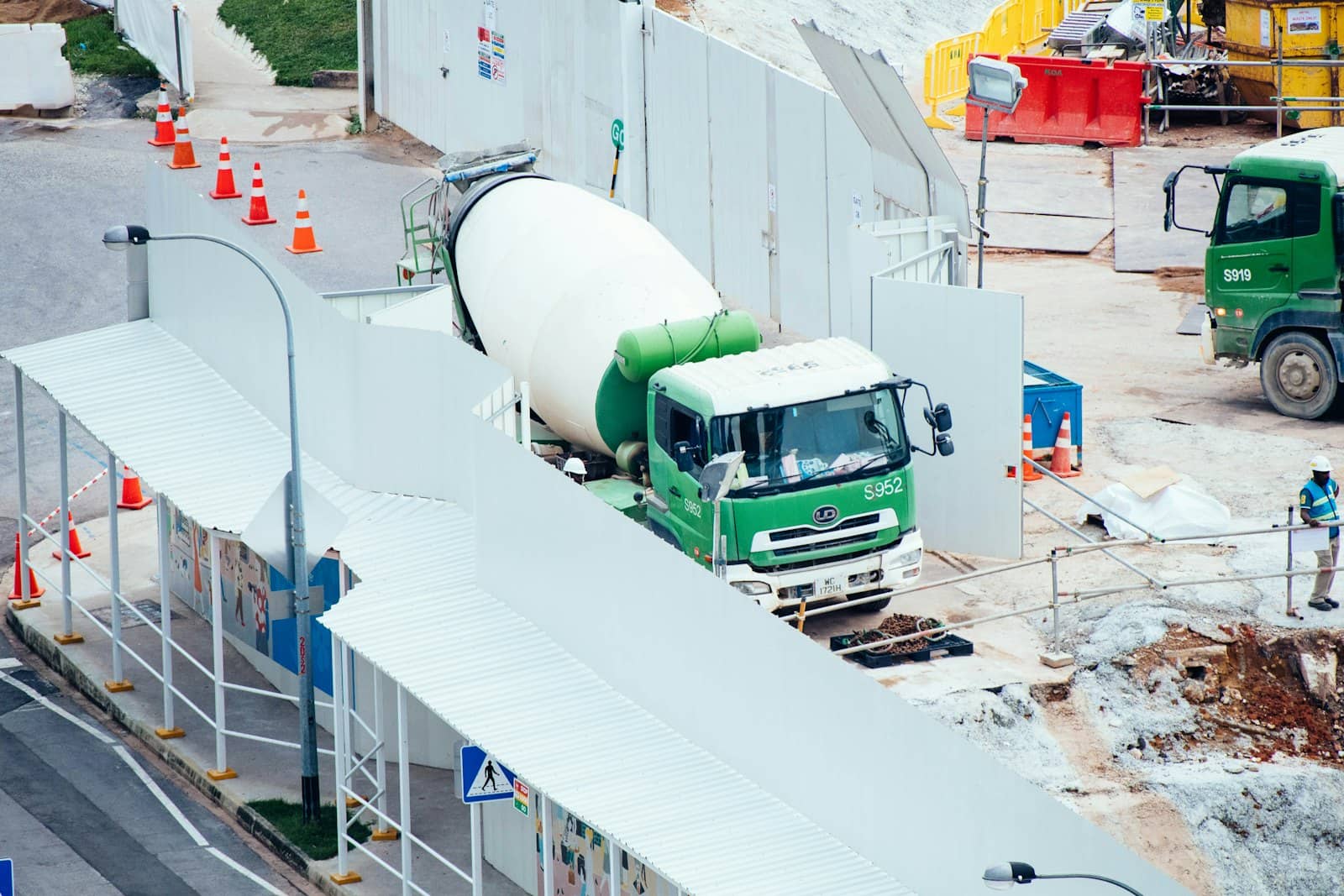
A ready-mix truck can place concrete directly from its chute maybe fifteen feet from the curb. Past that, you need a pump.
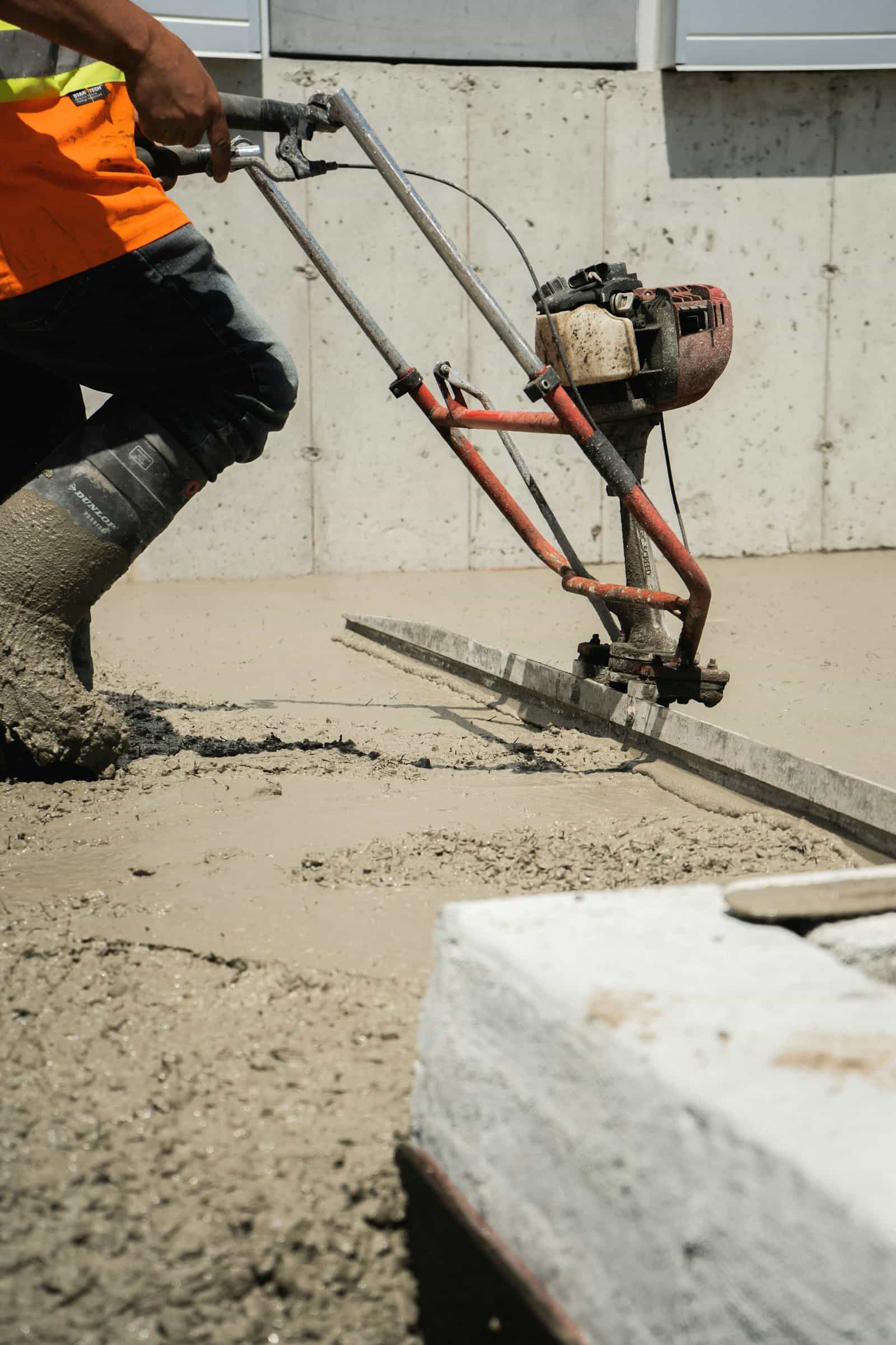
Pumping isn't a separate product — it's how we get concrete from the truck to the forms when the truck physically can't get close enough. A three-foot gate on a Sunnyvale side yard, a backyard patio behind a house with no drive-through access, a slab on a Los Gatos hillside forty feet below the street: none of those are reachable by chute, and hauling wheelbarrows of wet concrete across a yard all day is slow enough that the first loads are setting up before the last ones arrive.
A pump solves that by turning the truck into a stationary source and moving the concrete through a hose or boom instead. The mix design changes slightly to stay pumpable — slump gets managed a little differently and the aggregate blend is checked so it won't bridge and clog the line — but the finished slab is identical to one poured by chute. Pumping is a placement method, not a different kind of concrete.
We run pumping on driveways behind gated entries, patios and pool decks with no truck access, foundation walls too tall to place by chute, and any commercial pour where continuous placement matters more than saving the pump bill.
Boom Pumps vs. Line Pumps
We choose the equipment based on reach, volume, and how tight the site actually is — not by default.
Boom Pump
A truck-mounted hydraulic arm, commonly reaching anywhere from 28 to 61 meters depending on the rig. It swings over a house, a fence, or a hillside drop and places concrete directly where it's needed with almost no hand-carrying. The right call for backyard pours, upper-floor slabs, and any job where the placement point is elevated or obstructed.
Line Pump
A trailer-mounted pump pushing concrete through flexible rubber hose that crew lay out by hand and reposition as the pour moves. Slower per yard than a boom but far more maneuverable — it threads through a side gate, around a corner, or down a narrow easement a boom truck could never set up on.
What Goes Into a Pump Day
Pumping adds a second piece of equipment and a second schedule to coordinate, so the details matter more than they do on a standard chute pour.
- Mix design confirmed as pumpable before the order goes in — slump, aggregate size, and admixtures matched to the line
- Pump truck scheduled to arrive and set up ahead of the first ready-mix truck, not alongside it
- Priming the line with a grout slurry before real concrete enters, so the pipe doesn't dry-pack and block
- Boom or hose routed and staged before pour start — repositioning mid-pour costs minutes you don't get back
- Washout handled off-site or in a contained area; pump slurry isn't dumped into a storm drain or gutter
- A ground crew at the discharge end managing placement, not just standing at the truck
Pumping vs. Direct Chute
Pumping costs more per job. On the sites where it's actually needed, it isn't optional — it's the only way the concrete gets placed at all.
Chute Placement Works When
- The truck can back within about 15 feet of the forms
- There's a clear, driveable path from the street to the pour area
- The pour is small enough to place before the front of the load sets
- No grade change, fence line, or structure sits between truck and forms
Pumping Is the Only Real Option When
- Access is through a gate, side yard, or narrow easement
- The pour is behind the house with no drive-through route
- The site sits well above or below street grade
- Volume is large enough that continuous placement matters for finish quality
Where This Shows Up Across the Bay Area
Narrow lots are the norm rather than the exception in a lot of the neighborhoods we work — Sunnyvale, Campbell, Albany, and similar older subdivisions were platted with side yards a few feet wide, long before anyone was pouring backyard patios or ADU foundations. On those lots, pumping usually isn't a premium option we suggest — it's the only way concrete gets to the back of the property at all.
Hillside properties around Los Gatos, Saratoga, and the Oakland hills present the opposite problem: elevation instead of width. A pad sitting well above or below the street is out of chute range no matter how close the truck parks, and a boom is often the only equipment that can carry concrete down a slope without a crew hand-bombing wheelbarrows across loose grade.
On the commercial side, pumping earns its cost back through speed. A large warehouse slab or tenant improvement pour placed continuously through a boom avoids the cold joints and inconsistent finish that come from a crew trying to keep up with wheelbarrows on a big placement.
Line Washout Isn't a Detail to Skip
Every pump line has to be flushed of remaining concrete before it leaves — that washout water is caustic and classified as a pollutant if it reaches a storm drain. We contain it on site and haul it off rather than letting it run into the gutter, which is both the legal requirement across Bay Area jurisdictions and the difference between a clean job and a fine.
Concrete Pumping Questions
More Concrete Flatwork Services
Related work we handle, often on the same project as this one.
Often Quoted Alongside This
Work from our other category that regularly shows up on the same site visit.
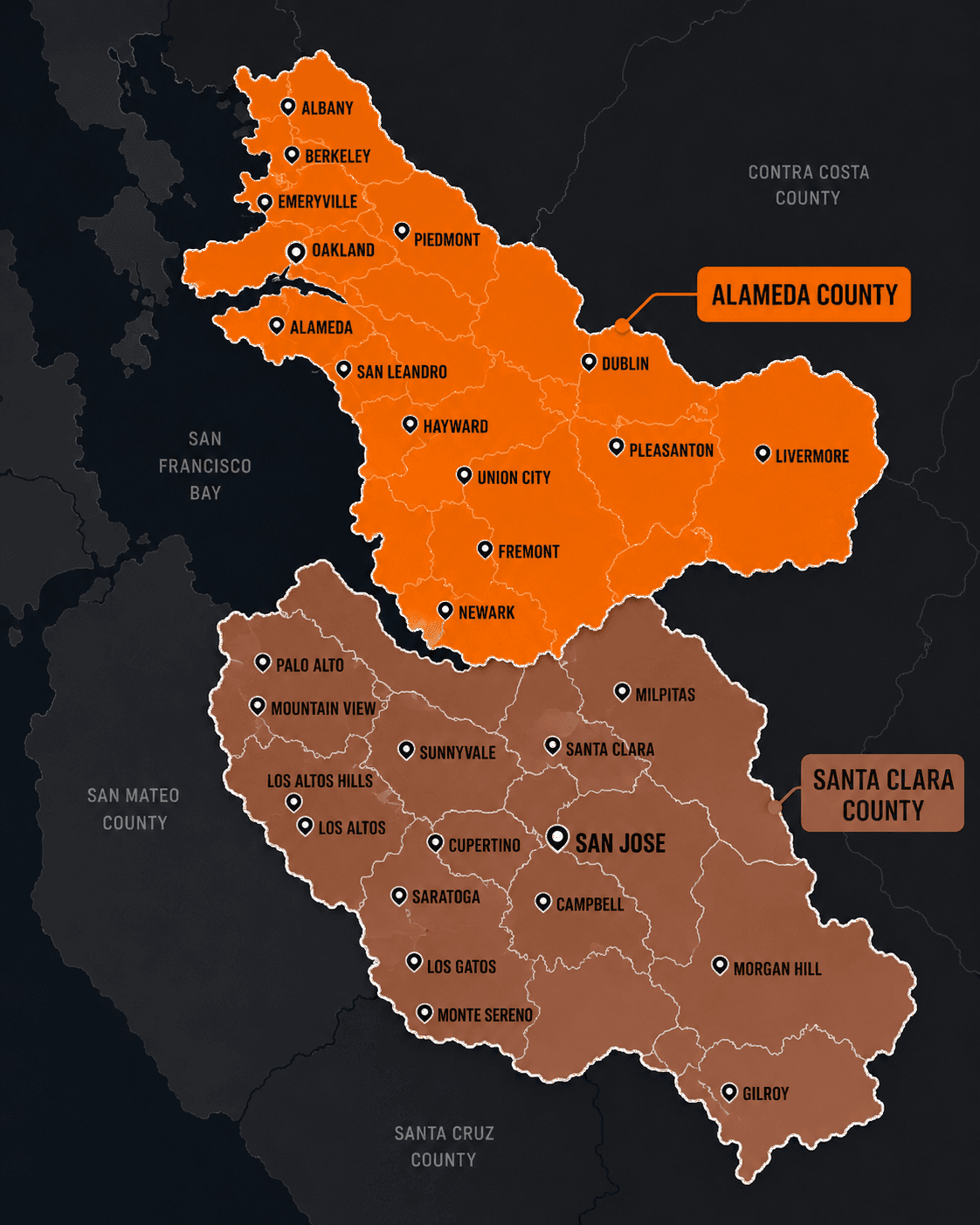
55 Cities Served
Santa Clara, Alameda, San Mateo & Santa Cruz counties
Service Area
Where We Provide Concrete Pumping
We provide concrete pumping across 55 cities in Santa Clara, Alameda, San Mateo, and Santa Cruz counties. Ground conditions, permitting, and the failure modes we see vary city by city, so each has its own page.
Counties
Read Before You Decide
Guides from our Learning Center that bear directly on this kind of work.
Have a Site That's Hard to Reach?
Tell us about the access — gate width, grade change, distance from the street — and we'll tell you honestly whether you need a pump and which kind.