Service Category
Concrete Flatwork Contractors in the Bay Area
Horizontal concrete surfaces — driveways, patios, walkways, pool decks, and slabs — built on a properly prepared base.
- Typical lifespan
- 25–30+ years, built properly
- Slab thickness
- 4" foot traffic · 5–6" vehicles
- On-site time
- 2–5 days for most residential work
- Estimates
- Free & written
Concrete Flatwork — At a Glance
Horizontal concrete surfaces — driveways, patios, walkways, pool decks, and slabs — built on a properly prepared base. Dueling Trowels Concrete Solutions provides concrete flatwork contractor services across 55 cities in Santa Clara, Alameda, San Mateo, and Santa Cruz counties, including San Jose, Oakland, Fremont, and Sunnyvale. Licensed, insured, and backed by a written workmanship warranty. Free written estimates.
What Counts as Concrete Flatwork?
Flatwork is the industry term for any concrete poured horizontally — the surfaces you walk on, park on, and live on.
If it's a horizontal slab, it's flatwork: driveways, patios, walkways, sidewalks, pool decks, garage floors, shed and hot tub pads. What separates it from structural concrete is its job. A foundation carries a building. Flatwork carries people, vehicles, and furniture, and it has to look good doing it, because most of it is in plain view.
That visibility is exactly why flatwork is unforgiving. A foundation gets buried and forgotten. A driveway sits at the front of your property for the next thirty years, and every trowel mark, color inconsistency, and misplaced joint stays visible for all of them.
The work that determines whether flatwork lasts happens before any concrete arrives. Base preparation, compaction, slab thickness, reinforcement, and joint layout are decided during planning. Once the truck shows up, most of the outcome is already locked in.
In Practice
Flatwork Across the Bay Area
The same fundamentals — base, thickness, reinforcement, drainage — applied to very different surfaces.
 Vehicle-rated
Driveways
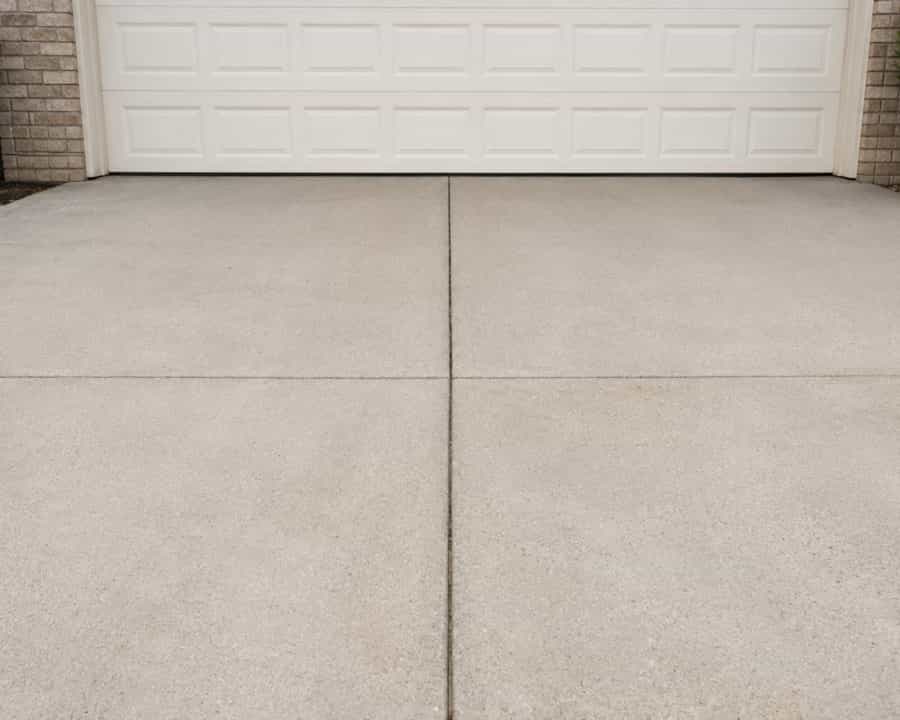
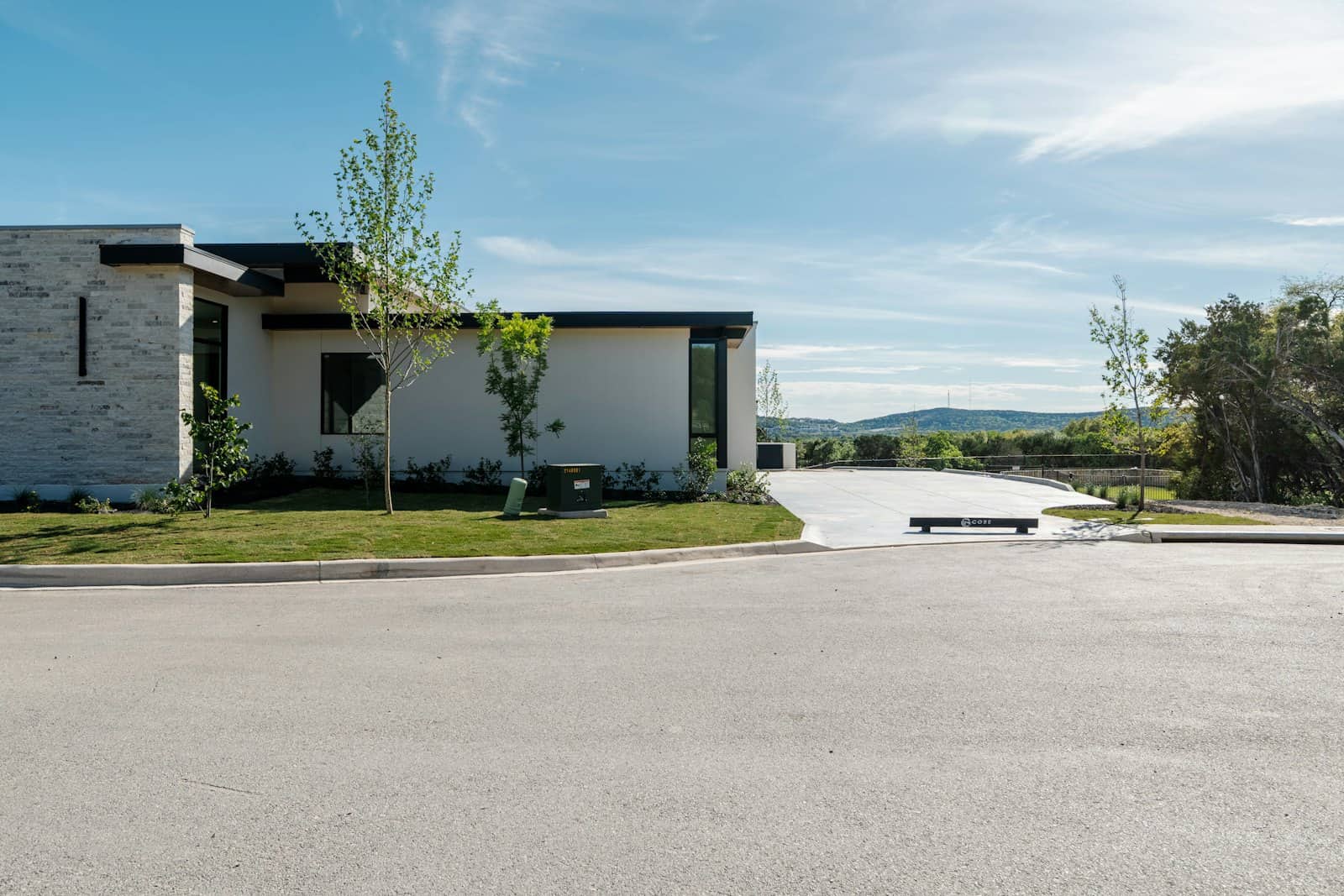
Five to six inches over compacted base, with fall carried away from the garage rather than into it.
 Decorative
Patios & outdoor living
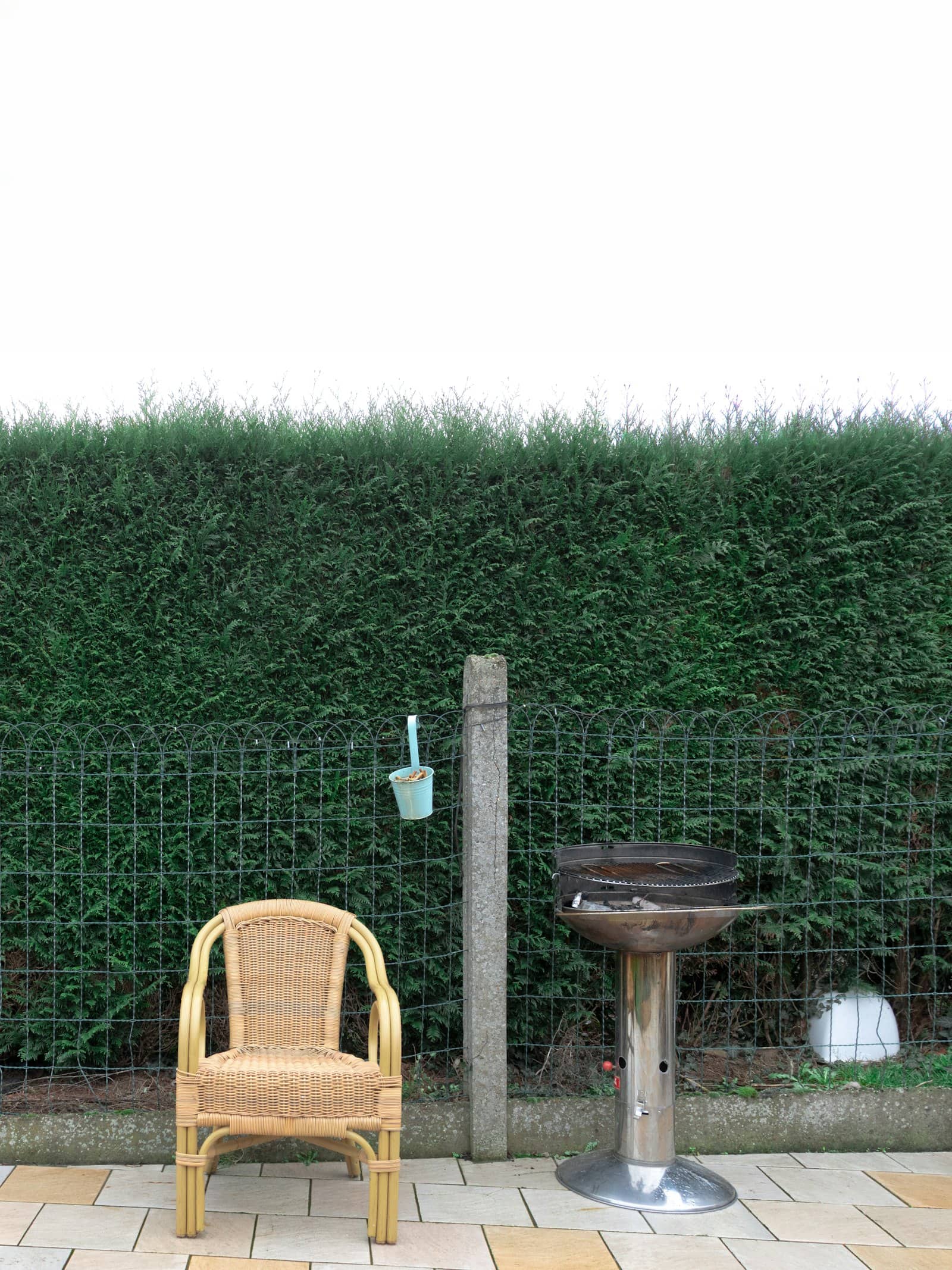
Shaped around how the space is actually used, with a finish chosen for bare feet and wet weather.
 Pedestrian
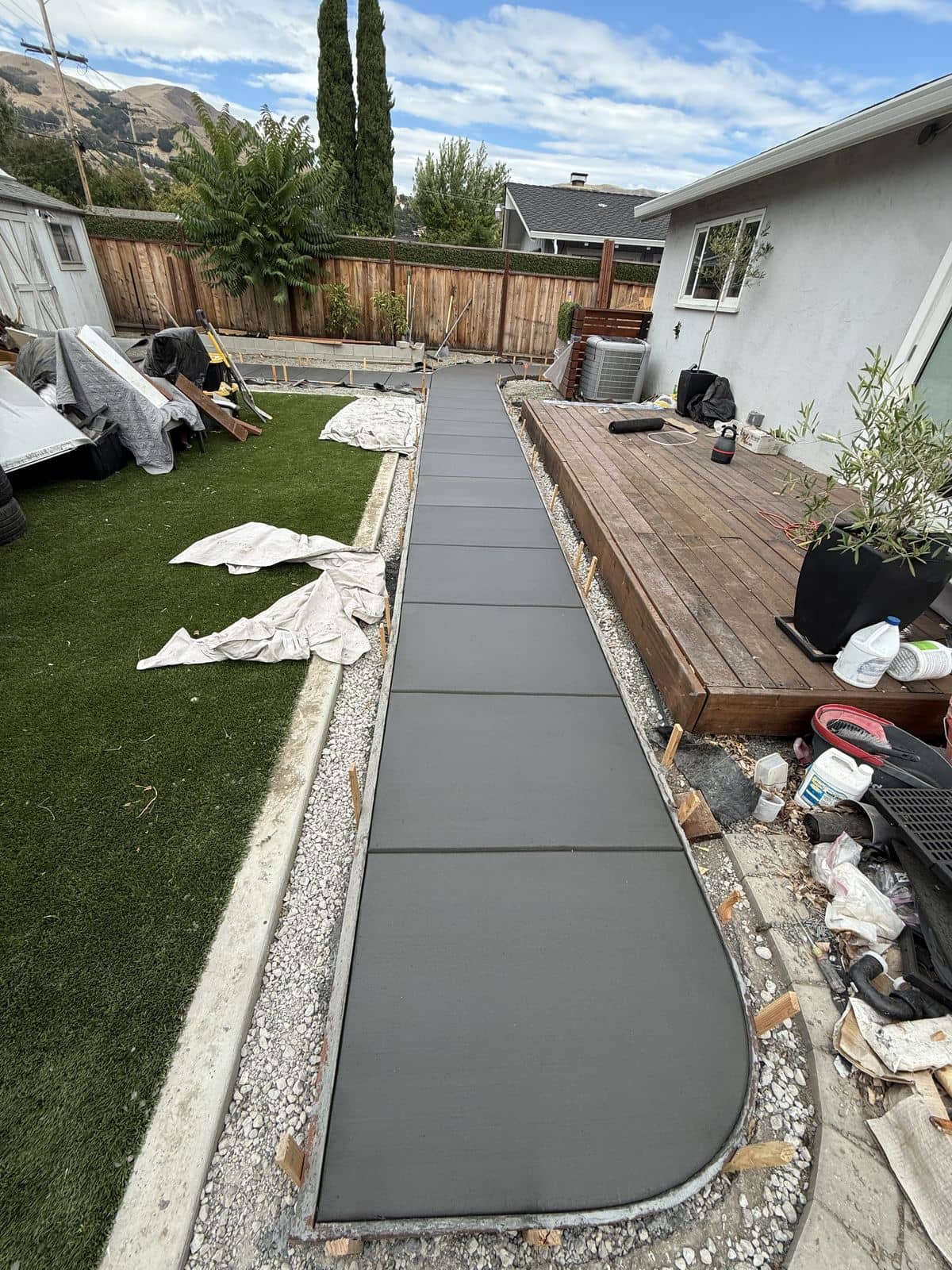
Walkways & entries
Level, compliant routes with joints placed so seasonal movement doesn't become a trip hazard.
Flatwork Services We Offer
Each of these has its own considerations. Follow the links for detail on materials, process, and what to expect.
Four Things That Decide Whether Flatwork Lasts
Almost every premature flatwork failure traces back to one of these being skipped or rushed.
Base Preparation
A compacted, uniformly graded sub-base. Soft spots and uneven fill are the single most common cause of slabs that crack and settle within a few years.
Correct Thickness
Four inches is standard for foot traffic and passenger cars. Anything carrying an RV, delivery truck, or heavy equipment needs more, plus reinforcement sized to match.
Joint Layout
Concrete shrinks as it cures. Control joints decide where it cracks. Cut them at the right depth and spacing and the cracking stays invisible inside the joints.
Curing Control
Concrete gains strength through hydration, not drying. Bay Area summers pull moisture out fast, so slabs poured in dry heat need active curing to reach full strength.
Where Flatwork Shows Up
We pour flatwork for homeowners and for commercial property owners across Santa Clara, Alameda, San Mateo, and Santa Cruz counties.
Around the Home
- Driveways and vehicle aprons
- Patios and outdoor living areas
- Walkways, paths, and side yards
- Pool decks and surrounds
- Garage and workshop floors
- Hot tub, shed, and equipment pads
- Steps, landings, and stoops
- RV and boat parking pads
Commercial Properties
- Entry aprons and building approaches
- Tenant walkways and courtyards
- Trash enclosure and equipment pads
- Loading and delivery aprons
- Interior warehouse and shop floors
- Curbs, gutters, and wheel stops
- Accessible routes and ramps
- Pedestrian plazas and seating areas
One Advantage of Pouring Concrete in Northern California
Flatwork in most of the country fails from freeze-thaw damage — water gets into the surface, freezes, expands, and spalls the concrete apart over successive winters. The Bay Area's mild climate largely removes that failure mode, which is why properly installed local flatwork can stay in good condition for decades. The trade-offs here are different: expansive clay soils that move seasonally, long dry spells that complicate curing, and a compressed winter window when the ground is too saturated to pour on.
Flatwork Questions
Transformations
Concrete Flatwork: Before & After
Representative comparisons of the condition we're typically called to, and what the finished work achieves. Drag the handle across each frame.
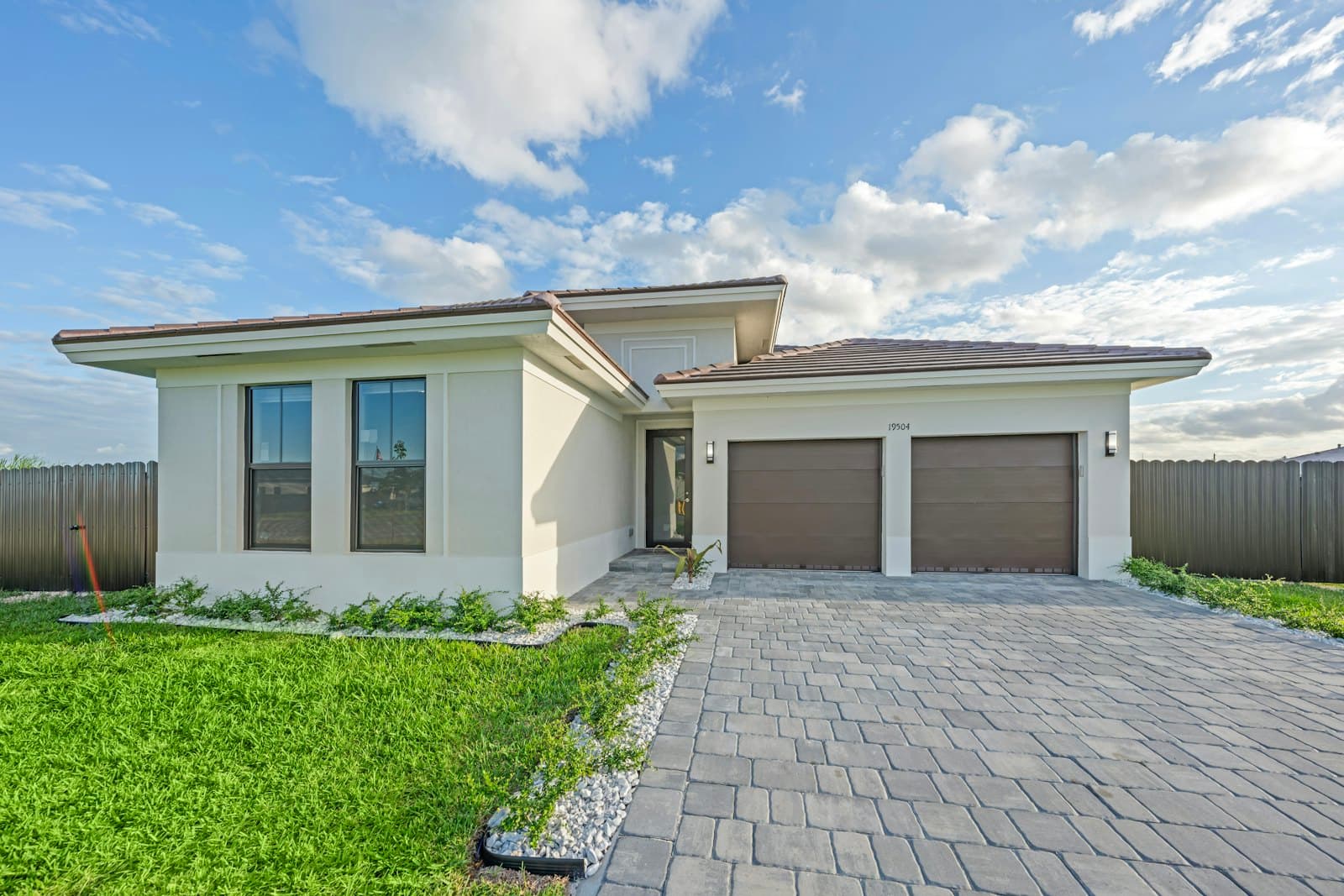
Typical 1960s tract home
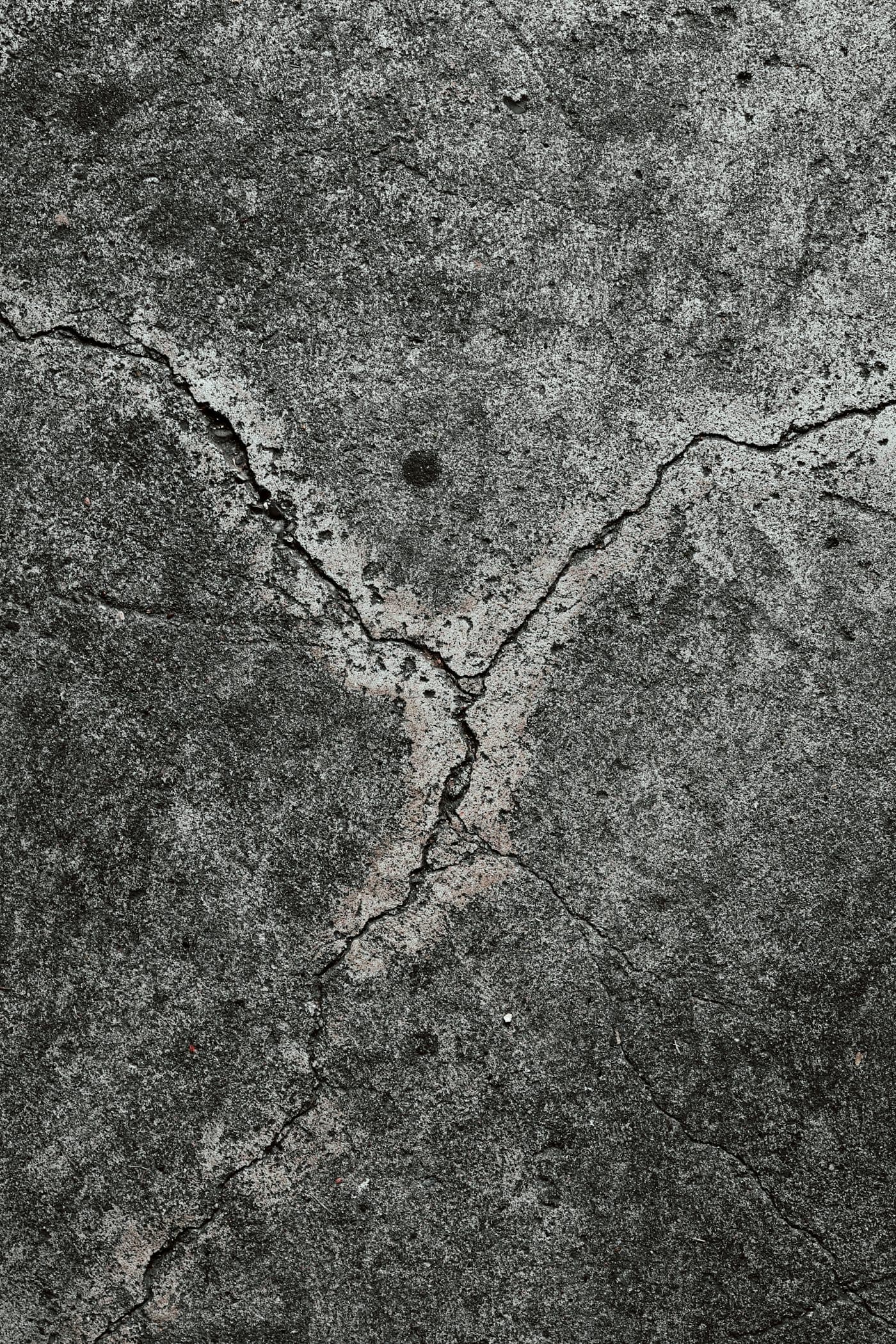
Driveway replacement
A driveway poured at three and a half inches on uncompacted native soil, cracked through in three places and settling toward the garage. Replacement went in at five inches over six inches of compacted Class 2 base, with rebar chaired into the slab and the fall reversed away from the house.
- Water now runs to the street instead of the garage slab
- Thickness and reinforcement rated for two modern vehicles
- Control joints cut on a grid, so future movement is directed
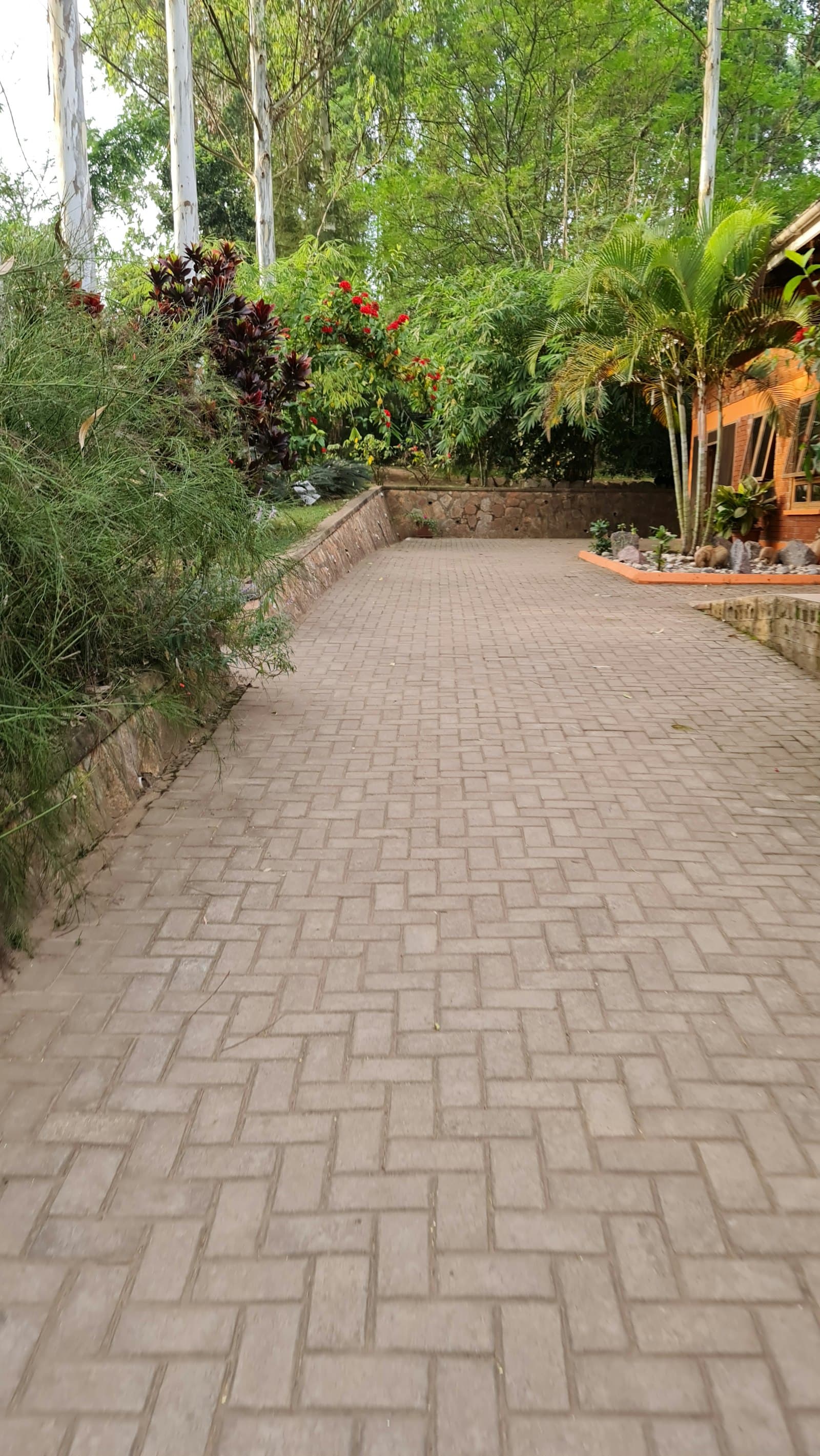
Mature street-tree frontage
Front walkway & entry
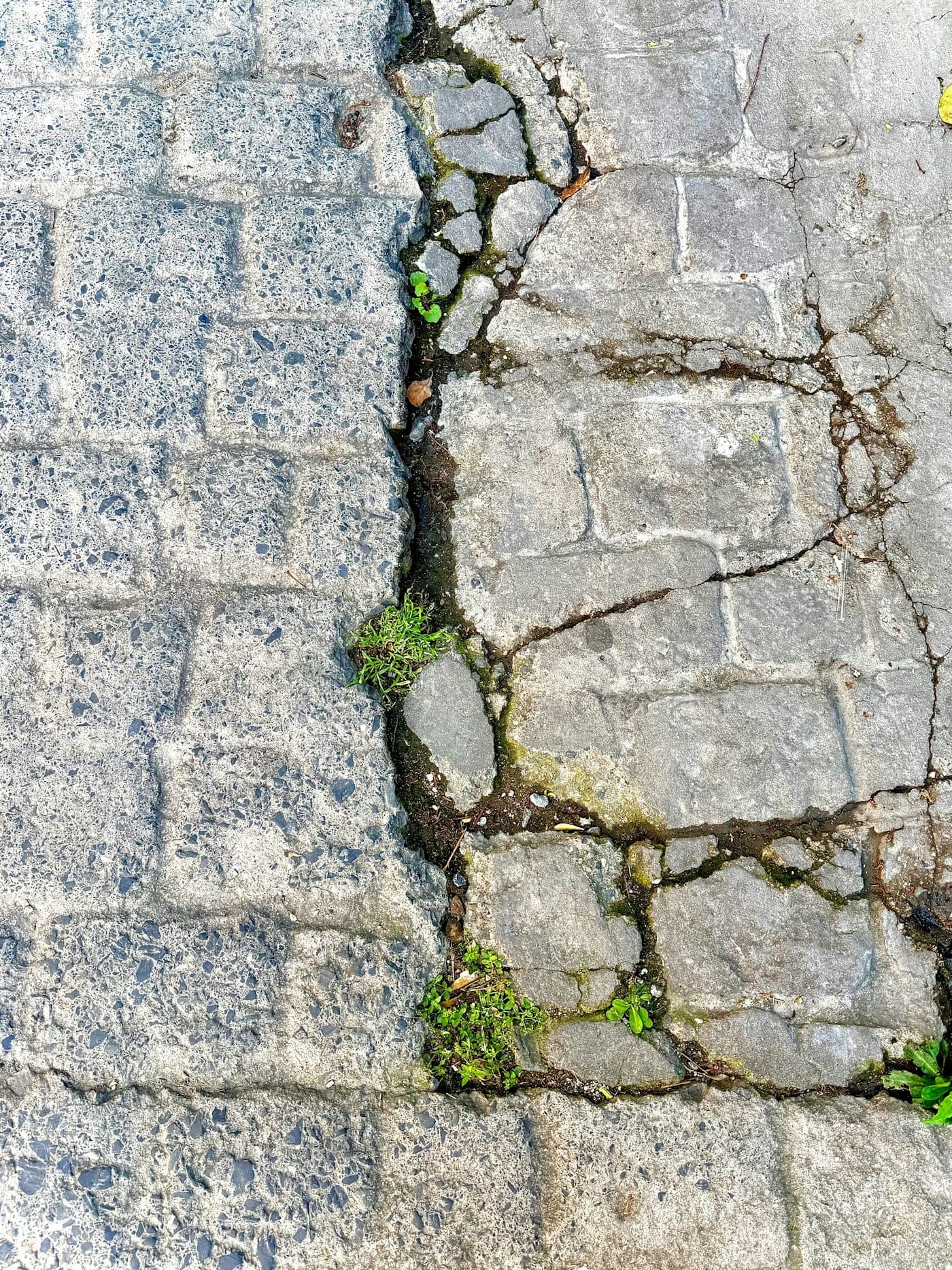
Root heave from a protected street tree had lifted three panels into a trip hazard and opened the joints to weeds. Replaced with a root barrier, a flexible joint at the tree side, and a patterned finish that ties the entry to the house.
- Trip hazard removed and the accessible route reinstated
- Root barrier installed without harming the protected tree
- Decorative finish that lifts the whole entry approach
Drag the handle — or use the arrow keys — to compare the condition before and after.
More Concrete Flatwork Services
Related work we handle, often on the same project as this one.
Often Quoted Alongside This
Work from our other category that regularly shows up on the same site visit.
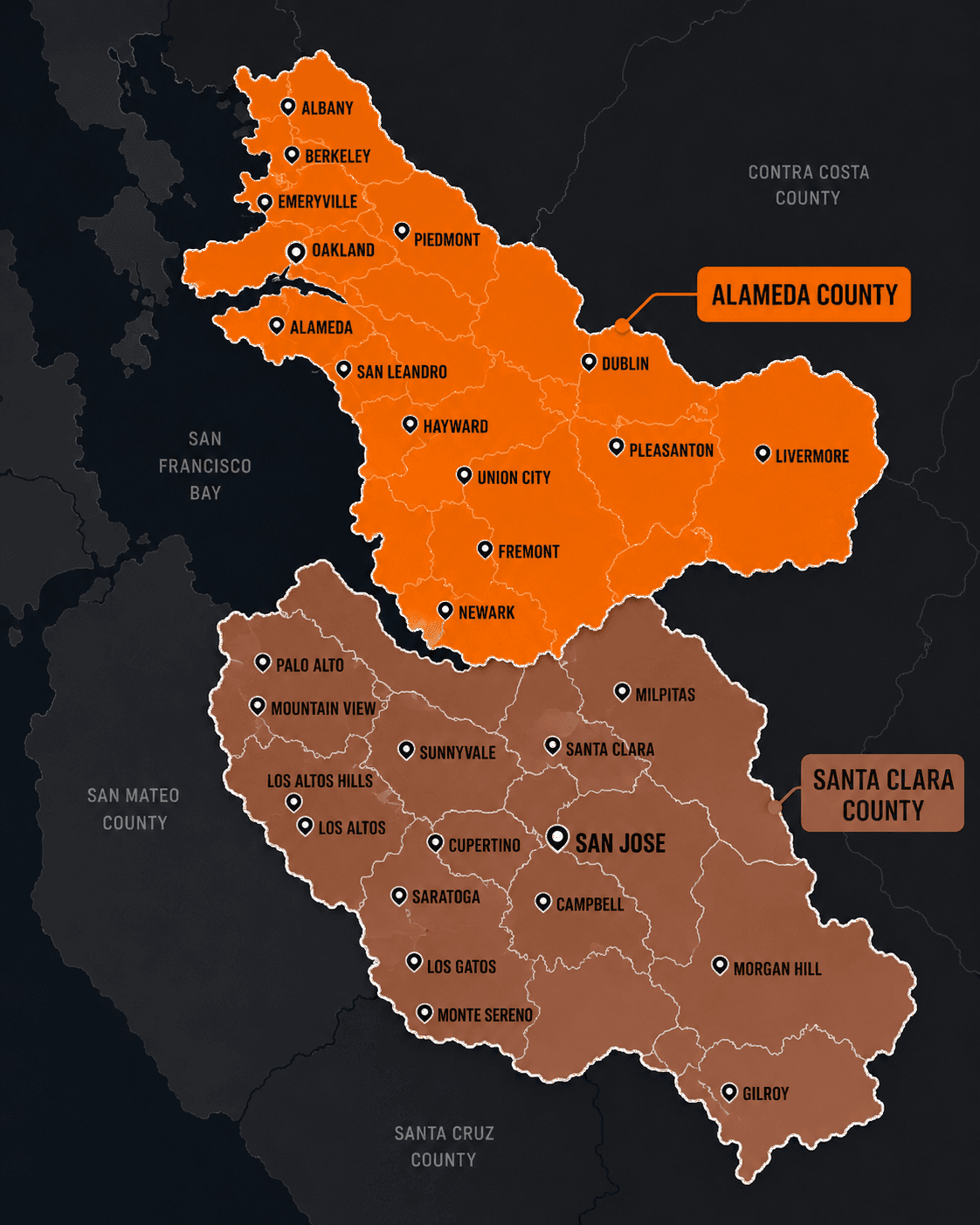
55 Cities Served
Santa Clara, Alameda, San Mateo & Santa Cruz counties
Service Area
Where We Provide Concrete Flatwork
We provide concrete flatwork across 55 cities in Santa Clara, Alameda, San Mateo, and Santa Cruz counties. Ground conditions, permitting, and the failure modes we see vary city by city, so each has its own page.
Counties
Read Before You Decide
Guides from our Learning Center that bear directly on this kind of work.
People Also Ask
The questions we're asked most about concrete flatwork, each answered in full.
Planning a Flatwork Project?
Tell us what you're picturing and we'll walk the site, talk through options, and give you a free written estimate with no obligation.