Quick answer
What is the best concrete finish for a driveway?
A broom finish is the best choice for most driveways: it gives reliable wet traction, hides minor imperfections, costs the least, and needs the least maintenance. Exposed aggregate is the better pick for sloped driveways and anywhere staining is a concern. Stamped concrete gives the strongest visual result but commits you to resealing every two to three years. Smooth trowelled finishes should never be used outdoors on a driveway.
- Most practical
- Broom finish
- Best traction
- Exposed aggregate
- Best appearance
- Stamped
- Never outdoors
- Smooth trowel
Driveway finish is the one decision on a concrete job that's purely yours. Thickness, base depth, and reinforcement are engineering questions with defensible right answers. The finish is a genuine trade-off between how it looks, how it grips when wet, how much staining it hides, and how much maintenance you're willing to commit to for the next twenty years.
Worth stating early: the finish has essentially no effect on how long the slab lasts. A stamped driveway and a broom-finished driveway on the same base with the same steel will both be there in forty years. What changes is how good each looks in year fifteen, and how much attention it took to get there.
The finishes compared
Broom finish — the practical default
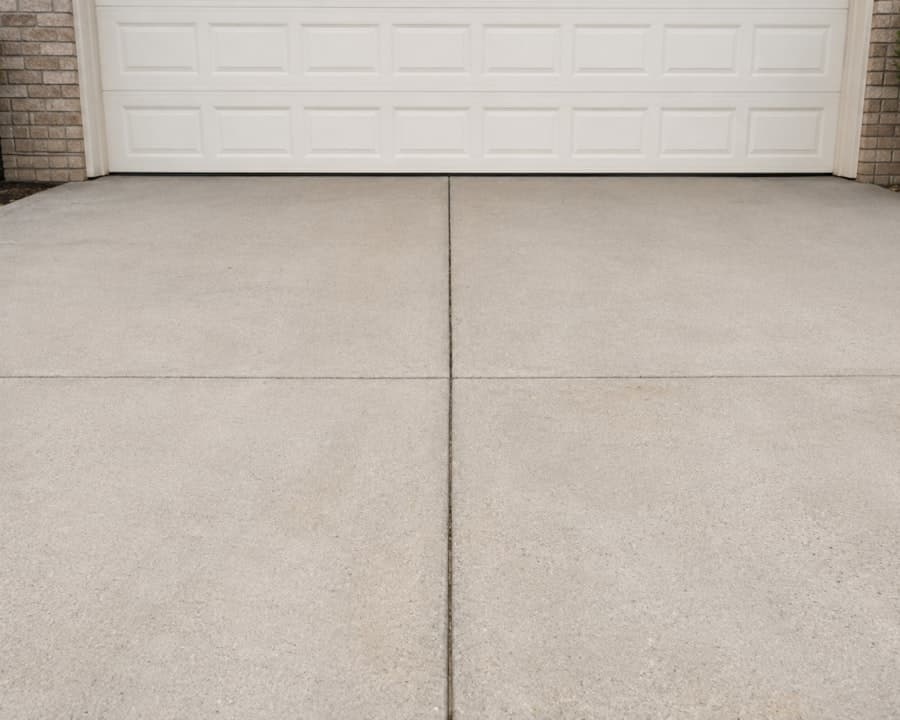
A broom finish is created by dragging a stiff-bristled broom across the surface while the concrete is still plastic, leaving fine parallel grooves. It's the most common driveway finish in the country and it's common for good reasons rather than lazy ones.
The grooves give reliable traction when wet, which on a sloped driveway is a safety question rather than a preference. The texture hides the minor color variation and trowel marks that every slab has. It's the cheapest finish because it adds a single pass to the finishing sequence. And it wears extremely well — there's no thin decorative layer to wear through, because the texture goes all the way down.
The direction of the broom matters more than people expect. Brooming perpendicular to the direction of travel gives the best traction and the most consistent appearance from the street. Brooming lengthwise looks tidier from some angles but channels water along the grooves rather than across them.
Exposed aggregate — the underrated one
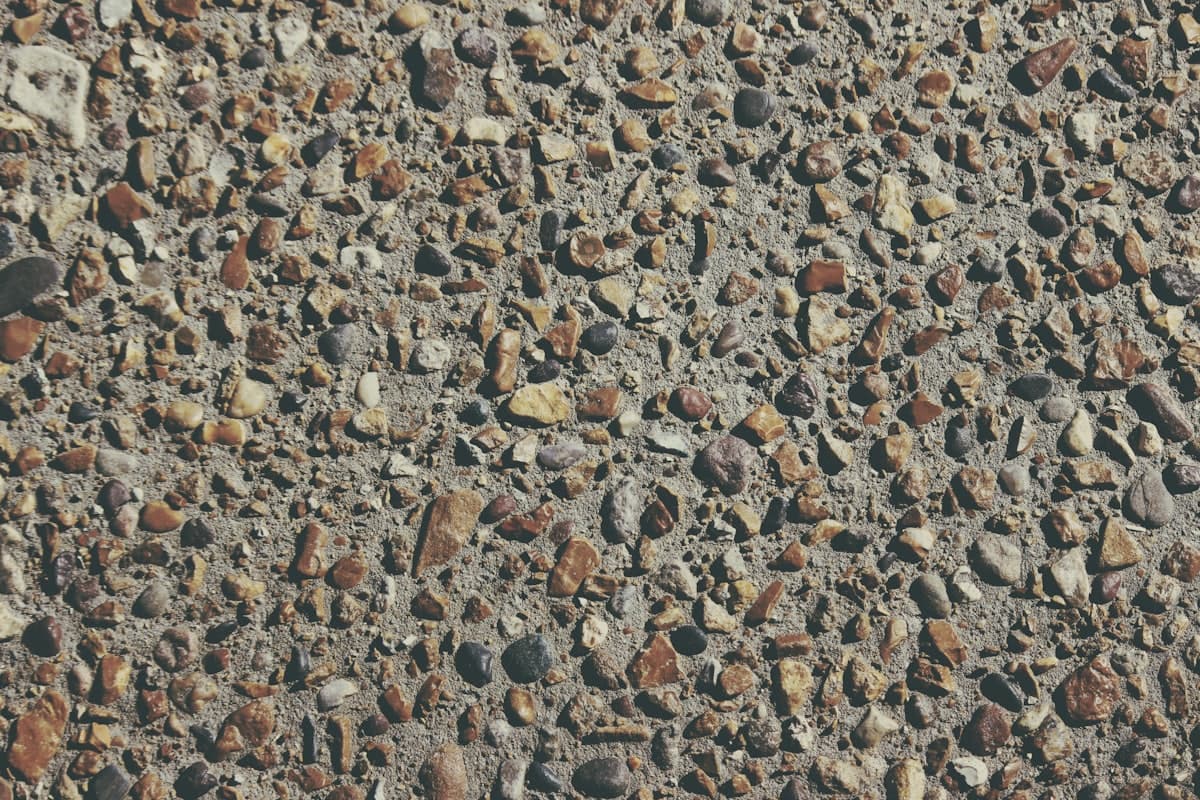
Exposed aggregate is made by removing the top layer of cement paste before it fully hardens, revealing the stone in the mix. The result is a hard-wearing, heavily textured surface with natural color variation from the aggregate itself.
It's the finish we recommend most often for sloped driveways, because the exposed stone gives the best wet traction of any concrete finish by a clear margin. It also hides oil spots, tire marks, and general staining better than anything else — the visual noise of the aggregate simply absorbs them. And because the wearing surface is stone rather than cement paste, it holds up unusually well under turning tires.
The trade-offs are real. It's rougher underfoot barefoot, harder to sweep and shovel, and slightly harder to clean because dirt lodges between the stones. It also costs more than broom, mostly because the timing window for washing off the surface paste is narrow and unforgiving — go too early and you dislodge the aggregate, too late and you're grinding.
Exposed aggregate up close
Stamped concrete — the design choice
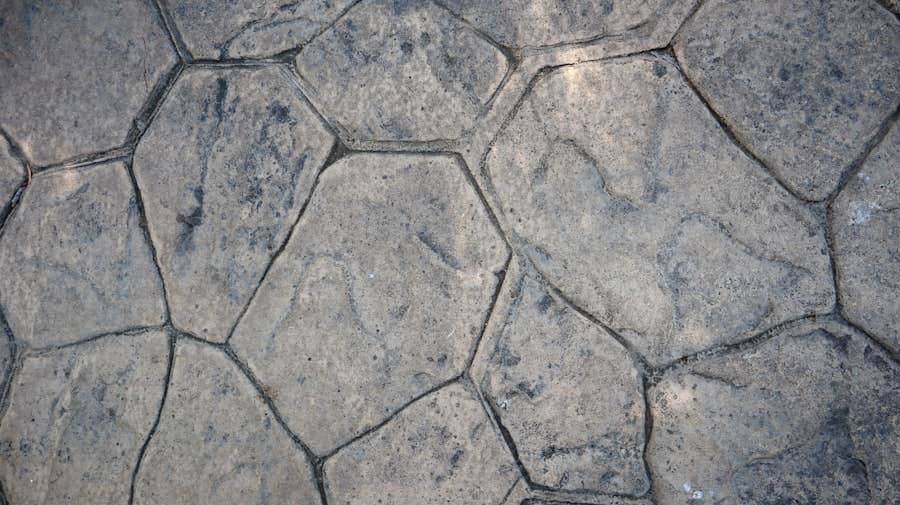
Stamped concrete is textured with patterned mats while it's still plastic, usually alongside integral color and a contrasting release agent, to produce a surface that reads as flagstone, slate, cobble, or brick. Done well it's genuinely hard to distinguish from natural stone at normal viewing distance. Done badly it looks like stamped concrete from across the street.
For a driveway it's the strongest visual upgrade available, and on a short driveway that forms a large part of the frontage it can change the whole character of a house. The quality gap between crews is much wider here than on any other finish, because the entire result depends on timing, layout planning, and the experience to detail the edges and the joints between stamp positions.
The commitment is maintenance. Stamped driveways depend on their sealer for color depth and surface protection, which means resealing every two to three years without exception. Neglect it and the color flattens and the pattern loses definition. Traction is also a live consideration: a stamped surface with a gloss sealer and no grit additive is genuinely slippery when wet, and on a sloped driveway that's a problem rather than an inconvenience.
Finish comparison
| Finish | Added cost | Wet traction | Hides stains | Maintenance |
|---|---|---|---|---|
| Broom | Baseline | Good | Moderate | Seal every 2–3 years |
| Exposed aggregate | +$3–$6 / sq ft | Excellent | Excellent | Seal every 2–3 years |
| Integral color + broom | +$2–$4 / sq ft | Good | Good | Seal every 2–3 years |
| Stamped + colored | +$6–$12 / sq ft | Fair — needs a grit additive in the sealer | Good | Reseal every 2–3 years, non-negotiable |
| Saw-cut pattern + broom | +$1–$3 / sq ft | Good | Moderate | Seal every 2–3 years |
| Smooth trowel | Baseline | Poor — unsafe outdoors | Poor | Not recommended outdoors |
Added cost is over a standard broom-finished slab of the same thickness. All figures are Bay Area indicative ranges.
The underrated middle option
There's a finish that sits between plain and decorative and almost nobody asks for it by name: a broom-finished slab with saw-cut patterning and a border.
Instead of relying on the functional control joints for the visual grid, the slab is saw-cut in a deliberate pattern — larger squares, a diamond layout, a defined border band around the perimeter — with the joints planned as a design element rather than tolerated as a necessity. Sometimes with a contrasting integral color in the border, sometimes just the cut lines.
It costs a fraction of stamping, adds no maintenance burden at all, keeps the traction of a broom finish, and looks considerably more considered than a plain slab. For a driveway where budget matters but you don't want the frontage to look utilitarian, it's the best value on the list.
Choosing your finish
Five questions, in the order that usually resolves the decision.
Is the driveway sloped?
If it's meaningfully sloped, traction moves to the top of the list. Exposed aggregate first, broom second. Stamped only with a grit additive in the sealer, and reluctantly.
How much sun does it get?
Full-sun driveways in Livermore, Gilroy, or Morgan Hill will fade colored concrete faster and heat up more. Lighter colors stay cooler; exposed aggregate and integral color hold up better than surface-applied color.
How visible is it from the street?
A short driveway forming most of the frontage justifies decorative spend in a way a long side approach doesn't.
Will you reseal it every two to three years?
Answer honestly. A neglected stamped driveway looks considerably worse at year ten than a neglected broom-finished one — the decorative finish has more to lose.
What does the house look like?
Stamped stone patterns suit traditional and craftsman homes. Large-format saw-cut panels and exposed aggregate suit modern and mid-century. A flagstone pattern in front of a flat-roofed modern house rarely lands.
Finishes in the field
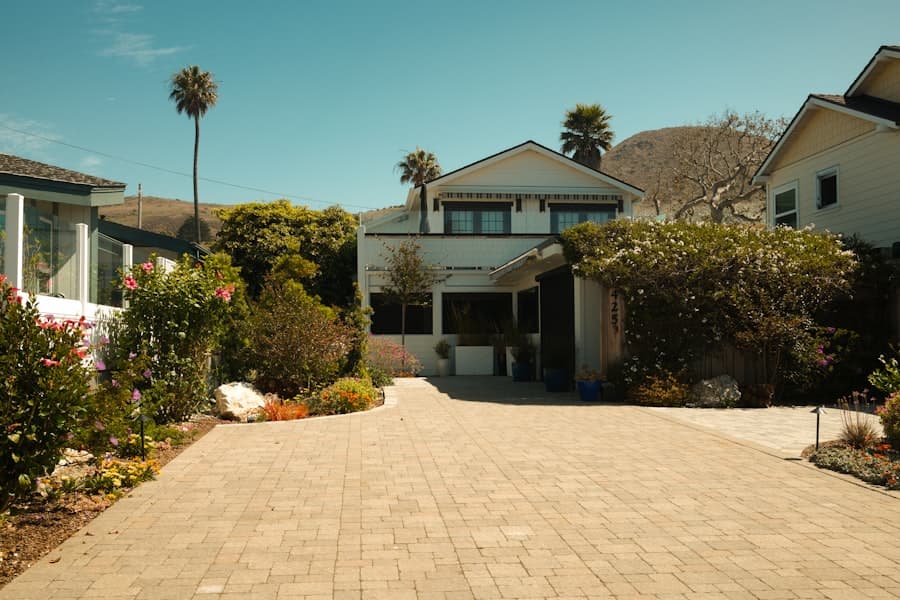
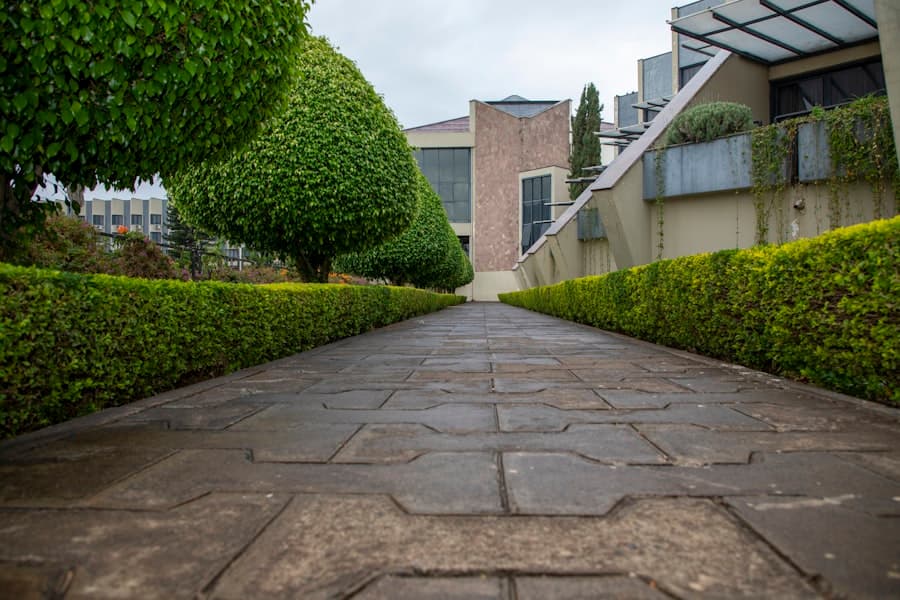
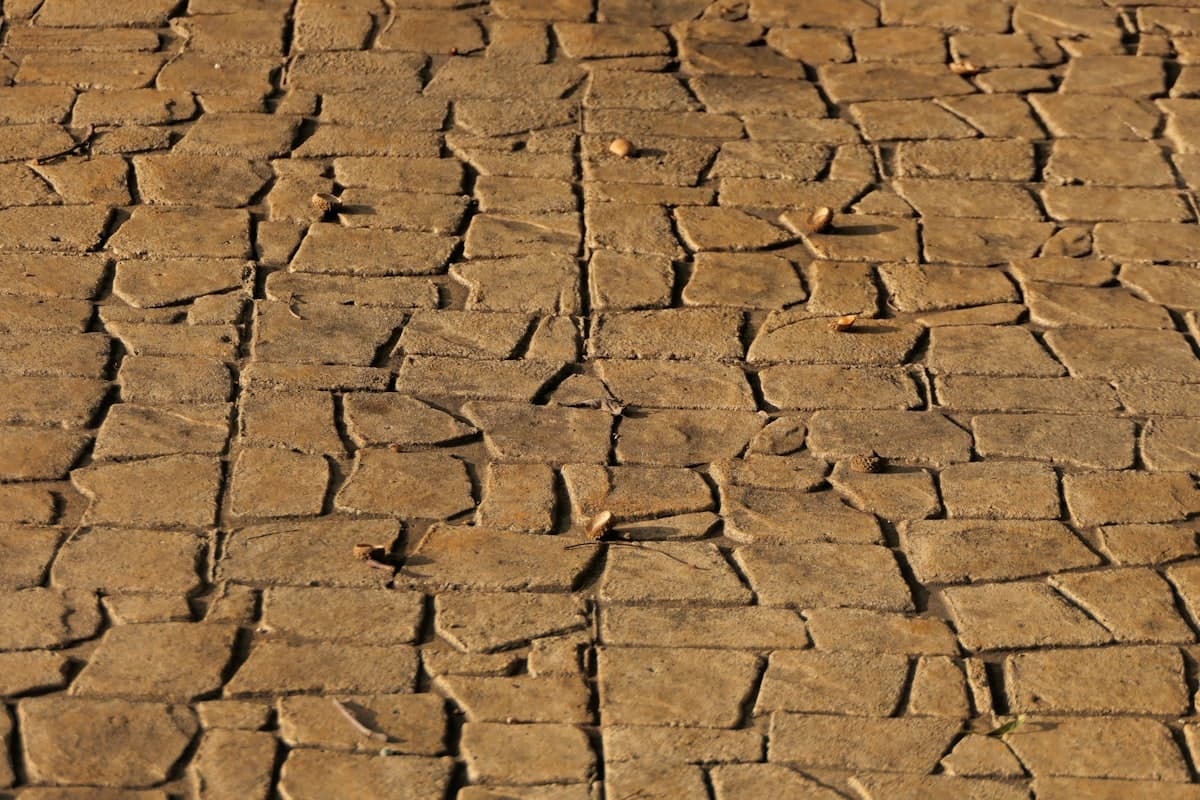
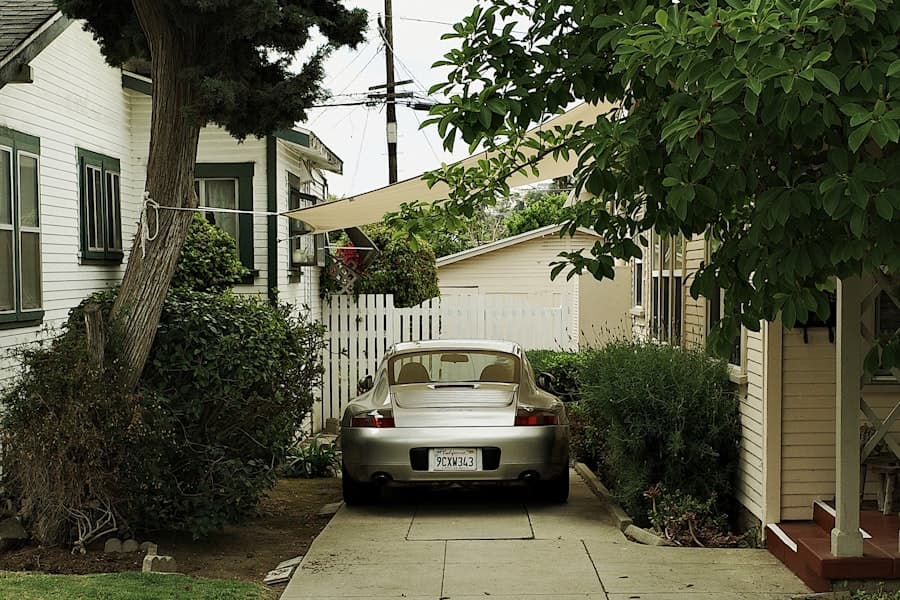
Bay Area driveways and flatwork across the finish range.
Driveway finish questions
Go deeper on finishes
Key takeaways
- Broom finish is the right default: good traction, low cost, low maintenance, hides imperfections.
- Exposed aggregate is the best choice on slopes and anywhere staining is a concern.
- Stamped concrete gives the strongest visual result and requires resealing every 2–3 years, without exception.
- Never use a smooth trowelled finish outdoors — it's genuinely unsafe when wet.
- Saw-cut patterning over a broom finish is the best-value decorative option and almost nobody asks for it.
- Always ask for an on-site sample panel before committing to color or pattern.
Still deciding?
Ask us about your specific project
We'll give you a straight answer on the phone, including when that means telling you that you don't need the work you asked about. Free written estimates across San Jose & the greater Bay Area.