Quick answer
How do you plan a commercial concrete maintenance budget?
Start with a documented condition assessment of every concrete asset on the site, rate each by condition and by risk, then build a five-year plan that schedules interventions at the point where cost per year of life gained is lowest. As a planning figure, budget roughly 1–3% of concrete replacement value annually for maintenance. Reactive-only maintenance typically costs two to four times more over a decade.
- Annual budget guide
- 1–3% of asset value
- Assessment frequency
- Annually
- Planning horizon
- 5 years, rolling
- Reactive cost penalty
- 2–4x
Most commercial properties manage concrete reactively: something breaks, someone complains, a contractor is called, a repair is made. It feels like cost control and it's the most expensive way to own concrete.
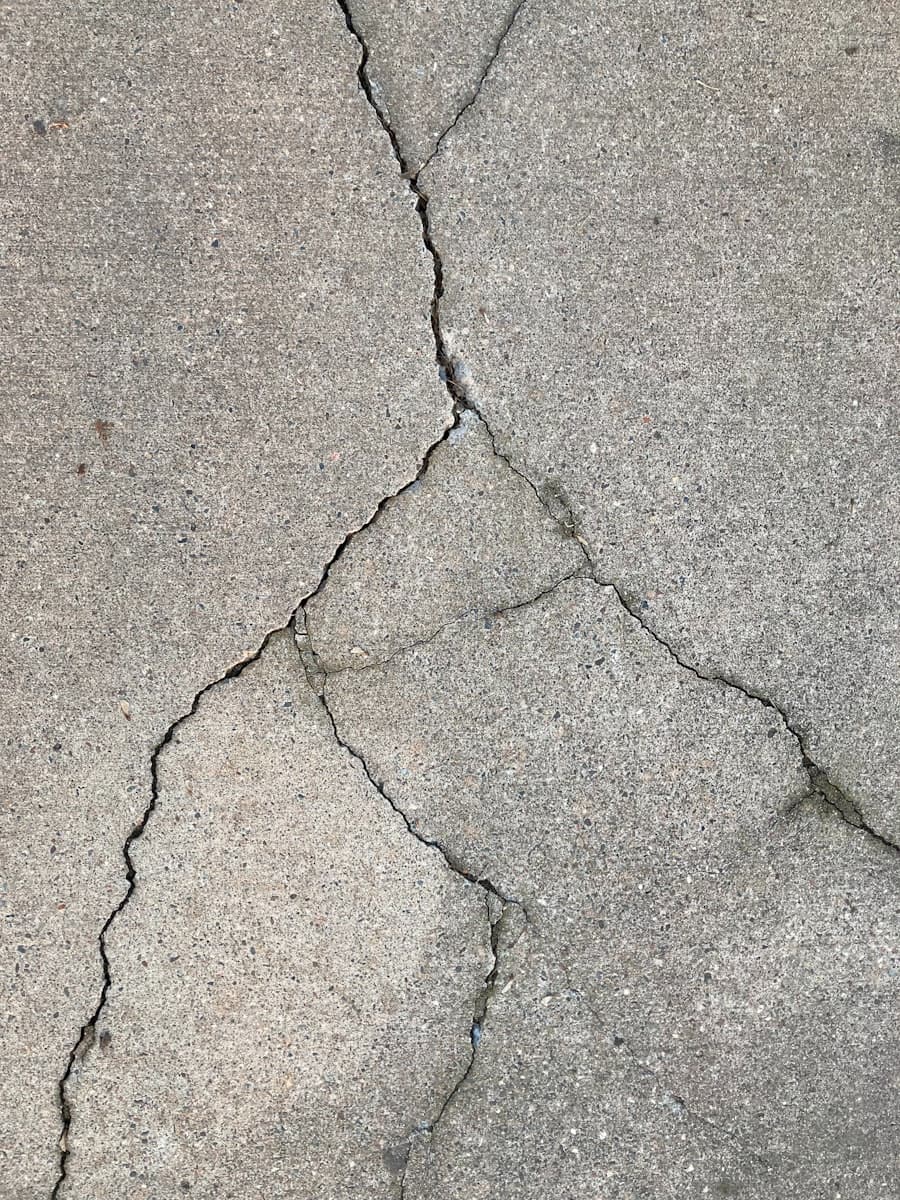
The reason is that concrete deterioration accelerates. A joint sealant that's failed lets water into the base; the base softens; the panel faults; the faulted edge spalls under traffic; the spall becomes a pothole. Each stage costs several times the previous one to fix. Intervening at stage one is cheap and boring; intervening at stage five is expensive, disruptive, and often means replacing rather than repairing.
A maintenance plan is essentially a mechanism for intervening early on purpose rather than late by default.
Building the plan
Four stages. The first one takes a day and everything else depends on it.
Inventory the assets
Every concrete element on the site: parking areas by zone, drive aisles, dock aprons, dumpster pads, sidewalks and accessible routes, stairs and ramps, interior floors. Record area, age where known, and construction type.
Assess condition
Walk each asset and rate it. Note joint condition, cracking, faulting and level changes, surface condition, drainage performance, and any ADA compliance issues. Photograph everything and date it.
Rate risk alongside condition
Condition tells you what's deteriorating; risk tells you what to do first. A minor level change on a main accessible route outranks significant cracking in a rarely used corner of the lot, because one is a liability and the other is an inconvenience.
Schedule interventions across five years
Group work geographically to reduce mobilisation cost, sequence around operational constraints, and spread spend so the budget is predictable. Then review and roll it forward annually.
Condition ratings and what they mean
| Rating | What you see | Action | Relative cost |
|---|---|---|---|
| Good | Sound surface, joints sealed, no faulting, drainage working | Routine cleaning and inspection | Baseline |
| Fair | Joint sealant failing, minor cracking, early surface wear | Joint and crack sealing — the highest-value intervention there is | 1x |
| Poor | Open joints, faulting under 1/4", spalling starting, ponding water | Targeted repair, joint rebuild, drainage correction | 3–5x |
| Very poor | Panels faulted, spalled edges, base pumping, structural cracking | Panel replacement | 10–15x |
| Failed | Widespread breakup, unsafe surface, non-compliant routes | Reconstruction | 20x+ |
Relative cost is the cost of correcting the condition, indexed against joint and crack sealing. The multipliers are why early intervention is the whole argument.
What to budget
As a planning figure, 1–3% of the concrete assets' replacement value annually covers a properly run program on most commercial sites. Sites with heavy truck traffic, older concrete, or known drainage problems sit at the top of that range or above it.
The more useful framing for a board or an owner is comparative. Over a ten-year period, planned maintenance typically costs somewhere between a quarter and a half of what reactive maintenance costs on the same assets — because reactive work is nearly always replacement rather than repair, is nearly always more disruptive, and nearly always happens at the least convenient time.
There's a second, less visible cost too. Reactive repairs happen during business hours because they're urgent, close areas without notice, and are priced without competitive tender. Planned work is scheduled, tendered, and phased. The disruption cost of reactive maintenance frequently exceeds its direct cost.
A typical maintenance cycle
Indicative intervals for a commercial site with moderate traffic. Frequency scales with use.
Quarterly
Visual inspection
Walk the site. Look for new cracking, level changes on accessible routes, ponding, and joint sealant failure. Fifteen minutes with a phone camera.
Annually
Formal condition assessment
Documented, photographed, rated. Includes measuring accessible route slopes and level changes. This is the input to the rolling five-year plan.
Annually
Crack sealing
Seal new cracks before a wet season. Cheap, quick, and it keeps water out of the base.
Every 5–7 years
Joint sealant renewal
Full replacement of joint sealant across the site. The single highest-return item in the program.
Every 5–10 years
Targeted panel replacement
Replace the panels rated poor or worse. Doing several at once cuts mobilisation cost significantly against doing them one at a time as they fail.
Every 20–30 years
Major rehabilitation or reconstruction
Even a well-maintained lot eventually reaches the point where reconstruction of areas is the right call. A maintenance plan means this is a scheduled capital item rather than an emergency.
Making the case internally
Maintenance budgets compete against everything else, and "the concrete looks fine" is a hard argument to beat without numbers. Three things help.
Document the cost curve. Showing that a $3,000 joint sealing program this year avoids an estimated $30,000 of panel replacement in four years is a far stronger case than a request for maintenance funding.
Quantify the disruption. Lost parking bays, closed loading docks, and blocked routes have an operational cost that's often larger than the repair cost and rarely appears in the comparison.
Name the liability. Trip hazards and non-compliant accessible routes carry a risk that's quantifiable in a way general deterioration isn't, and that tends to move budget faster than anything else.
Maintenance planning questions
Related reading
Key takeaways
- Concrete deterioration accelerates — each stage costs several times the last to correct.
- Budget 1–3% of concrete replacement value annually for a properly run program.
- Reactive-only maintenance typically costs two to four times more over a decade.
- Joint sealing on a 5–7 year cycle is the single highest-return item available.
- Rate assets by risk as well as condition — liability outranks appearance.
- Accessible route compliance degrades over time and belongs in every annual assessment.
Still deciding?
Ask us about your specific project
We'll give you a straight answer on the phone, including when that means telling you that you don't need the work you asked about. Free written estimates across San Jose & the greater Bay Area.