Quick answer
What is the difference between concrete dye and concrete stain?
Concrete dye is a very fine pigment carried in water or solvent that soaks quickly into the surface and gives bright, consistent color — but many dyes fade in direct sunlight, so they're best indoors. Concrete stain either reacts chemically with the concrete (acid stain) to create permanent, mottled earth tones, or deposits pigment into the pores (water-based stain) for a wider color range. Integral color is different again: pigment is mixed into the concrete before it's poured, so the color runs through the whole slab.
- Dye
- Vivid, best indoors
- Acid stain
- Permanent, mottled
- Water-based stain
- Most colors, more even
- Integral color
- Through the whole slab
Four ways to put color into concrete
People use 'stain' and 'dye' interchangeably, and contractors sometimes do too, but they're different products that behave differently over time. Choosing the wrong one is the most common reason colored concrete disappoints — a vivid indoor dye used on a sunny patio, or an acid stain expected to produce a uniform paint-like color.
There are four main approaches. Integral color is mixed into the concrete at the plant. Color hardener is a dry powder worked into the fresh surface, mostly used with stamping. Stains — acid and water-based — are applied to cured concrete. Dyes are also applied to cured concrete, usually on interior floors, and often during polishing. Tinted sealers add a little color in the coating itself.
Each has a place. The decision comes down to whether the concrete is new or existing, whether it's inside or out, how much color variation you want, and how permanent the color needs to be.
Dye, stain, and integral color compared
| Dye | Acid stain | Water-based stain | Integral color | |
|---|---|---|---|---|
| Applied to | Cured concrete | Cured concrete | Cured concrete | Fresh mix, before pour |
| How color forms | Fine pigment penetrates | Chemical reaction | Pigment deposits in pores | Pigment throughout |
| Look | Vivid, even | Mottled, variegated | More uniform | Even, subtle |
| Color range | Very wide | Earth tones | Wide | Moderate |
| UV stability | Varies; many fade | Excellent | Good | Excellent |
| Best use | Interior, polished floors | Interior & exterior | Interior & exterior | New exterior slabs |
| Works on old concrete | Yes | Yes, if reactive | Yes | No |
Acid stain's natural variation
Concrete dye in detail
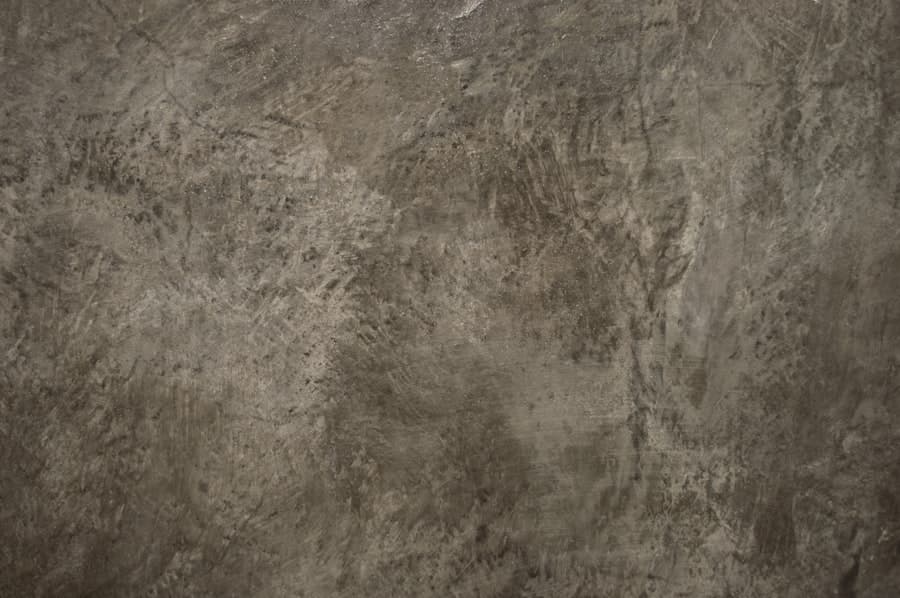
Dyes are made with extremely fine color particles dissolved or suspended in water or a solvent such as acetone. Because the particles are so small, they penetrate quickly and evenly, giving bright, saturated, translucent color. That's why dyes are popular for polished interior floors, where they're applied during the polishing process and locked in by the densifier and guard.
Dyes dry fast, which makes them good for crisp patterns and multiple colors in one floor. Their weakness is ultraviolet light. Many dyes are not UV-stable and fade noticeably in direct sun, so they're generally not recommended for exterior concrete or floors under large sunny windows unless the product is specifically rated for UV exposure.
Because dyes don't react chemically, they produce a more predictable color than acid stain. That predictability is a strength when a specific color is needed, such as a brand color in a commercial space.
Acid stain in detail
Acid stain is a solution of metallic salts in a mild acid. When applied to cured concrete, it reacts with the calcium hydroxide (lime) in the cement paste to form new colored compounds within the surface. The color isn't a coating — it becomes part of the concrete, which is why acid stain doesn't peel and is very UV-stable.
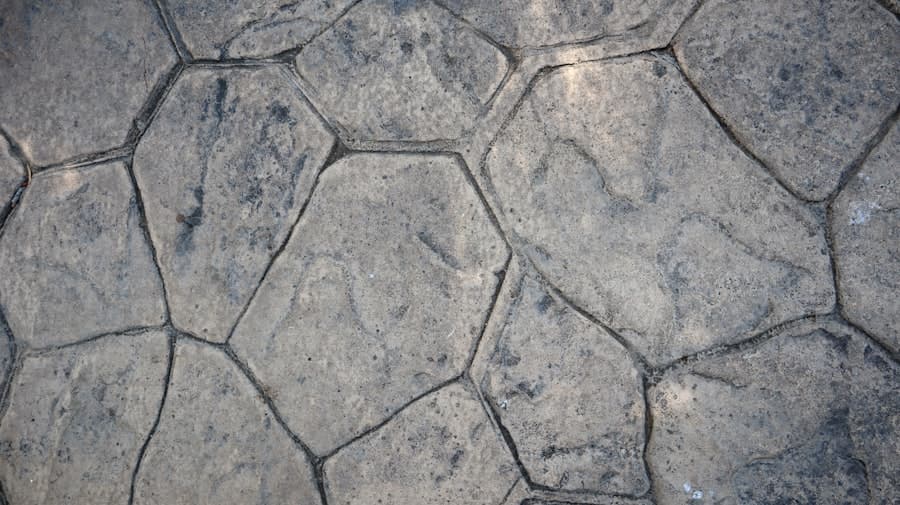
The reaction depends on the concrete itself: its mix, age, finishing, and how much lime is available at the surface. That's why acid stain produces mottled, marbled, variegated color, and why two slabs stained with the same product can look different. The palette is limited to earth tones — browns, tans, terracotta, and blue-greens.
Acid stain needs the concrete to be clean and free of sealers, paints, and curing compounds, or the acid can't reach the paste. After staining, the residue must be neutralized and rinsed thoroughly before sealing.
Water-based stain in detail
Water-based stains contain pigments and acrylic or other binders that penetrate the surface pores and bond there. They don't rely on a chemical reaction, so the result is more predictable and more uniform than acid stain, and the color range is much wider — including whites, blacks, and brighter tones acid stain can't make.
They're generally lower in odor and easier to handle than acid stain, with no neutralizing step. Water-based stains can be layered, thinned, or sprayed to create effects, and they can tone down or blend existing variation.
Their durability depends more on the sealer above them than acid stain does, because the color sits nearer the surface. Exterior work should be sealed with a UV-stable sealer and resealed on schedule.
Integral color in detail
Integral color is pigment — usually iron oxide — added to the concrete at the batch plant or in the truck, so every part of the slab is colored. Chips, scratches, and wear reveal the same color underneath, which makes integral color the most durable option for exterior flatwork that sees traffic.
The color is softer than surface-applied products, because the pigment is diluted through the whole mix and the cement's own gray tone influences it. Lighter cement and a measured pigment dose give more consistent results. Integral color is often combined with stamping, a contrasting release agent, or a stain to add depth.
Its limitation is obvious: it only works on new concrete. To color an existing slab, you need a stain, dye, or tinted sealer — or an overlay.
Colored concrete in practice
Which one should you choose?
Dye
Pros
- Brightest, most saturated colors
- Fast drying for patterns
- Ideal with polished concrete
Cons
- Many fade in direct sunlight
- Mostly for interiors
Verdict — Best for interior and polished floors.
Acid stain
Pros
- Permanent, part of the concrete
- Very UV-stable
- Rich, natural variation
Cons
- Earth tones only
- Unpredictable results
- Needs neutralizing
Verdict — Best for a natural, marbled look inside or out.
Water-based stain
Pros
- Wide color range
- More uniform and predictable
- Lower odor, simpler process
Cons
- Relies more on sealer for durability
Verdict — Best when you need a specific color on existing concrete.
Integral color
Pros
- Color through the full depth
- Most durable for exterior traffic
Cons
- New concrete only
- Softer colors
Verdict — Best for new patios, driveways, and walks.
How existing concrete is stained or dyed
Test and assess
Check for sealers, coatings, and moisture; test a small area to see how the slab takes color.
Clean and strip
Remove dirt, grease, and any old sealer or paint so color can penetrate.
Profile the surface
Light grinding or etching opens a dense surface where needed.
Apply color
Spray, brush, or ragged on in coats; acid stain is left to react for its dwell time.
Neutralize and rinse
Acid stain residue is neutralized and rinsed until clean.
Seal
A sealer suited to the location protects the color and deepens it.
Colored concrete in Bay Area conditions
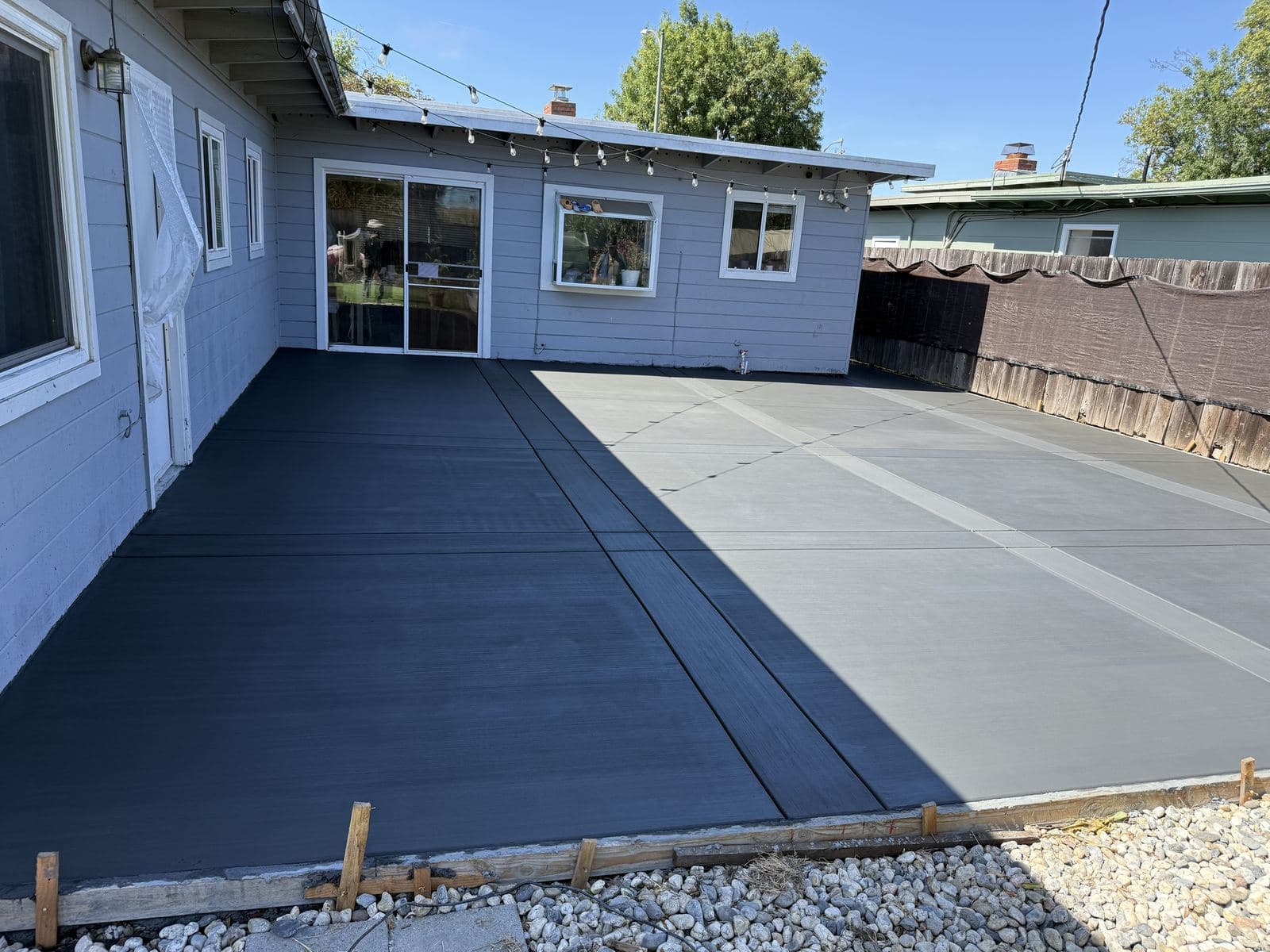
Sun exposure varies a lot across the Bay Area. Inland patios in San Jose, Gilroy, and Livermore get strong summer UV, so exterior color should come from UV-stable products — acid stain, quality water-based stain, or integral color — with a UV-stable sealer on top. Coastal areas get less direct sun but more moisture, which makes good sealing and drainage important.
Dark colors absorb heat. On patios and pool decks used barefoot, lighter tones stay more comfortable in summer, and they also show fading less.
Color hardener and tinted sealers
Two more products round out the picture. Color hardener is a dry blend of pigment, cement, and fine aggregate broadcast onto fresh concrete and floated into the surface. It produces intense, durable color in the top layer and increases surface hardness. It's the standard way to color stamped concrete, often paired with a contrasting release agent that settles into the texture.
Tinted sealers add a translucent tint to a clear sealer. They can even out blotchy concrete, refresh faded color, or add a subtle tone, but the color lives in the coating and wears away with it. They're best treated as a maintenance and touch-up tool rather than the main color system.
Which product for which project
| Project | Best color option | Why |
|---|---|---|
| New patio or driveway | Integral color (+ release or stain) | Color through the slab, durable |
| New stamped concrete | Color hardener + release | Intense color, hard surface |
| Existing exterior patio | Acid or water-based stain | Works on cured concrete, UV-stable |
| Interior polished floor | Dye | Vivid color, locks into polish |
| Faded or blotchy slab | Tinted sealer or stain | Evens out tone |
| Garage floor | Stain or dye + densifier/guard | Durable and easy to clean |
What color choices look like over time
Integral color softens slightly as the surface weathers but stays consistent because the color runs through the concrete. Acid stain is effectively permanent; the visible change over time comes from wear of the sealer and soiling, which is fixed by cleaning and resealing. Water-based stains hold up well under a maintained sealer but can wear in high-traffic paths if the sealer is neglected.
Dyes indoors hold their color well, especially under a polished densified surface with a guard. Outdoors, non-UV-stable dyes can fade within months in strong sun, which is why exterior dye use should be limited to products specifically rated for it.
For every option, the sealer is part of the color system. It protects the surface, deepens the tone, and determines how good the color looks year to year.
Test areas prevent surprises
Because concrete itself influences the final color — through its cement, aggregate, finishing, and age — a small test area is the most reliable way to see what you'll actually get. That's especially true with acid stain, where the same product can look very different on two slabs.
A good test includes the full sequence: cleaning, color, neutralizing if needed, and sealing, because sealer darkens and deepens color. Look at the test dry and wet, in daylight, before deciding.
Common problems and how to avoid them
Blotchy or patchy color usually comes from an uneven surface: areas that were troweled harder, patches of residual curing compound, old sealer, or oil. Thorough cleaning and a light, even surface profile before color application produce far more consistent results.
Weak or pale acid stain results often mean the concrete has little free lime at the surface — common with some modern mixes, overlays, or heavily troweled slabs. Water-based stain or dye is the better option in that case.
Sealer failure is the third common problem: color that looked rich on day one turns cloudy or peels because the sealer was applied too thick, over a damp slab, or over residue that wasn't neutralized and rinsed. Following each product's preparation and dry times prevents it.
Cost of each coloring method
Staining an existing slab typically costs $4–$10 per square foot in the Bay Area, including cleaning, preparation, and sealing. Dyes applied as part of a polished floor are usually priced within the polishing project, which generally runs $5–$12 per square foot. Integral color adds roughly $2–$4 per square foot to new concrete, and color hardener is part of stamped concrete's $16–$28 range.
Preparation is the biggest variable for staining and dyeing existing concrete. Slabs with old sealers, paint, or adhesives need stripping or grinding first, which adds time and cost.
Key points
- Dye gives vivid color but many fade outdoors — best for interiors.
- Acid stain is permanent, mottled, and UV-stable, in earth tones.
- Water-based stain offers the widest range and more uniform color.
- Integral color runs through the whole slab but only works on new concrete.
- Sealer is part of every color system — and needs renewing.
Maintaining colored concrete
Colored concrete stays vibrant with simple care: sweep regularly so grit doesn't wear the sealer, clean with a pH-neutral cleaner, avoid harsh acids and bleach, and reseal when water stops beading — every two to three years outdoors and every eight to ten years indoors. Clean up oil, fertilizer, and rust promptly, because they can stain through a worn sealer.
If color has faded, a fresh coat of stain or a tinted sealer can restore it without starting over. On integral-colored concrete, cleaning and resealing alone often brings the color back.
Working with a contractor on color
When you request a quote for colored concrete, share where the concrete is, whether it's new or existing, how much sun it gets, and the look you're after — a natural variegated tone, a specific uniform color, or a bold interior finish. That tells the contractor whether integral color, color hardener, acid stain, water-based stain, or dye is the right tool.
Ask to see samples on real concrete, request a test area on your slab for existing concrete, and confirm what sealer will be used and how often it should be renewed. Getting these details in writing makes it easier to compare quotes and sets clear expectations for the result.
Dye and stain questions
Related
Standards & references
The published standards and code sections this guide draws on. Requirements vary by jurisdiction — your local building department has the final word.
- ACI 310R-13: Guide to Decorative Concrete — American Concrete Institute
- ACI 515.2R-13: Guide to Selecting Protective Treatments for Concrete — American Concrete Institute
Still deciding?
Ask us about your specific project
We'll give you a straight answer on the phone, including when that means telling you that you don't need the work you asked about. Free written estimates across San Jose & the greater Bay Area.