Quick answer
What is concrete spalling?
Spalling is concrete breaking away from its surface in flakes, chips, or chunks. Shallow spalling usually comes from water and poor finishing or curing at the time of the pour. Deeper spalling that exposes rusty steel is caused by reinforcing bar corroding inside the concrete — rust takes up more space than steel, and the pressure breaks the concrete off. Shallow spalls can be patched or resurfaced; rebar-driven spalls need the steel treated before any patch will last.
- Shallow spalling
- Surface, water & finishing
- Deep spalling
- Corroding rebar
- Warning sign
- Rust stains, exposed steel
- Key repair step
- Treat the steel first
Spalling, scaling, and popouts — what you're actually looking at
People use 'spalling' for almost any concrete surface that's breaking up, but there are three different problems with different causes, and the right repair depends on which one you have.
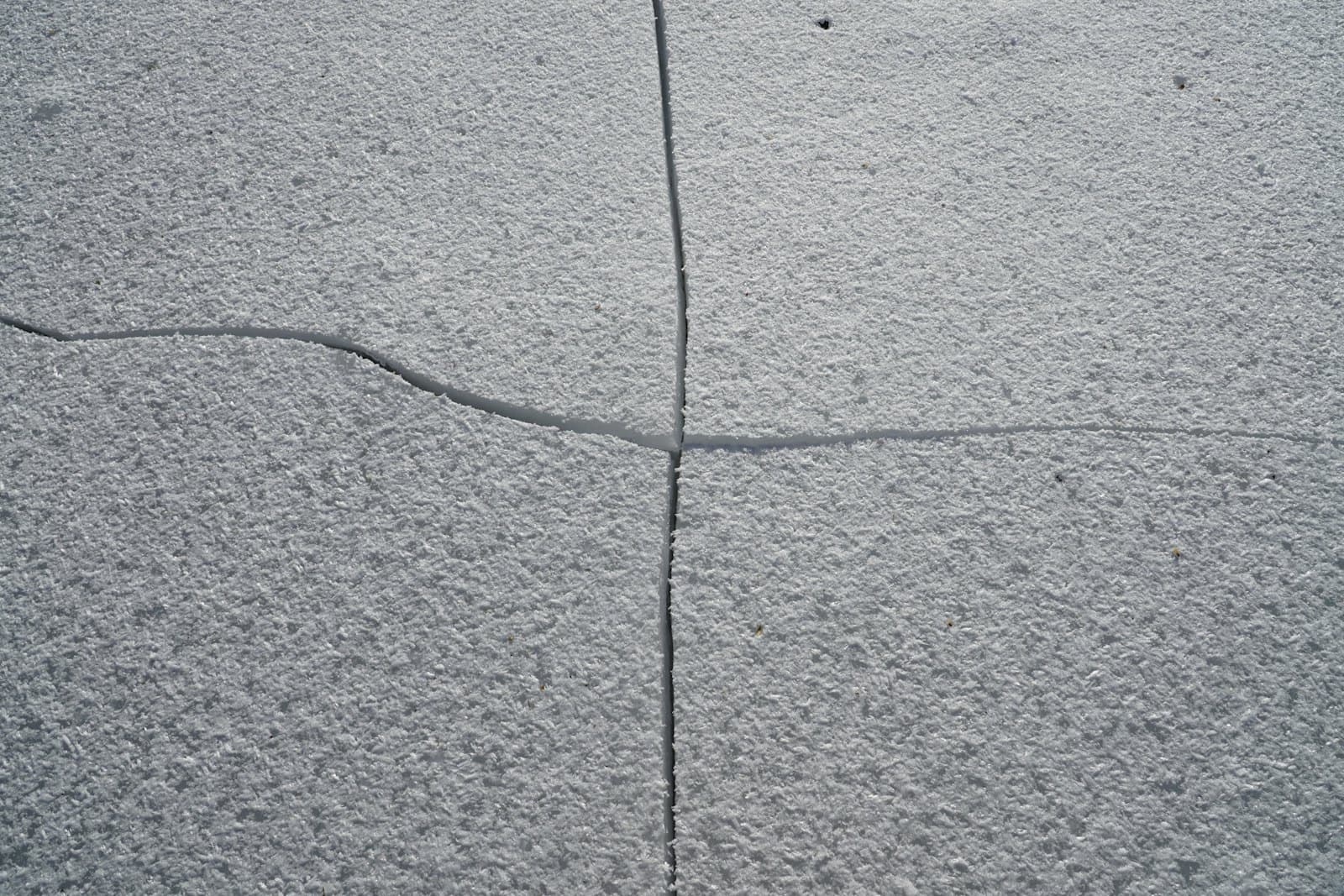
Scaling is the loss of a thin top layer — often just a few millimeters — over a broad area, leaving the coarse aggregate showing. It's usually a finishing or curing problem: too much water worked to the surface while finishing, finishing while bleed water was still present, or a surface that dried out too fast in sun and wind. In cold climates, freeze-thaw cycles and deicing salt are a major cause; in the Bay Area, scaling is more often about how the slab was finished.
Popouts are small conical pits where a single piece of aggregate near the surface has broken out, usually because the stone itself absorbed water and expanded. They're mostly cosmetic.
True spalling is deeper — chunks breaking away, often along an edge, a joint, or over steel. When you can see rust stains or exposed reinforcing bar, the cause is corrosion, and that is the type that matters structurally on stairs, balconies, retaining walls, and parking structures.
Where surface damage starts
Why rusting rebar breaks concrete
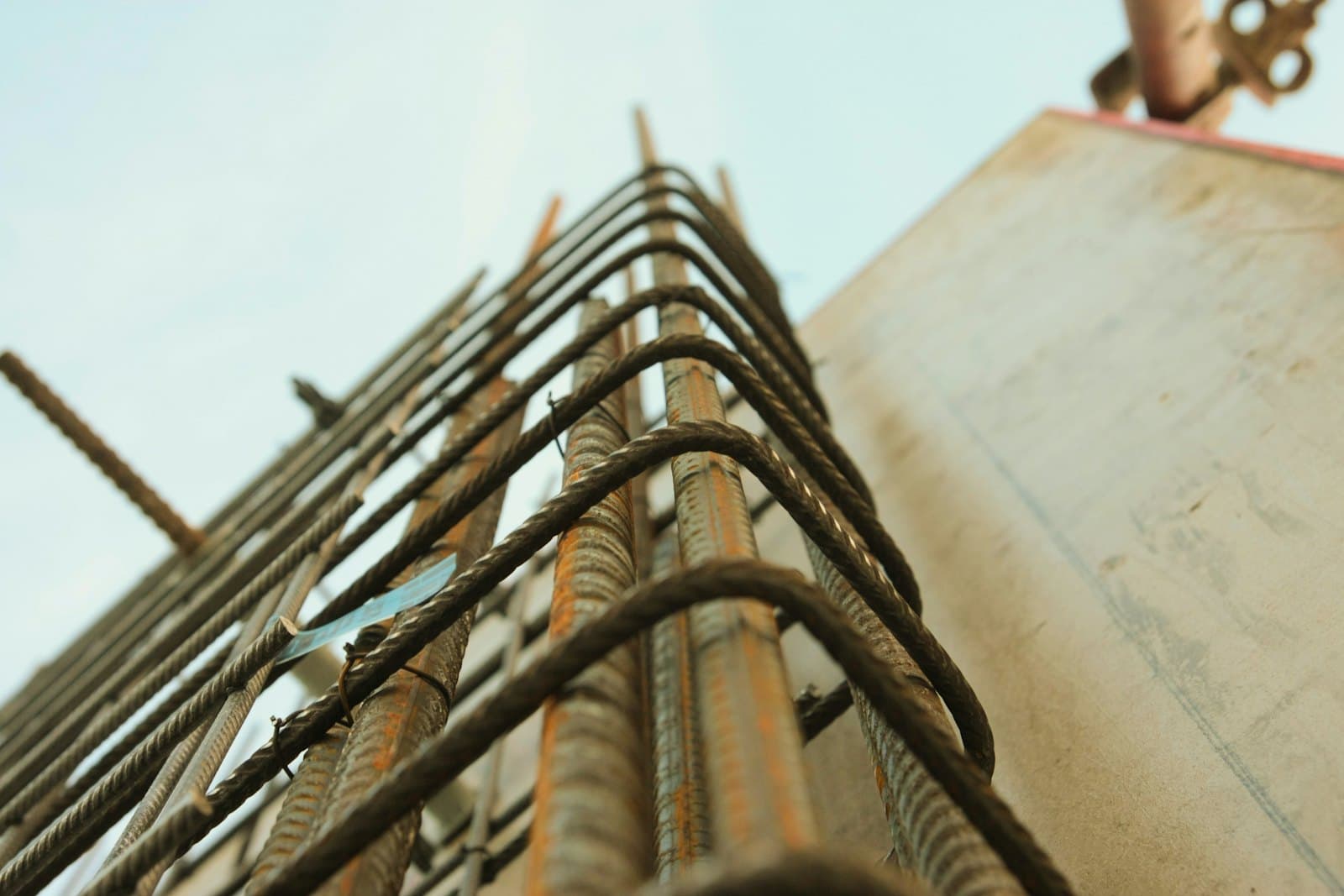
Concrete protects the steel inside it in two ways: physically, by covering it, and chemically, because fresh concrete is highly alkaline and that alkalinity keeps steel from rusting. Over time that protection can break down — through cracks that let water and air in, through carbonation slowly reducing the alkalinity from the surface inward, or through chlorides from deicing salts or sea air.
Once steel starts to corrode, the rust occupies several times the volume of the original metal. That expansion has nowhere to go, so it cracks the concrete above the bar and eventually pops the cover off entirely. The tell-tale signs are rust-colored stains bleeding from cracks, a hollow sound when the area is tapped, and cracks running in straight lines that follow the bars.
The most common reason for early corrosion is inadequate cover — steel placed too close to the surface. Rebar that sat on the ground during the pour instead of on chairs, or steps formed without enough concrete over the bars, are classic examples. Coastal properties face the added challenge of salt in the air, which is one reason concrete near the ocean in Pacifica, Half Moon Bay, and Santa Cruz needs more attention.
Cover matters from day one
Types of surface damage and their fixes
| Damage | Typical cause | Repair |
|---|---|---|
| Scaling (thin, widespread) | Finishing or curing at the pour | Clean and resurface with a bonded overlay |
| Popouts (small cone pits) | Absorptive aggregate near surface | Patch individual pits; usually cosmetic |
| Edge or joint spalls | Impact, failed joints, water | Saw-cut, remove, patch with repair mortar |
| Spalls over rusty rebar | Corroding reinforcement | Remove concrete behind bar, treat steel, rebuild |
| Widespread deep spalling | Advanced corrosion or poor concrete | Engineer assessment; partial or full replacement |
How a lasting spall repair is done
The most common failed repair is a patch troweled over loose concrete and rusty steel. It looks fine for a season and falls off. Here's the sequence that actually holds.
Sound out the damage
Tap the surrounding area with a hammer. Hollow-sounding concrete is delaminated even if it looks intact, and it has to come out too.
Saw-cut the edges
Cut a clean perimeter around the damaged area so the patch has square edges to lock against instead of feathering to nothing.
Remove to sound concrete
Break out all loose material. Where rebar is exposed and rusted, remove concrete behind the bar so the repair material can wrap fully around it.
Clean and treat the steel
Remove rust from the bar, add supplemental steel where it has lost significant section, and apply a corrosion-inhibiting coating.
Rebuild with a repair mortar
Apply a bonding agent and a polymer-modified repair mortar matched to the depth, then cure it properly so it doesn't shrink away from the old concrete.
Seal against water
Seal the surface and any cracks so water can't start the process again.
Where spalling shows up most around Bay Area homes
Concrete steps are the most common place homeowners see real spalling. Step nosings take impact, water sits on treads, and older steps were often formed with very little cover over the steel. A spalled step edge is both a trip hazard and a sign of corrosion that will keep progressing.
Driveway edges and joints are next. Tires cross the same joint thousands of times, and a joint left unsealed lets water and grit work down into the slab. Edges break down first, and if there's steel near the surface, corrosion follows.
Pool decks, retaining walls, and garage slabs round out the list. Pool decks get chlorinated splash-out and constant wetting; retaining walls with poor drainage stay saturated; garage floors take road grime and drips. Coastal properties add airborne salt to all of these.
Common spalling locations

How to prevent spalling
- Reinforcement placed on chairs with full concrete cover
- No extra water added to the mix on site
- Finishing done after bleed water has gone
- Active curing for the first days, especially in heat and wind
- Exterior concrete sealed every two to three years
- Joints and cracks sealed so water can't reach the steel
- Drainage that keeps water off steps, walls, and slab edges
How to inspect concrete for spalling
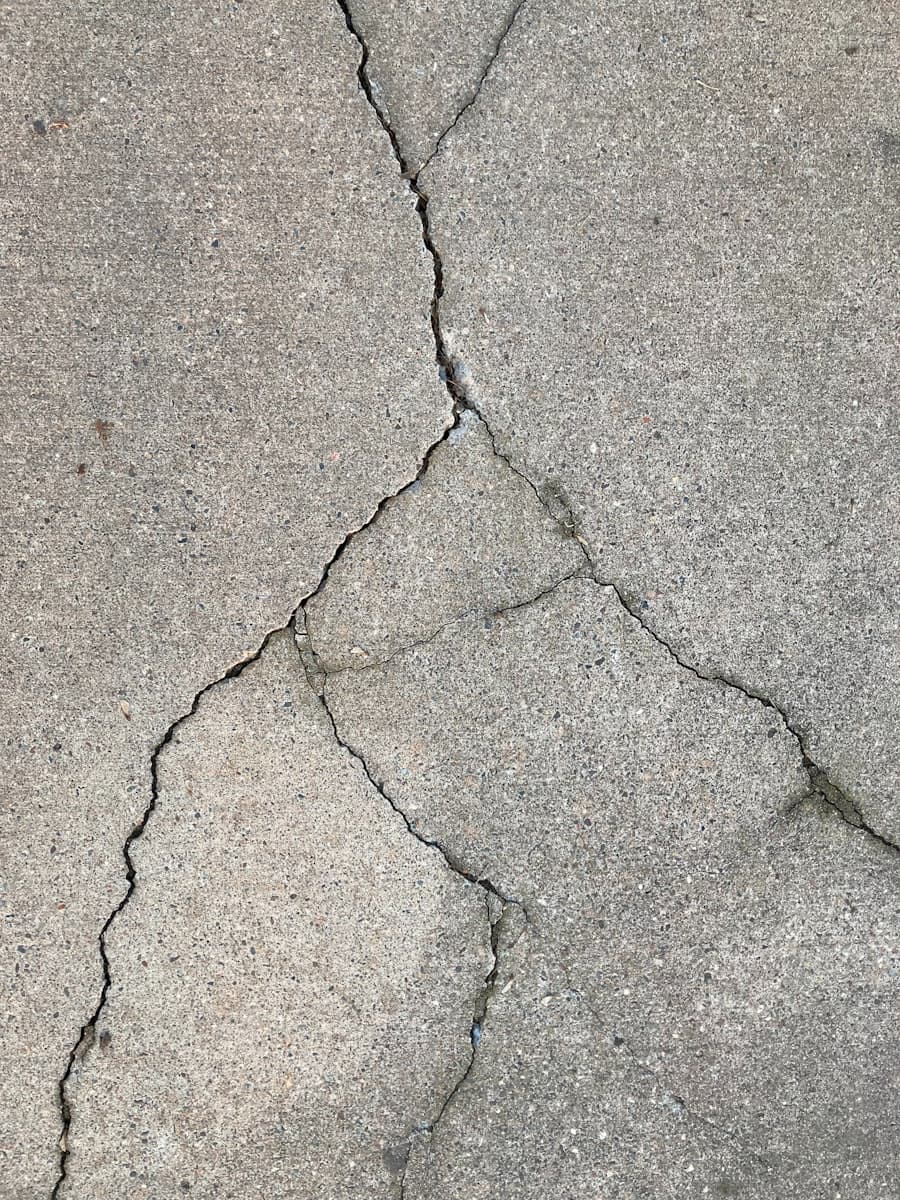
Start with a visual walk-around after rain, when cracks and damp areas are easiest to see. Look for rust-colored staining from cracks, straight-line cracks that run parallel to edges or step nosings, areas where the surface has flaked or broken away, and any exposed steel.
Then sound the concrete. Tap it with a hammer or drag a chain across larger flat areas. Solid concrete gives a sharp ring; delaminated concrete — where a layer has separated internally but not yet broken off — sounds dull and hollow. Marking the hollow areas shows how far the damage really extends, which is almost always further than what you can see.
On stairs, check the nosings and the junction between treads and risers. On walls, check the base where water collects and any area beneath a planter or downspout. On garage slabs, check joints and the area where the slab meets the driveway.
How corrosion spalling progresses
Stage 1
Protection breaks down
Water, air, carbonation, or chlorides reach the steel through cracks or thin cover.
Stage 2
Rust begins
Corrosion starts on the bar surface; rust staining may appear at cracks.
Stage 3
Cracking
Expanding rust cracks the concrete along the line of the bar.
Stage 4
Delamination
The concrete cover separates internally and sounds hollow when tapped.
Stage 5
Spalling
The cover breaks away, exposing the bar and accelerating corrosion.
When to involve an engineer
Most spalling on residential steps, slabs, and walkways is a repair a qualified concrete contractor can handle. Some situations call for a structural engineer: spalling on balconies, elevated walkways, parking structures, or load-bearing walls and columns; reinforcing bars that have lost a significant amount of their cross-section to rust; widespread delamination across a structure; or any spalling paired with sagging, deflection, or wide cracks.
Multi-family buildings in California with elevated exterior elements are subject to periodic inspection requirements, and spalling found there should be documented and assessed by the appropriate professional.
Repair options compared
Patch repair
Pros
- Targets only damaged areas
- Lowest cost for localized spalls
- Keeps existing concrete
Cons
- Patches can be visible
- Fails if steel isn't treated
Verdict — Best for isolated spalls with sound concrete around them.
Resurfacing overlay
Pros
- Uniform new surface
- Good for widespread shallow scaling
Cons
- Requires a sound base
- Doesn't address deep corrosion
Verdict — Best for broad surface scaling on sound slabs.
Partial or full replacement
Pros
- New reinforcement with proper cover
- Long service life
Cons
- Highest cost
- Demolition and downtime
Verdict — Best when damage is widespread or the steel is badly corroded.
Repaired steps and walkways
Coastal and pool environments
Salt is a powerful accelerator of corrosion. Concrete within reach of ocean spray or salt-laden fog — common in Pacifica, Half Moon Bay, and the Santa Cruz coast — takes in chlorides over time, and once enough reach the steel, corrosion starts even in otherwise good concrete. Sealing exterior concrete regularly and keeping cracks sealed are the best defenses.
Pool decks and saltwater pools present a similar challenge from splash-out and chlorinated water. Coping and deck edges are the most exposed areas. Regular sealing, good drainage away from the deck, and prompt repair of cracks help prevent spalling from starting.
Choosing repair materials
Repair mortars are formulated for different depths and conditions. Thin, feather-edge resurfacers are designed for shallow scaling; trowel-grade polymer-modified mortars handle typical patch depths; and deeper repairs may use formed and poured repair concrete. Using a thin product in a deep repair, or a deep-pour product in a thin patch, invites cracking and debonding.
Compatibility matters too. A repair that's much stiffer or shrinks much more than the surrounding concrete tends to crack at its edges. Bonding agents, proper surface preparation, and curing the patch keep it attached. For structural repairs, materials are specified by the engineer.
Key points on spalling
- Spalling is concrete breaking away from the surface.
- Shallow scaling usually comes from finishing or curing problems.
- Deep spalling with rust stains is driven by corroding steel.
- Lasting repairs remove loose concrete and treat the steel first.
- Sealing and keeping cracks closed are the best prevention.
Spalling on new concrete
Surface flaking within the first year or two of a new slab is almost always a workmanship issue — finishing with bleed water on the surface, adding water to make the mix easier to place, or inadequate curing. Raise it with the contractor while the workmanship warranty is active; documented photos and dates help.
Spalling around joints and edges
Joint edges are vulnerable because they're thin and take repeated impact from tires, carts, and foot traffic. Unsealed joints fill with grit; when the slab expands in heat, the grit acts as a wedge and chips the edges. Sealing joints with a flexible sealant keeps grit and water out and protects the edges.
Slab edges along lawns and planters stay wet from irrigation and can scale or spall over time, especially if water sits against them. Adjusting sprinklers and grading so water drains away reduces this damage.
Budgeting for repairs over time
Spalling rarely stops on its own. Once corrosion starts, it continues and spreads, so repairing early is almost always cheaper than waiting. For properties with many concrete elements — multi-family buildings, commercial sites, or homes with extensive steps and walls — a periodic inspection and a planned repair budget prevent small spalls from becoming large, expensive ones.
Prioritize anything that creates a trip hazard or affects a structural element first, then address cosmetic scaling as budget allows.
Spalling questions
Get it assessed
Standards & references
The published standards and code sections this guide draws on. Requirements vary by jurisdiction — your local building department has the final word.
- ACI 546R-14: Guide to Concrete Repair — American Concrete Institute
- ACI 201.2R-16: Guide to Durable Concrete — American Concrete Institute
- Concrete Slab Surface Defects: Causes, Prevention, Repair (IS177) — Portland Cement Association
Still deciding?
Ask us about your specific project
We'll give you a straight answer on the phone, including when that means telling you that you don't need the work you asked about. Free written estimates across San Jose & the greater Bay Area.