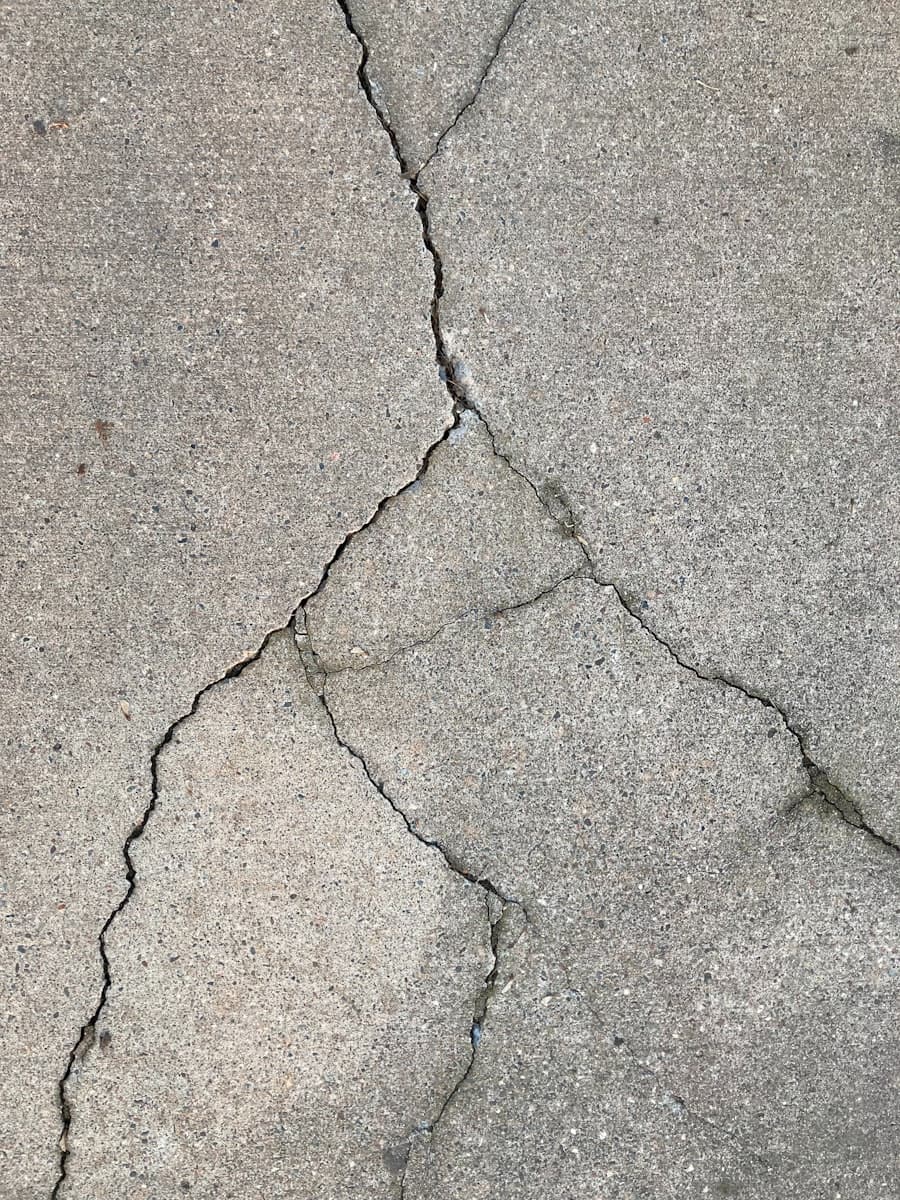
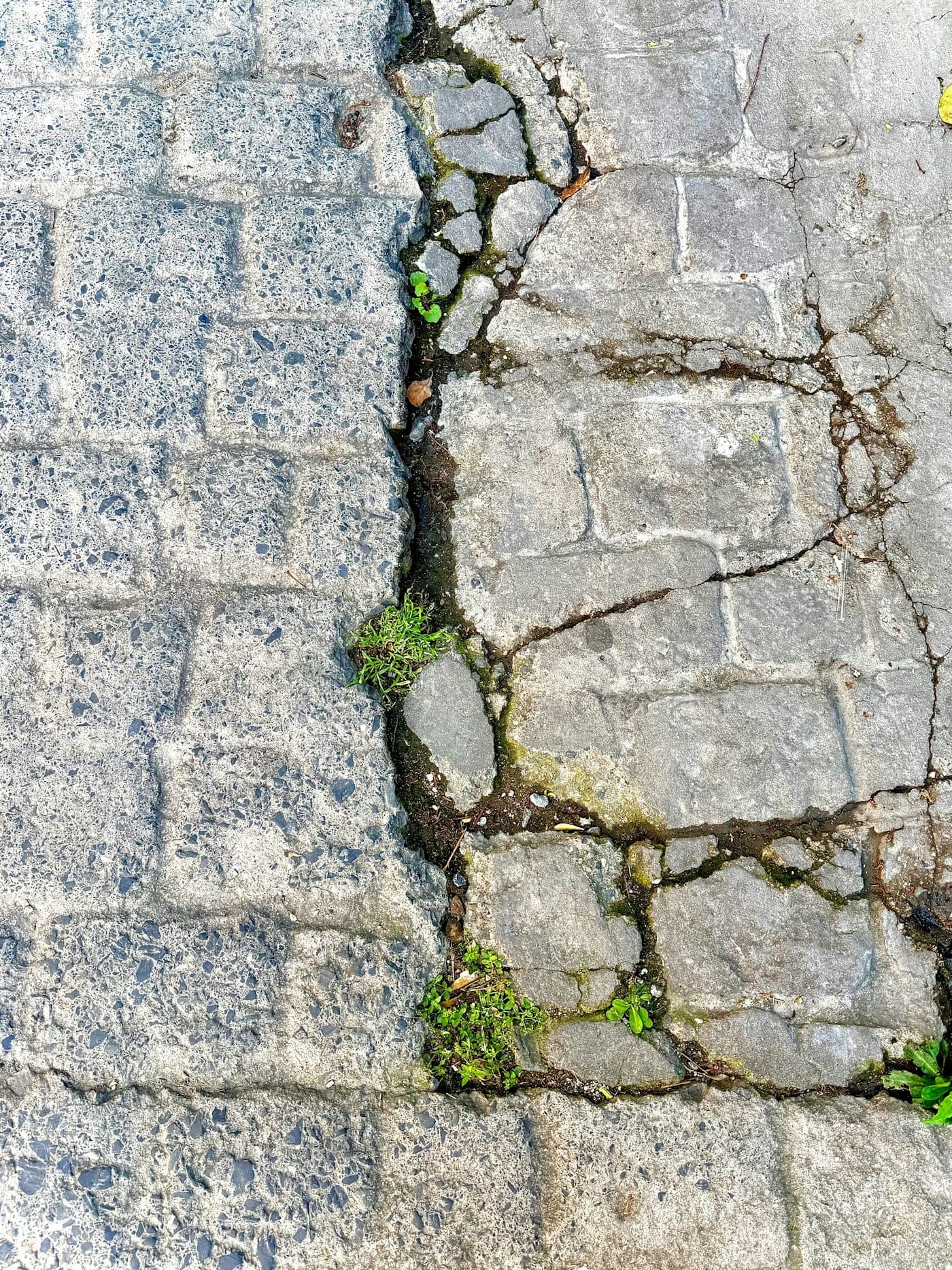
Quick answer
How do you repair cracks in concrete?
For cracks up to about 1/4 inch: clean the crack out completely with a wire brush and vacuum, then fill with a self-leveling polyurethane concrete crack sealant. For wider cracks, widen and undercut the edges first, fill the base with backer rod, then seal. Any crack with a height difference across it, or that reopens after repair, needs assessment rather than filling — the cause is under the slab.
- DIY range
- Up to 1/4 inch
- Best product
- Polyurethane sealant
- Key step
- Clean the crack out first
- Call someone
- Any height difference
Filling cracks is genuinely worthwhile and one of the few concrete jobs where careful DIY produces a result as good as a professional's. The reason to do it isn't cosmetic: an open crack is a direct channel for water into the base, and base saturation is what turns a hairline crack into a settled panel over a decade.
It's also one of the easiest jobs to do badly, and the failures are almost always the same one — filler applied over a crack that wasn't properly cleaned out, which loses its bond within a season.
Product by crack width
| Crack width | Product | Notes |
|---|---|---|
| Hairline, under 1/16" | Usually nothing, or a penetrating sealer over the whole slab | Too narrow for filler to enter. Sealing the surface is more effective than trying to fill it. |
| 1/16" to 1/4" | Self-leveling polyurethane crack sealant | The workhorse product. Flexible, bonds well, handles seasonal movement, UV-stable. |
| 1/4" to 1/2" | Backer rod plus polyurethane sealant | Foam rod fills the depth so the sealant forms a correctly shaped joint rather than a deep plug. |
| Over 1/2", static | Polymer-modified patching mortar, or sealant over backer rod | Worth a professional look first to confirm the movement has stopped. |
| Any width, with a height difference | None — assess first | The base has moved. Filling hides the symptom and the step remains a trip hazard. |
| Control joints | Self-leveling polyurethane joint sealant | Joints are meant to move. Use a flexible sealant, never a rigid patching compound. |
How to fill a crack properly
Allow an hour for a typical driveway's worth of cracks, plus cure time.
Choose dry weather
The crack has to be dry and stay dry while the sealant cures. Check the forecast for 24 hours, and don't work on a slab that's been rained on recently.
Clean the crack out
This is the step that determines whether the repair lasts. Wire brush along the crack to remove loose material, then vacuum it out. A shop vacuum with a crevice tool works well. Blow it out with compressed air if you have it.
- Filler applied over loose debris bonds to the debris rather than the concrete, and lifts out within a season.
Widen it if necessary
For cracks over about 1/4 inch, run an angle grinder with a diamond blade along the crack to create a clean, consistent channel roughly 1/4 inch wide and 1/4 inch deep. It feels counter-intuitive to make the crack bigger, and it dramatically improves the repair.
Insert backer rod on deep cracks
Closed-cell foam rod pushed into the crack so the sealant sits in a shallow band rather than filling the full depth. This lets the sealant stretch and compress properly with seasonal movement.
Apply the sealant
Cut the nozzle to match the crack width, run a continuous bead along the crack, and let self-leveling product settle. Slightly overfill — it will sink as it cures.
Tool the surface if needed
Non-self-leveling products need smoothing with a putty knife or a gloved finger. Self-leveling ones don't. On textured concrete, broadcasting a little clean dry sand over the wet sealant helps the repair blend rather than reading as a glossy stripe.
Let it cure before use
24 hours before foot traffic, 48–72 before vehicles. Check the product instructions — polyurethanes cure by reacting with atmospheric moisture and take longer in dry conditions.
Why flexible products, and not concrete
The instinct is to fill a crack in concrete with concrete. It's the wrong material for the job in almost every case.
A crack exists because the slab moved. It will keep moving — seasonally, with temperature, and with any ongoing settlement. Rigid patching compound bonded across a moving crack simply cracks again, usually along one edge of the repair, which leaves you with a worse-looking crack than you started with.
Polyurethane sealants stretch and compress. They accommodate the movement, stay bonded to both faces, and keep water out through the whole cycle. That's why they're what professionals use on flatwork cracks and joints, and why the tub of patching mortar on the same shelf is usually the wrong purchase.
Rigid patching materials do have a place — spalled edges, corner breaks, popouts, and holes where the concrete is missing rather than merely separated. Those aren't moving joints and a cementitious patch is right there.
When to stop and call someone
Some cracks are information rather than damage, and filling them is the wrong response.
Any crack with a height difference across it means the ground has moved under one side. Filling it makes the step no less of a trip hazard and hides a problem that's still developing. The same applies to a crack that keeps reopening after being properly repaired — that's active movement telling you something.
Cracks in a foundation wall or a structural slab are a different category entirely, and horizontal cracks in a foundation wall in particular warrant a structural engineer rather than a concrete contractor. Cracks wider than about half an inch, or where you can see base material through the gap, are worth a professional look before any filler goes near them.
And if a large proportion of a slab is cracked, the question isn't how to fill them — it's whether the slab is a repair, resurfacing, or replacement case.
Crack repair questions
Related reading
Key takeaways
- Fill cracks to keep water out of the base — that's the structural reason, not appearance.
- Cleaning the crack out matters more than filling it. Wire brush, then vacuum.
- Use flexible polyurethane sealant, not rigid patching compound. Cracks move.
- Widen and undercut cracks over 1/4 inch, and use backer rod on deep ones.
- Re-caulk your control joints at the same time — nobody does, and it protects far more length.
- Any height difference across a crack means assessment, not filler.
Still deciding?
Ask us about your specific project
We'll give you a straight answer on the phone, including when that means telling you that you don't need the work you asked about. Free written estimates across San Jose & the greater Bay Area.