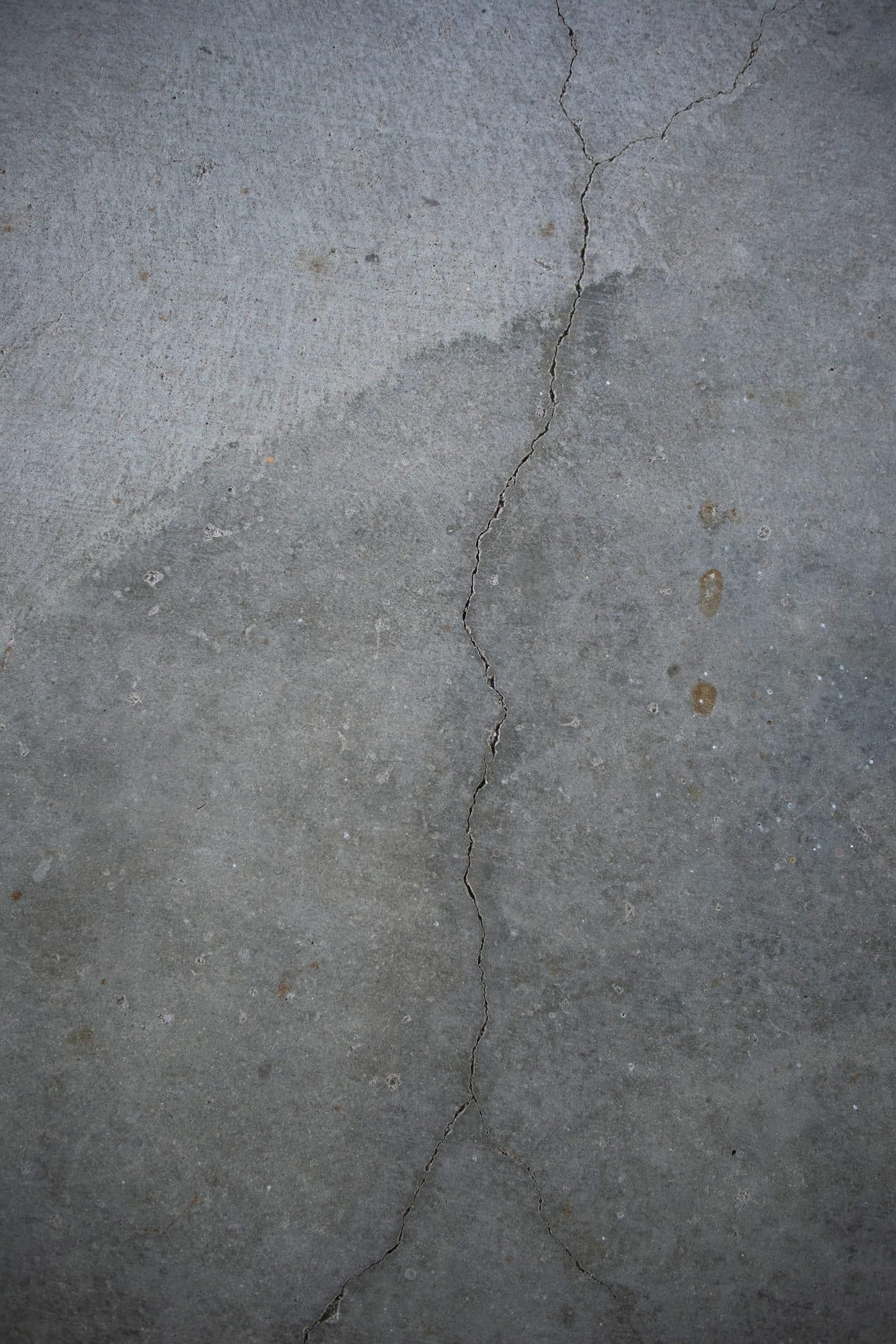
Quick answer
Should I lift or replace a sunken concrete slab?
Lift it if the slab is still in one or two solid pieces and the ground underneath has stopped moving. Slabjacking (pumping cement slurry) or polyurethane foam injection raises the panel back to level for a fraction of the cost of replacement, usually in a few hours. Replace it if the slab is broken into many pieces, crumbling, or sitting on ground that is still washing out — lifting a shattered slab only raises the problem.
- Lifting works when
- Slab intact, cause fixed
- Typical lift time
- A few hours
- Usable after foam lift
- Same day
- Replace when
- Shattered or still moving
Why concrete sinks in the first place
A slab doesn't sink because the concrete failed. It sinks because the ground underneath it lost volume. Concrete is rigid and strong in compression; it sits on whatever is beneath it, and when that support shrinks, washes away, or compresses, the slab follows it down.
The usual causes are the same ones that drive foundation settlement. Fill soil that was never properly compacted keeps consolidating for years after the pour. Water from downspouts, leaking irrigation, or poor drainage carries fine soil out from under the edge of a slab. Expansive clay shrinks away from the slab in a dry summer. And utility trenches dug and backfilled under driveways and walkways settle into a sunken strip long after the original work.
That cause matters more than anything else in this decision. Lifting a slab restores its level but does nothing to stop whatever made it sink. If water is still running under the edge, a lifted panel can settle again within a couple of seasons. The first job in any repair conversation is finding the cause and fixing it — usually a downspout, a grading problem, or a leak.
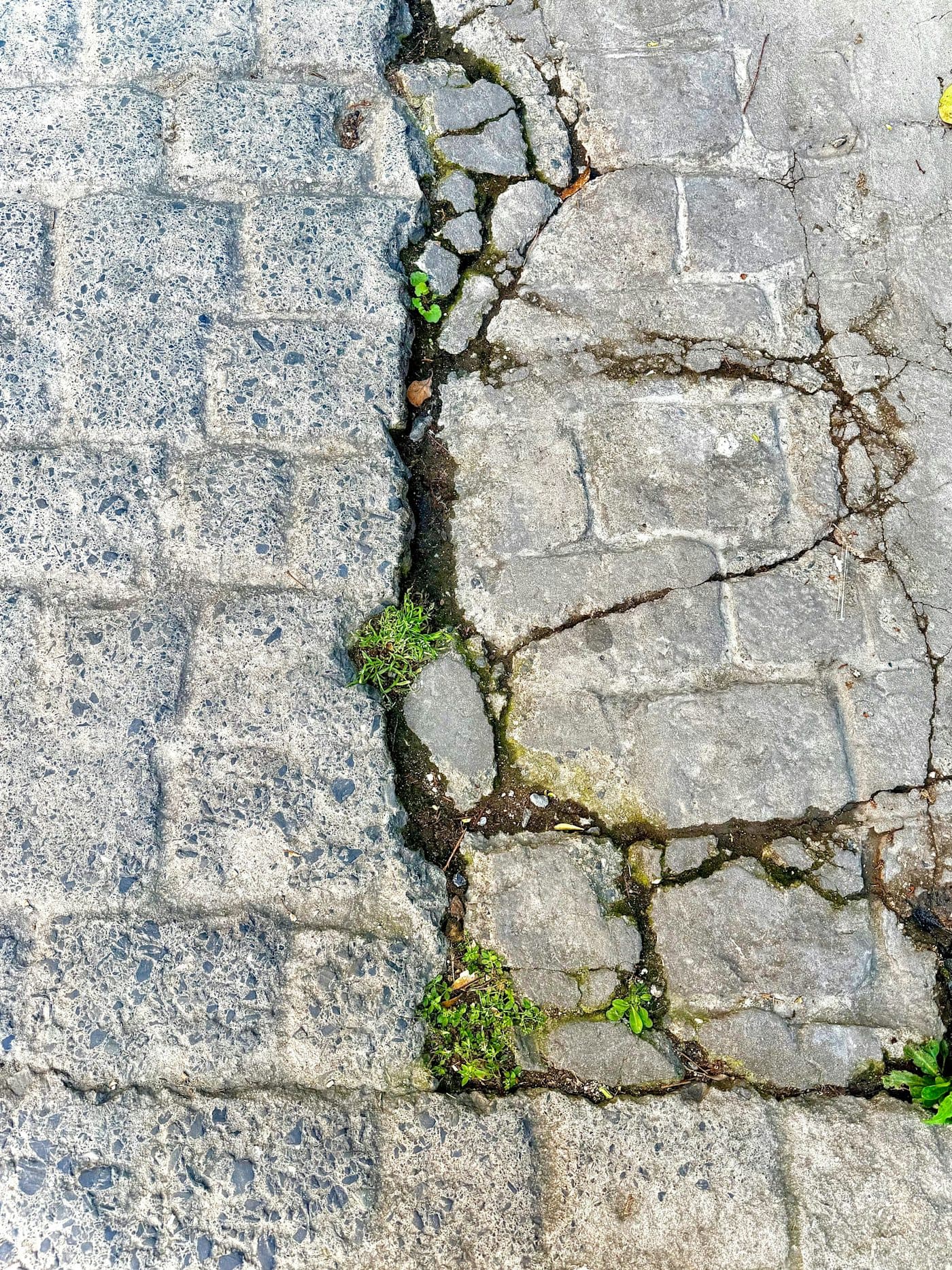
The trip hazard most lifting jobs start with
The two ways to lift concrete
Both methods work the same way in principle: drill small holes through the sunken slab, pump material underneath under pressure, and let that material fill the void and push the slab back up. They differ in what gets pumped and how big the holes are.
Slabjacking — also called mudjacking — pumps a cement-based slurry, usually a mix of sand, cement, and soil or fly ash, through holes roughly an inch and a half to two inches across. The slurry is heavy and fills large voids well. It takes a day or more to firm up before heavy loads, and the larger holes are visible once patched.
Polyurethane foam lifting injects a two-part expanding foam through holes about the size of a pencil. The foam expands, fills the void, and lifts the slab, then cures in minutes. It weighs a small fraction of what slurry does, so it adds very little load to soft soil, and the panel can usually be walked and driven on the same day. It costs more per job than slurry in most markets, but the smaller holes and quick return to service make it the more common choice for driveways and sidewalks today.
Slabjacking vs. foam lifting vs. replacement
Slabjacking (cement slurry)
Heavy slurry pumped under the slab through larger holes.
Pros
- Lowest cost lifting method in most cases
- Fills large voids well
- Cement-based material, no plastics
Cons
- Larger, more visible patch holes
- Heavy — adds load to already-weak soil
- Needs time to firm up before heavy use
Verdict — Good value for large voids on stable ground.
Polyurethane foam lifting
Expanding foam injected through small holes.
Pros
- Small, discreet holes
- Lightweight — minimal added load
- Usable the same day
- Precise, gradual lift control
Cons
- Usually costs more than slurry
- Doesn't fix a cracked or crumbling surface
- Won't hold if the cause isn't fixed
Verdict — The usual choice for driveways, walks, and pool decks.
Remove and replace
Break out the panel, rebuild the base, pour new concrete.
Pros
- Fixes the base, not just the level
- New surface, new reinforcement
- Lasts 30–50 years when built properly
Cons
- Highest cost
- Days of work plus about a week before driving
- New concrete won't exactly match old color
Verdict — Right when the slab is broken up or the base has failed.
Lift, repair, or replace — decision guide
| What you see | Likely cause | Best fix |
|---|---|---|
| One panel sunk, still in one piece | Void under slab from washout or fill | Lift (foam or slurry) after fixing drainage |
| Panel tilted toward the house | Settlement at the slab edge | Lift to restore fall away from the house |
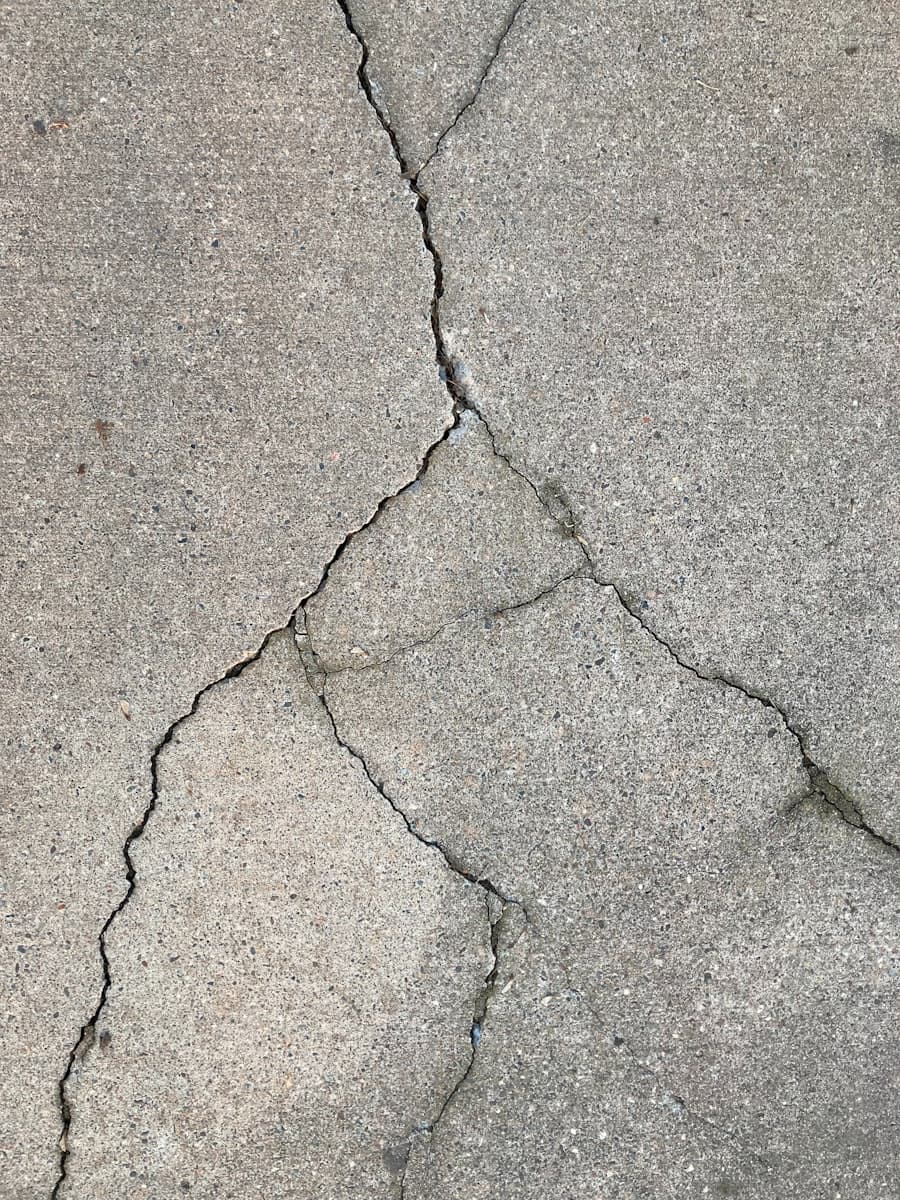
| Panel sunk and cracked into 2–3 pieces | Void plus slab stress | Lift possible if pieces are solid; otherwise replace |
| Panel shattered into many pieces | Long-term loss of support | Replace with a rebuilt base |
| Panel lifted by tree roots | Root growth under the slab | Replace with root management — lifting can't lower it |
| Surface flaking but level | Surface damage, not settlement | Resurface or repair, no lifting needed |
Roots push panels up rather than letting them sink. Lifting only raises concrete, so root-heaved panels have to come out.
How a lifting job runs
Assess the slab and the cause
We check whether the panel is intact, measure how far it has dropped, and look for the water, fill, or leak that caused it.
Fix the cause
Redirect downspouts, correct grading, or repair the leak. Lifting without this step is paying twice.
Drill injection holes
A pattern of small holes is drilled through the slab so material can be distributed evenly underneath.
Inject and lift
Material is pumped in gradually while the slab is watched with a level, so it rises evenly and stops at the target height.
Patch and seal joints
Holes are patched with cementitious grout, and the joints around the panel are sealed so water can't get back under it.
What lifting costs compared to replacement
Lifting is priced per job rather than per square foot, because the cost depends on how much material it takes to fill the void, how many holes are needed, and how far the slab has to move. A single sunken sidewalk panel is a small job; a whole driveway that has settled along one side takes much more material.
Replacement, by comparison, runs the same as new work: in the Bay Area, roughly $14–$22 per square foot for a plain finish once demolition and base rebuilding are included. For one or two intact panels, lifting is almost always far cheaper. For a slab that is cracked into many pieces, the cost gap narrows and replacement becomes the better value because it actually fixes the base.
The honest comparison is cost per year of life. A lift that holds for many years because the drainage was fixed is excellent value. A lift on a slab with an unresolved water problem may need redoing within a few seasons, and at that point the replacement you were avoiding would have been cheaper.
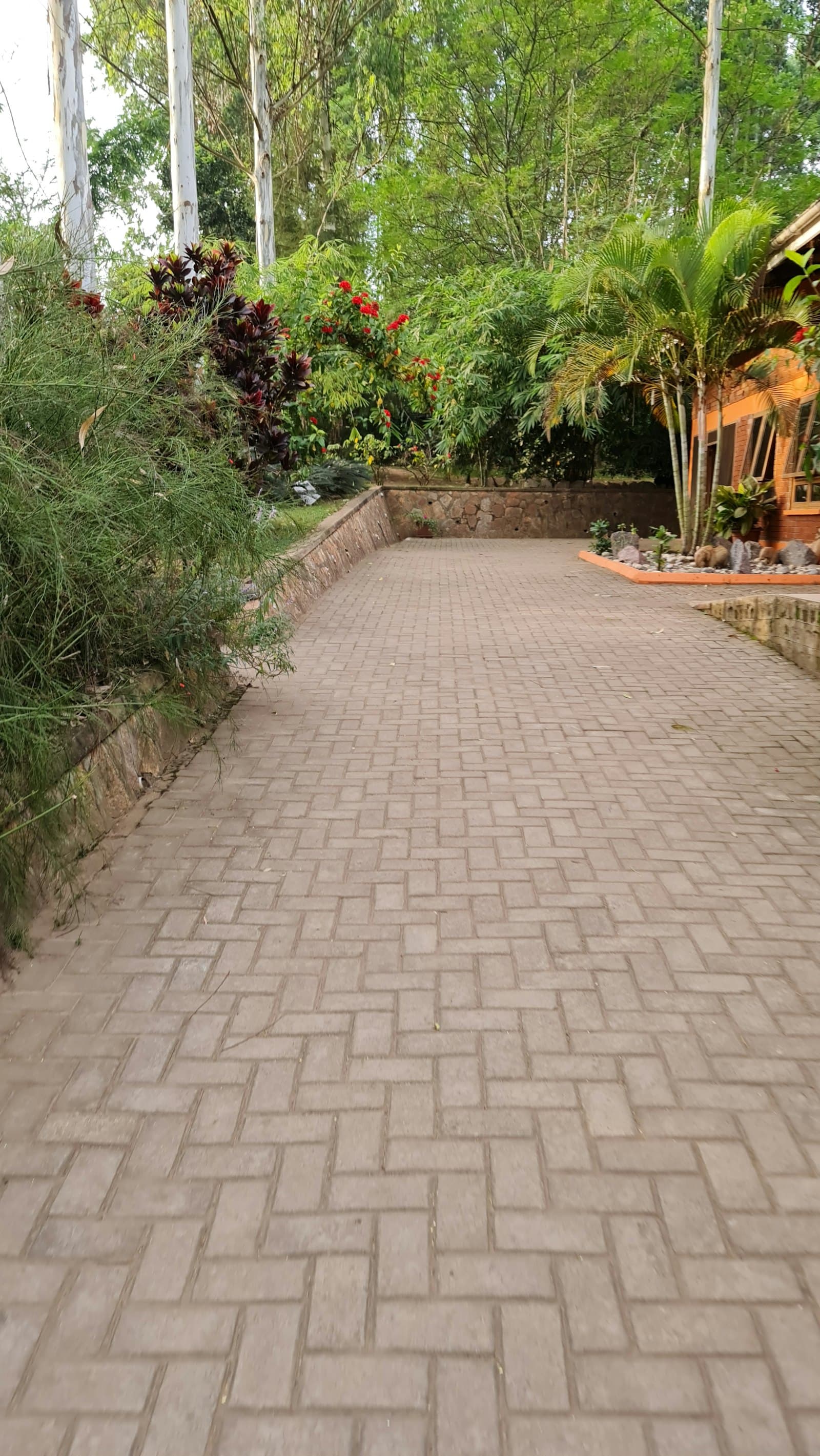
When replacement is the right call
Questions to ask before you hire a lifting contractor
- What caused this slab to sink, and how will that be fixed?
- Will you use foam or slurry, and why for this slab?
- How many holes, and how will they be patched?
- Is the slab intact enough to lift without cracking further?
- What happens if it settles again — is there a warranty?
- Will joints and cracks be sealed afterward?
- Would replacement be the better value here?
Terms you'll hear
- Slabjacking / mudjacking
- Raising a slab by pumping cement slurry underneath it.
- Polyurethane lifting
- Raising a slab with expanding two-part foam injected through small holes.
- Void
- The empty space under a slab left by settled, eroded, or shrunken soil.
- Washout
- Soil carried out from under a slab by running water.
- Trip hazard
- A level change between surfaces, commonly over 1/4 inch, that can catch a foot.
Where sunken concrete shows up around the house
Driveway panels next to the garage are a common spot, because downspouts often discharge right at the corner of the garage and water works under the slab edge. Walkways along the side of the house settle where irrigation keeps the soil wet, and front porches or stoops settle away from the foundation when the backfill around the house was never compacted.
Pool decks settle where splash-out and leaks soften the soil, and patios sink along the edge closest to the lawn where sprinklers run daily. Public sidewalks are a mix: roots lift some panels while washout drops others.
Each of these has a water story behind it. Finding that story is how you make sure a lifted slab stays lifted.
Common causes and the fix that has to come first
| Cause | Sign | Fix before lifting |
|---|---|---|
| Downspout discharging at slab edge | Settling at house corners | Extend or redirect downspouts |
| Irrigation overspray | Edge near lawn sinking | Adjust heads, reduce watering |
| Leaking pipe | Wet soil, unexplained settling | Repair the leak |
| Uncompacted backfill | Stoop pulling away from house | Fill voids; monitor |
| Utility trench settlement | Sunken strip across driveway | Lift or replace over the trench |
Can new concrete match the old?
One of the strongest arguments for lifting is that it keeps the original concrete, so there's no color mismatch. Replacement concrete never exactly matches a slab that has weathered for years; fresh concrete is lighter and more uniform, and even with careful mix choices the difference shows for a long time.
When replacement is necessary, placing new panels at existing joint lines, replacing a full panel rather than a patch, and sometimes replacing an entire section of walkway rather than one square all make the result look intentional.
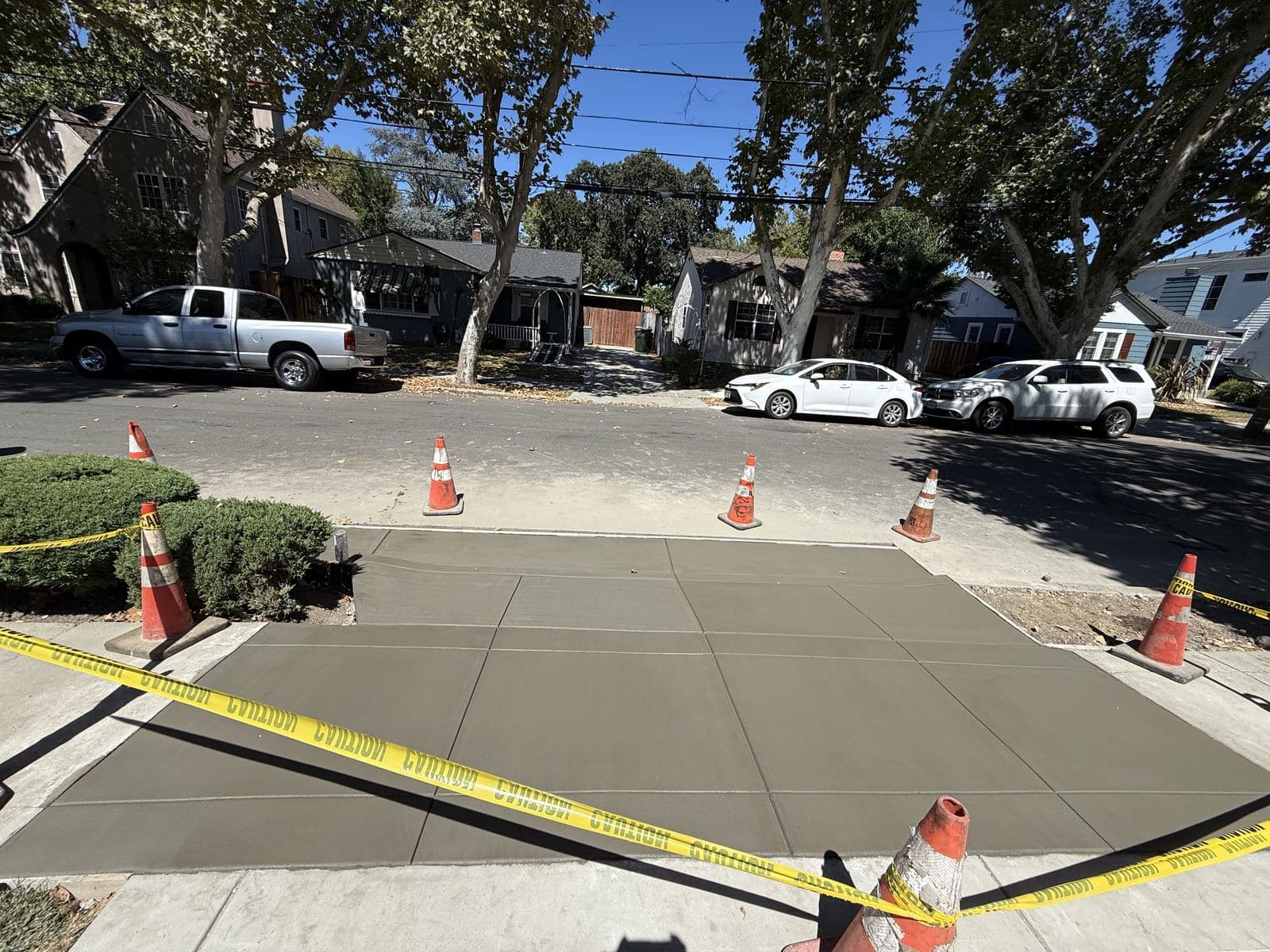
A replaced driveway apron
What happens to the soil under a lifted slab
Lifting fills the void that formed under the slab, restoring contact between the concrete and the ground. With slurry, the void is filled with a cementitious material that hardens into a solid support. With foam, it's filled with a lightweight, closed-cell polymer that also resists water.
Neither method compacts the deeper soil. If that soil continues to consolidate or wash out, new voids can form beneath the fill. That's why fixing water problems first, and choosing the right material for the soil, determines how long the lift lasts.
Key points on lifting vs replacement
- Lifting works on intact slabs once the cause of settling is fixed.
- Foam lifting uses small holes and is usable the same day.
- Slurry lifting usually costs less and fills large voids.
- Shattered, crumbling, or root-heaved slabs need replacement.
- Lifting keeps the original concrete, so there's no color mismatch.
Lifting before selling a home
Sunken walks and driveway panels often show up on home inspection reports as trip hazards. Lifting is a quick, relatively low-cost way to correct them before listing, and it leaves the original concrete in place so the property doesn't look patched. Pair it with joint sealing and a clean, and the concrete reads as maintained rather than failing.
Grinding small trip hazards
When the offset between panels is small, grinding the raised edge down to a gentle bevel can remove the trip hazard without lifting or replacing anything. It's fast and inexpensive, and it's common on public sidewalks where an offset is just over the trip-hazard threshold. Grinding doesn't fix the cause, so it suits offsets that have stopped moving.
Why some contractors push replacement
Replacement is a bigger job and a bigger invoice, so it's reasonable to ask why a contractor recommends it over lifting. A good answer points to something specific: the slab is broken into many pieces, the base is still washing out, roots are pushing it up, or the surface is crumbling. A vague answer is a reason to get a second opinion.
The reverse is also true — a contractor offering only lifting may recommend it for slabs that are past saving. An honest assessment considers both and explains the trade-off.
Concrete lifting questions
Next steps
Standards & references
The published standards and code sections this guide draws on. Requirements vary by jurisdiction — your local building department has the final word.
- ACI 546R-14: Guide to Concrete Repair — American Concrete Institute
- ACI 224.1R-07: Causes, Evaluation, and Repair of Cracks in Concrete Structures — American Concrete Institute
Still deciding?
Ask us about your specific project
We'll give you a straight answer on the phone, including when that means telling you that you don't need the work you asked about. Free written estimates across San Jose & the greater Bay Area.