
Quick answer
How do you maintain a concrete driveway?
Sweep or rinse it monthly, clean oil and fuel spills immediately, reseal every two to three years, fill cracks and re-caulk joints as they appear, and make sure rainwater and downspouts discharge away from the slab rather than beside it. That's the entire routine — four habits, and the last one matters more than the other three combined.
- Sweep / rinse
- Monthly
- Reseal
- Every 2–3 years
- Crack repair
- As they appear
- Drainage check
- Twice a year
Concrete maintenance is a genuinely small job that people either overdo with the wrong products or ignore entirely for fifteen years. There isn't much middle ground, and the middle ground is where the value is.
It's also an area where most of the advice online is written for the Midwest and East Coast, where freeze-thaw cycling and de-icing salt dominate everything. Neither is a meaningful factor across Santa Clara and Alameda counties. What we deal with here instead is sun, seasonal soil movement, and water management — and the maintenance priorities shift accordingly.
The year-round routine
Aligned to Bay Area seasons. Total time commitment is a few hours a year, plus a weekend every two to three years for sealing.
Monthly, year-round
Sweep or rinse
Grit sitting on the surface acts like sandpaper under tires and wears through sealer faster than the traffic does. Leaves and organic debris in joints hold moisture against the slab and stain it. Five minutes with a broom or a hose.
Immediately, whenever it happens
Clean spills
Oil, transmission fluid, brake fluid, and fuel penetrate unsealed concrete within hours and are effectively permanent once they do. Absorb with cat litter or an absorbent granule, then degrease. Speed matters far more than the product.
Early autumn — September or October
Pre-rain drainage check
The most valuable half hour of the year. Check every downspout discharges past the slab edge, clear the gutters feeding them, and look at whether the soil beside the driveway falls away or toward it. Do this before the first serious rain, not after.
After the first heavy rain
Watch where the water goes
Walk it during or just after a downpour. Ponding on the surface, water running toward the garage, or water disappearing into a joint all tell you something no dry inspection will.
Late spring — April or May
Inspect and repair
Walk the slab looking for new cracks, opened joints, and spalling edges. Fill anything new. Spring is the right time because the ground has finished its wet-season movement and anything that opened up has already done so.
Every 2–3 years, in dry weather
Clean and reseal
Pressure wash or deep clean, let the slab dry fully — at least 24 hours, longer if it's been wet — then apply sealer. Late spring or early autumn is ideal: warm enough to cure, not hot enough to flash off before it penetrates.
Every 10 years, or when something changes
Professional assessment
Cheap, quick, and it catches settlement while sectional repair is still an option rather than after it isn't.
Sealing: what it does and how often
Sealer is a thin protective layer that reduces how much water and contaminant the concrete surface absorbs. Concrete is porous — not waterproof — and everything that soaks in, from rainwater to engine oil, is harder to deal with once it's in there.
In this climate, the case for sealing is less about freeze-thaw protection and more about staining, surface wear, and keeping decorative color looking the way it did. Every two to three years is right for a broom-finished driveway; decorative work sits at the tighter end of that.
The test is simple: pour a cup of water on the surface. If it beads and sits, the sealer is working. If it soaks in and darkens the concrete within a few seconds, it's time. That test is more reliable than any calendar, because sun exposure and traffic vary enormously across a single driveway.
Sealing schedule by surface
What not to do
More driveways are damaged by enthusiastic maintenance than by neglect, and a few specific mistakes account for most of it.
Avoid these
0 of 10 checked
Cleaning common stains
| Stain | What works | Notes |
|---|---|---|
| Fresh oil or transmission fluid | Absorbent granules or cat litter, then a concrete degreaser | Speed is everything. Absorb first, don't spread it by hosing. |
| Old, set-in oil | Poultice — degreaser mixed into an absorbent paste, covered, left overnight | Draws oil back out of the pores. Often needs two or three applications. |
| Rust from furniture or fertiliser | Oxalic acid based rust remover made for concrete | Never use bleach on rust — it sets it. |
| Leaf and tannin staining | Oxygen bleach (sodium percarbonate) and a stiff brush | Common under oaks and liquidambars. Safe on sealed concrete. |
| Efflorescence — white chalky film | Dry brush first, then an efflorescence remover if needed | It's mineral salt carried out by moisture. Recurrence means water is moving through the slab from underneath. |
| Tire marks | Degreaser and a stiff brush; a sealer refresh afterward | Hot tires soften some sealers and lift plasticiser. More common on dark-colored concrete. |
| Paint | Concrete-safe paint stripper, then rinse thoroughly | Avoid scraping with metal, which gouges the surface. |
Crack and joint repair
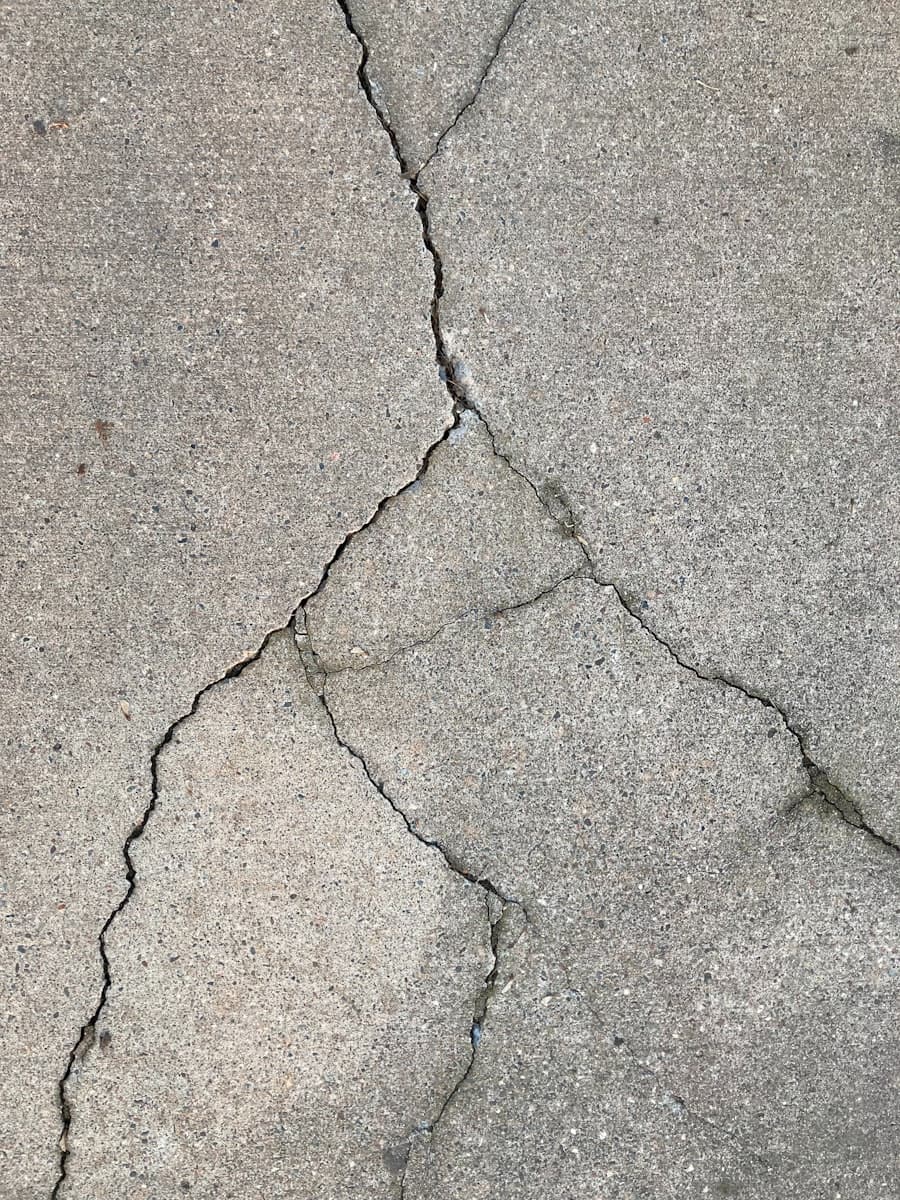
Filling small cracks is genuinely worthwhile DIY, and it's the maintenance task with the clearest return. An open crack is a direct channel for water into the base, and base saturation is what turns a cosmetic crack into a settled panel.
For hairline to 1/4 inch cracks, a self-leveling polyurethane concrete crack sealant applied from a caulking gun is the right product. Clean the crack out first with a wire brush and a vacuum — filler over loose debris fails within a season. For anything wider than about half an inch, or where there's a height difference across the crack, stop and get it looked at, because the cause is underneath and filling it just hides the symptom.
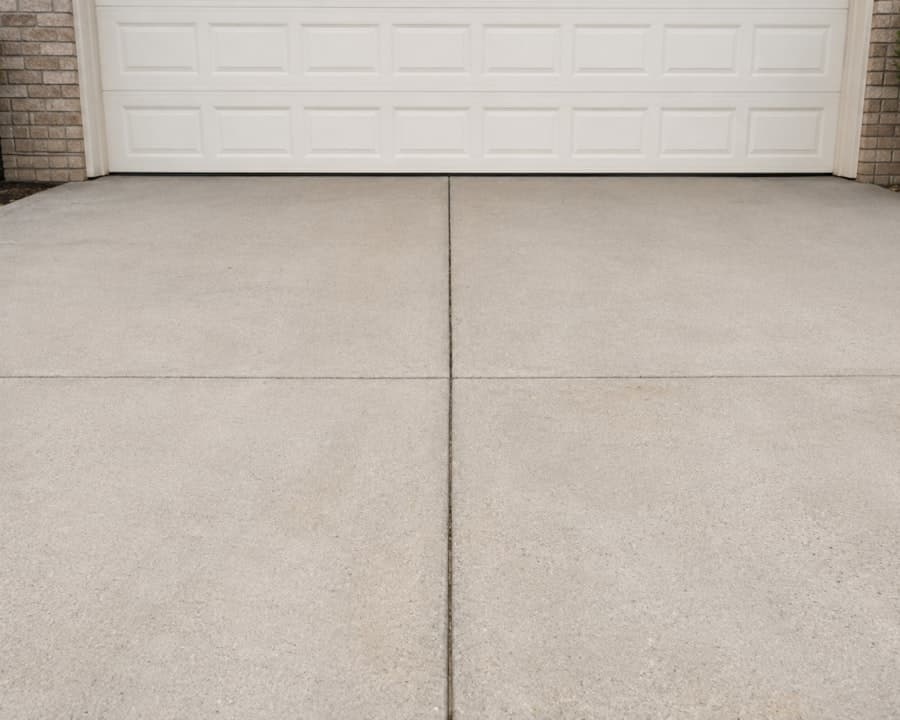
Control joints deserve the same attention and rarely get it. The joint is meant to open; the caulk in it is meant to stay flexible and keep water out while it does. Re-caulking joints every five years or so is cheap and it protects the base along the whole joint line.
Maintenance questions
Keep reading
Key takeaways
- Four habits cover it: sweep monthly, clean spills immediately, seal every 2–3 years, keep water away from the slab.
- Downspout position matters more than anything else on the list. Extend them past the slab edge.
- Test sealer with a cup of water — beading means it's working, soaking in means it's time.
- Never pressure wash with a narrow tip. It permanently etches the surface.
- Fill cracks under 1/4 inch yourself with polyurethane crack sealant. Get anything wider, or with a height difference, assessed.
- Most online maintenance advice is written for freeze-thaw climates and doesn't apply here.
Still deciding?
Ask us about your specific project
We'll give you a straight answer on the phone, including when that means telling you that you don't need the work you asked about. Free written estimates across San Jose & the greater Bay Area.