Quick answer
What are the warning signs of foundation problems?
The signs that matter most are: doors and windows that stick or won't latch, and got worse over time rather than seasonally; diagonal cracks running from the corners of door and window openings; floors that visibly slope or feel uneven; gaps opening between walls and ceilings or between trim and walls; and any horizontal crack in a foundation wall. Hairline vertical cracks in a foundation wall and fine drywall cracks are usually normal.
- Most urgent sign
- Horizontal foundation crack
- Most common real sign
- Diagonal cracks at openings
- Usually harmless
- Fine vertical foundation cracks
- First thing to check
- Drainage
Foundation anxiety is one of the most exploited things in home ownership. There's a whole industry built on turning normal settlement into an emergency, and it's genuinely difficult for a homeowner to tell the difference between a house that's moved once and stopped and a house that's moving now.
The useful distinction is almost always about progression rather than appearance. Almost every house in the Bay Area over forty years old has settled somewhat and has some evidence of it. That's history. What matters is whether it's still happening — and that's something you can establish yourself with a pencil and six months of patience.
Where to look, and what for
Signs, and how seriously to take them
| What you see | What it usually means | Concern level |
|---|---|---|
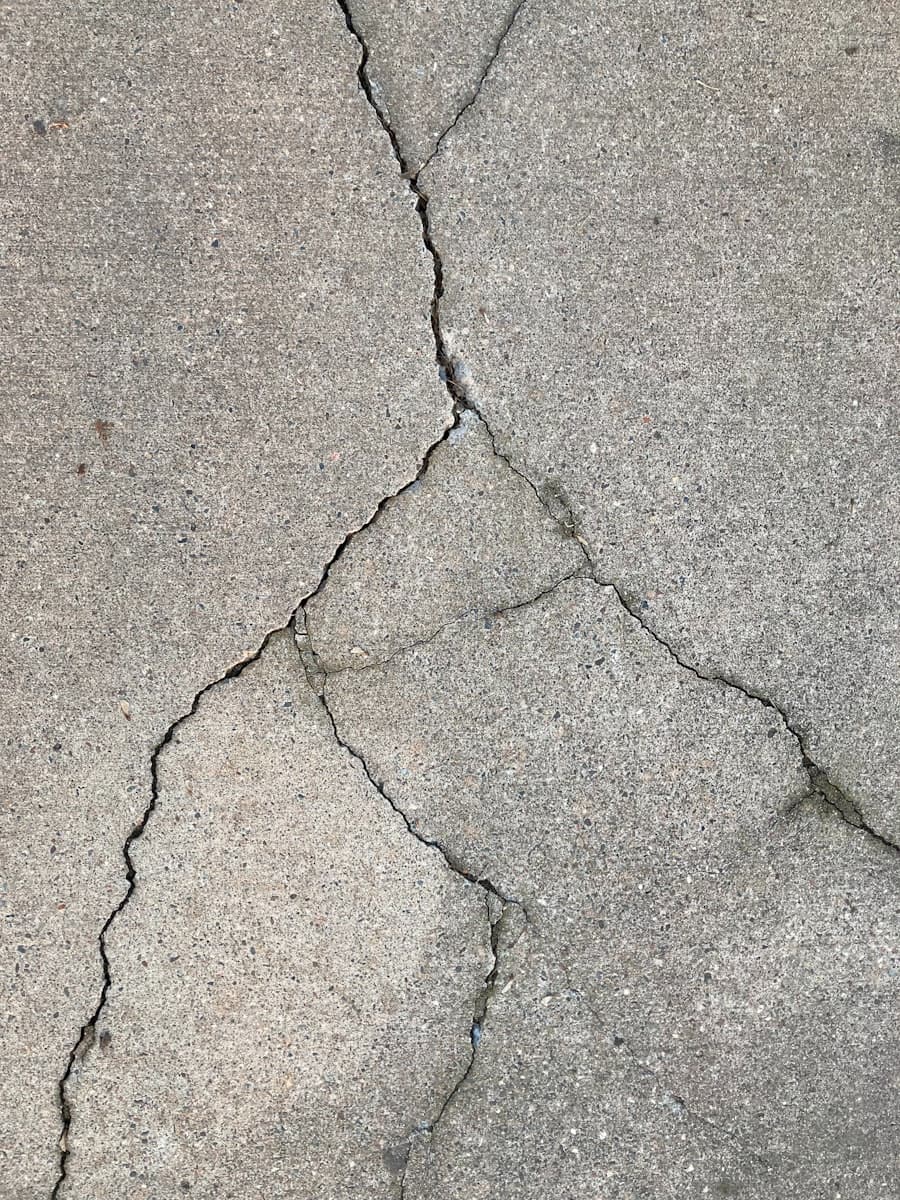
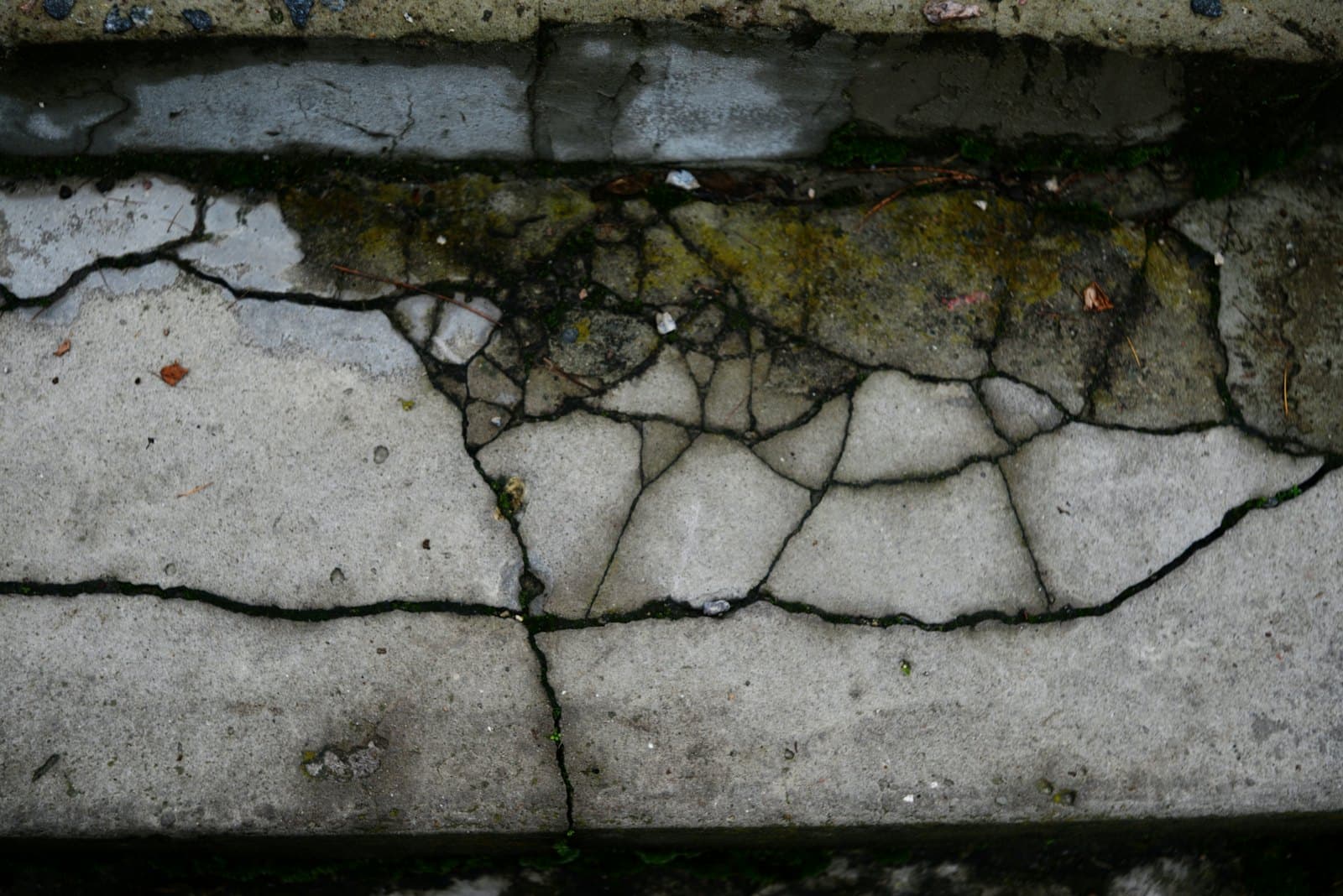
| Fine vertical cracks in a foundation wall, under 1/8" | Shrinkage during curing. Extremely common in every poured wall. | Low — monitor only |
| Diagonal cracks from the corners of doors and windows | The frame is racking because the structure has moved differentially. | Moderate to high — worth investigating |
| Stair-step cracking through mortar joints in block or brick | Differential settlement along that wall. | Moderate to high |
| Horizontal crack in a foundation wall | Lateral soil pressure pushing the wall inward. Structurally significant. | High — engineer |
| Doors and windows sticking, worse each year | Progressive movement racking the openings. | Moderate to high |
| Doors sticking in winter, fine in summer | Seasonal soil moisture movement, or simply timber swelling with humidity. | Low — monitor across a full year |
| Floors sloping noticeably, or a marble rolling consistently | Differential settlement or, on raised floors, failed piers. | Moderate to high |
| Gaps between trim and wall, or wall and ceiling | The structure has moved relative to itself. | Moderate |
| Fine drywall cracks at corners of openings, static | Normal settlement and seasonal movement in most houses. | Low |
| Exterior gap where a patio, path, or step meets the house | The flatwork has settled, not necessarily the house. | Low to moderate — check drainage |
Working out whether it's active
This is the question that matters, and you can answer it yourself over a few months.
Document what you can see
Photograph every crack with something for scale — a coin or a ruler. Date the photographs. Note doors that stick and where they bind.
Mark the ends of cracks
A pencil line across each crack at its end, with the date beside it. If the crack extends past the mark in six months, it's growing.
Measure widths at fixed points
Mark a point on each significant crack and record the width there. A crack monitor gauge from a builders' merchant does this precisely for a few dollars.
Check floor levels
Roll a marble or a golf ball across each room. Consistent movement in the same direction across multiple rooms suggests real slope. A four-foot spirit level on the floor confirms it.
Track it across a full year
Bay Area soils move seasonally. Something that appears in February and closes up in August is soil moisture, not progressive failure. You need both ends of a year to tell the difference.
Check drainage while you wait
Downspouts, grading against the house, irrigation running near the foundation, and any plumbing leaks. Water is behind most foundation movement, and correcting it is often the entire fix.
Signs specific to raised foundations
If your house has a crawl space, the diagnostic information is right there under the floor and almost nobody looks.
Bouncy or sloping floors on a raised foundation are frequently a pier or post problem rather than a foundation wall problem — a post that's settled, rotted at the base, or was never properly shimmed. That's often a comparatively straightforward repair.
Look for standing water or damp soil, which drives rot and pest problems. Look at the base of posts and the ends of girders and joists for rot or insect damage. Check whether the house is bolted to the foundation and whether the cripple walls are braced with plywood — the two key seismic retrofit items on older homes.
And check the ventilation. Blocked or missing foundation vents create exactly the humid, still conditions that cause the problems above.
When to involve an engineer rather than a contractor
There's a real difference between the two, and knowing when you need which saves both money and unnecessary work.
A structural engineer assesses the building and specifies what needs doing. They have no financial interest in the repair, which makes their assessment independent. A contractor prices and executes work. Where the diagnosis is uncertain or the stakes are high, paying an engineer a few hundred dollars for an independent report is the best money in the process.
Call an engineer for: any horizontal crack or bowing in a foundation wall; cracks wider than about a quarter inch in a foundation; noticeable and progressive floor slope; multiple signs appearing together over a short period; or any situation where a contractor is recommending significant structural repair and you'd like a second opinion that isn't selling anything.
You don't need an engineer for a hairline crack in a garage slab, a door that sticks in winter, or fine drywall cracking at a doorway corner in a fifty-year-old house.
Foundation warning sign questions
Related reading
Key takeaways
- Progression matters more than appearance. Almost every older house has settled once.
- Diagonal cracks at door and window corners, sloping floors, and progressive sticking are the signs that count.
- A horizontal crack in a foundation wall is structurally significant. Call an engineer.
- Fine vertical cracks in poured foundation walls are normal shrinkage.
- Mark and date every crack, then check again after a full seasonal cycle.
- Check drainage first. Water causes most foundation movement, and correcting it is far cheaper than structural repair.
Still deciding?
Ask us about your specific project
We'll give you a straight answer on the phone, including when that means telling you that you don't need the work you asked about. Free written estimates across San Jose & the greater Bay Area.