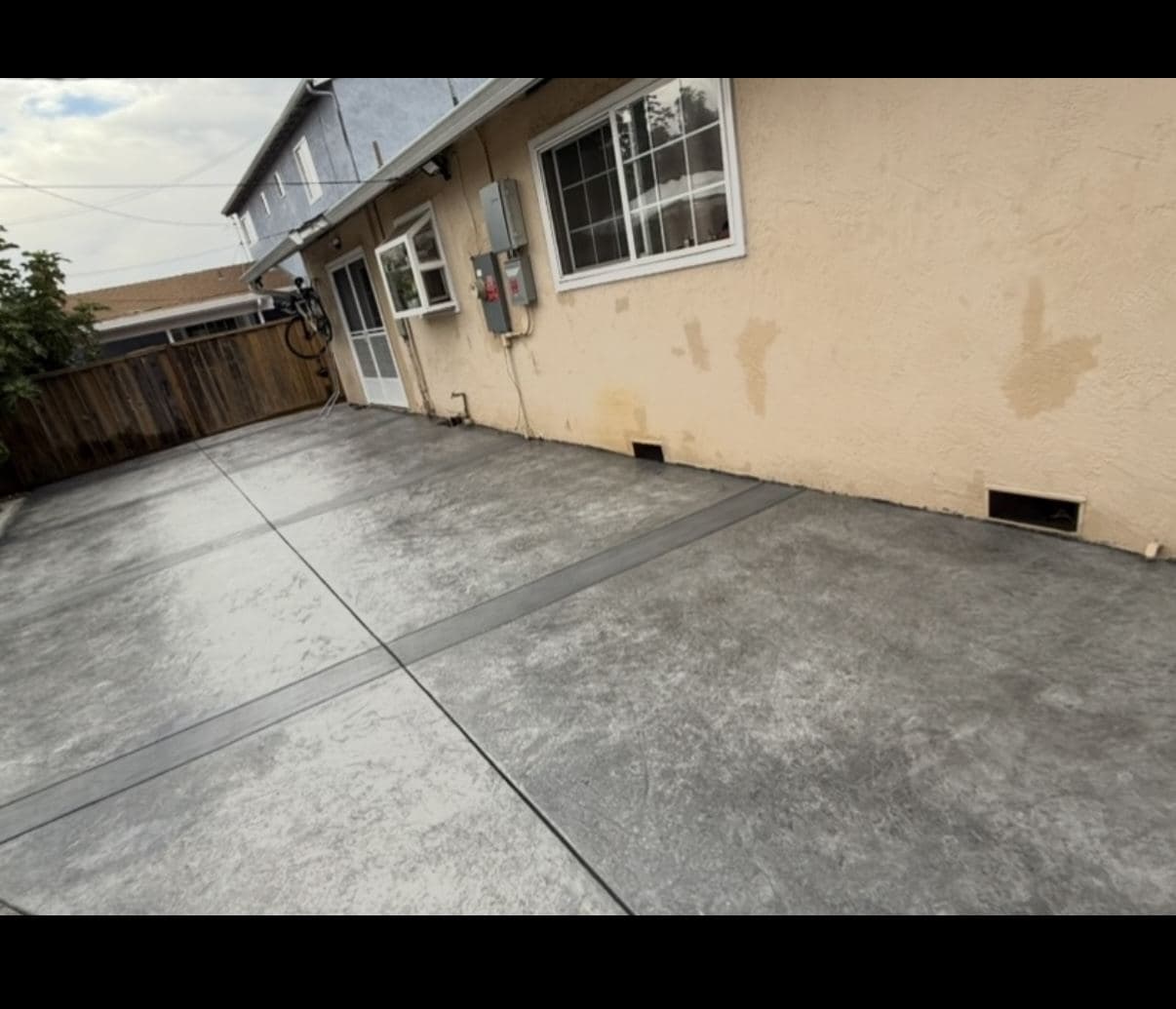
Quick answer
Should concrete have a broom finish or a trowel finish?
Use a broom finish for exterior concrete that people walk or drive on — driveways, walkways, patios, and pool areas — because its fine ridges give grip when wet. Use a smooth steel-trowel finish for interior floors, garages, and slabs that will be polished or covered, where a dense, smooth, easy-to-clean surface matters more than traction. A smooth trowel finish outdoors is slippery when wet and should be avoided.
- Outdoors
- Broom finish
- Indoors / garage
- Steel trowel
- Wet traction
- Broom far better
- Never outside
- Hard-troweled smooth
How each finish is made
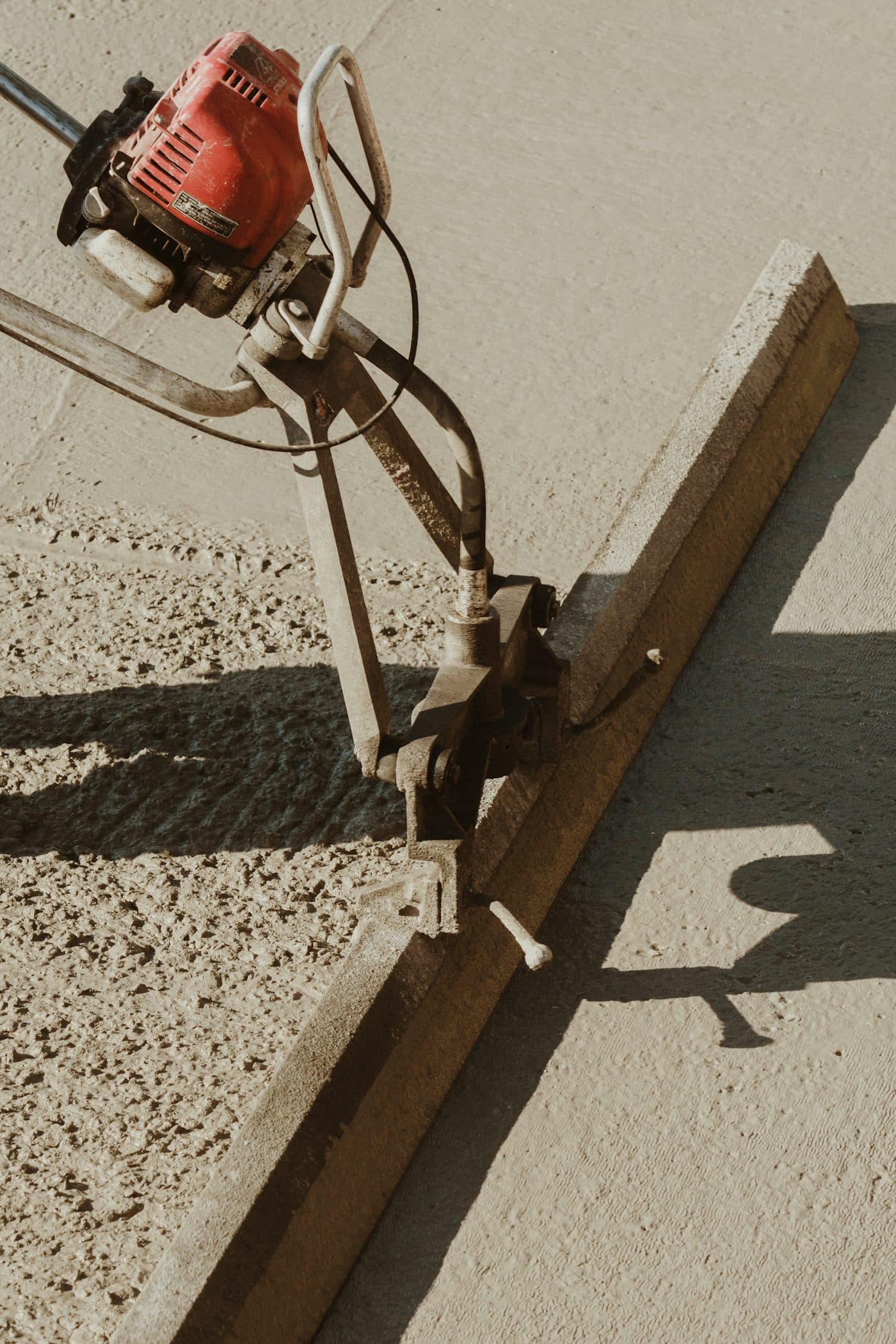
Every concrete slab goes through the same early steps: the concrete is placed, struck off level with a screed, and floated to embed the coarse aggregate and bring a layer of fine paste to the surface. What happens next decides the finish.
For a trowel finish, the finisher works the surface with a steel trowel — by hand or with a power trowel on larger slabs — in several passes as the concrete stiffens. Each pass compacts and smooths the paste, producing a dense, flat, sometimes glossy surface.
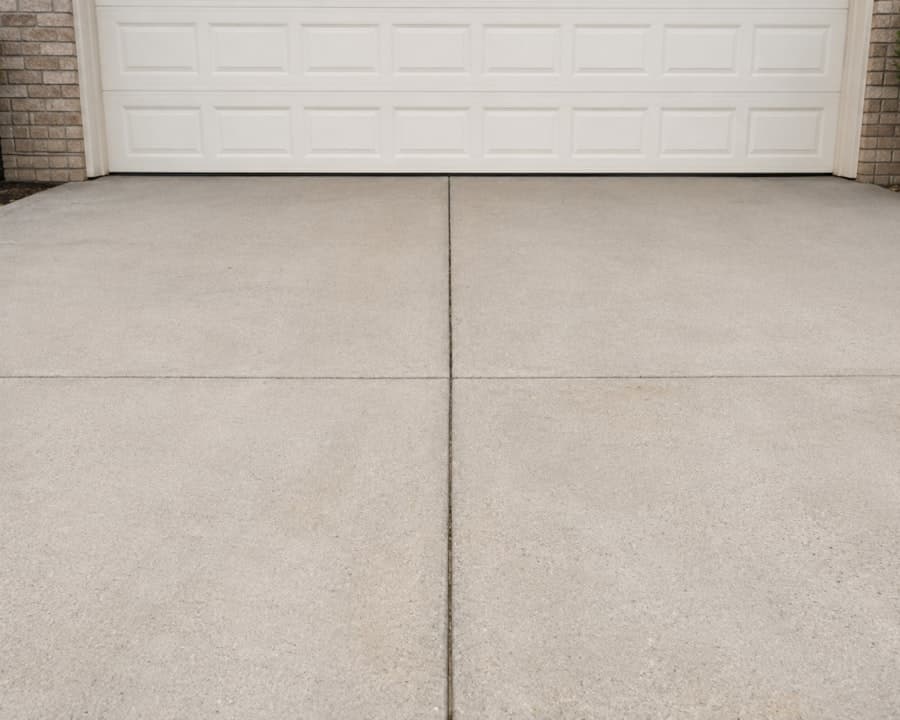
For a broom finish, the surface is floated and lightly troweled, then a broom is dragged across it while it's still soft enough to take texture. The bristles leave fine parallel grooves. Bristle stiffness and timing set how coarse the texture is: a fine broom gives light texture, a stiff broom a heavier one.
Finishing the surface
Broom vs trowel finish compared
| Broom finish | Smooth trowel finish | |
|---|---|---|
| Texture | Fine parallel ridges | Smooth, dense, flat |
| Wet traction | Good to excellent | Poor |
| Best for | Driveways, walks, patios, ramps | Garages, interiors, polished floors |
| Cleaning | Holds some dirt in grooves | Very easy to sweep and mop |
| Look | Classic, practical | Clean, modern |
| Cost | Lowest | Similar; more labor on large slabs |
| Under coatings | Not ideal | Ideal (after preparation) |
Why broom finish is the outdoor standard
Water on a smooth surface forms a film that shoes and tires slide on. The ridges of a broom finish break that film and give soles and treads something to grip. That's why most city standards for public sidewalks and driveway aprons call for a broom or similar textured finish, and why accessibility guidance calls for firm, stable, slip-resistant surfaces on walking routes.
Broom finish is also forgiving. Its texture hides minor imperfections, small color variations, and light wear better than a smooth surface. And because it's the simplest finish to produce, it's typically the lowest-cost option for exterior flatwork.
Direction matters. Broom texture is usually run perpendicular to the direction of travel — across a walkway or across the slope of a driveway — so it gives grip where feet and tires need it.
Where a trowel finish belongs
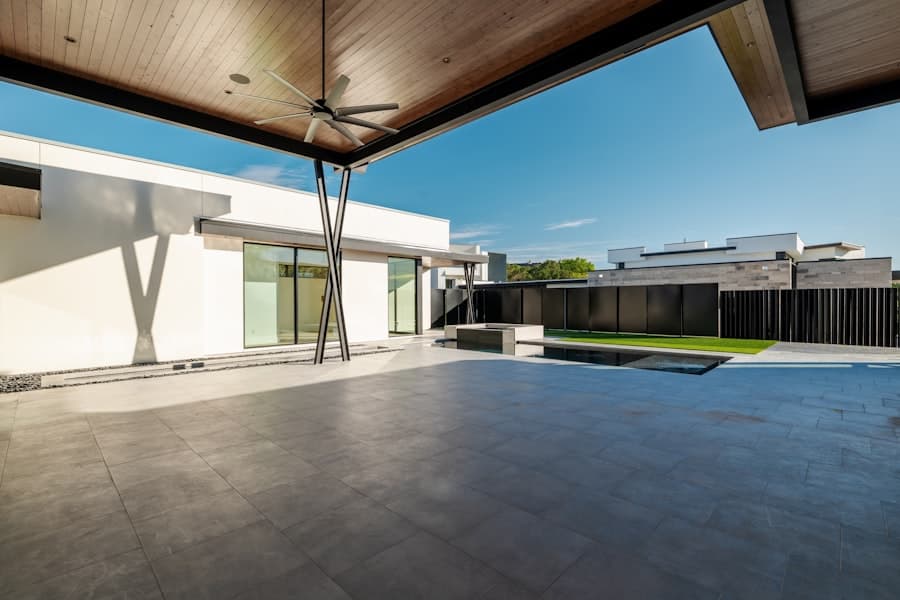
Indoors, the priorities change. A garage floor or basement slab needs to be easy to sweep, resistant to dusting, and ready for coatings, sealers, or polishing. A hard-troweled surface is denser and smoother, which makes it easier to clean and gives coatings a consistent surface after proper preparation.
Floors that will be polished are often hard-troweled at the pour, then ground and polished later. Floors that will receive tile or other coverings are usually given a smoother finish suitable for the adhesive or underlayment.
A trowel finish can be used outdoors in covered areas that stay dry, but for any surface that gets rained on, it's a slip risk. If a smooth look is wanted outside, a light broom or a sealer with anti-slip grit is a safer compromise.
Garage floors suit a smooth finish

Other finishes worth knowing
- Light broom
- Fine texture; comfortable barefoot, good for patios.
- Heavy broom
- Coarse texture; maximum grip on steep driveways and ramps, harder to sweep.
- Swirl / float finish
- Circular pattern made with a float; textured and decorative.
- Salt finish
- Rock salt pressed in and washed out, leaving small pits; good traction near pools.
- Exposed aggregate
- Surface paste washed away to reveal stone; the best wet traction of any finish.
- Stamped
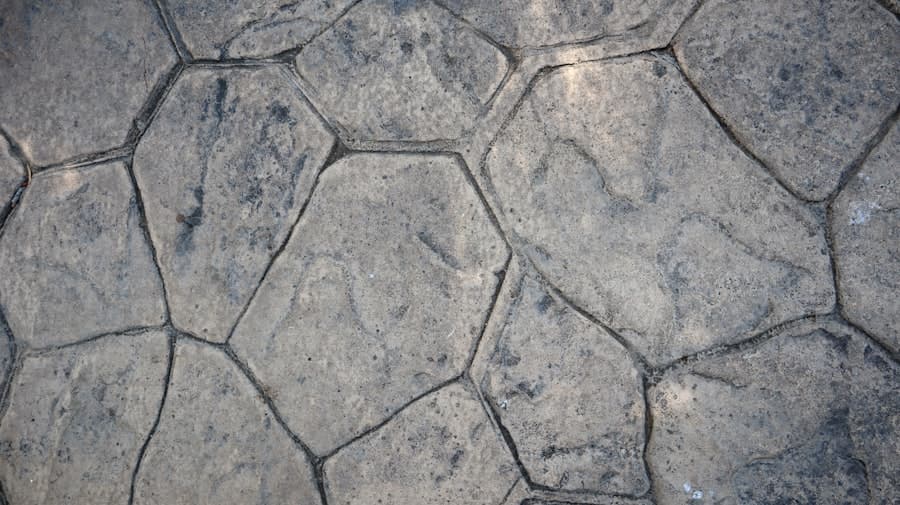
- Patterned mats pressed into fresh concrete for a stone, brick, or wood look.
Finishes at a glance
Choosing a finish for each part of your property
Driveways: broom finish as the default, heavy broom or exposed aggregate on steep slopes, stamped for appearance. Walkways and entries: light to medium broom, or a decorative finish with grit in the sealer. Patios: light broom or textured stamp for barefoot comfort. Pool decks: exposed aggregate, salt finish, or textured coatings. Garages: smooth trowel, optionally densified or polished. Interior slabs: smooth trowel ready for polishing or flooring.
Mixing finishes on one property is normal. A stamped front entry, a broom-finished driveway, and a smooth garage floor are a common, sensible combination.
Ask your contractor
- Which direction will the broom texture run?
- Light or heavy broom for this slope?
- Will the garage slab be hard-troweled?
- Will a sealer be applied, and will it add slip resistance?
- Can I see a sample of the texture?
Timing: the finisher's real skill
Both finishes depend on timing. After the concrete is floated, bleed water rises to the surface. Finishing while that water is present works it back into the surface, weakening the top layer and setting up scaling and dusting later. Good finishers wait for the bleed water to evaporate before troweling.
For a broom finish, the texture has to be applied while the surface is still soft enough to take the bristles but firm enough that the ridges hold their shape. Too early and the texture slumps; too late and the broom skips or tears the surface. On hot, windy days the window shrinks, which is why crew size and experience matter.
Power troweling large interior slabs follows a similar rhythm: several passes as the concrete stiffens, increasing the trowel angle each time to compact and burnish the surface.
Traction by finish
| Finish | Wet traction | Comfort barefoot | Ease of cleaning |
|---|---|---|---|
| Smooth trowel | Poor | Excellent | Excellent |
| Light broom | Good | Good | Good |
| Heavy broom | Excellent | Fair | Fair |
| Salt finish | Very good | Good | Good |
| Exposed aggregate | Excellent | Fair to poor | Good |
| Stamped (with grit in sealer) | Good | Good | Good |
Finishes for ramps, slopes, and steps
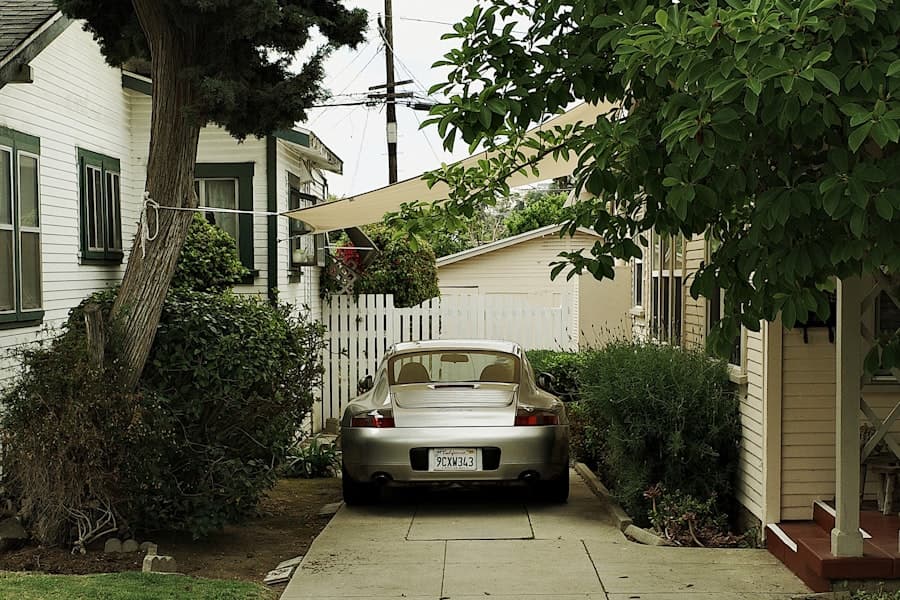
Steep driveways, ramps, and steps need the most traction. Heavy broom texture or exposed aggregate is the usual choice on slopes, with the broom run across the slope. Steps benefit from a textured tread surface and well-defined nosings so edges are easy to see.
Accessible ramps and routes must have a firm, stable, slip-resistant surface. A broom finish is the common way to achieve that in concrete. Very coarse textures can be uncomfortable for wheelchair users and those with mobility aids, so moderate texture is often the right balance.
Texture on a sloped driveway
Sealing each finish
Broom-finished exterior concrete is usually sealed with a penetrating sealer that keeps the texture and traction while repelling water and stains. Film-forming sealers fill some of the texture and can reduce grip, especially on lighter broom finishes, so an anti-slip additive is often recommended if a glossy sealer is used.
Smooth troweled interior slabs can be densified, polished, sealed, or coated. Densifying hardens the surface and reduces dusting; polishing adds sheen; coatings change the color and add chemical resistance but need the surface prepared by grinding first.
Changing a finish later
If a smooth exterior slab is too slippery, several fixes exist: a penetrating anti-slip treatment, a sealer with grit, light grinding to open the surface, or a textured overlay. If a broom finish feels too rough for a patio, a skim-coat overlay can create a smoother textured surface. Changing finishes later costs more than choosing correctly at the pour, but it's possible.
Why some contractors over-finish
A smooth, glossy surface can look impressive on the day of the pour, and some homeowners ask for it. But an exterior surface troweled smooth trades away traction, and if it was worked while bleed water was present, it can scale or dust within a few seasons. A good contractor explains the trade-off and finishes for the use, not for the photo.
Over-troweling also increases the risk of surface defects. Repeated passes on a surface that's already stiffening can bring too much fine material to the top, creating a weak layer. The right number of passes depends on the finish being produced and the conditions.
Cleaning and maintaining each finish
Broom-finished concrete is cleaned with a stiff push broom, a garden hose, and occasional washing with a concrete cleaner. The grooves can hold dirt, so a pressure washer with a wide fan tip — held well back from the surface — is useful for periodic deep cleaning. Sealing every two to three years keeps stains on the surface where they're easy to remove.
Smooth troweled interior floors are easy to dust mop and damp mop. Densified or polished floors need only a pH-neutral cleaner, while coated floors follow the coating manufacturer's recommendations. Oil and chemical spills should be cleaned promptly on any finish.
Recommended finish by location
| Location | Recommended finish | Notes |
|---|---|---|
| Driveway (flat) | Broom | Medium texture |
| Driveway (steep) | Heavy broom or exposed aggregate | Texture across slope |
| Front walk / entry | Light broom or decorative | Grit in any glossy sealer |
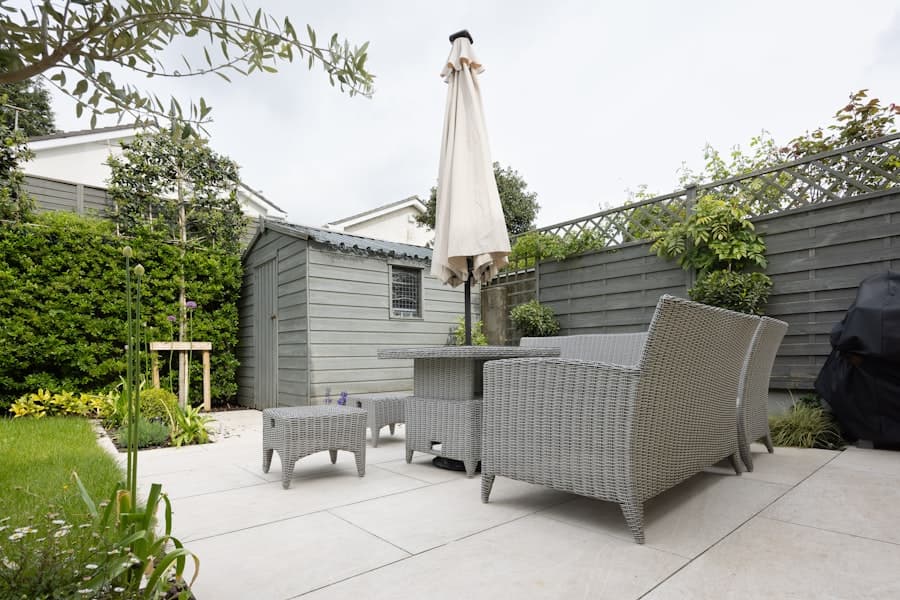
| Patio | Light broom or textured stamp | Comfortable barefoot |
| Pool deck | Exposed aggregate or salt | Cool, grippy when wet |
| Garage | Smooth trowel | Densify or polish |
| Interior slab | Smooth trowel | Ready for polishing or flooring |
| Ramp | Broom | Moderate texture |
A light broom patio
Cost of each finish
Broom and smooth trowel finishes are both part of standard flatwork pricing. In the Bay Area, plain broom-finished patios typically run $10–$16 per square foot installed and driveways $12–$18, including base, reinforcement, and finishing. A hard-troweled interior slab is priced similarly, with more labor on large areas that need power troweling.
Decorative finishes cost more: exposed aggregate adds roughly $3–$6 per square foot, and stamped concrete runs $16–$28 overall. Salt and swirl finishes add a small premium over a plain broom finish.
Public sidewalks and city standards
Work in the public right-of-way — sidewalks, curb ramps, and driveway aprons — follows city standard details, which specify thickness, joint spacing, and finish. Most call for a broom finish, sometimes with a specific texture direction and edging detail. Contractors pulling an encroachment permit build to those standards, and the city inspects the work.
That's one reason a homeowner's driveway may have a different finish from the apron at the street: the private driveway can be decorative, while the public apron follows the city's standard finish.
Making the choice
If the concrete is outside and will get wet, choose a textured finish — broom for most surfaces, with heavier texture or exposed aggregate on slopes and around pools. If it's inside or sheltered and needs to be easy to clean, or will be polished, coated, or covered, choose a smooth trowel finish.
When appearance matters outdoors, decorative finishes — stamped, exposed aggregate, colored, or salt — give character while keeping traction, provided they're sealed appropriately.
Key points
- Broom finish is the standard for exterior traction.
- Smooth trowel finish suits garages, interiors, and polishing.
- A smooth finish outdoors is slippery when wet.
- Run broom texture across the direction of travel.
- Heavy broom or exposed aggregate on steep slopes.
Common questions on pour day
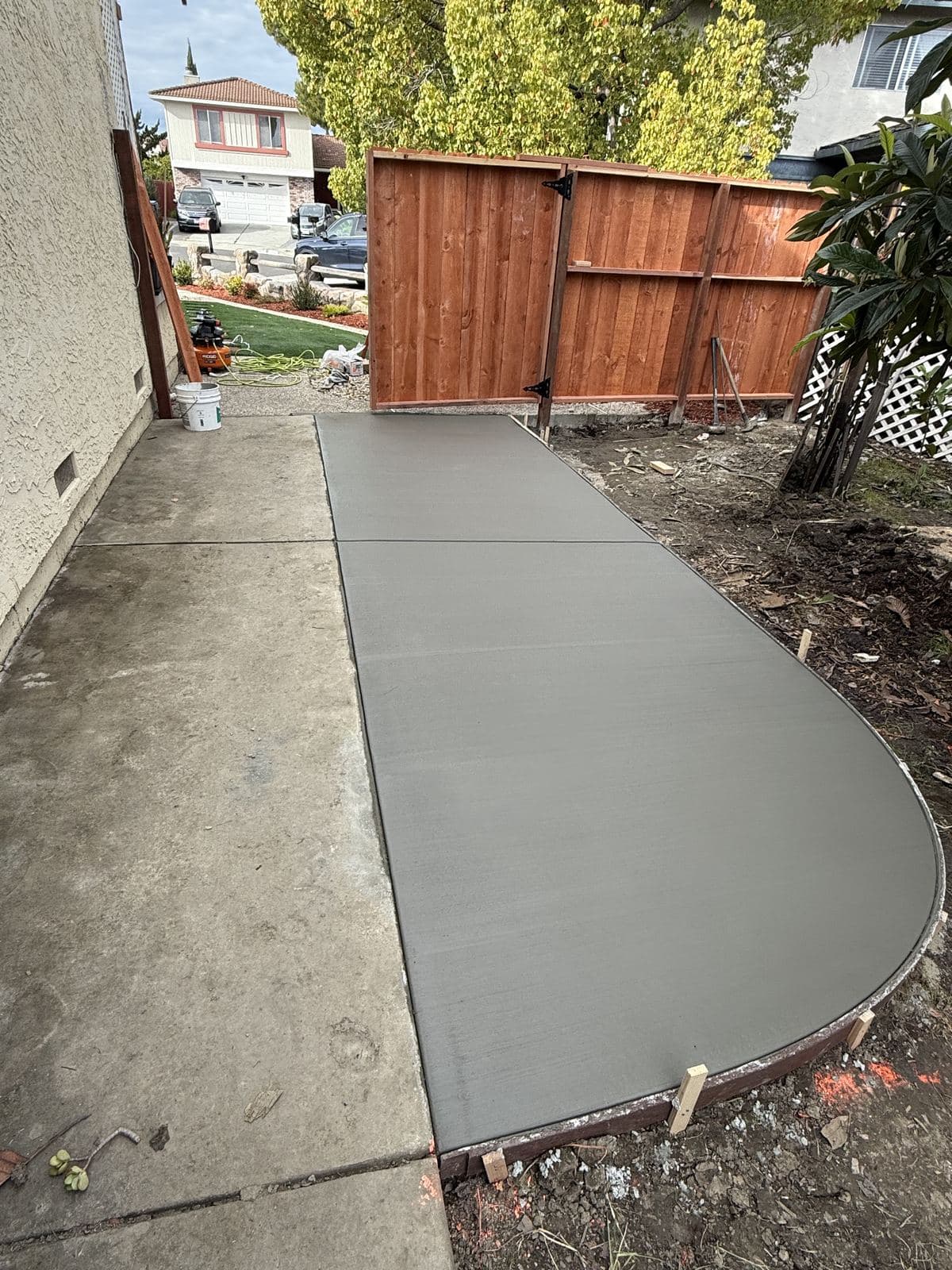
Homeowners often ask why the crew waits before finishing, why the broom texture runs a particular direction, or why the edges look different from the middle. Waiting allows bleed water to evaporate so the surface isn't weakened. Texture direction is chosen for traction across the direction of travel. Edges are tooled with an edger to round them and make them less likely to chip, which leaves a smooth border around a broom-finished field — a classic, intentional detail.
Joint lines are also tooled or sawn the same day, so they become part of the finished look. If you'd prefer a different edge detail or no smooth border, mention it before the pour.
Edges and borders
Finishes in shaded and damp areas
North-facing walks, shaded side yards, and areas under trees stay damp longer and can grow moss or algae, which makes any surface slicker. A broom or other textured finish, good drainage, and periodic cleaning keep these areas safer. Avoid smooth finishes anywhere that stays wet.
What 'finish' means on a quote
On a concrete quote, the finish line item describes the final surface texture. 'Broom finish' or 'medium broom' is the most common for exterior flatwork. 'Steel trowel' or 'hard trowel' describes a smooth interior finish. 'Float finish' describes a slightly textured surface between the two. Decorative finishes — exposed aggregate, stamped, salt — are usually listed separately and priced as upgrades.
If a quote doesn't state the finish, ask. It affects appearance, safety, and maintenance, and it's one of the easiest details to agree on before the pour rather than debate afterward.
Broom and trowel finish questions
Related
Standards & references
The published standards and code sections this guide draws on. Requirements vary by jurisdiction — your local building department has the final word.
- ACI 302.1R-15: Guide to Concrete Floor and Slab Construction — American Concrete Institute
- ACI 310R-13: Guide to Decorative Concrete — American Concrete Institute
- 2010 ADA Standards for Accessible Design — U.S. Department of Justice
Still deciding?
Ask us about your specific project
We'll give you a straight answer on the phone, including when that means telling you that you don't need the work you asked about. Free written estimates across San Jose & the greater Bay Area.