Quick answer
How long should you wait to drive on new concrete?
Wait about seven days before driving a passenger car on a new concrete driveway, and 28 days before heavy vehicles such as RVs, moving trucks, boat trailers, or loaded dumpsters. You can walk on it after 24–48 hours. In cold weather, add a few days, because concrete gains strength more slowly. Keep the first drives gentle — no sharp turns in place and no parking on the edges.
- Foot traffic
- 24–48 hours
- Passenger cars
- ~7 days
- Heavy vehicles
- 28 days
- Cold weather
- Add 30–50%
Why concrete needs time before it carries a car
Concrete doesn't harden by drying out. It gains strength through hydration, a chemical reaction between cement and water that continues for weeks. In the first days, the slab is hard enough to walk on but has only a fraction of the strength it will eventually reach.
Driveway concrete is typically specified at 4,000 PSI, meaning it should reach that compressive strength at 28 days. By about seven days, a properly cured mix has usually reached around two-thirds or more of that strength — enough for the light, spread-out loads of a passenger car, but not for the concentrated weight of a truck's axle or an RV.
Loading concrete too early doesn't usually cause dramatic failure on the spot. More often, it causes cracking at the edges and apron, surface damage, or a weaker slab long-term. Those problems are permanent, which is why a week's patience is worth it.
The curing timeline
Day-by-day: what you can do on a new driveway
Day 0
Pour day
Keep everyone off. Protect from pets, kids, rain, and leaves.
Days 1–2
Light foot traffic
Walk carefully; avoid dragging objects or wheeled bins.
Days 3–6
Bikes and wheelbarrows
Light wheeled traffic is fine; keep cars off.
Day 7
Passenger cars
Drive straight in and out; avoid turning wheels while stopped.
Days 7–28
Normal car use
Avoid parking heavy loads near edges and the apron.
Day 28+
Heavy vehicles
RVs, moving trucks, trailers, and dumpsters.
What changes the timeline
Temperature is the biggest factor. Hydration slows down as temperatures drop; below about 50°F it's noticeably slower, and near freezing it nearly stops. A December pour in a cool inland valley may need ten days or more before cars, while a September pour may be ready in seven.
Thickness matters less than people expect for timing — a five-inch slab and a four-inch slab gain strength at similar rates — but thickness matters a great deal for how much load the slab can eventually carry. That's why RV pads are thicker, not just older.
The mix matters too. Some mixes use accelerators or higher cement content for early strength; others use supplementary materials such as fly ash that gain strength more slowly but end up durable. Your contractor will tell you if your mix needs longer before use.
Curing quality matters most of all. A slab kept moist for its first days reaches its strength reliably. One that dries out quickly in hot, windy weather gains strength more slowly at the surface and may never reach its full potential there.
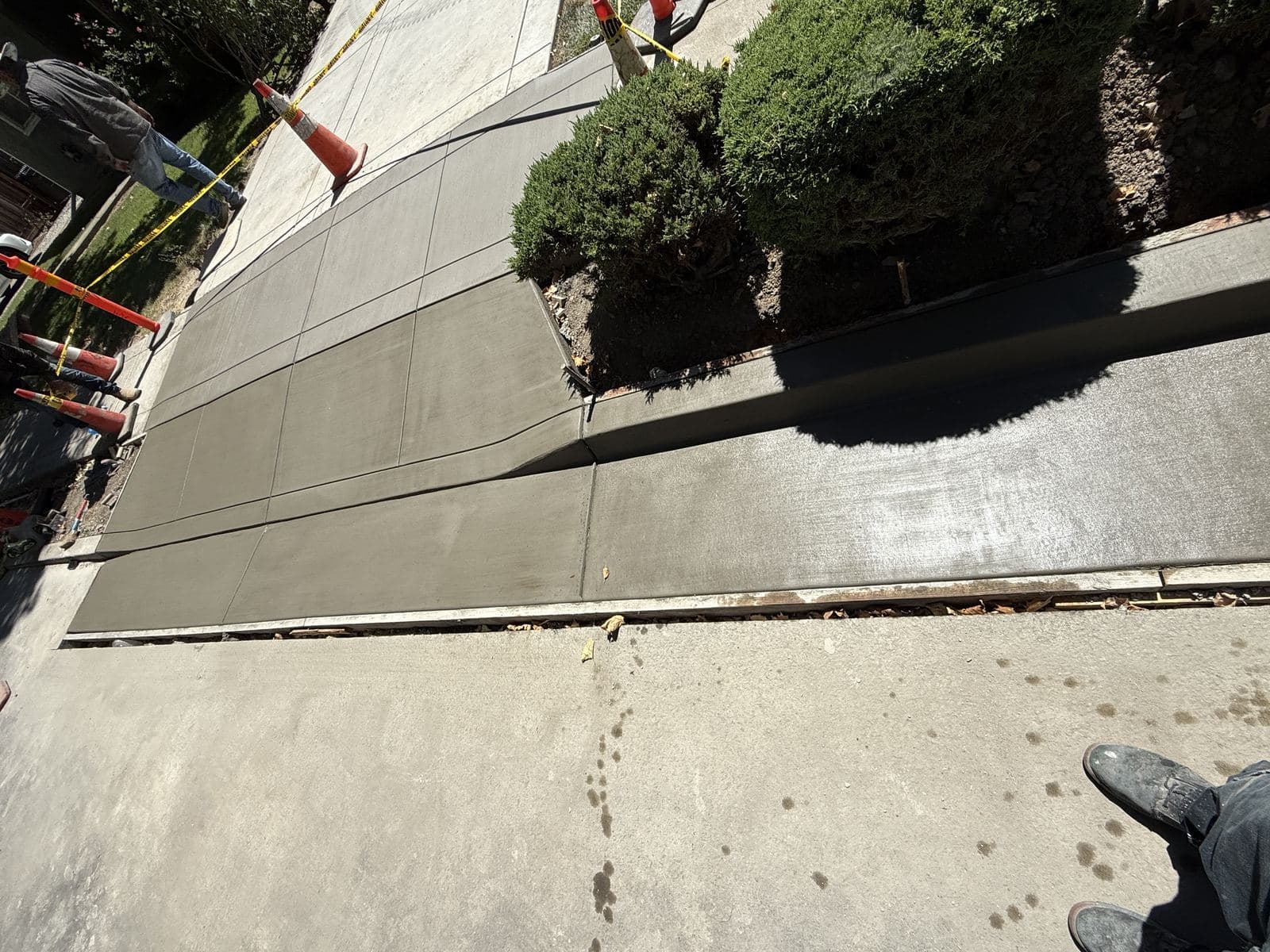
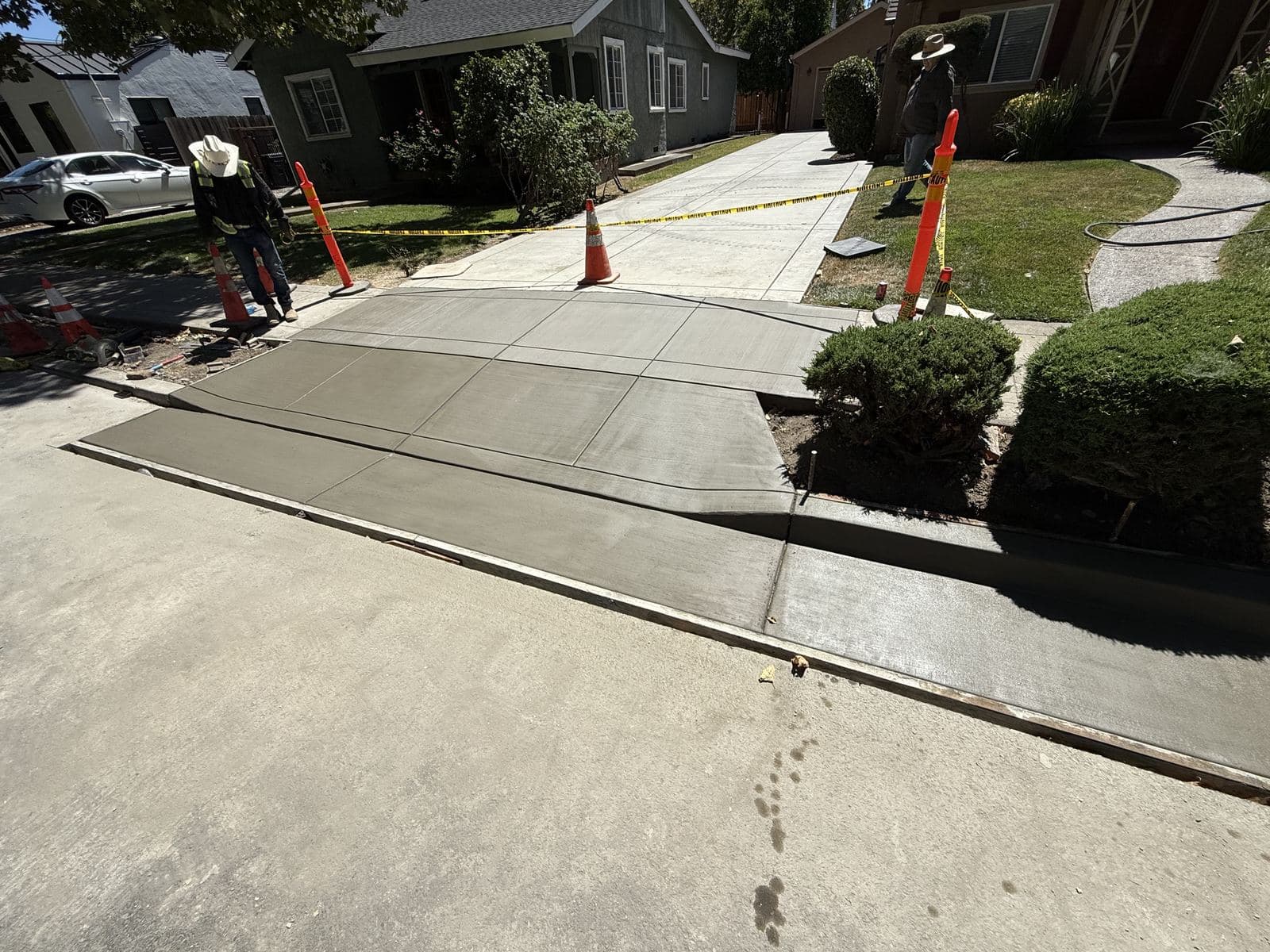
A new apron curing
Waiting times by vehicle and weather
| Load | Warm weather (70°F+) | Cool weather (50–60°F) | Cold weather (40–50°F) |
|---|---|---|---|
| Foot traffic | 24 hours | 24–48 hours | 48–72 hours |
| Passenger car | ~7 days | 7–10 days | 10–14 days |
| SUV / pickup | ~7–10 days | 10–14 days | 14+ days |
| RV, truck, dumpster | 28 days | 28+ days | 28+ days |
Guidance only — follow your contractor's instructions for your mix and conditions.
Protecting a new driveway in the first month
Keep the surface moist or covered as your contractor directs during the first days, especially in hot or windy weather. Don't pressure wash it for at least a couple of weeks, and don't apply deicers or harsh chemicals. Keep oil drips off by moving leaky vehicles elsewhere.
Avoid placing heavy, concentrated loads — a storage container, a loaded trailer, a pallet of materials — for the full 28 days. Plan deliveries and moving trucks accordingly, or have them park on the street.
Sealing, if planned, comes after at least 28 days, once enough moisture has left the slab.
First-month checklist
- Barricade the driveway on pour day
- Walk on it only after 24–48 hours
- Keep the surface moist if instructed
- No cars for about seven days
- No heavy vehicles for 28 days
- Keep tires off the edges
- No pressure washing for two weeks
- Seal no sooner than 28 days
What if someone drove on it too soon?
If a car drove on the slab a day or two after the pour, inspect for tire marks, surface scuffing, and new cracks, especially at edges. Light marks on the surface may be cosmetic. Cracks that appear at edges or under the wheel path should be reported to the contractor promptly with photos.
If a heavy truck crossed it in the first weeks, look closely at the apron and edges for cracking or broken corners. Early damage is easier to assess and address while the contractor is still engaged with the job.
Why cars, trucks, and RVs need different waits
A passenger car spreads its weight over four tires, with each tire carrying a relatively small load over a wide patch. A loaded moving truck or an RV puts far more weight on each axle, and a single dual-wheel axle can carry many times what a car's wheel does. Dumpster rolloff containers concentrate weight on small steel wheels or rails, which is especially hard on young concrete.
That's why the timeline steps up with weight: concrete that's ready for a sedan at a week may still be vulnerable to a concentrated heavy load until it's close to full strength. Planning moving day, deliveries, and construction dumpsters around the 28-day mark avoids most early damage.
Common heavy loads and when to allow them
| Load | Typical wait | Tips |
|---|---|---|
| Passenger car / small SUV | ~7 days | Drive straight; avoid edges |
| Full-size pickup | 7–10 days | Longer in cool weather |
| Delivery van | 10–14 days | Keep off the apron corner |
| Moving truck | 28 days | Park on the street if possible |
| RV / boat trailer | 28 days | Thicker slab recommended |
| Dumpster / container | 28 days | Use plywood to spread load |
Concrete curing in hot, dry weather
In hot, dry, or windy weather — common inland in summer — the surface can dry out before the concrete has hydrated properly. Moisture loss at the surface weakens the top layer, increases cracking, and can leave a dusty surface. Curing compounds, wet curing with soaker hoses or wet burlap, or covering with plastic all help keep moisture in.
Hot weather speeds early strength gain, but it doesn't shorten the waiting time much in practice, because protecting the surface from early wear still matters. Follow the contractor's curing instructions closely in the first days after a summer pour.
Curing in cool and rainy weather
Cool weather slows hydration. Below about 50°F the strength gain is noticeably slower, and near freezing it nearly stops. In the Bay Area, freezing is rare at most elevations, but cool, damp winter weather is common, so winter pours often need a few extra days before vehicles.
Rain after the surface is finished and set is generally not a problem and can even help curing. Rain on unfinished concrete is the risk, which is why contractors schedule pours around forecasts and cover fresh work if needed.
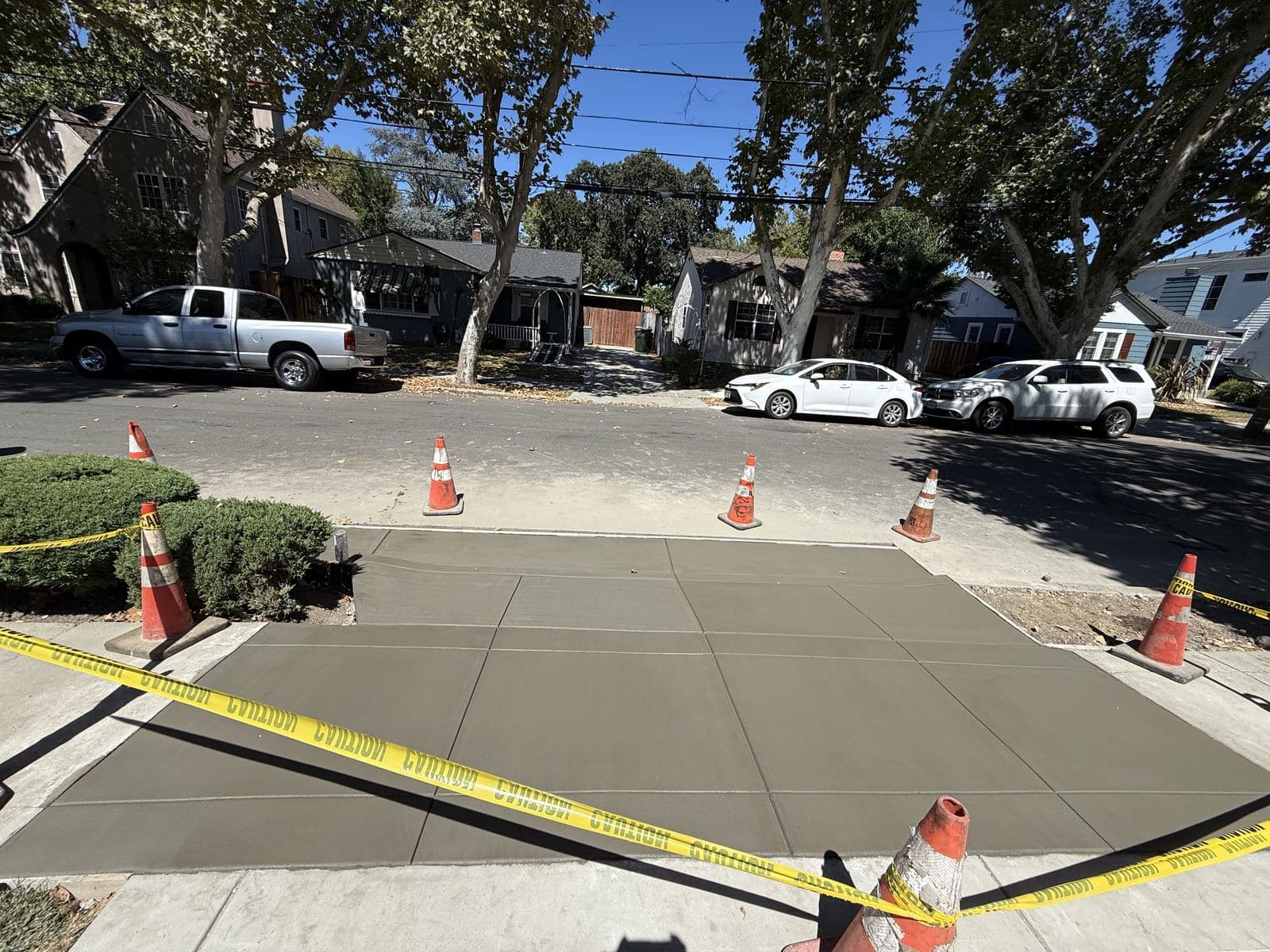
Patience at the apron
Signs concrete was loaded too early
Early loading can show up as tire scuffs or tread marks in the surface, cracks running from slab edges or corners, broken corners at the apron, or a crack following the wheel path. Some damage appears weeks later as the slab responds to stresses it experienced while weak.
Document anything unusual with dated photos and share them with your contractor promptly. Early communication makes it easier to assess whether the damage is cosmetic or needs repair.
Planning around a driveway replacement
Losing the driveway for a week or more takes planning. Arrange street parking or a neighbor's driveway, and check local parking rules for overnight street parking. Move vehicles out before demolition starts, because the old driveway is broken up on the first day.
Plan deliveries for after the 28-day mark, or have them stop at the curb. If you're moving, schedule the truck to park on the street. And let anyone who visits — trades, delivery drivers, family — know that the driveway is off limits for the first week.
A simple barrier at the street, such as cones and a rope or a sign, helps prevent someone from driving on it absent-mindedly in the first days.
Why the first week matters most
In the first week, concrete gains strength rapidly but is still vulnerable at the surface and edges. Curing practices in this period — keeping the slab moist, protecting it from extreme heat or cold, and keeping traffic off — have an outsized effect on long-term durability.
After the first week, strength gain continues more slowly. Normal car use is fine, but avoid heavy point loads until the 28-day mark, when the concrete reaches its specified strength.
Quick reference
| Question | Answer |
|---|---|
| Walk on it | 24–48 hours |
| Drive a car | About 7 days |
| Heavy trucks / RVs | 28 days |
| Pressure wash | After 2+ weeks |
| Seal | After 28+ days |
| Full design strength | 28 days |
How contractors protect fresh concrete
Right after finishing, contractors apply a curing method — a spray-on curing compound, wet burlap, soaker hoses, or plastic sheeting — to keep moisture in. Forms are usually left in place for at least a day, then removed carefully so edges aren't chipped. Joints are cut the same day.
Barricades or tape keep people and vehicles off, and the contractor gives the homeowner instructions for the following days: when to keep the surface moist, when foot traffic is fine, and when cars and heavier loads can return.
Does sealing speed up driving?
No. Sealing protects the surface but doesn't make concrete gain strength faster, and most sealers shouldn't be applied until the concrete has cured for 28 days. Cure-and-seal products applied right after finishing help retain moisture for curing, but the timeline for driving stays the same.
Accelerated mixes can reach strength faster and are sometimes used when a driveway or lot needs to reopen quickly. If that's important to you, discuss it with your contractor before the pour.
Key points
- Walk on new concrete after 24–48 hours.
- Drive cars after about 7 days in normal weather.
- Wait 28 days for RVs, moving trucks, trailers, and dumpsters.
- Allow extra time in cool weather.
- Keep tires off edges and the apron corner early on.
Concrete curing in the Bay Area by season
Spring and fall are ideal for pouring and curing in most of the Bay Area: mild temperatures and moderate humidity let concrete gain strength steadily, and the standard week before cars applies. Summer brings faster early strength gain inland but higher risk of surface drying, so curing practices matter more than waiting longer.
Winter brings cooler temperatures and rain. Concrete poured between storms cures more slowly, so allowing ten days or more before cars is sensible, especially in cooler inland valleys and on shaded driveways. Coastal areas with fog and cool air see slower strength gain year-round compared with hot inland areas.
When to call your contractor
Contact your contractor if you see cracks wider than a hairline appearing in the first weeks, cracks at slab corners or edges, surface flaking, or areas that look powdery or dusty. Early issues are easier to assess and document while the job is fresh, and many are covered by workmanship warranties if they result from installation.
A note on stamped and decorative driveways
Stamped and colored driveways follow the same strength timeline as plain concrete, but their sealed decorative surface deserves extra care in the first weeks. Avoid turning wheels while stopped, keep heavy vehicles off for the full 28 days, and follow your installer's guidance on when the first full seal coat goes on, so the color and texture stay crisp for years.
Garage slabs and interior floors
Garage floors follow the same timeline as driveways: about a week before parking a car and 28 days before heavy loads such as lifts, workbenches full of tools, or storage racks. Because garage slabs dry more slowly indoors, waiting longer before sealing or coating is often wise.
New driveway care for the first year
Beyond the first month, a few habits help a new driveway last. Avoid deicing salts — rarely needed in the Bay Area but sometimes used at higher elevations — during the first winter, because young concrete is more vulnerable to surface damage. Clean oil drips promptly, keep downspouts discharging away from the slab, and keep joints clear.
Seal after the first 28 days if your contractor recommends it, then follow a two- to three-year resealing schedule. Watch for any cracks during the first year; hairline cracks within joints are normal, but cracks across panels or at corners are worth noting and mentioning to your contractor.
First-year care
| When | What to do |
|---|---|
| First week | Keep cars off; keep moist if instructed |
| First month | No heavy loads; no pressure washing early |
| After 28 days | Seal if recommended |
| Throughout year | Clean spills; keep drainage working |
| End of first year | Inspect joints and edges |
Driving on new concrete — questions
Related
Standards & references
The published standards and code sections this guide draws on. Requirements vary by jurisdiction — your local building department has the final word.
- ACI 308R-16: Guide to External Curing of Concrete — American Concrete Institute
- ASTM C39: Standard Test Method for Compressive Strength of Cylindrical Concrete Specimens — ASTM International
- ACI 306R-16: Guide to Cold Weather Concreting — American Concrete Institute
Still deciding?
Ask us about your specific project
We'll give you a straight answer on the phone, including when that means telling you that you don't need the work you asked about. Free written estimates across San Jose & the greater Bay Area.