Santa Clara County · California
Concrete Contractors in Cupertino, CA
Mid-century ranch homes, extensive rebuilds, and foothill edges.
Dueling Trowels Concrete Solutions is a licensed and insured concrete contractor serving Cupertino, Santa Clara County, California. We install and replace concrete driveways, patios, walkways, stamped and stained finishes, foundations, and commercial flatwork throughout Cupertino and nearby Sunnyvale, Saratoga, San Jose. Free written estimates. Call or text (669) 200-9478.
Santa Clara County · California
Concrete Contractors Serving Cupertino
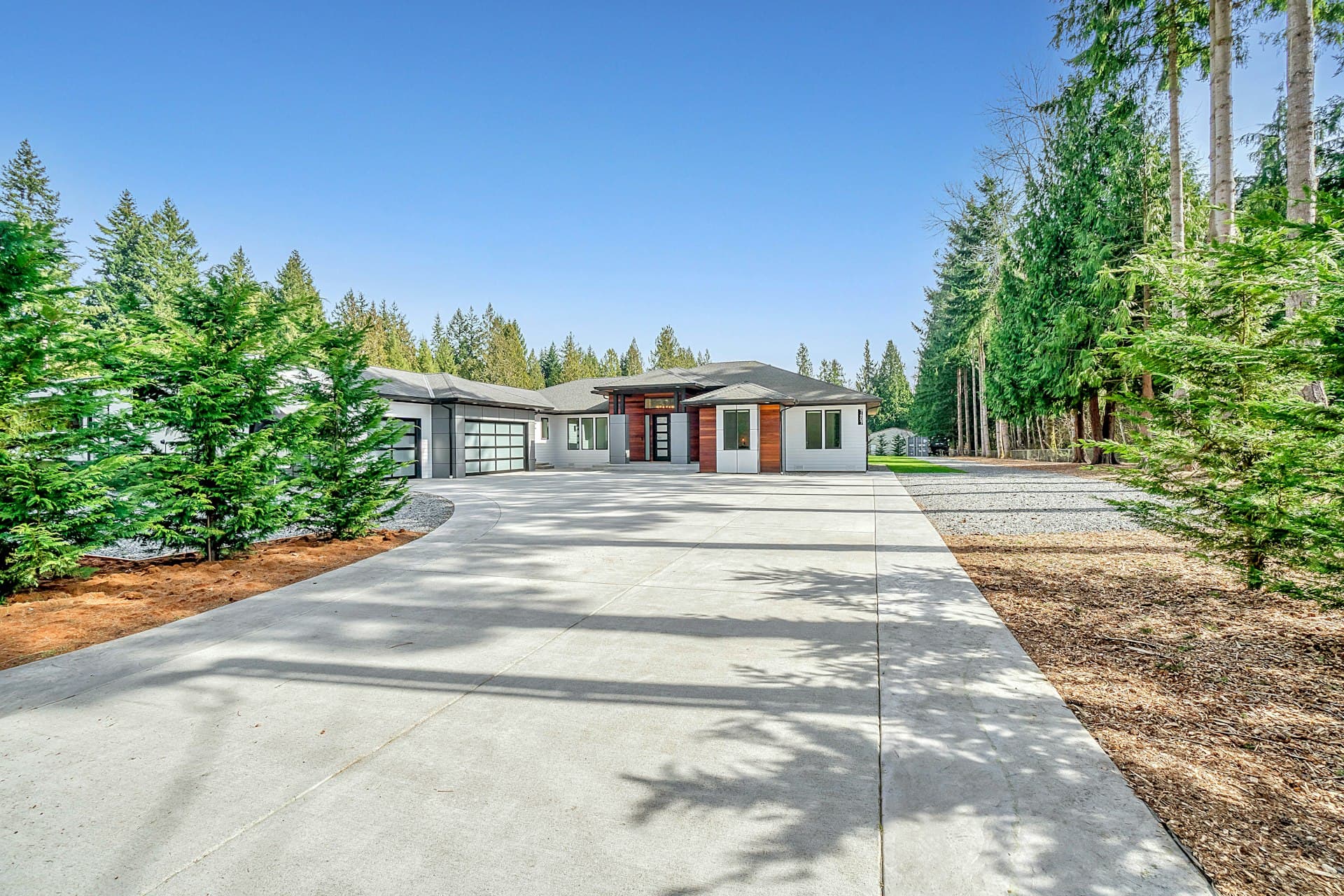
Cupertino has been quietly rebuilding itself for two decades. The original 1950s and 60s ranch housing is steadily being replaced or heavily expanded by owners who intend to stay for a long time, and concrete work here is very often part of a larger investment in the property rather than a standalone repair.
That changes the conversation. Homeowners here tend to be planning several years out, thinking about how the driveway relates to a future addition or how the back yard will work once a remodel is finished. We do a lot more design-stage discussion in Cupertino than we do in most cities.
- Years in the Bay Area
- 20+Years in the Bay Area
- Projects completed
- 1,000+Projects completed
- Written estimates
- FreeWritten estimates
Most Requested
Concrete Services in Cupertino
The four we're asked for most often here. Every other service we offer is available throughout the city too.
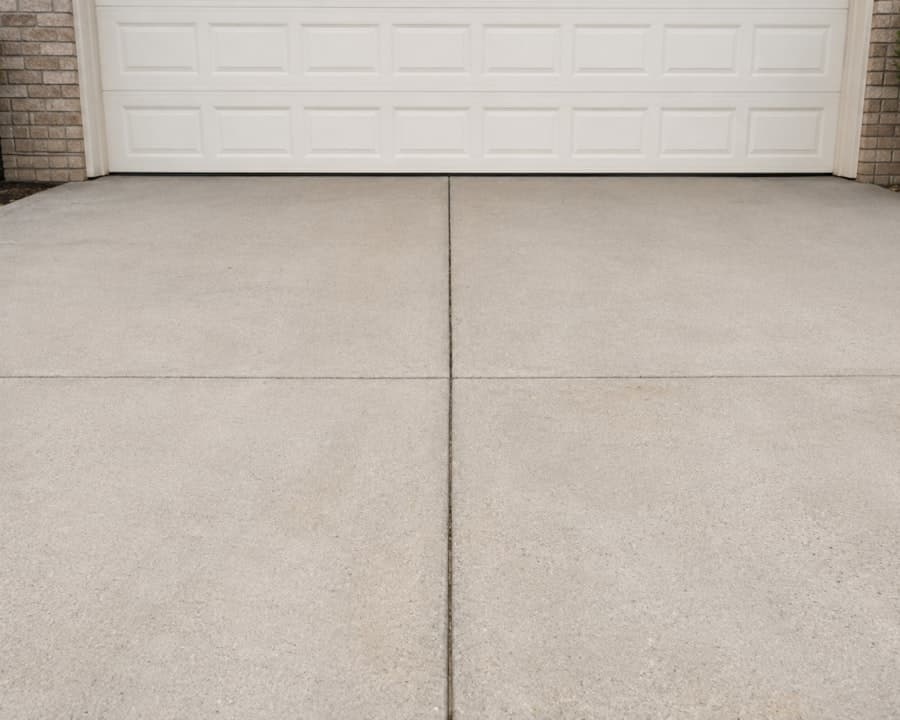
Concrete Driveways
Vehicle-rated driveways with engineered thickness, controlled cracking, and drainage that moves water away from your garage.
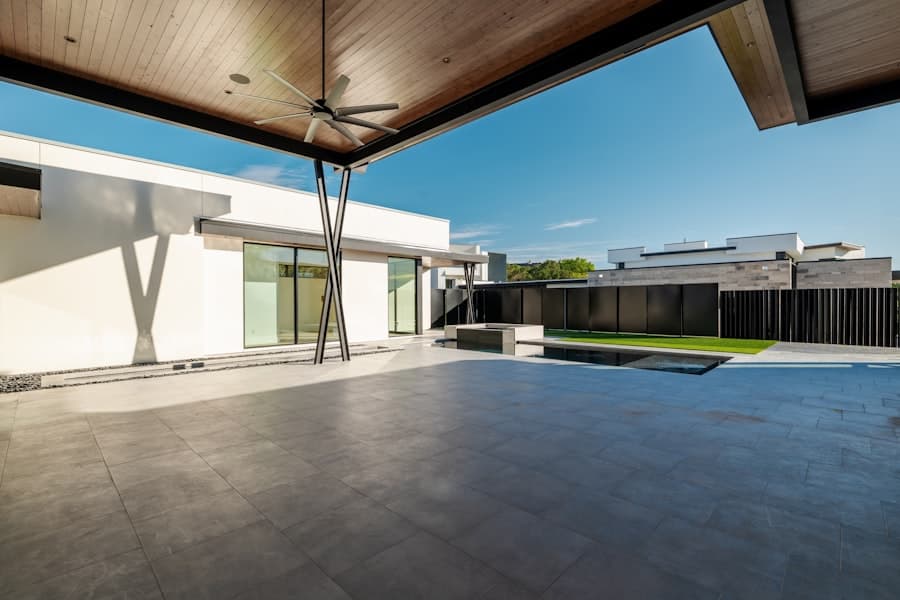
Concrete Patios
Outdoor living surfaces planned around furniture, foot traffic, and how your household actually uses the yard.
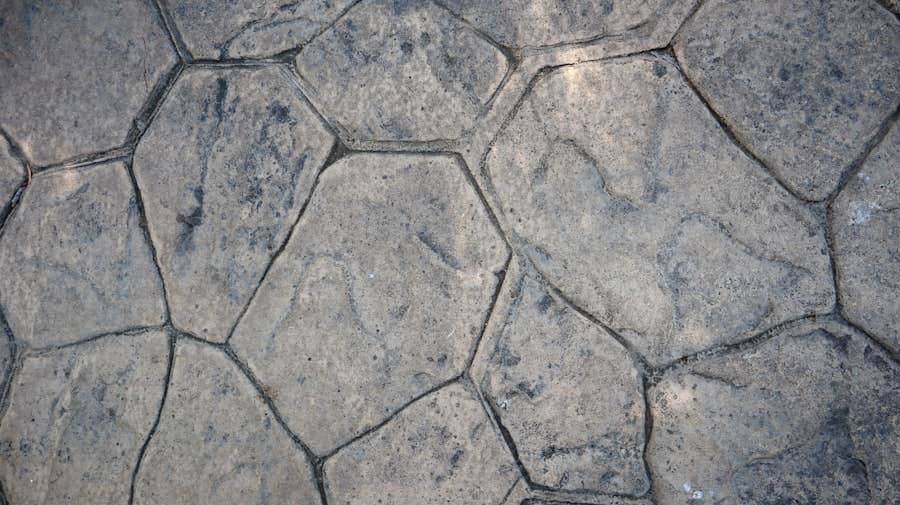
Stamped Concrete
Stone, brick, slate, and plank patterns pressed into fresh concrete, colored in layers and sealed for depth.

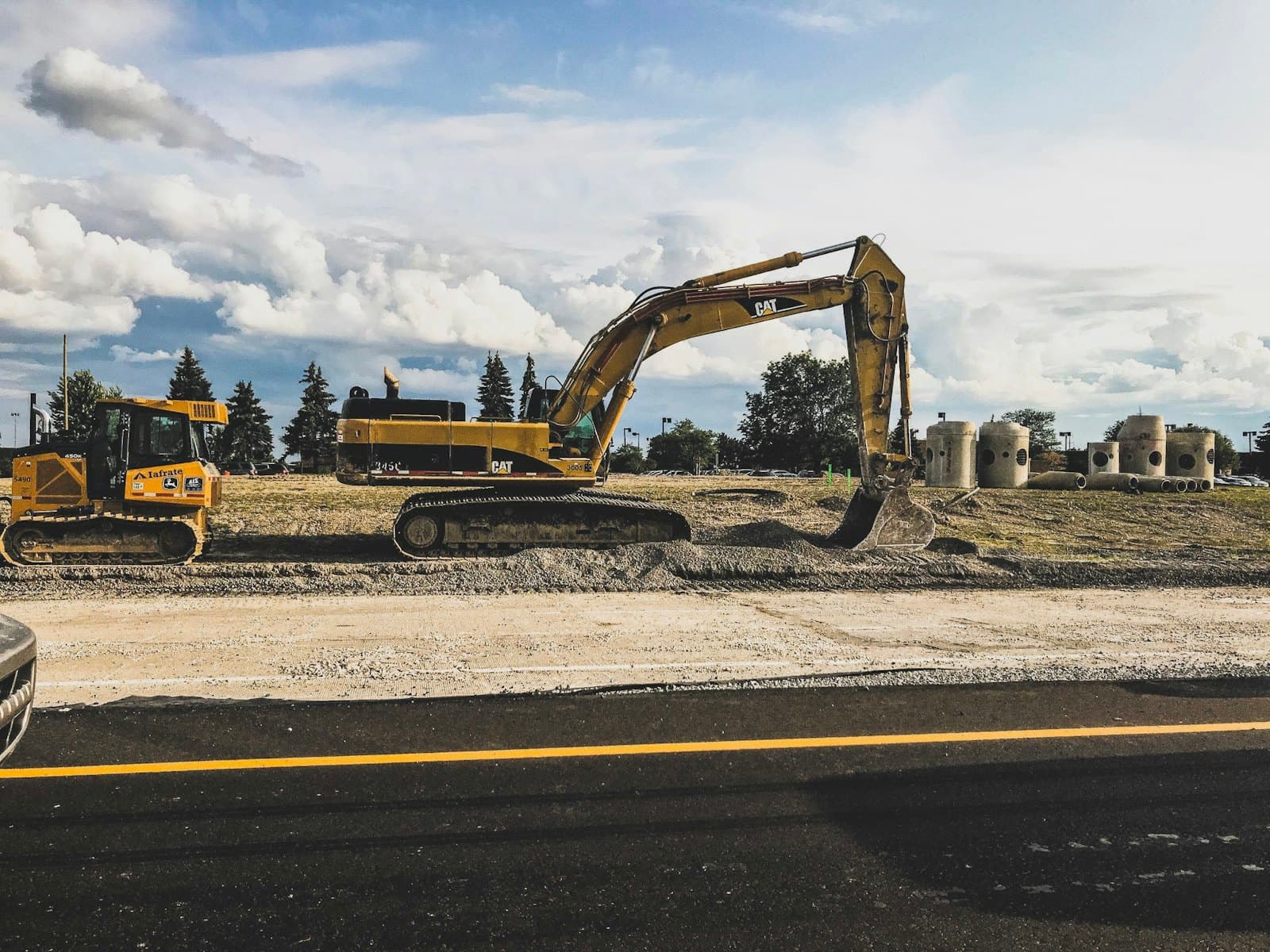
Foundations & Slabs
Structural concrete that carries the building — slab-on-grade, tilt-up panels, cast-in-place walls, and additions.
03
Property Styles Across Cupertino
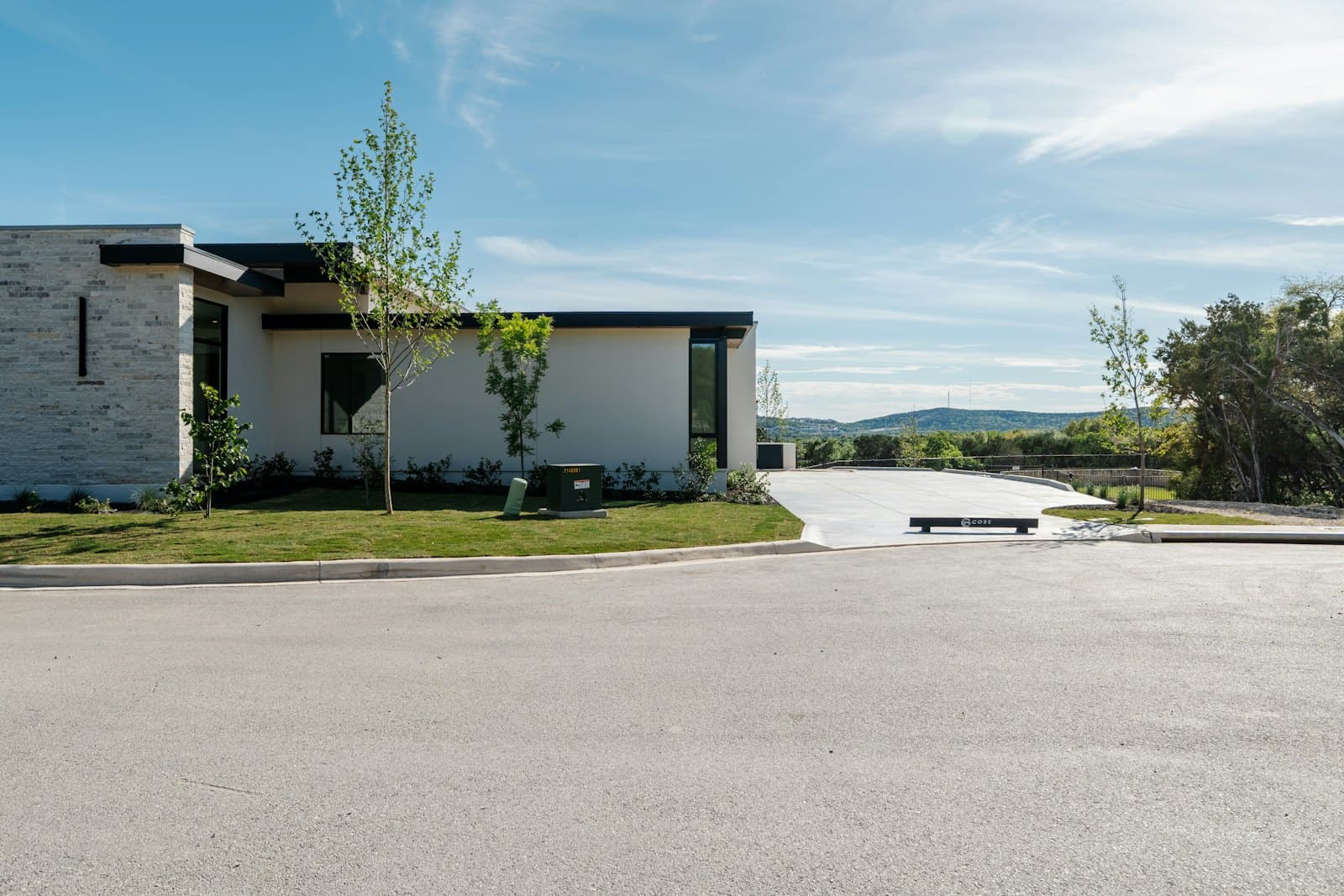
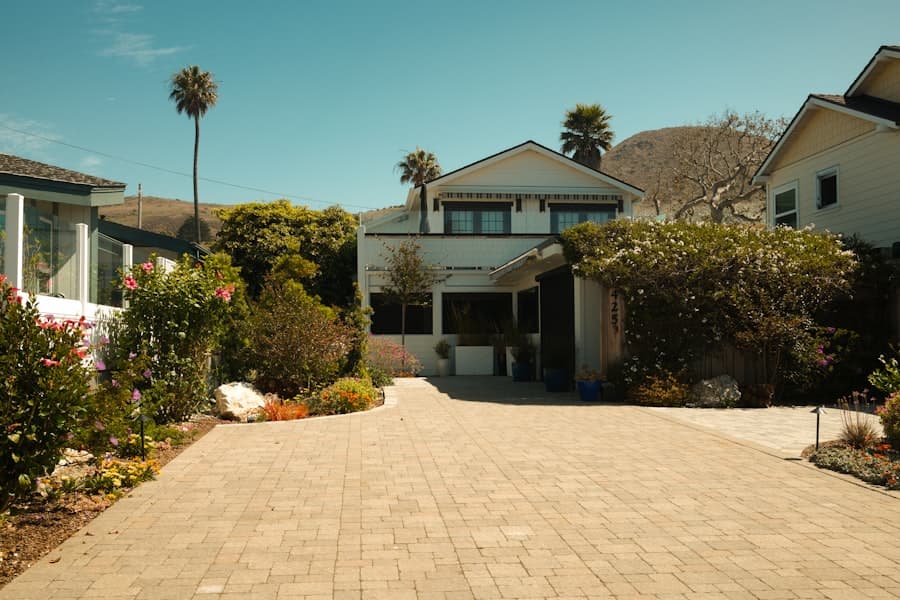
The base layer is postwar ranch housing on generous, regular lots — but a large share has been either substantially remodeled or torn down and rebuilt at significantly greater size. That produces an unusual mix on a single street: original 1,400-square-foot ranch homes next to new builds three times the size, each with different driveway and hardscape expectations.
04
Ground Conditions and Site Considerations
Flat across most of the city, rising toward the western foothills around Monta Vista and the Stevens Creek corridor. The foothill-edge properties bring genuine slope, retaining requirements, and more careful drainage design than the valley-floor lots need.
How Cupertino Weather Affects the Work
Warm, dry summers with the valley's typical long construction season, moderated slightly at the western edge where the foothills catch a bit more marine air. Winter rain is the main scheduling constraint, particularly on the sloped properties where saturated ground makes excavation impractical.
Concrete Problems We See Most in Cupertino
Every city has its own recurring issues. These are the ones that come up disproportionately here.
Concrete outlasted by the house around it
A rebuilt or heavily expanded home with the original driveway still in front of it is the most common situation we're called into here — and the new house usually needs a wider, better-planned approach anyway.
Slope and drainage on foothill lots
Properties toward Monta Vista and the western edge need real drainage design. Water coming off a hillside has to be managed deliberately, not just sloped away and hoped for.
Construction-related slab damage
Driveways that survived forty years of family cars often don't survive a remodel — concrete trucks, dumpsters, and lumber deliveries concentrated over a few months do more damage than decades of normal use.
Built to Last
How We Build Concrete That Survives This Ground
Whatever the soil does in Cupertino, the answer is the same in principle: build the layers under the slab properly and design for the movement rather than hoping it doesn't happen.
This is what a slab we build looks like in section. Skipping any one of these layers is the single most common reason concrete in this area fails early.
What happens when a layer gets skipped
- 5
Concrete slab
3,000–4,000 PSI · 4" home, 6"+ vehicles
Four inches under a delivery truck cracks, every time. Thickness has to match the heaviest thing that will ever sit on it — not the family car.
- 4
Reinforcement
#4 rebar at 18" centres, chaired
Rebar lying on the base does nothing at all. It has to sit in the slab's middle third, where it can hold a crack closed instead of watching one open.
- 3
Vapour barrier
10-mil sheeting under interior slabs
Without it, ground moisture wicks up through the concrete. That delaminates coatings, lifts flooring, and leaves a garage or shop slab that never fully dries.
- 2
Aggregate base
Crushed Class 2 rock, 4–6" in lifts
Pour straight onto soil and water has nowhere to drain. It collects under the slab, softens the ground, and the support the slab was designed around disappears.
- 1
Compacted subgrade
Graded to fall, compacted to 90–95%
Skip the compaction and the slab settles unevenly within a few wet seasons. One side drops, a crack opens across the difference, and no surface repair will hold it.
Transformations
The Condition We're Usually Called To
Representative comparisons of the problems that bring people to us, and what replacement achieves. Drag the handle across each frame.
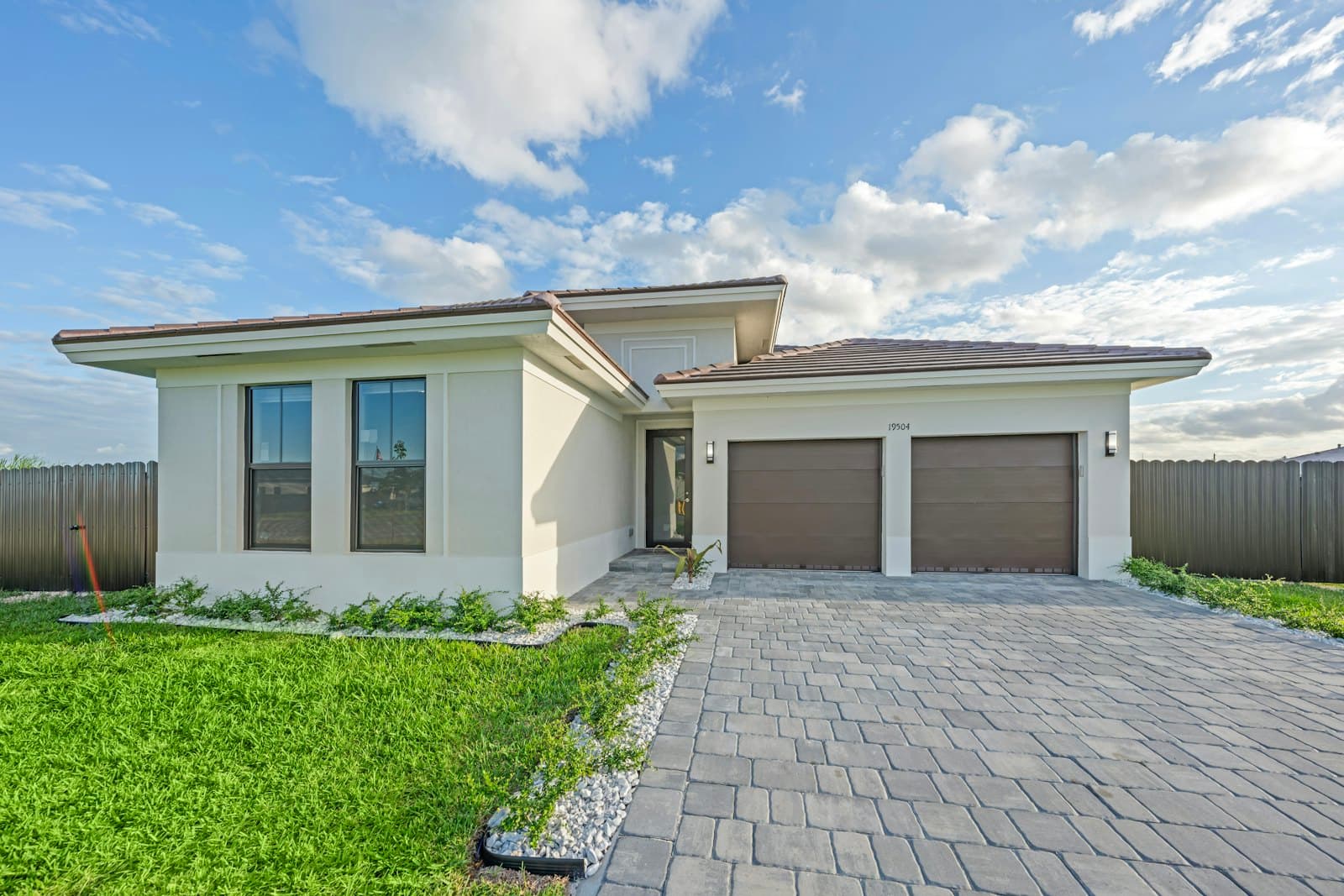

Typical 1960s tract home
Driveway replacement
A driveway poured at three and a half inches on uncompacted native soil, cracked through in three places and settling toward the garage. Replacement went in at five inches over six inches of compacted Class 2 base, with rebar chaired into the slab and the fall reversed away from the house.
- Water now runs to the street instead of the garage slab
- Thickness and reinforcement rated for two modern vehicles
- Control joints cut on a grid, so future movement is directed

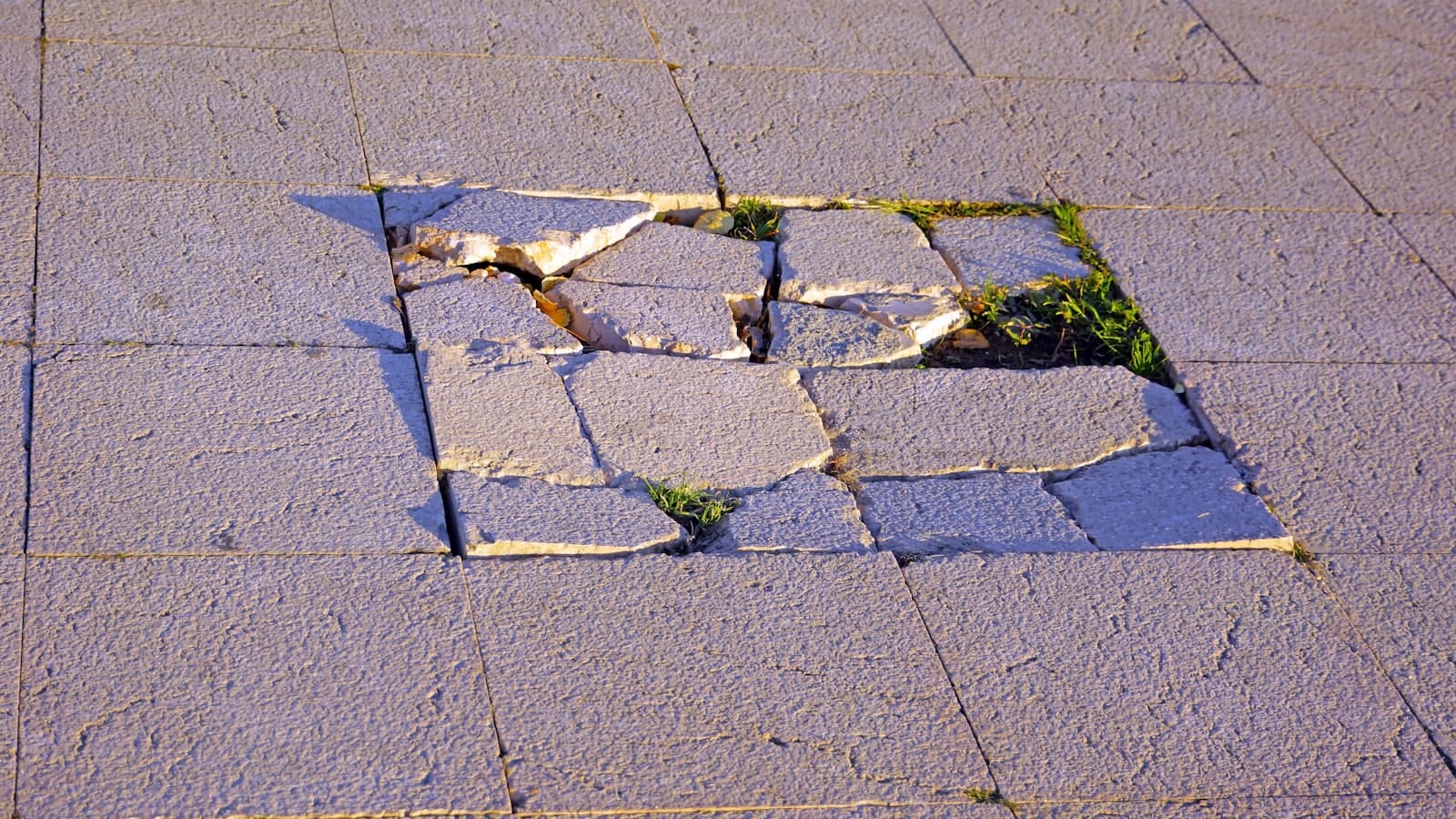
Shaded rear yard
Patio rebuild
A north-facing patio that stayed damp year round, growing moss in the joints and holding water against the house wall. Rebuilt with fall built into the slab, a wider footprint, and a sealed decorative finish that sheds water instead of holding it.
- Positive fall away from the building, no standing water
- Sealed surface that resists moss and organic staining
- Footprint extended to take a full outdoor dining setting
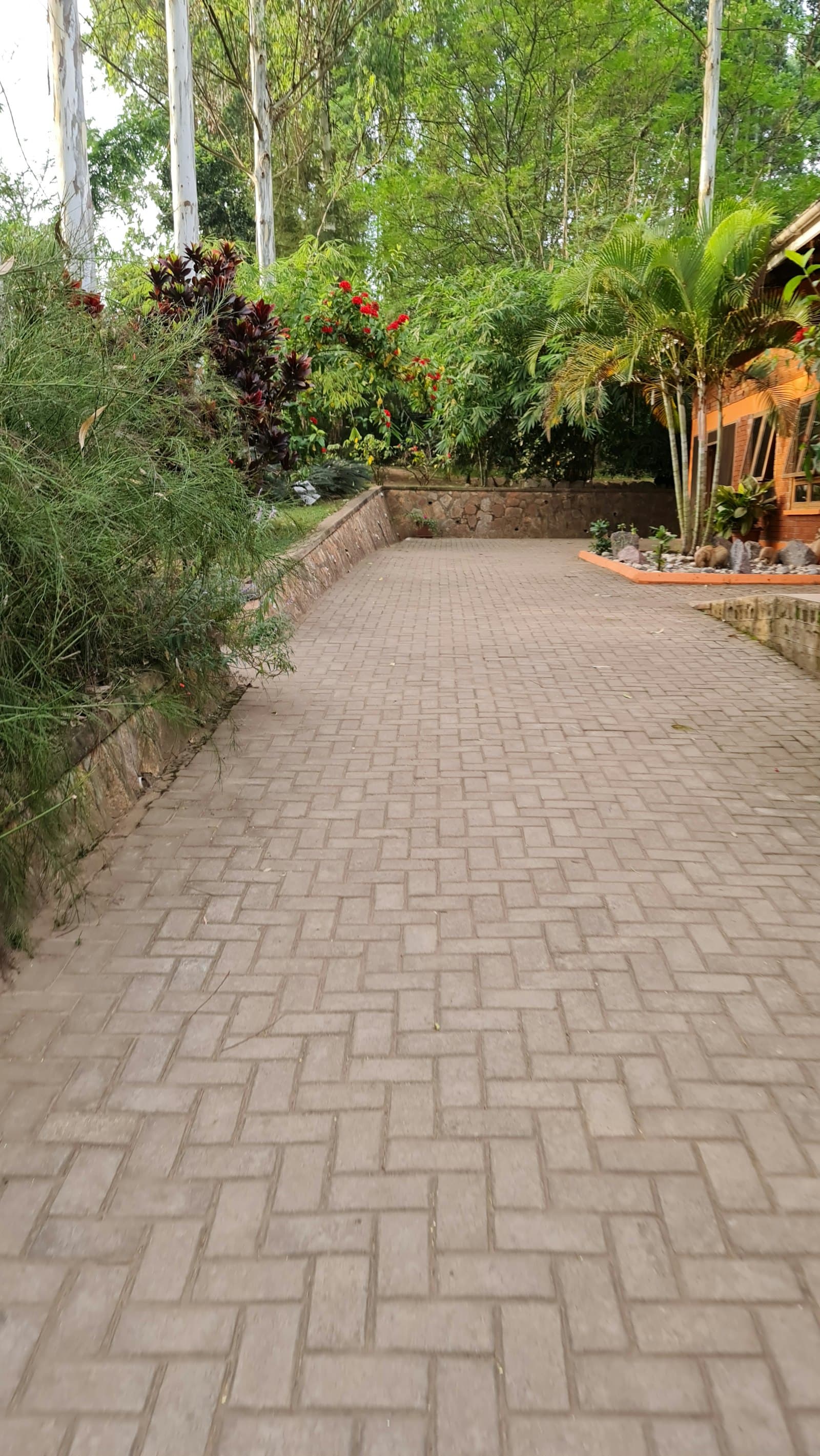
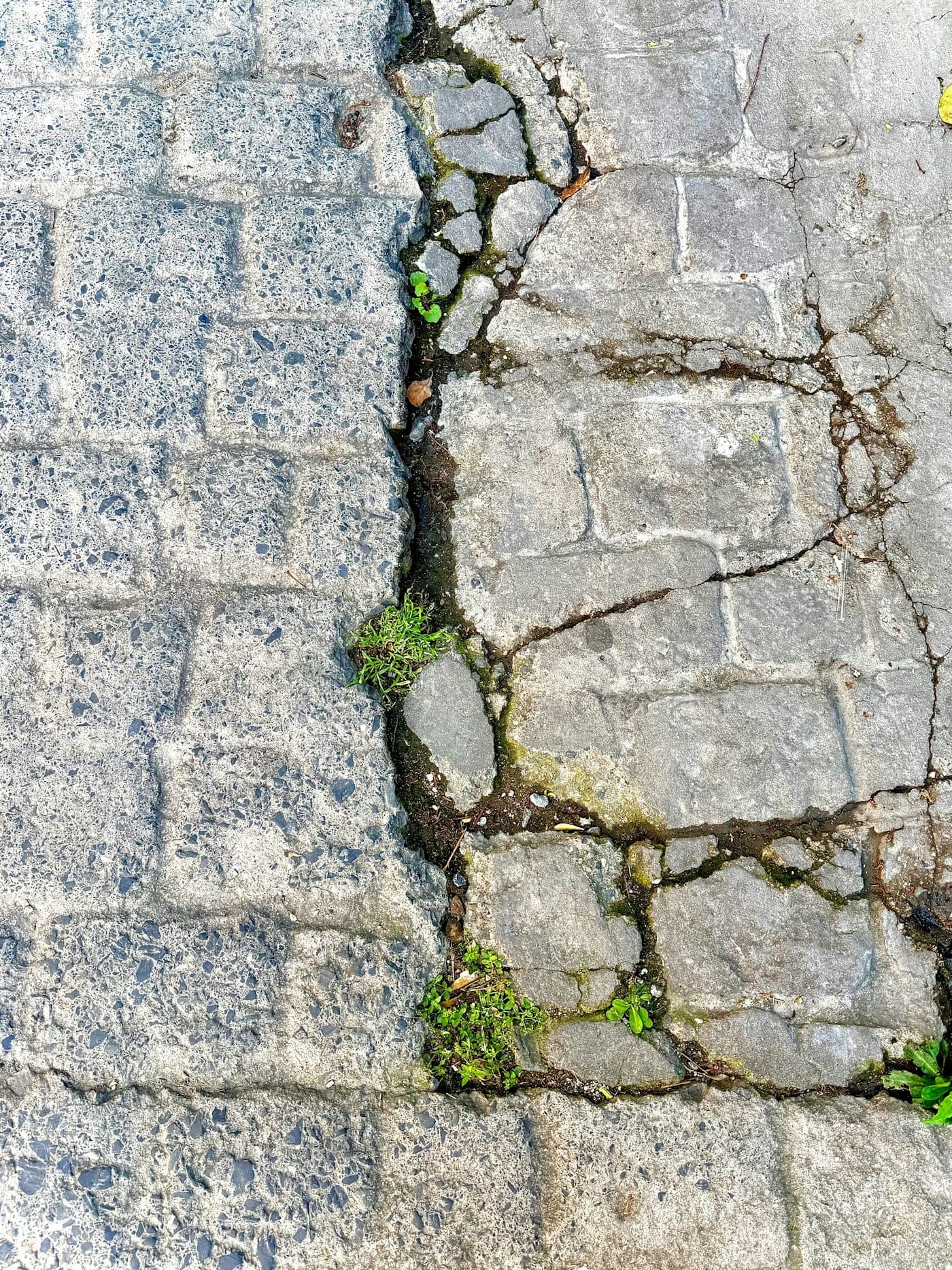
Mature street-tree frontage
Front walkway & entry
Root heave from a protected street tree had lifted three panels into a trip hazard and opened the joints to weeds. Replaced with a root barrier, a flexible joint at the tree side, and a patterned finish that ties the entry to the house.
- Trip hazard removed and the accessible route reinstated
- Root barrier installed without harming the protected tree
- Decorative finish that lifts the whole entry approach
Drag the handle — or use the arrow keys — to compare the condition before and after.
Residential and Commercial Work in Cupertino
Two sides of the same business — the same crews and the same standards, sized to the project.
For Homeowners
- Driveways and vehicle aprons
- Patios and outdoor living areas
- Walkways and garden paths
- Pool decks and surrounds
- Garage and workshop floors
- Hot tub and equipment pads
- Steps, landings, and stoops
- RV and boat parking pads
For Businesses
- Parking lots and drive aisles
- Loading docks and truck aprons
- Industrial and warehouse floors
- Foundations, footings, and slabs
- Sidewalks and accessible routes
- Curbs, gutters, and wheel stops
- Trash enclosure and equipment pads
- Courtyards and pedestrian plazas
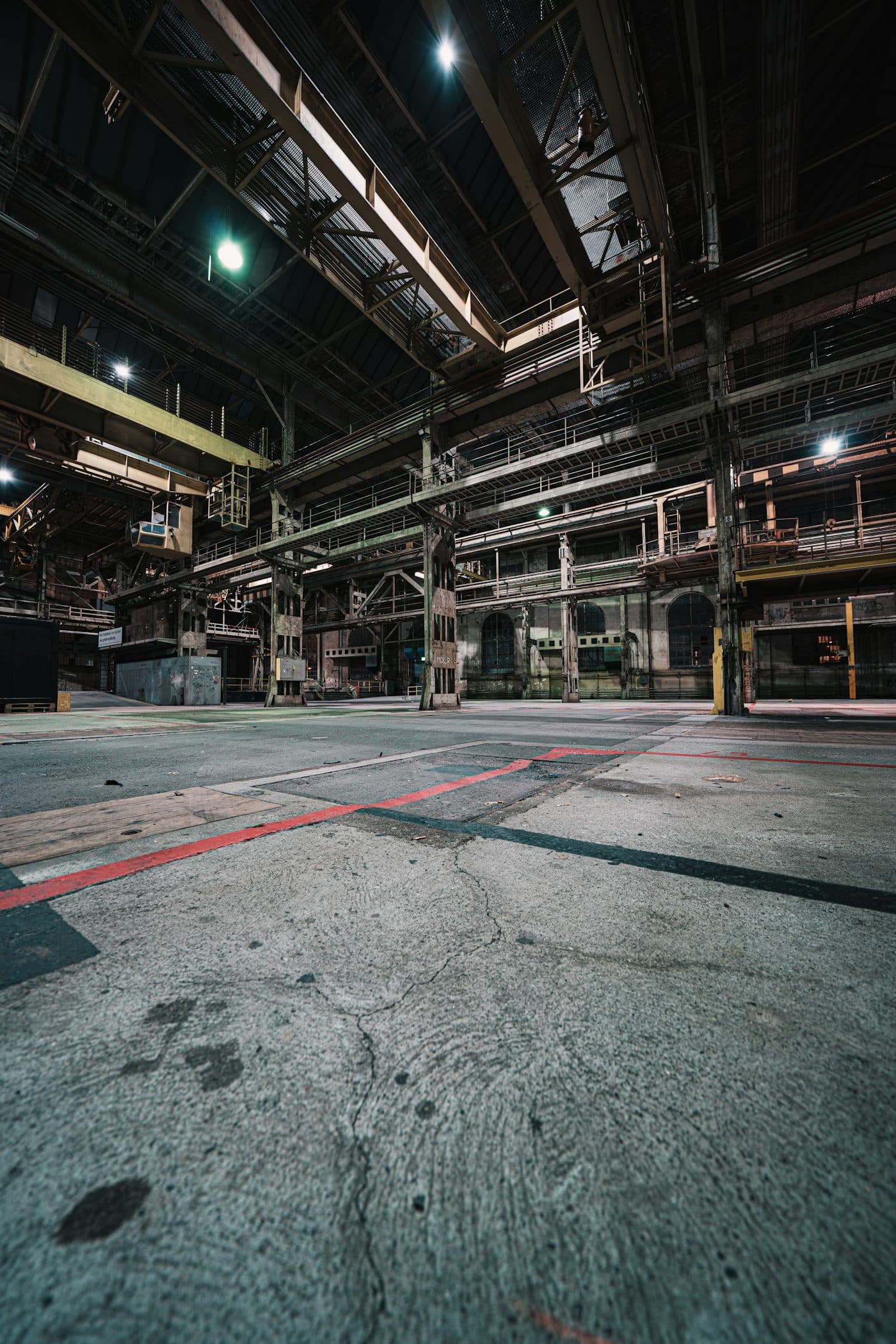
For Businesses
Commercial Concrete in Cupertino
Cupertino's commercial concrete work centers on the retail properties along Stevens Creek Boulevard and De Anza Boulevard, the office and campus developments, and the schools and community facilities that need periodic parking and accessible route work.
- Parking lots and drive aisles
- Loading docks and truck aprons
- Industrial and warehouse floors
- Foundations, footings, and slabs
- Sidewalks and accessible routes
- Curbs, gutters, and wheel stops
Neighborhoods We Work In
Rancho Rinconada · Monta Vista · Garden Gate · Oak Valley · Seven Springs · Inspiration Heights
Rancho Rinconada and Garden Gate are where the ranch-to-rebuild transition is most visible, and where driveway replacement usually accompanies larger work. Monta Vista and Inspiration Heights climb into the foothills, bringing slope and drainage into every conversation.
Why Work With Us
What Cupertino Property Owners Get
The commitments written into every estimate we send, and what you can hold us to once the job is done.
Licensed & Fully Insured
General liability and workers' compensation on every job, so work happening on your property is never your exposure.
Two Decades Locally
Twenty-plus years working this ground. We already know how Cupertino permitting runs and what fails here.
Free Written Estimates
On-site assessment, written scope, itemised price, no obligation — and no verbal number that drifts later.
What Working With Us Looks Like
From first call to finished slab, here's how a Cupertino project runs.
Free on-site consultation
We come out, look at the existing conditions, and talk through what you're trying to achieve — including whether the work you're asking about is actually the work you need.
Written estimate and design decisions
You get a written scope and price, plus a walkthrough of finish, colour, and layout options with physical samples where decorative work is involved.
Permits and scheduling
Where the work needs city approval or an encroachment permit, we handle the application and build the timeline around it.
Demolition and site preparation
Old material is removed, the base is graded to the drainage design and compacted properly. This stage decides how long the finished slab lasts.
Pour, finish, and cure
Concrete is placed and finished to the specification you chose, control joints are cut on a planned grid, and the slab is cured under controlled conditions.
Walkthrough and aftercare
We walk the finished work with you and leave you with clear guidance on when you can use it and how to keep it looking right.
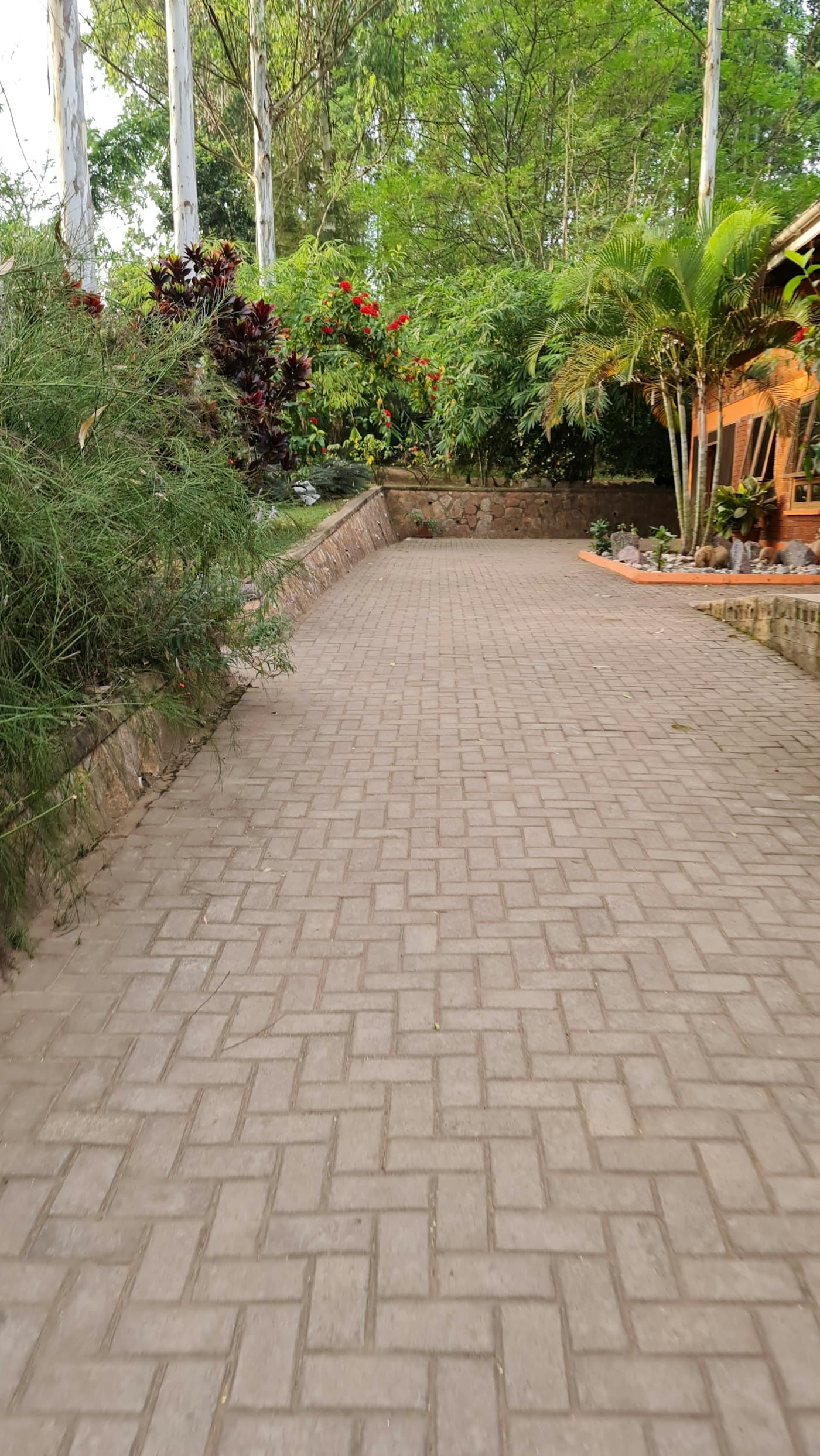
Aftercare
Keeping Concrete in Good Condition in Cupertino
Four habits that do most of the work of getting three decades out of a slab in this climate.
Reseal on a schedule
Every 2–3 yearsDecorative and stamped work every two years, plain flatwork every three. Waiting until it looks tired means it has already been absorbing water for a season.
Clear and refill the control joints
AnnuallyJoints exist so the slab cracks where you chose. Packed with grit and weeds they stop working, and the slab cracks somewhere you didn't choose.
Check drainage before the wet season
Each autumnConfirm downspouts discharge past the concrete and soil hasn't built up above the slab edge. Most local concrete failures are water failures first.
Clean oil and rust quickly
As it happensPetroleum breaks down the surface paste and rust penetrates deep enough to become permanent. Degreaser and a stiff brush within a few days is enough.
Cupertino Concrete Questions
Questions we're asked regularly by Cupertino property owners.
Every Service Available in Cupertino
Flatwork covers the surfaces you walk and park on. Structural concrete carries buildings and heavy commercial loads.
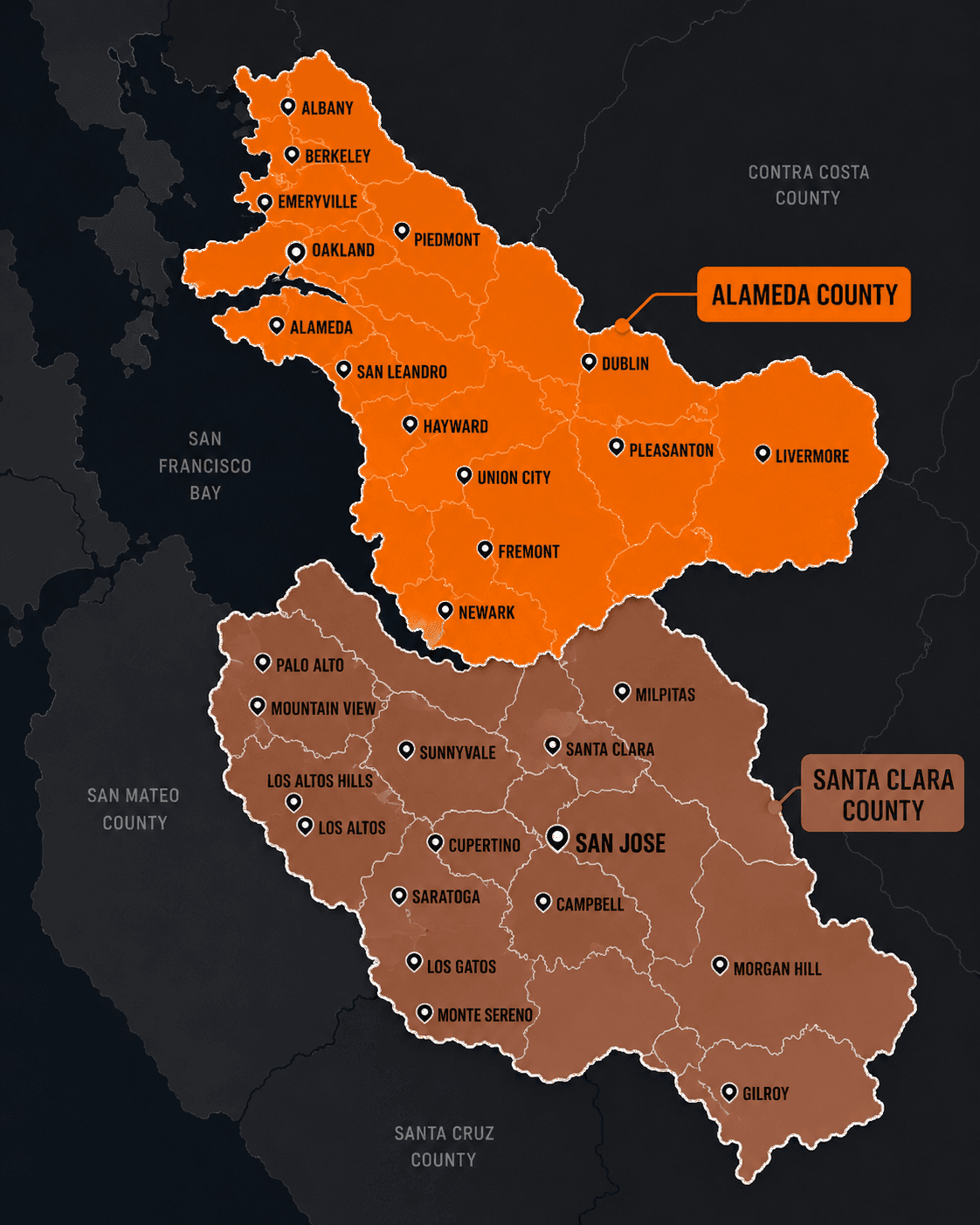
29 Cities Served
Santa Clara & Alameda counties
Nearby
Also Serving Around Cupertino
We work throughout Santa Clara County and across the county line. If your property sits just outside Cupertino, we almost certainly cover it — these are the pages closest to you.
Get a Free Cupertino Concrete Estimate
Tell us what you're planning and we'll come out, look at the site, and give you a written estimate with no obligation.